
Turtle Symbolism in Chinese Culture and Feng Shui
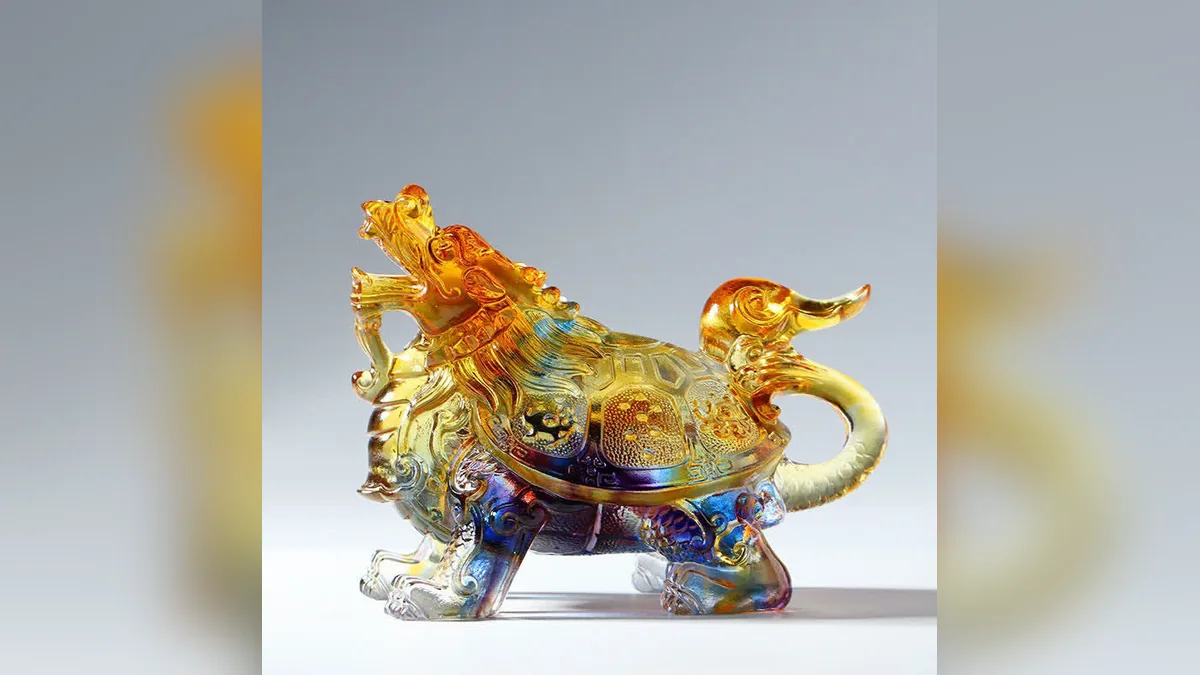
The turtle’s shell rises in a dome, its plates arranged in rough rows. Old Chinese diviners read this form as a map of heaven and earth. In Chinese culture, turtle symbolism centers on long life, endurance, stability, and protection. The dragon turtle, or long gui, combines a dragon’s head with a turtle’s body and serves in feng shui tradition as an emblem of support and steady prosperity. These are cultural meanings and beliefs, with no guarantee of protection, wealth, luck, or any other outcome.
Turtle Symbolism Begins with the Shell
A shell makes the association with shelter easy to understand. Its broad curve covers the animal, while the low body and firm stance suggest steadiness. Traditional interpretations connect those visible qualities with endurance: the capacity to continue, carry weight, and remain present over time.
Long life belongs at the center of this symbolism. Traditional sayings speak of a turtle living a thousand years, using an expansive number to express longevity. The familiar idea of the turtle’s slow, long life gives its measured pace a favorable meaning. Slowness becomes a sign of persistence rather than a shortcoming.
Those associations offer a cultural starting point. A turtle can express a wish for lasting years or an appreciation of patient effort. The meaning belongs to the image and the tradition surrounding it.
From Heaven and Earth to Shang Divination
Early Chinese thought found a model of the cosmos in the turtle: the domed upper shell suggested heaven, and the flatter underside suggested earth. That reading helps explain why an ordinary animal could hold such an important place in ritual life.
During the Shang era, diviners used turtle plastrons, the lower portions of the shell, for divination. They prepared the shell and applied heat to produce cracks, which they interpreted in relation to matters put before them. Inscriptions on surviving examples record divinations and sometimes their results.
The distinction between the upper shell and the plastron matters. The dome provides the visual connection to heaven; the underside supplied a surface for the diviner’s work. Remembering both keeps the shell’s symbolic shape connected to the historical practice, without treating a modern turtle ornament as an oracle bone.
The Northern Guardian and the Tablet Bearer
The Black Tortoise of the North, also called Xuanwu, is one of the Four Symbols in Chinese tradition. It is often shown together with a snake, sometimes entwined around its body. This pairing identifies a particular celestial figure, so a snake beside a tortoise is a meaningful part of the design.
Another classic grouping names the turtle among the Four Benevolent Animals, alongside the dragon, phoenix, and qilin. This is a different list from the Four Symbols. Keeping the groupings distinct makes it easier to understand why turtles appear in several kinds of Chinese imagery.
At temples and tombs, a turtle-like creature may carry a stone tablet, or stele, on its back. This is bixi, a legendary bearer of heavy loads. The tablet gives the creature’s endurance a visible task: supporting words intended to last. Its role offers a close connection between the turtle’s sturdy form and the preservation of memory.
The Dragon Turtle as a Feng Shui Emblem
The dragon turtle brings a different emphasis to that sturdy outline. Its dragon head and turtle body combine qualities associated in tradition with authority, endurance, and support. In feng shui, steady prosperity is among its symbolic meanings. A figure resting on coins makes that prosperity theme especially clear, though coins do not appear beneath every dragon turtle design.
Our handmade liuli dragon turtle art piece has liuli glassware/crystal glass as its listed material, with colorful or gold options. The small size measures 14 × 7 × 11 cm and weighs about 1000 g; the medium measures 20 × 12.5 × 16 cm and weighs about 3000 g.
Those measurements help you judge the space and surface needed for display. The liuli glass explainer on our blog covers the material term used in the product name. Here, the dragon turtle’s form carries the traditional meaning, while its dimensions guide the practical choice of a place for it.
Placement Customs for a Turtle Figure
Feng shui placement customs vary by practitioner and household. The following conventions treat the turtle as a symbol of backing and continuity. Use them as traditional display guidance, with a secure location taking priority.
- Place a turtle behind a desk chair or toward the back of a room to represent “support,” often facing into the room.
- Recognize coins beneath some dragon turtles as part of the traditional prosperity imagery.
- Keep the figure clean and raised off the floor on a suitable surface.
- Choose a position where passing hands, moving chairs, or an opening door will not knock it over.
The northern association of the Black Tortoise provides cultural context, but it does not establish one compulsory direction for every turtle ornament. A thoughtful arrangement can acknowledge the custom while fitting the room you actually have.
A Turtle Form for Incense and Everyday Objects
The same animal can appear in a useful household object. Our ceramic turtle incense burner measures approximately 12.9 × 9.3 × 8 cm / 5.0 × 3.6 × 3.1 in. It is listed for sage bundles and palo santo, which are not included. Color options are beige, blue, white, and yellow.
The page notes handmade variations in color, shape, and size. In use, set it on a heat-resistant, steady surface, keep combustible materials clear, and never leave burning material unattended. The turtle shape supplies the symbolic connection; suitable placement and attentive handling govern its practical use.
Our articulated brass turtle charm keychains bring the motif to a movable pendant. The turtle pendant measures 24 × 36 mm and weighs approximately 17 g. The product name describes the turtle as articulated. Listed materials include ebony wood, ordinary wood, star moon bodhi seed, rope, copper alloy, and brass.
Options include the turtle alone, a turtle with a gourd, or a turtle with a gourd, five emperor coins, and pi xiu. These combinations add other traditional motifs around the turtle. Our post on five emperor coins provides context for that particular option.
Long Life in a Wearable Motif
Jewelry gives the turtle a smaller setting. Our moss agate copper turtle bracelet uses moss agate and copper alloy, with 8 mm beads on an elastic band. Its listed wrist circumference is approximately 15–16 cm, which is 5.9–6.3 in. Check that range against your wrist measurement when considering fit.
The shell remains the connecting image across these different settings: a covering, a rounded outline, and a form associated with lasting strength. In Chinese tradition, the turtle gives visible shape to wishes for long life and steadfastness. A figure on a shelf or a turtle motif in jewelry can carry that meaning without requiring an elaborate arrangement. Its unhurried stance leaves room for a simple reading: endurance has value of its own.
Shop the story
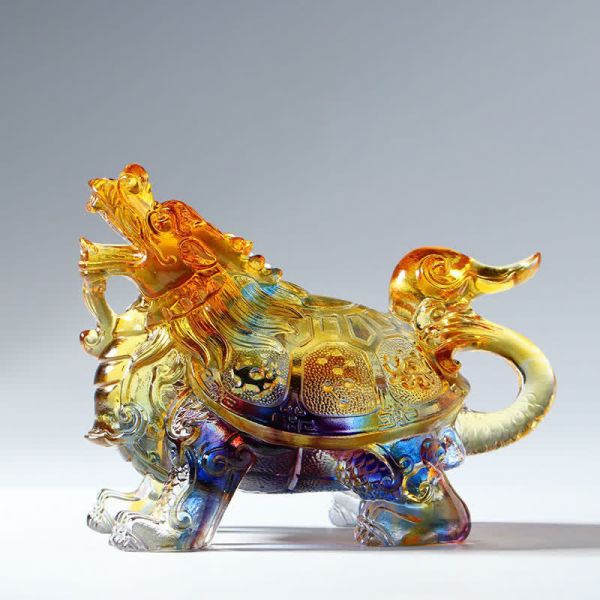 Buddha Stones Feng Shui Dragon Turtle Handmade Liuli Crystal Art Piece Home Office DecorationAs low as $299.59 Regular Price $399.45
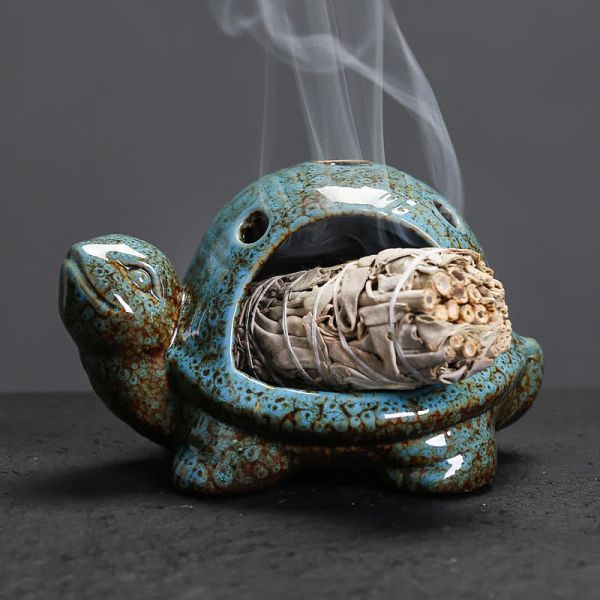 Buddha Stones Ceramic Turtle Endurance Incense BurnerAs low as $52.59 Regular Price $74.07
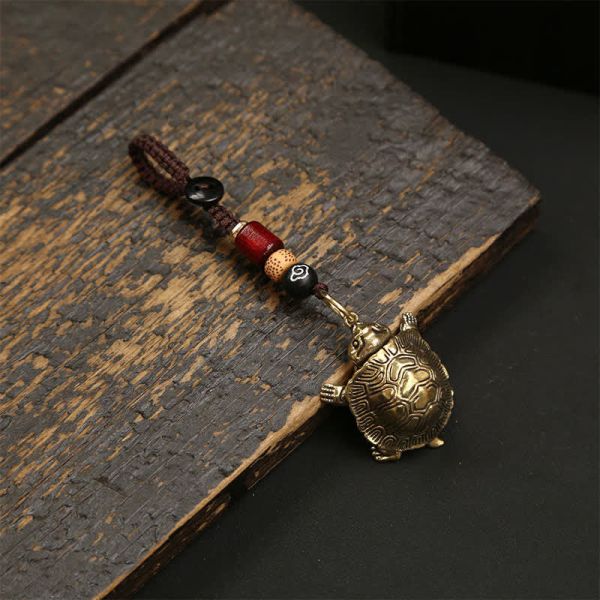 Buddha Stones Articulated Brass Turtle Prosperity Charm KeychainsAs low as $25.59 Regular Price $34.12
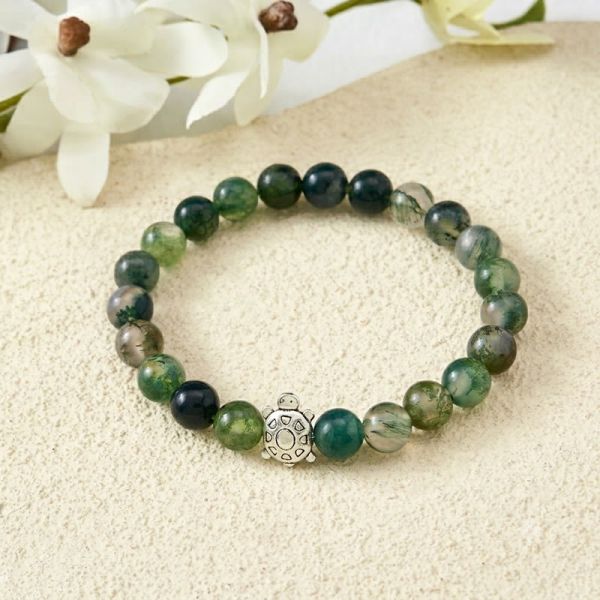 Buddha Stones Moss Agate Copper Turtle Calm BraceletSpecial Price $25.59 Regular Price $35.54