
Five Emperor Coins Meaning: The Story Behind the Set
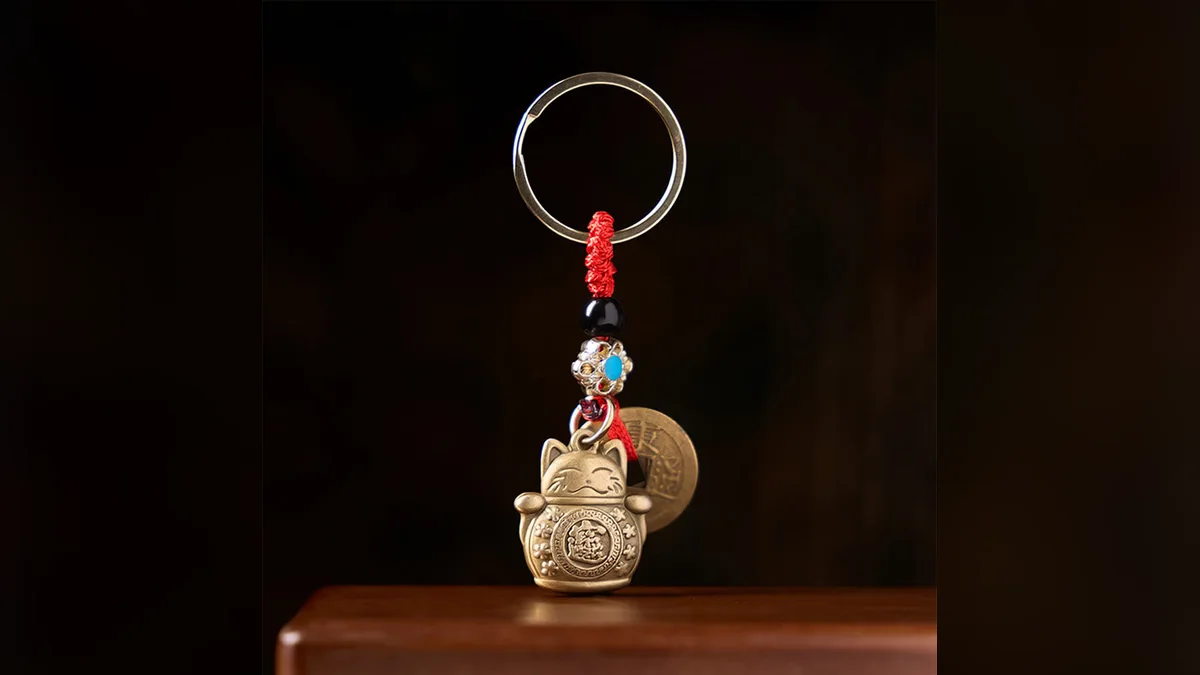
Old copper coins, round with a square hole cut through the center, turn up strung on a loop of red cord in shops, cars, and front hallways across Chinese communities. Usually there are five of them, each stamped with the reign name of a different Qing dynasty ruler. People call the set the five emperor coins, and anyone asking about five emperor coins meaning usually gets the same short answer: the coins carry the names of five reigns in a row — Shunzhi, Kangxi, Yongzheng, Qianlong, and Jiaqing — and in feng shui folk practice, keeping the five together stands for continuity and good fortune, a belief passed along rather than a claim we make about the metal itself.
Five reigns, five coins
Each coin in the set stands for one reign, and lined up in order they read like a short chronicle of Qing rule. None of the five profiles below rest on exact dates — the point of the set, as it is handed down, is the sequence itself, five names in a row rather than five separate stories told on their own.
Shunzhi
Shunzhi was the first Qing emperor to rule from Beijing, after the dynasty moved its court south into the former Ming capital. Because his reign opens the period the other four coins continue, his name sits first in the row. People assembling or buying a set generally place him at the start, marking the beginning of a Qing presence in the capital that the later coins carry forward.
Kangxi
Kangxi's reign is remembered as one of the longest in Chinese history, and the word that comes up most around it is stability. Under his rule the court settled into steady governance, administration held together, and the period is often used as a reference point for what a long, settled reign looked like. Later emperors inherited a court shaped by those decades.
Yongzheng
Yongzheng's reign sits between two longer ones and is remembered differently — less for stability and more for administrative reform. He reworked how taxes, reports, and official business moved through the bureaucracy, tightening a system that had grown loose, and the shift is often framed as a quieter achievement set against the long reigns on either side. Where Kangxi's name calls up a settled court, Yongzheng's calls up the paperwork and process that kept it running.
Qianlong
Qianlong's reign is associated with a long span of rule and a wide stretch of territory under Qing control. The period is also tied to arts patronage — painting, porcelain, and courtly collecting are frequently mentioned alongside his name. Of the five, Qianlong is often the one people recognize first, since his reign is the one most linked with the dynasty at its widest reach.
Jiaqing
Jiaqing's reign closes the sequence that the five coins represent. The years that followed his accession are often described as the start of a slower period for the dynasty, set against the confidence of the reigns before him. On the coin, his name marks the end of the run the set is built to represent, not a judgment on the reign itself.
Round outside, square inside
Set the five coins side by side and the shape carries as much meaning as the names. Each coin is round on the outside with a square hole punched through the middle. The common reading treats the round edge as heaven and the square hole as earth, with the coin sitting between the two. Part of the five emperor coins meaning rests in that shape: heaven above, earth below, and the coin itself holding the space between.
The reign name of each emperor is cast directly onto the face of the coin, in the script used on the Qing dynasty issue it copies. Threading five coins onto one loop of red cord keeps the set together as a single object instead of five loose pieces rattling in a drawer. Many people choose to keep the coins somewhere specific, like a bag or a car, simply because that is where a set like this is traditionally kept, and red cord itself carries a long association in Chinese tradition with marking something as worth giving or holding onto.
Carrying them today
Most people encounter the five-coin set now on a keychain rather than as loose coins in a pocket, and the shape translates well to that format — small, flat, easy to loop onto a key ring or bag strap. Our keychain collection includes a few different pairings of the coins with other figures from Chinese folk tradition. None of them changes what the coins are described as doing; the difference is only in the figure paired alongside the set.
The Five Emperor Coins Lucky Cat keychain pairs a lucky cat charm with coins in the five emperor style, in copper and brass, sized at 28 x 24 x 12 mm.
The Vintage Brass Elephant keychain comes in two versions — the elephant pendant on its own, or the elephant paired with the five coins. It is made from brass, copper alloy, rope, star moon bodhi seed, wood, and ebony wood, with an elephant pendant measuring 30 x 32 x 16 mm and weighing about 31.3 grams, strung on a 65 mm rope.
The Copper Chinese Zodiac Gourd keychain sets the coins against a gourd shape alongside a Chinese zodiac animal, in copper and brass, offered in all twelve zodiac animals so you can pick the one tied to a particular birth year.
The Brass Turtle Pi Xiu keychain comes in four styles, from a plain turtle to a turtle with gourd, Pi Xiu figure and five emperor coins; only some styles include the coins. Materials include brass, copper alloy, rope, star moon bodhi seed, wood, and ebony wood. The turtle pendant measures 9 x 20 x 30 mm and weighs about 17 grams.
Product pages for these keychains note that natural materials such as wood may vary slightly in color and detail from one piece to the next.
Worth saying plainly: charm pieces like these are made in the style of the old coins, not antique currency. A keychain version is a reproduction of the shape and the reign names, not a find from an actual Qing-era mint, and nothing on a brass or copper charm changes that. What carries over is the set itself — five names, one shape, strung on red cord — and whatever five emperor coins meaning a person attaches to it is a matter of tradition and belief, carried from one object to the next rather than built into the metal.
Shop the story
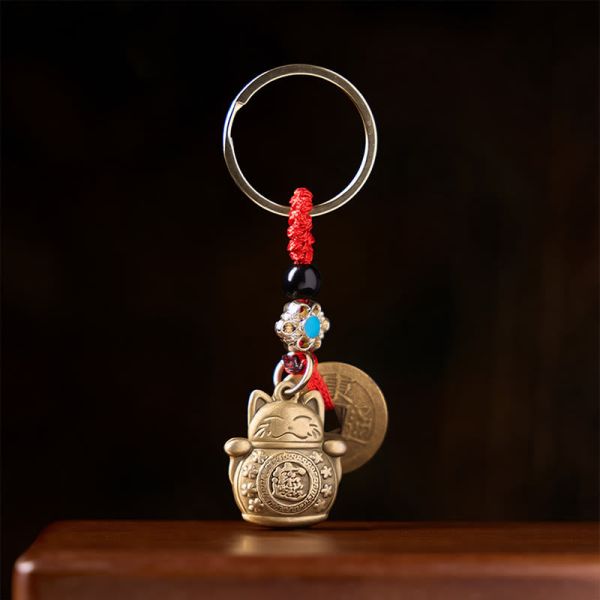 Buddha Stones Feng Shui Five Emperor Coins Lucky Cat Money Wealth KeychainSpecial Price $25.59 Regular Price $34.12
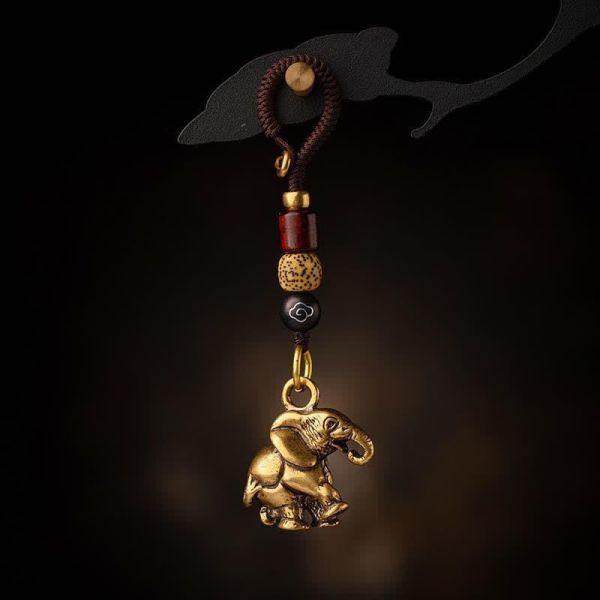 Buddha Stones Vintage Brass Elephant Five Emperor Coins Luck KeychainsAs low as $25.59 Regular Price $34.12
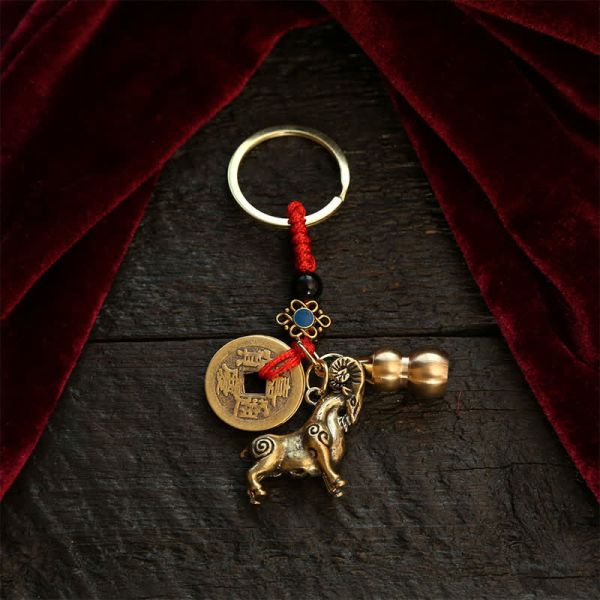 Buddha Stones Copper Chinese Zodiac Five Emperor Coins Gourd Wealth KeychainsAs low as $25.59 Regular Price $34.12
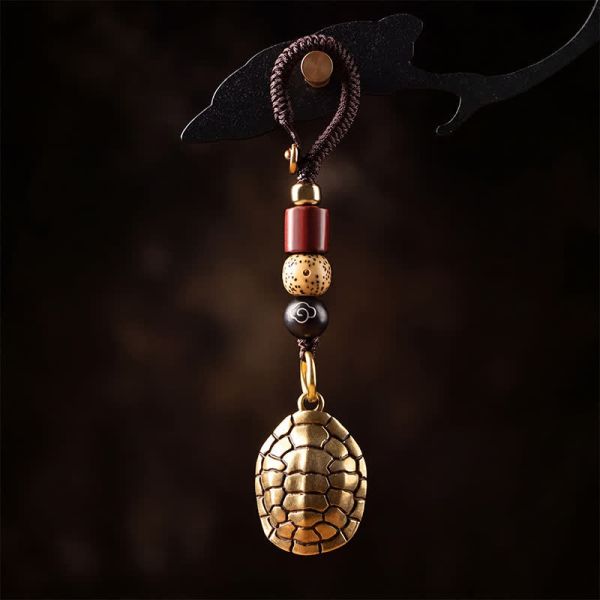 Buddha Stones Brass Turtle Pi Xiu Five Emperor Coins Protection KeychainsAs low as $25.59 Regular Price $35.05