
Tiger Symbolism: Courage, Guardianship, and Tradition
Dark stripes on a tiger’s forehead are often read as the Chinese character 王 (wang), meaning king. In Chinese tradition, the tiger is called the king of the hundred beasts, and tiger symbolism centers on courage, authority, and guardianship. Those associations take different forms across the zodiac, directional imagery, paired animals, and gifts for children. A fierce face on a hat and a tiger beside a dragon draw on related ideas, but their settings help explain what they mean. We approach these images through the traditions in which they appear.
Tiger Symbolism and the Mark on the Forehead
The character 王 has three horizontal strokes joined by a vertical stroke. The dark markings above a tiger’s eyes can suggest that arrangement, giving artists and viewers a visible connection between the animal and the word for king. This traditional reading allows for differences in the markings of individual tigers.
The title “king of the hundred beasts” expresses the tiger’s authority within the animal world. It gives the animal a role beyond being large or fierce: the tiger becomes a figure of command. The title helps explain its traditional associations with guardianship as well as courage.
When reading a tiger design, start with the face. A clearly drawn forehead mark may emphasize kingship, while an open mouth or alert posture may emphasize fierceness. The surrounding objects and the purpose of the design still matter; one detail does not explain the whole image.
The Zodiac Tiger
The tiger is the third animal in the twelve-year Chinese zodiac cycle. As a zodiac emblem, it carries traditional associations with courage and boldness. These cultural descriptions belong to the sign; they cannot reliably predict a person’s character or future.
Recent and upcoming Tiger years include:
- 1974
- 1986
- 1998
- 2010
- 2022
- 2034
The zodiac year begins at Lunar New Year, not January 1.
That boundary matters for birthdays early in the calendar year. Anyone with a January or February birthday needs that year's Lunar New Year date before identifying their animal sign. The year number alone may leave out that distinction.
A tiger chosen as a birth-year gift refers to this repeating calendar cycle. Its meaning comes from a different context than a directional tiger or a guardian image. Our Chinese zodiac collection groups animal designs within that calendar context.
The White Tiger of the West
The White Tiger, or Baihu, belongs to the Four Symbols, the celestial guardians of the cardinal directions, and is paired with the west and autumn. Here the tiger belongs to a larger system of directions and seasonal correspondences, giving it a more specific role than the general image of a courageous animal.
The word “white” is part of this figure’s identity. Identifying a pale tiger decoration as Baihu requires context. A label naming the White Tiger, a western position within a directional arrangement, or its appearance with the other Four Symbols can help establish the connection.
This distinction is useful when looking at art. Ask whether the tiger appears as an individual animal or as one member of an organized group. In the latter setting, its relationship to the whole arrangement becomes central to its meaning.
The Dragon-and-Tiger Pairing
Dragon and tiger appear together as longhu, a pairing found in art, Daoist imagery, and traditional feng shui landscape language. Their relationship gives the composition meaning: two commanding creatures are considered together, with attention to how they relate to one another.
In traditional feng shui landscape language, the dragon is placed on the left and the tiger on the right. These terms describe relationships within a landscape arrangement and depend on its orientation. Applying them to a particular setting requires more context than simply choosing a side of a shelf for a tiger ornament.
In art and Daoist imagery, the pair can express complementary forces. The precise interpretation depends on the work and its setting; the pairing does not have just one explanation that applies everywhere. Our article on Chinese dragon symbolism offers more context for the dragon side of the relationship.
A useful first step is to notice what the two creatures are doing. Their direction, spacing, and interaction help distinguish a paired composition from two separate animal motifs.
Tigers in Folk Craft for Children
Tiger-head hats and shoes were traditional folk gifts for small children, offered as wishes for protection. The animal’s fierce character became part of something intimate and practical: clothing made for a child. The guardian meaning belongs to the gift-giving tradition.
The face makes the connection recognizable. Tiger features turn a hat or the front of a shoe into an animal image, carrying the protective wish through the design. A playful appearance can coexist with the tiger’s traditional authority; gentleness of style does not erase the older association.
This context also explains why tiger imagery extends beyond imposing statues. It can appear in affectionate gifts and everyday objects. When choosing a tiger-themed gift now, explaining the tradition in a short note gives the recipient a clearer account of the symbol than simply calling it auspicious.
Tiger designs to compare
Our tiger designs include decorative objects, teaware, and jewelry. “Protection” in the full names of the liuli piece and rosewood bracelet expresses a traditional wish. Neither the name nor the symbol guarantees protection.
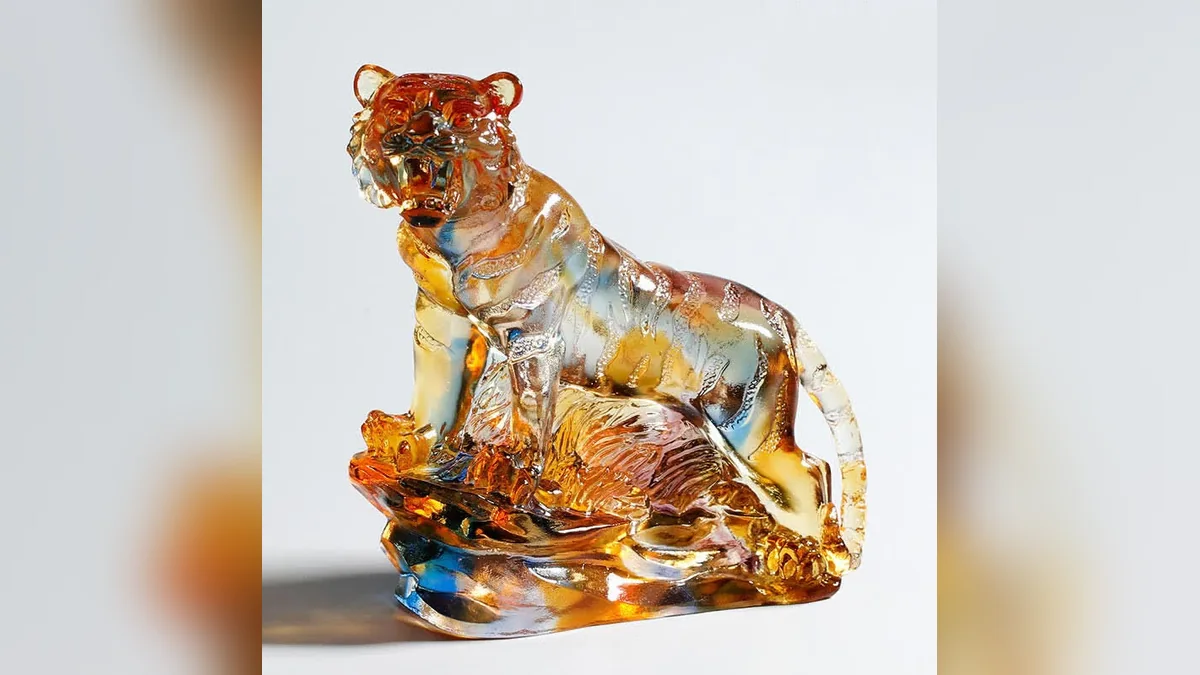
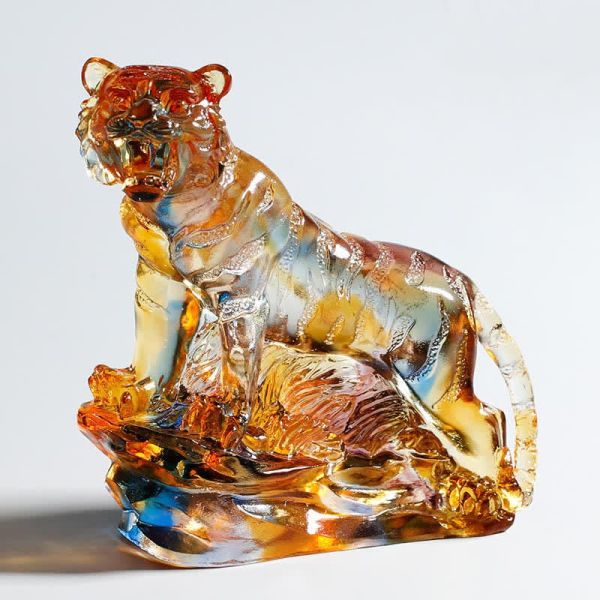
Handmade Liuli Crystal Tiger Art Piece
The Handmade Liuli Crystal Tiger Art Piece is made of liuli, which the listing also calls crystal glass. Color options include colorful, gold, orange, and purple; some options have a base.
Dimensions are 10.5 × 4 × 10.3 cm, 12 × 5 × 13 cm, and 15 × 7 × 15.5 cm (L × W × H). The available weights are 1000 g, 2000 g, and 3000 g. Check the selected option for its configuration. For background on the material, read what liuli glass is.
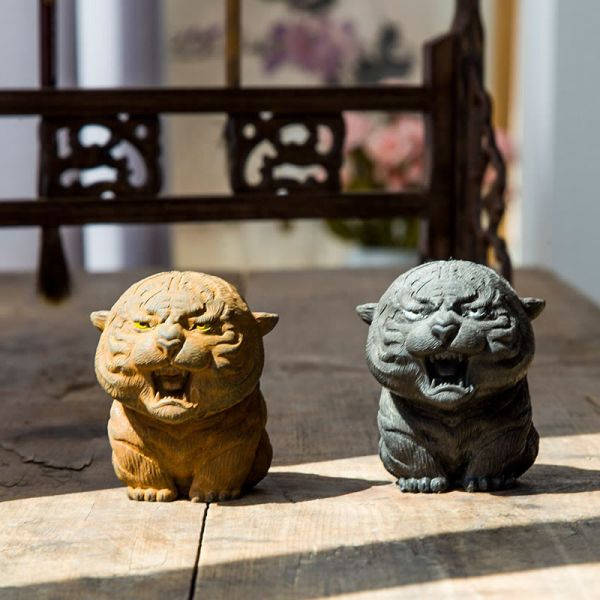
Mini Roaring Tiger Statue
The Mini Roaring Tiger iron powder and resin statue contains 80 percent iron powder and 20 percent resin and weighs about 300 g. Rust, black, and polished versions are offered. Small imperfections may occur because it is handcrafted. The package contains one statue.
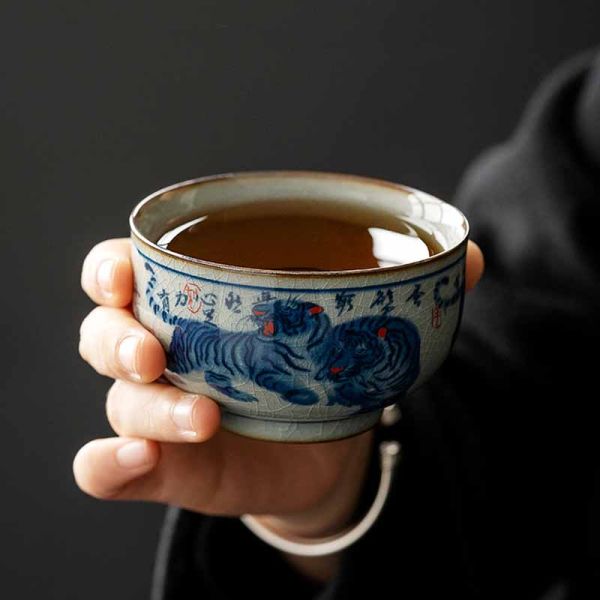
Jingdezhen Hand Painted Cute Tiger Teacup
The Jingdezhen Hand Painted Cute Tiger ceramic teacup measures 8.5 × 4 cm and holds 140 ml. A gift-box option is available. The purchase includes one teacup. Accessories appearing beside it in the photographs serve only as photo props and are excluded from the purchase.
Tibetan Rosewood Engraving Tiger Bracelet
The Tibetan Rosewood Engraving Tiger bracelet has 11 rosewood beads measuring 20 mm. It is elastic, unisex, and intended for a wrist circumference of 15-20 cm. The tiger motif gives this jewelry its connection to the animal’s traditional meanings.
The tiger’s meaning becomes clearer when the setting stays in view: a forehead mark speaks of kingship, a zodiac animal marks a calendar cycle, and a child’s tiger-head shoes carry a family’s protective wish. Recognizing those differences lets you describe the image with care and appreciate the particular tradition behind it.
Shop the story
 Buddha Stones Handmade Liuli Crystal Tiger Art Piece Protection Home DecorationAs low as $198.59 Regular Price $264.79
 Buddha Stones Handmade Mini Roaring Tiger Iron Powder Rust Cast Resin Statue Home DecorationSpecial Price $49.59 Regular Price $66.12
 Buddha Stones Jingdezhen Hand Painted Cute Tiger Ceramic Teacup Kung Fu Tea Cup Bowl 140mlAs low as $42.59 Regular Price $59.99
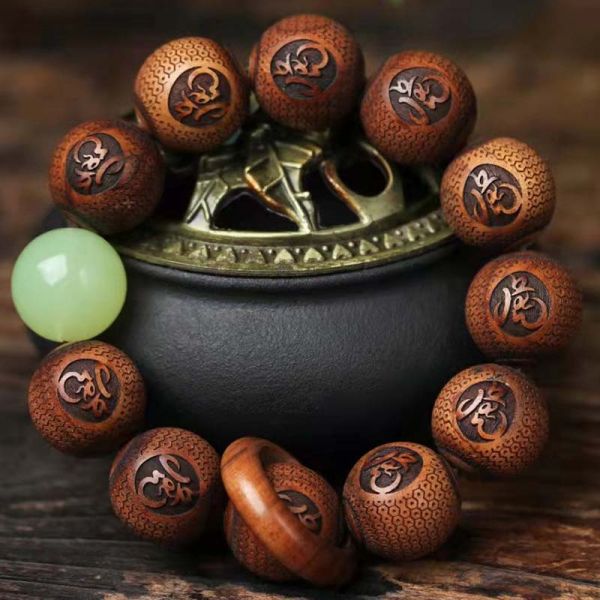 Buddha Stones Tibetan Rosewood Engraving Tiger Protection BraceletSpecial Price $29.59 Regular Price $39.45