
Six Syllable Mantra Jewelry: Words Worn with Care
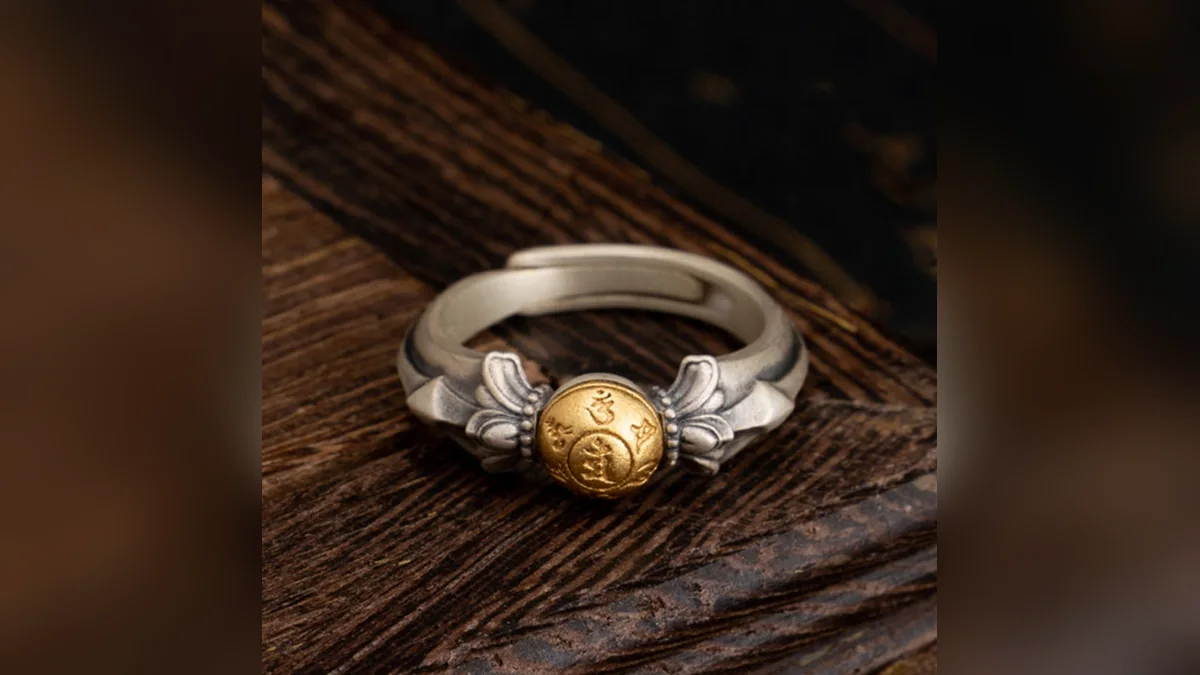
Tibetan devotees recited Om Mani Padme Hum as they passed stones bearing its syllables. The words belonged to a practice shared through speech, writing, and repeated acts of devotion. Six syllable mantra jewelry carries this Buddhist formula onto rings and bracelets. Traditionally associated with Avalokiteshvara, the bodhisattva of compassion, it expresses devotion to compassion and wisdom. Luck, wealth, and protection are traditional beliefs attached to some jewelry motifs; wearing them guarantees none of these outcomes.
An inscription beside a walking path and an inscription worn on a hand occupy different settings. Yet both give the words a visible form. Their cultural significance begins with the text itself: something people recite, reproduce, and treat with respect. Understanding that background gives a jewelry choice more substance than its appearance alone.
Devotional lettering, festival days, and everyday hands
In Tibetan Buddhist communities, the mantra appears on mani stones and prayer wheels. Its repetition belongs to a wider devotional culture in which written words, spoken recitation, and bodily actions accompany one another. Stone inscriptions remain in place while people pass them; a handheld prayer wheel travels with its user. Jewelry introduces another scale, bringing lettering onto an object intended for wear.
Festival observances make that wider setting easier to understand. During Saga Dawa, Tibetan Buddhists commemorate the Buddha’s birth, enlightenment, and passing into parinirvana. Devotional activities can include offerings, recitation, and circumambulation, or walking around a sacred place. Practices differ between communities. The mantra belongs within this continuing religious life, beyond its appearance as an ornament.
Lettering also presents a practical design question. A devotional inscription needs space, while a ring or bead offers only a limited surface. Script, arrangement, and the shape of the object influence how the words are presented. A familiar mantra can therefore look quite different across objects without becoming a different formula. Visual differences alone do not establish a piece’s origin or religious status.
Our introduction to prayer wheel practice offers context for another object associated with this mantra. A wheel and a bracelet have different uses, and familiarity with one does not create a required ritual for the other.
Wearing six syllable mantra jewelry with context
A modern wearer may approach an inscription through Buddhist practice, family tradition, an interest in lettering, or a gift. Those starting points deserve clear language.
Avalokiteshvara is known in Chinese Buddhist contexts as Guanyin. This connection helps explain why compassion is central to the mantra’s cultural setting. For a fuller discussion of the words, our Om Mani Padme Hum meaning article provides background. Here, the important distinction is between understanding a devotional inscription and expecting a material reward from wearing it.
Some contemporary designs combine the mantra with Pi Xiu, a creature associated with wealth in Chinese folk belief and feng shui traditions. That pairing places Buddhist writing beside a separate auspicious motif. It should be understood as a combination of symbolic references. Pi Xiu imagery does not turn the Buddhist formula into a financial promise.
For daily wear, begin with the listed dimensions and materials. Adjustable sizing still needs attention to fit, and an elastic string does not make a bracelet suitable for every wrist. If the jewelry is a gift, explain the inscription in a brief note and let the recipient decide what it means within their own practice or interests.
Four designs and the details that distinguish them
The following pieces place Om Mani Padme Hum in different jewelry formats. Words such as Peace, Wealth, and Strength in their names express symbolic wishes. They describe neither a guaranteed result nor a religious qualification. Compare the physical specifications before deciding which format suits the intended wearer.
A silver ring with adjustable sizing
The Buddha Stones 925 Sterling Silver Manjusri Mantra Om Mani Padme Hum Peace Adjustable Ring uses 925 sterling silver and weighs about 5.6g. Its ring circumference is 7cm(Adjustable), and the Om Mani Padme Hum size is 6mm. This places the inscription in a ring format for someone who prefers jewelry on the hand. The adjustment description should be considered together with the circumference rather than treated as universal sizing.
A brass bracelet paired with Pi Xiu
The Buddha Stones Antique Brass Pi Xiu Om Mani Padme Hum Wealth Bracelet is brass, with 8mm beads and a weight of 128.4g. It uses premium elastic string and gives a wrist circumference of 6.5–7.1 in (16.5–18 cm). The package includes 1 × Bracelet. Here, Wealth names the traditional wish associated with the Pi Xiu motif; it is not a forecast of the wearer’s finances.
A round-bead option in liuli and copper alloy
The Buddha Stones Black Gold Pi Xiu Om Mani Padme Hum Wealth Round Bead Bracelet combines liuli and copper alloy. Its black beads measure 12mm, and its premium elastic string accompanies a wrist circumference of 6.7–7.1 in (17–18 cm). The package contains 1 × Bracelet. Black Gold is part of the product name; the specified materials are liuli and copper alloy, so the name should not be read as a statement of gold content.
An obsidian and jade design with size options
The Buddha Stones Black Obsidian Jade Om Mani Padme Hum Strength Couple Magnetic Bracelet has options labeled 10mm, 8mm, and 8mm&10mm. Its specifications give bead sizes of 8mm, 10mm, premium elastic string, and a wrist circumference of 15-20cm. Materials are recorded as Obsidian, Jade, Gold Plated, and the design is unisex. The Couple wording does not establish the package quantity; check the selected option’s details before treating it as a gift for two people.
Questions about the inscription and its use
Must you recite the mantra to wear it?
Wearing an inscription does not by itself establish a recitation practice. You can learn its Buddhist context and treat the words respectfully. If you want to include recitation in religious practice, seek guidance from a qualified teacher within the tradition you follow.
Does a Pi Xiu design change the mantra’s meaning?
The pairing adds a Chinese auspicious motif associated with wealth beliefs. The mantra retains its association with Avalokiteshvara and compassion. Neither motif provides assurance of prosperity, luck, or protection.
What should you say when giving it as a gift?
Explain that the inscription is Om Mani Padme Hum, associated with compassion in Buddhist tradition. Include the chosen piece’s material and sizing information. A simple explanation leaves the recipient room to appreciate both the object and the words it carries.
Shop the story
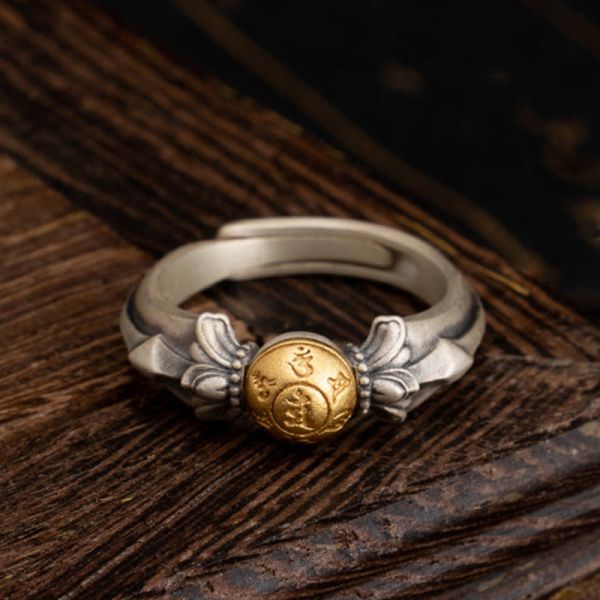 Buddha Stones 925 Sterling Silver Manjusri Mantra Om Mani Padme Hum Peace Adjustable RingSpecial Price $229.59 Regular Price $318.88
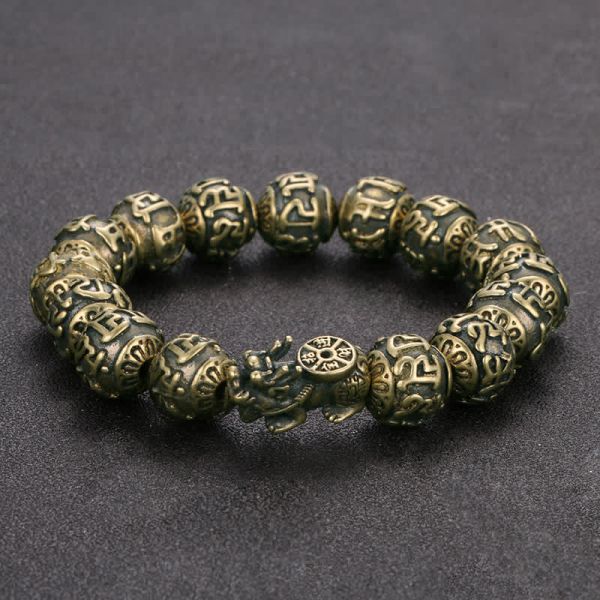 Buddha Stones Antique Brass Pi Xiu Om Mani Padme Hum Wealth BraceletSpecial Price $42.59 Regular Price $59.99
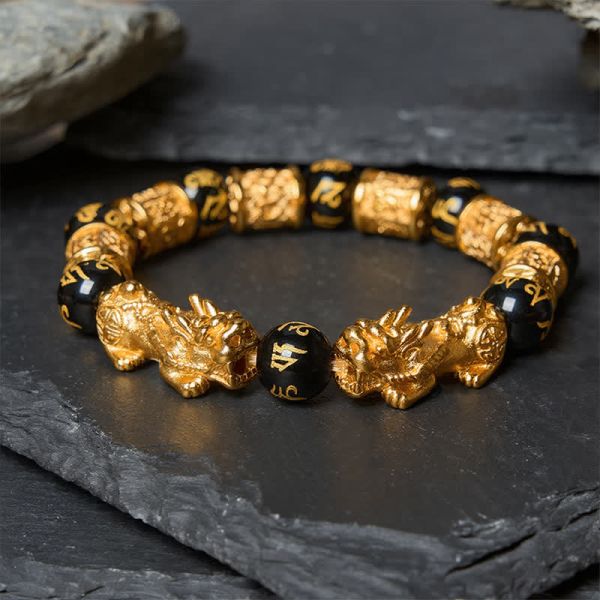 Buddha Stones Black Gold Pi Xiu Om Mani Padme Hum Wealth Round Bead BraceletSpecial Price $35.59 Regular Price $49.43
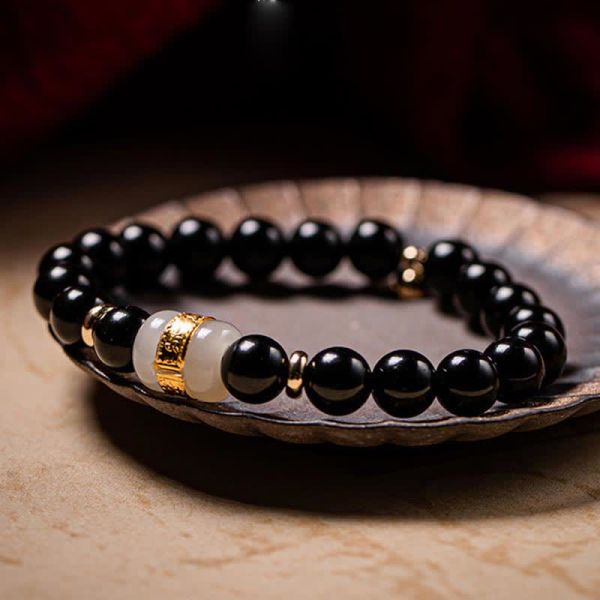 Buddha Stones Black Obsidian Jade Om Mani Padme Hum Strength Couple Magnetic BraceletAs low as $40.59 Regular Price $54.12