
Prayer Wheel Anatomy: Its Parts and How to Turn It
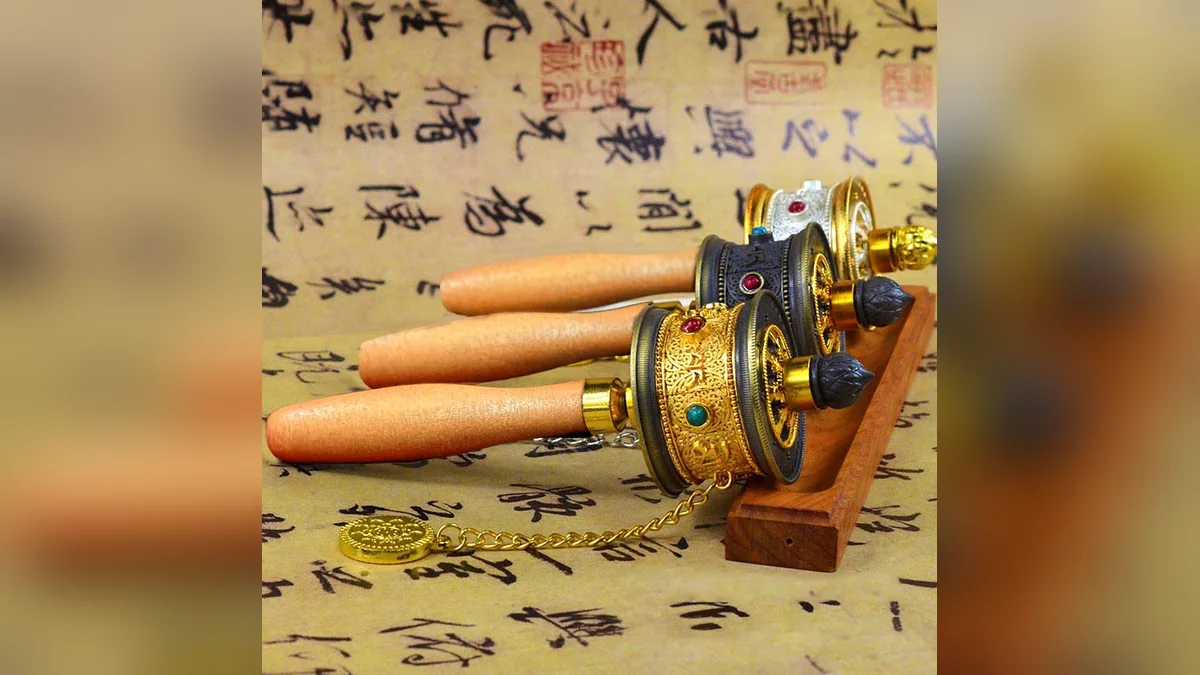
Along the outer walls of Tibetan monasteries, rows of cylinders turn under passing hands. A prayer wheel, also called a mani wheel or Tibetan mani khorlo, is a cylinder that traditionally holds a tightly rolled scroll printed with a mantra, most often Om Mani Padme Hum. In Tibetan Buddhist belief, turning it clockwise is understood as equivalent to reciting the mantra written inside.
A hand-held version brings that rotating cylinder onto a handle. Its construction is easier to understand when you separate the parts that move from the parts that support them: the drum turns around an axle, while a small hanging weight helps carry the motion. The lettering outside is visible, but the scroll traditionally held within is just as central to its religious use.
At Buddha Stones, we distinguish these traditional features from the specifications of individual decorations. An object may borrow the familiar cylinder shape or mantra motif without its listing confirming everything inside it.
Parts of a hand-held prayer wheel
- The drum: This is the rotating cylinder, often embossed with the mantra in Tibetan or Lantsa script. The writing belongs to the outer surface; its presence alone does not tell you whether the cylinder contains a printed scroll.
- The scroll inside: Traditional wheels contain a tightly rolled scroll bearing repeated copies of a mantra, enclosed within the drum. Decorative wheels may not contain one, so check the individual description rather than assuming that a closed cylinder has the same contents.
- The spindle or axle: This central shaft supports the drum and gives it an axis around which to rotate. Think of it as the line running through the center of the cylinder, distinct from the cylinder moving around it.
- The handle: The handle sits below the drum and provides the place to hold a portable wheel upright. Your grip supports the object while a gentle movement of the wrist starts and maintains the rotation above your hand.
- The weight and short chain: A small weight attached to the drum by a short chain swings outward as the cylinder turns. It helps keep the drum spinning once you have started the motion, without needing to push the cylinder on each revolution.
- The cap or finial: The top of the drum may have a cap, a decorative finial, or both, completing the upper outline. A pointed ornament at the top is separate from the weight on the chain, even when both are visually prominent.
Wheels of every size
The hand-held form makes the relationship between handle, axle, and drum especially clear. It is portable, and the person holding it supplies the movement. Larger forms keep the same basic idea of a cylinder turning around a central axis, while changing how that motion begins.
Wall-mounted rows are familiar sights at Tibetan monasteries and stupas. People passing alongside them can set successive cylinders turning by hand. Here, the support is fixed to the building or surrounding structure, so there is no handle to carry.
Very large wheels may stand in halls of their own, with room for visitors to approach and turn them. Other forms are turned by flowing water or wind. These variations show why a handle and chain are useful labels for the portable form, but do not describe every wheel you might encounter.
Small desktop and car versions bring the cylinder form into everyday settings. Their scale and intended placement differ from monastery installations, and their descriptions deserve a separate reading: a decorative object, a traditional ritual implement, and a rotating piece of jewelry need not share the same internal construction.
How to turn one
For a hand-held wheel with a hanging weight, begin with enough space for the chain to move freely. Keep it clear of nearby objects and other people; a wide swing or forceful flick is unnecessary.
- Hold the handle upright. Support it securely below the drum, leaving the cylinder free to rotate. Keeping the axle upright gives you a straightforward starting position for controlling the movement.
- Start a clockwise turn. Use a gentle circular wrist movement to set the drum spinning clockwise, viewed from above. Let the weight travel around with it and help carry the rotation; avoid pulling on the chain.
- Keep a steady pace. Continue with small wrist movements as needed. There is no need to make it spin as fast as possible, and you can stop and begin again if the motion becomes awkward.
- Recite the mantra if that is your practice. Many people say Om Mani Padme Hum while turning the wheel. In this religious context, the spoken recitation accompanies the turning rather than serving as a timing rule for each revolution.
- Walk clockwise around stupas or temples. When turning a wheel while making a circuit, follow the customary clockwise direction and observe local guidance. At a monastery, give people space to pass and follow instructions for the particular place.
The Om Mani Padme Hum mantra itself has its own article on our blog.
Four wheels at home
Our four pieces below use the wheel form in different ways. We list their materials, dimensions, and options here; none of these specifications confirms an internal mantra scroll.
The Tibetan Lucky wheel decoration is zinc alloy, measures 5 × 17 cm, and weighs 210 g. Its listed pendant length is 11.5 cm, and it comes in three style options, labeled 1, 2, and 3.
The Six True Words copper decoration is electroplated copper, with black or gold options. Its listed overall dimensions are 5 × 19 cm, with a 12 cm handle and a wheel measuring 5 × 5 cm; its weight is 266 g.
The Tibetan Blessing car decoration is zinc alloy, measures 8 × 9.3 cm, and weighs 325 g. It comes in bronze, gold, or red, and its page mentions lotus and Om Mani Padme Hum motifs.
Place a car piece where it cannot block the view or move while driving.
The Om Mani Padme Hum copper rotatable ring uses the rotating form as jewelry. It is copper, about 20 mm wide, and listed in an adjustable US10-US11 size.
A prayer wheel becomes easier to read when you recognize the drum, axle, scroll, and supporting parts. That understanding also leaves room for a useful distinction: what belongs to Tibetan Buddhist practice, and what an individual decorative piece is documented to contain.
Shop the story
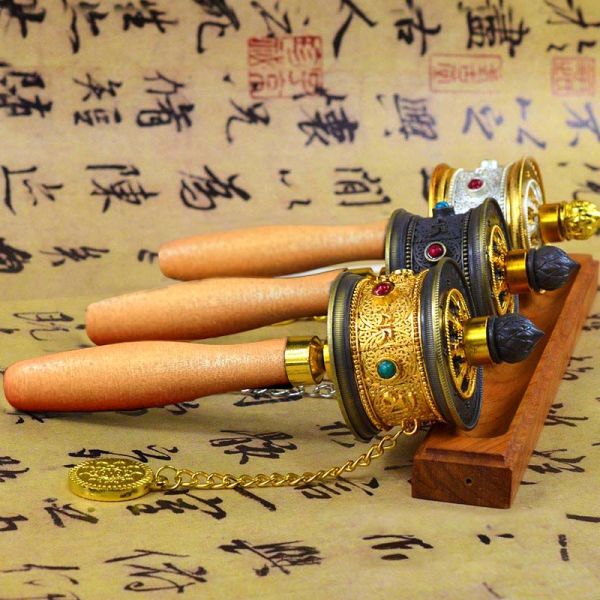 Buddha Stones Tibetan Lucky Prayer Wheel DecorationAs low as $36.59 Regular Price $48.79
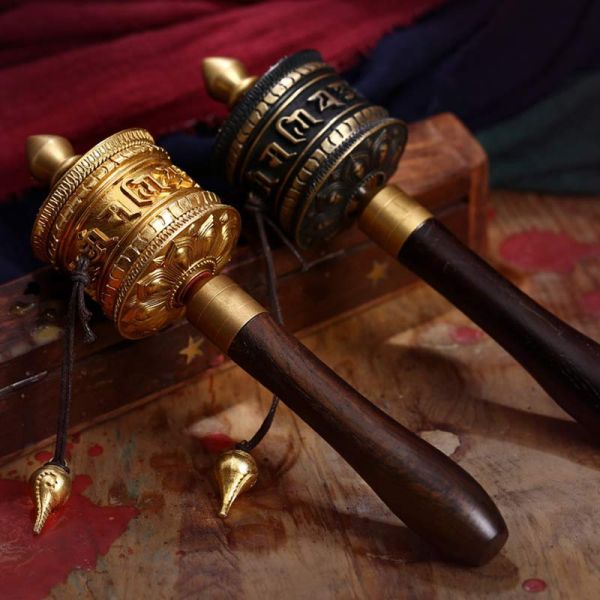 Tibetan Prayer Wheel Six True Words Copper Meditation DecorationAs low as $129.59 Regular Price $168.44
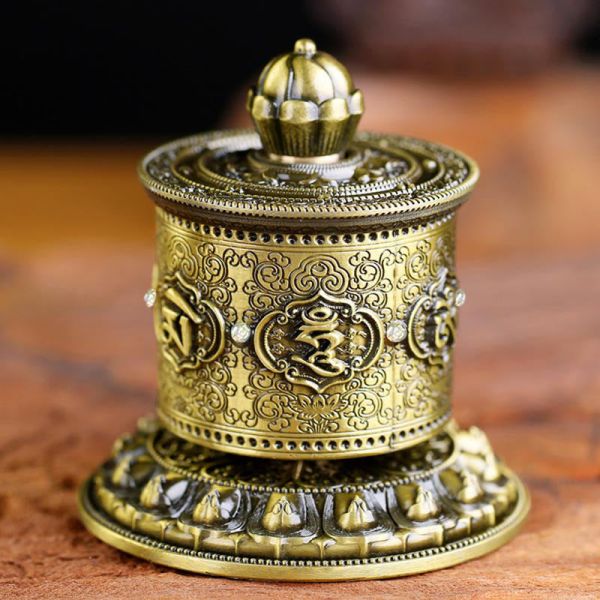 Buddha Stones Tibetan Blessing Prayer Wheel Car DecorationAs low as $65.59 Regular Price $87.45
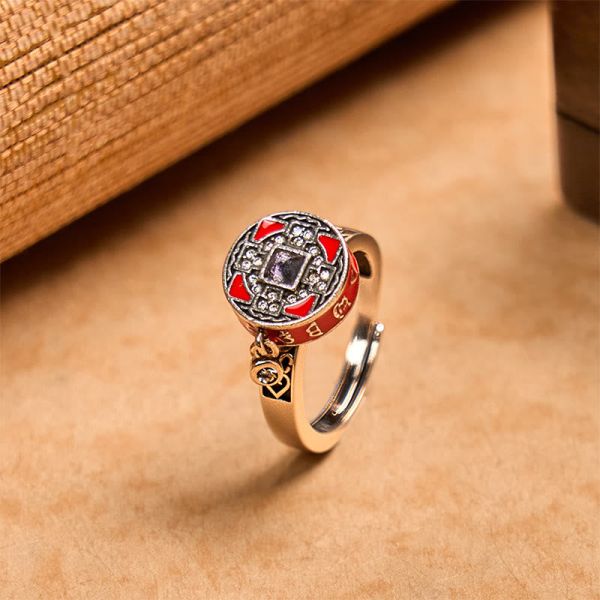 Buddha Stones Om Mani Padme Hum Copper Prayer Wheel Rotatable Wealth RingSpecial Price $25.59 Regular Price $34.12