
Ruyi Meaning: From Ceremonial Scepter to Cloud Motif
Ruyi, 如意, means “as you wish” or “as one desires.” The ruyi is a curved ceremonial scepter with a head shaped like a cloud or a lingzhi mushroom. In Chinese tradition, it stands for wishes fulfilled, authority, and good fortune. Understanding ruyi meaning begins with that connection between a spoken wish and a recognizable form. These associations express cultural beliefs; the object does not guarantee luck or any particular result.
The scepter
The ruyi may have begun as something quite practical. Early examples may have served as back scratchers or as pointers held by scholars and monks while speaking. Its precise beginnings are uncertain, so it is better to keep these possible uses in view than to give the object a single, definite origin.
As a ceremonial object, the ruyi belonged in the hand. Its curved shaft and broad head gave it a recognizable outline, while the act of holding it could mark the speaker's role. Buddhist monks held ruyi during teaching, and the bodhisattva Manjushri is sometimes shown holding one. In that setting, the object forms part of the visual language of teaching and religious authority.
The scepter also entered court life. In the Qing court, ruyi made from jade, gold, or lacquer were exchanged as gifts, including for weddings and birthdays. The name made the gesture especially apt: to present a ruyi was to offer a wish in a tangible form. Its association with authority could sit beside the more personal hope that life would unfold as the recipient desired.
These uses give the object several overlapping identities. A ruyi could be a teaching implement, a ceremonial possession, or a gift. Its meaning depended partly on who held it, who offered it, and the occasion.
The cloud head
The next stage of the ruyi's story concerns its outline. The broad head is often described as cloud-shaped or compared with lingzhi, a mushroom associated in Chinese tradition with longevity. Those descriptions help explain why a single shape can suggest both an auspicious cloud and a wish for long life.
Eventually, the head became a decorative motif that could stand on its own. A full shaft was no longer necessary for the design to be recognized. Ruyi cloud collars use the outline in clothing, while repeating ruyi forms appear in decorative borders. Lock charms also offer a place for the cloud-like curves.
This change matters when you encounter the word on jewelry. A ruyi motif need not be a miniature scepter. It may preserve only the curved head or repeat that outline within a larger design. Looking for the shape helps distinguish the object's physical form from the wish carried by its name.
The ruyi today: ruyi meaning in everyday objects
Today, the ruyi survives both as a complete decorative object and as a detail on things made for daily use. A necklace can combine its curves with a traditional lock shape; a ring can refer to the scepter through a pattern. A decorative art piece may place the ruyi beside another auspicious symbol.
You can appreciate the outline without treating it as a prediction. For a gift, the phrase “as you wish” offers a clear starting point: it conveys goodwill while leaving the recipient's wishes their own.
The following terms help separate the mushroom, cloud, lock, and spoken greeting that meet around this motif.
- Lingzhi: A mushroom associated with longevity in Chinese tradition; its form is often compared with the ruyi head.
- Xiangyun: Auspicious clouds, a traditional decorative theme related to the ruyi's cloud-shaped outline.
- Ruyi lock or longevity lock: A lock-shaped charm traditionally given to children to express wishes for long life.
- Ji xiang ru yi: An auspicious greeting expressing wishes for good fortune and for things to go as desired.
Ruyi designs to compare
Our selection places the motif in jewelry, a keychain, and a decorative art piece. Words such as “Luck” or “Success” in product names describe traditional wishes. They do not promise results.
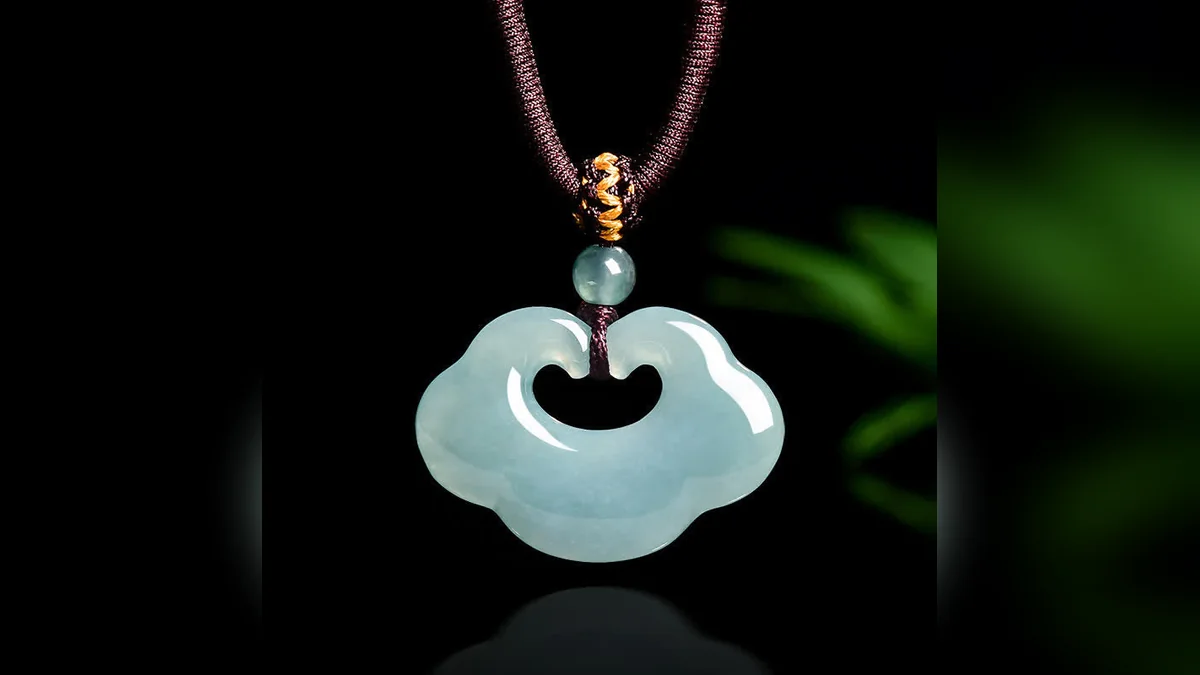
Jade ruyi cloud lock necklace
Our Jade Ruyi Cloud Chinese Lock charm pendant necklace uses jade and rope. The necklace measures 45 cm (18 in), with a pendant of about 0.81 × 1.12 × 0.18 in / 20.5 × 28.5 × 4.5 mm.
The lock shape belongs to the custom of children's longevity locks: charms given with wishes for a long life. Here, that traditional form meets the ruyi cloud motif. The word “lock” identifies the charm's shape and cultural background. Jade may vary slightly in color, details, and overall appearance, as the product information notes.
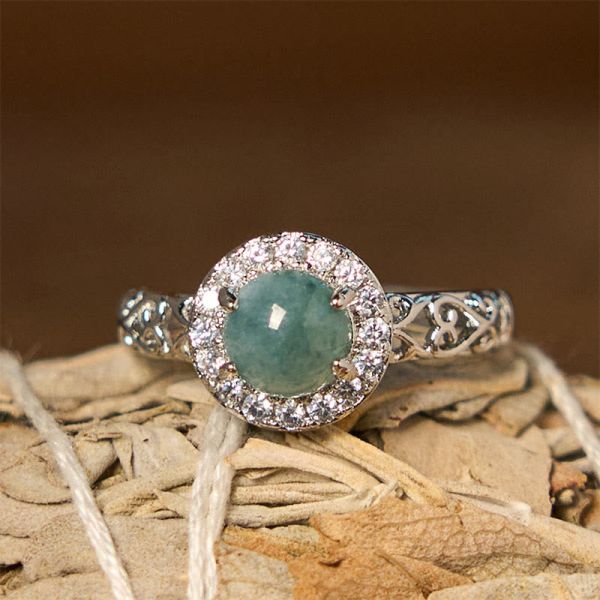
Hetian jade ruyi pattern ring
The Natural Hetian Jade Egg Ruyi Stick Pattern ring brings the scepter motif into a ring design. The jade size is 4 mm. Its materials are given as Hetian jade and copper with platinum.
The product information also notes possible variations in the jade's color, details, and overall appearance. The design's connection to the ruyi rests in its named stick pattern and the traditional wish that the motif expresses.
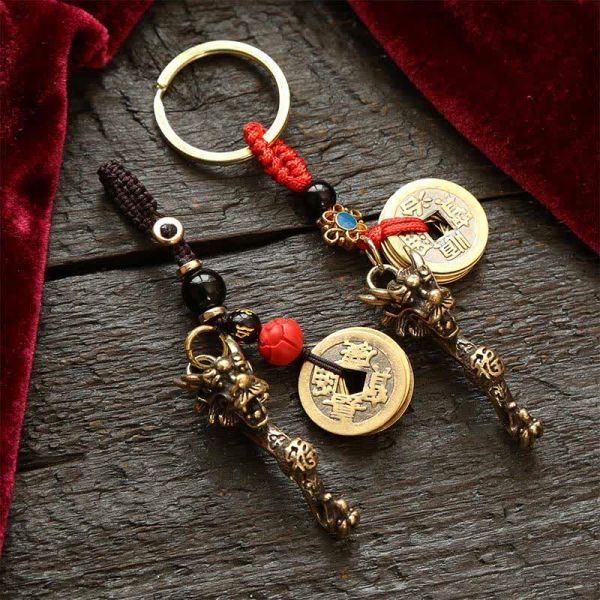
Dragon ruyi five emperor coins keychain
The Brass Dragon Ruyi Five Emperor Coins keychain combines several named motifs in an everyday accessory. The product name uses “Brass”; the materials field gives copper alloy, braided cord, resin, and wood. Its options are BlackRed Beads and Red String.
The ruyi provides one part of the design's symbolic vocabulary. The coin motif has its own background, discussed in our article on five emperor coins meaning. Keeping those references distinct makes it easier to understand how different traditional wishes can share one object.
Liuli ruyi elephant art piece
Our Handmade Liuli Crystal Ruyi Elephant art piece with crystal base uses liuli glassware/crystal glass. The two listed sizes are:
- 30 × 9 × 14 cm, including the base; about 2940 g.
- 30.5 × 7.5 × 7 cm, with a 30 × 9 × 2.5 cm base; about 2700 g.
The elephant adds a wordplay connection: xiang, meaning elephant, sounds like the xiang in ji xiang, meaning auspiciousness. Paired with ruyi, it refers to the greeting ji xiang ru yi. For the material's terminology, our article on what liuli glass means offers further context. The pairing carries the ruyi's old role as an expressed wish into an object intended for display.
Shop the story
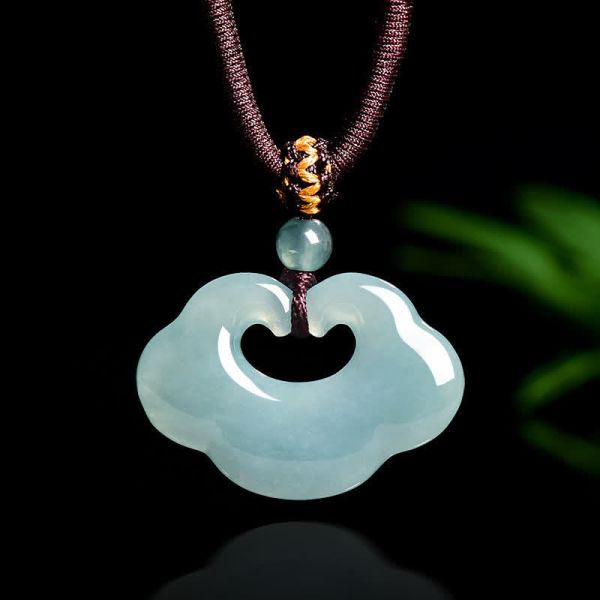 Buddha Stones Jade Ruyi Cloud Chinese Lock Charm Luck Pendant NecklaceSpecial Price $27.59 Regular Price $38.32
 Buddha Stones Natural Hetian Jade Egg Ruyi Stick Pattern Luck RingSpecial Price $25.59 Regular Price $34.12
 Buddha Stones Brass Dragon Ruyi Five Emperor Coins Success KeychainsAs low as $25.59 Regular Price $35.05
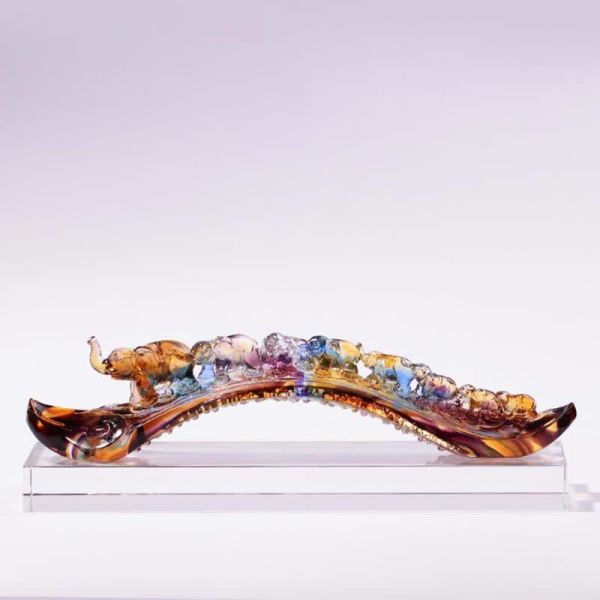 Buddha Stones Handmade Liuli Crystal Ruyi Elephant Art Piece Home Decoration With Crystal BaseAs low as $529.59 Regular Price $706.12