
Qilin Meaning: How to Recognize the Gentle Beast
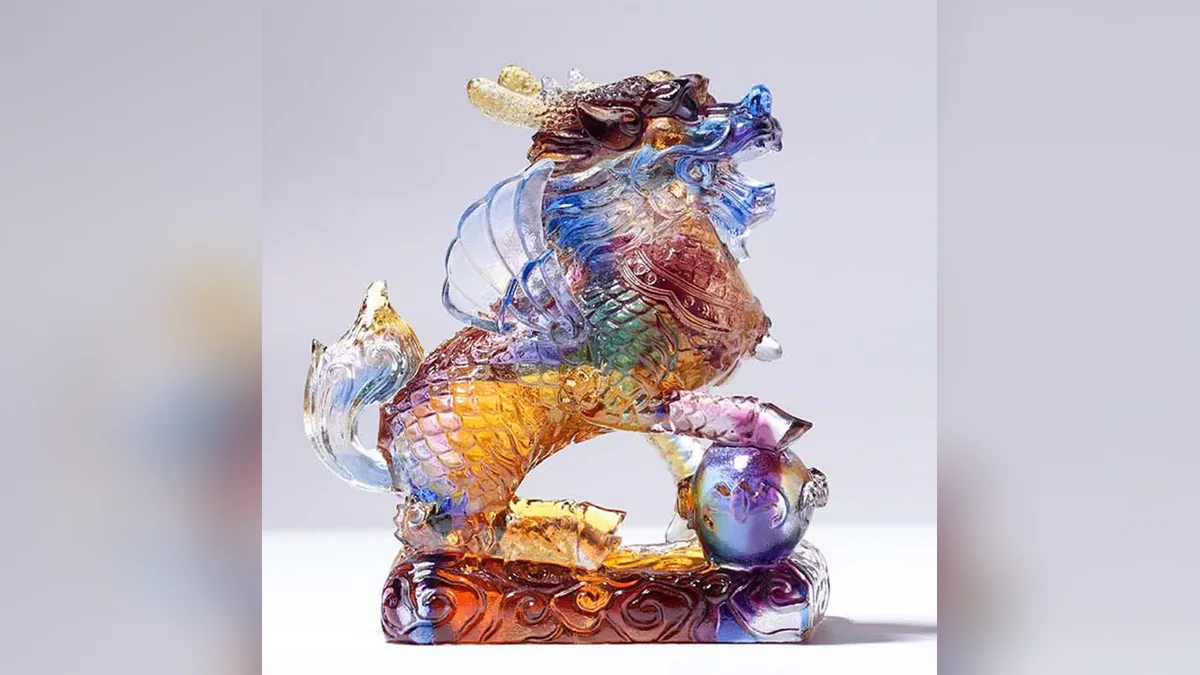
A qilin appeared before the birth of Confucius, according to legend. The story connects its appearance with wisdom and benevolence. To understand qilin meaning, start with that gentle character: the qilin (麒麟, kirin in Japanese) is a hooved mythical creature of Chinese tradition, a sign of a wise ruler or sage, benevolence, and good fortune. In folk custom, it also represents wishes for children through qilin song zi, “the qilin brings sons.” These are traditional associations; a qilin image cannot guarantee a child, good fortune, or another outcome.
Its appearance can seem surprising beside those meanings. A dragon-like face, scales, and flames might suggest a fierce animal, yet the stories emphasize gentleness. The following details can help you recognize it on a decorative figure, hanging charm, or embroidered design.
How to recognize a qilin
There is no single fixed outline for a qilin. Artists have combined its animal features differently across periods, so look for a group of clues rather than treating one horn or a patch of scales as proof.
- Dragon-like head: The face often resembles a Chinese dragon, even when the rest of the figure stands on four hooved legs.
- Scales: A patterned, scaled surface commonly covers the body. Scales alone are not enough to distinguish it from a dragon.
- Hooves: Check the feet when they are visible. Hooves are a useful clue when comparing a qilin with creatures that have lion-like paws.
- One or two horns: Depictions often show a single horn or a pair. Horn count varies, so it should support your identification rather than decide it.
- Ox-like or deer-like body: Depending on the period and depiction, the body may look substantial like an ox or more slender like a deer.
- Flames or clouds: Curling forms may surround the body or legs. Read these as features of mythical imagery rather than ordinary animal anatomy.
Legend says the qilin walks without crushing grass. That detail explains something its elaborate surface cannot: its gentleness extends even to the ground beneath its feet. Flames and horns belong to its appearance; careful movement belongs to its character in the stories.
For a practical identification, begin with the whole silhouette, then inspect the feet and head. On a small motif, some details may be simplified or hidden. If only the face is visible, leave room for uncertainty instead of relying on a dragon-like expression alone.
Qilin meaning and similar mythical creatures
Chinese decorative traditions include several creatures with overlapping features. The distinctions below combine visible clues with their usual symbolic associations. References to wealth, good fortune, or guardianship describe beliefs and customs, not promised results from owning an object.
| Creature | How to spot it | Usual association |
|---|---|---|
| Qilin | Hooved, ox-like or deer-like body; dragon-like head; scales; often one or two horns | Benevolence, a wise ruler or sage, and good fortune in Chinese tradition; wishes for children in folk custom |
| Pixiu | Winged, lion-like creature rather than a hooved animal | Wealth symbolism in feng shui tradition |
| Chinese guardian lion | Lion-like form, commonly seen in pairs at gates | Traditional guardianship at entrances |
| Dragon | Long, serpentine body rather than an ox-like or deer-like torso | Authority and auspicious symbolism in Chinese tradition |
Setting also helps. A pair of lion-like figures flanking a gate suggests guardian lions, while a long body curling through a design suggests a dragon. Our article on Chinese dragon symbolism covers that related creature in more depth. A qilin may borrow a dragon-like head without sharing the dragon’s overall shape.
Stories and customs
The Confucius birth legend connects the qilin with the arrival of a sage. Within that tradition, its appearance signals an exceptional person whose importance rests on wisdom. This helps explain why the creature can look formidable while standing for benevolence.
The custom called qilin song zi gives the image another context. Its wording specifically refers to sons, reflecting the language of the traditional wish. When describing the motif today, it is useful to explain that historical wording plainly and distinguish it from any prediction about a family’s future.
Context changes how an image is read. A qilin presented in connection with a birth may express a wish for children; the same creature on a decorative object may draw attention to benevolence or good fortune. For identification, the creature’s features and the accompanying explanation are useful starting points.
Qilin designs to compare
Our product pages use the name kirin as well as qilin. The formats below let you compare the motif across a display object, a phone hanging decoration, a tea pet, and an embroidered purse.
Handmade liuli display piece
Our Feng Shui Kirin handmade liuli crystal art piece uses liuli glassware, also described as crystal glass. Its dimensions are 10 × 5 × 11 cm, in length, width, and height, and its weight is 1000 g. The options are Colorful, Gold, Kirin&Ball, and Kirin&Ingot.
The word “crystal” here accompanies a glass material description. For the material background, read what liuli glass is. “Fortune” in the full product name reflects a customary wish, not a result the decoration can deliver.
Natural jade phone hanging decoration
The Natural Jade Kirin phone hanging decoration is jade, with a listed length of 10 cm. The charm measures 28.2 × 24.4 × 5.8 mm, and the listed weight is 8.9 g. The listing notes that, given the nature of jade, color and detail can differ from piece to piece. Its full name includes “Prosperity,” a symbolic wish rather than a financial promise.
Resin tea pet
Our Small Kirin resin tea pet measures 12 × 8 × 11.5 cm. The page offers cyan, gold, green, or orange and lists both a color-changing option and a no-color-change option. It describes the color-changing piece as changing with heat, so check the selected option for that feature.
Tea pets are figures kept on a tea tray and rinsed with tea as part of tea-table custom. Here, the qilin motif becomes part of that setting. The figure’s resin material is worth distinguishing from the clay used for some other tea pets.
Su embroidery purse
The Mythical Beast Su Embroidery purse is polyester and measures 23 × 23 cm. It weighs about 360 g, has one zippered pocket and multiple card slots, and closes with a zipper. Pattern options include qilin, dragon, phoenix, and crane, each offered in cobalt blue, golden, orange, red, or turquoise. Select the qilin pattern if that is the creature you want.
Su embroidery is the embroidery tradition of Suzhou. The product page says the purse cannot be soaked for cleaning. When reading a qilin motif, begin with the overall body, then look for hooves, a dragon-like head, scales, and horns. Together, those details connect the recognizable creature with the gentle character described in its legends.
Shop the story
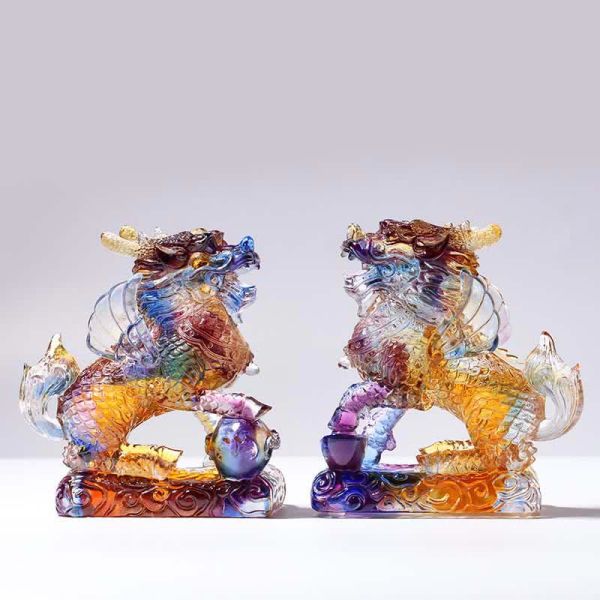 Buddha Stones Feng Shui Kirin Handmade Liuli Crystal Art Piece Fortune Home Office DecorationAs low as $209.59 Regular Price $279.45
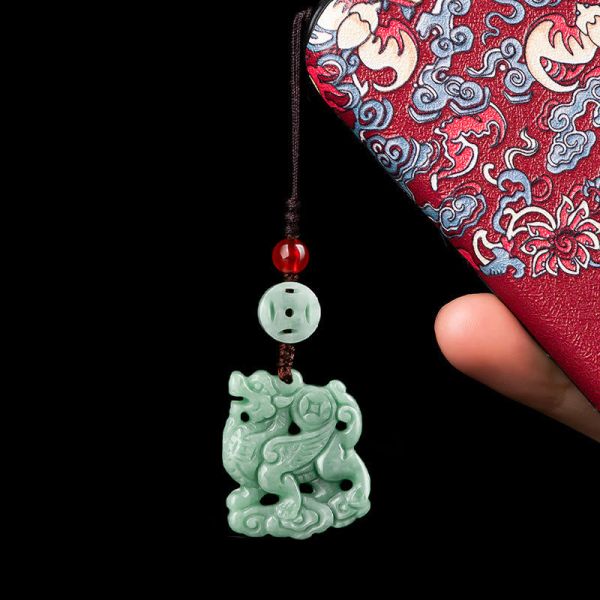 Buddha Stones Natural Jade Kirin Prosperity Phone Hanging DecorationSpecial Price $32.59 Regular Price $44.64
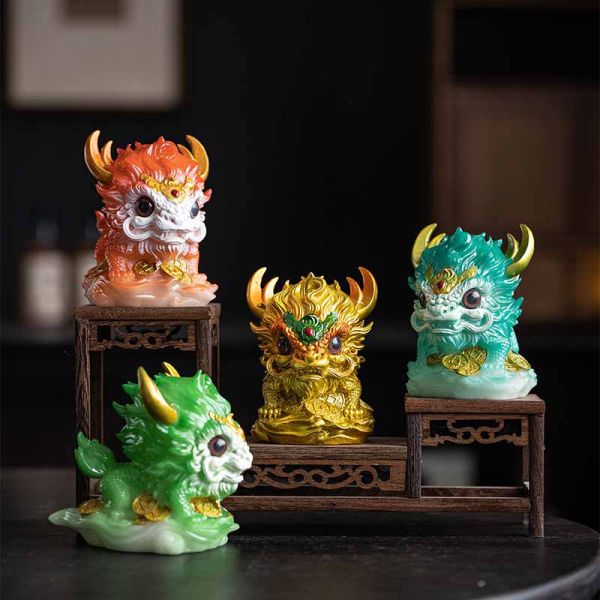 Buddha Stones Color Changing Small Kirin Resin Tea Pet Home Figurine DecorationAs low as $49.59 Regular Price $67.01
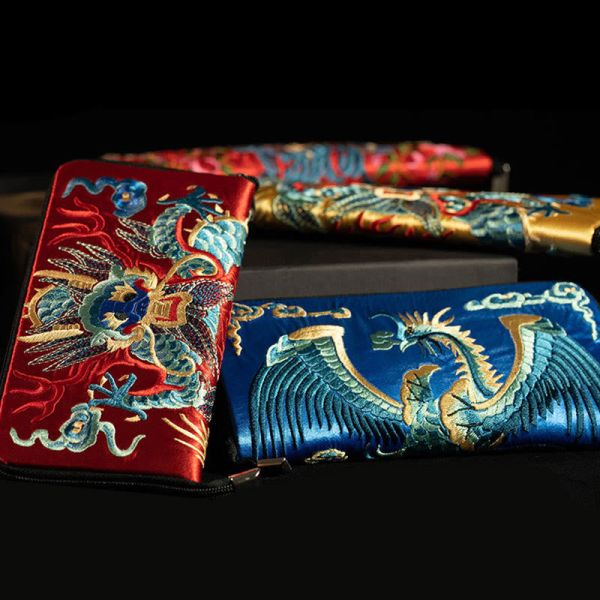 Buddha Stones Mythical Beast Phoenix Dragon Qilin Su Embroidery Ticket Folder Storage Journey Shopping Purse HandbagAs low as $75.59 Regular Price $100.79