
Plum Blossom Meaning: Flowers Before Spring Arrives
Plum trees flower on bare branches in late winter, often while snow still lies around them. Known in Chinese as mei (梅), their blossoms appear before the fullness of spring. In Chinese tradition, plum blossom meaning centers on resilience, hope, and integrity because the tree blooms in the cold before other flowers. The plum blossom is also the national flower of Taiwan and belongs to the Three Friends of Winter with pine and bamboo. These associations begin with an ordinary fact of the season: a branch can bear flowers while the landscape around it still looks wintry.
Flowers in the cold: plum blossom meaning
The flowers do not wait for a canopy of leaves. Their placement against bare wood makes the season visible: blossom and winter occupy the same branch. That contrast helps explain why the plum became an emblem of endurance. In traditional readings, its significance lies in flowering under difficult conditions, with spring still ahead.
Hope follows from that timing. A flower in late winter suggests that the season will change, even though the cold has not entirely passed. Integrity is a related moral association. Chinese literary and artistic traditions have treated the plum as an image of maintaining one's character when circumstances are difficult. The tree supplies the image; people supply the ethical meaning.
The Three Friends of Winter bring different forms together. Pine remains green, bamboo retains its presence through the cold, and plum offers its early flowers. Their companionship in art expresses an admiration for constancy. These meanings belong to cultural tradition, leaving room for a blossom to be appreciated simply as a flower, too.
The name deserves a little care. Although mei is often translated as plum, the tree is Prunus mume, closer to apricot than the familiar fruiting plums that the English word may suggest. In Japan it is called ume and generally blooms before cherry blossom. The two flowering seasons have their own character; a plum blossom motif need not be read as a cherry blossom design.
The plum in poems and paintings
Plum blossom appears in Chinese poetry as a seasonal presence and a subject for reflection. Cold branches, scattered flowers, and the approach of spring give poets a way to consider persistence without describing it directly. A blossom can carry a moral association while remaining rooted in weather and place. Its meaning does not require a single story or an agreed interpretation of every poem.
Scholars also painted ink plum, using branches and blossoms as a subject through which brushwork could express character. Ink allows the flower to be recognized without reproducing its color. The direction of a branch, the spacing of flowers, and the open paper around them can hold the composition together. Sparse marks leave the viewer room to look.
In the Four Gentlemen of Chinese painting, plum appears with orchid, bamboo, and chrysanthemum. Within this grouping, plum stands for winter. The flowers are associated with qualities admired in a cultivated person, so a botanical subject also becomes an ethical one. That connection helps explain why a modest flowering branch has such a substantial place in scholarly art.
Looking at a plum design, you can notice both the blossom and the space around it. A branch with a few flowers has a different rhythm from a field filled with petals. Neither arrangement needs an elaborate explanation. The older paintings offer a useful way of seeing: attend to the structure first, then consider the associations it carries.
Five petals
The familiar five-petaled blossom adds another layer to plum blossom meaning. In folk custom, its five petals are said to stand for five blessings. Accounts of those blessings can differ, so this is better understood as a traditional association than a fixed code that governs every image. A designer may use the flower for its outline without intending a detailed symbolic message.
The circular arrangement is easy to recognize even when the blossom is reduced to a small decorative form. In a painting, individual flowers belong to a branching composition. On an accessory, a single flower may carry the reference. Both can point back to the same seasonal subject, though the scale and setting change.
For a gift, the motif can express a wish for perseverance or hopeful beginnings. That is a statement of intention from the giver, not a prediction about the recipient's future. Traditional blessings carry no guarantee. The flower represents an idea, and the object gives that idea a visible form.
Wearing and using the motif
A plum design can enter daily life through a hair accessory, a ring, a bag, or teaware. The cultural reference remains available without requiring a ceremonial occasion. Choosing among these forms is partly a matter of where you want the flower to appear: within a hairstyle, on a hand, across fabric, or at the tea table.
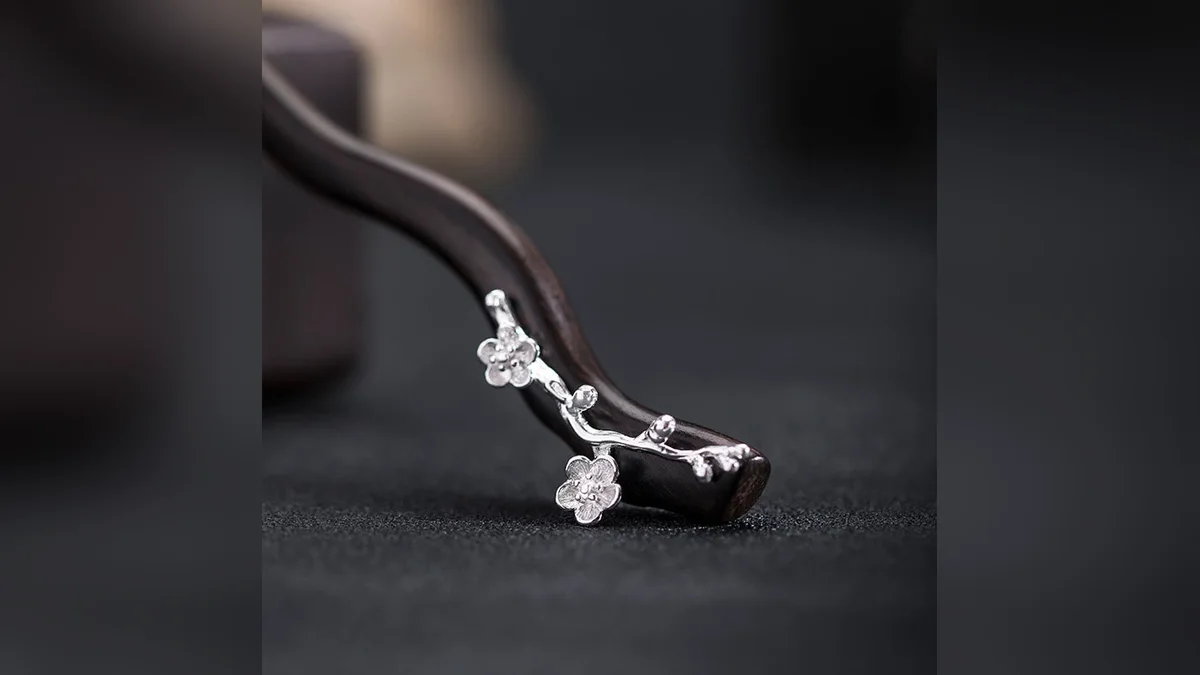
Our 925 sterling silver and ebony plum blossom hairpin has a classical Chinese style and measures about 1.6 × 17.5 cm. Its materials are 925 sterling silver and ebony. The word Blessing in its full name expresses a traditional wish. For the practical steps of arranging hair around a stick, our hair stick guide explains the technique.
The Plum Blossom Leaf Pattern copper ring is adjustable and unisex, with gold, rose gold, or silver color options. Copper is the stated material; silver here names a color. Luck in the full product name likewise refers to a traditional wish rather than an assured result. The flower can be chosen for its seasonal association or simply for the pattern.
For the table, our Beige Plum Blossom Shape ceramic gaiwan page offers several options. The plum blossom shape gaiwan measures 9.8 × 9.2 cm, holds 120 ml, and has a base diameter of 13 cm. A peach branch version has the same size and capacity. The beige cup bowl measures 8.4 × 7.2 cm and holds 100 ml. Gift box versions use a 15.5 × 16 × 12 cm box. According to the page, any other teaware seen in the pictures serves only as staging and does not ship with the order. Our gaiwan brewing guide covers handling and pouring.
The Plum Blossom Embroidery bamboo handle handbag crossbody bag lists embroidery fabric and metal as its materials. It measures 23 × 7 × 26 cm, with one main pocket and one interior pocket. The non-adjustable crossbody strap is 120 cm long, and the closure is a buckle. The embroidered flowers are stylized, with large pale petals, so judge the motif from the product photos.
When choosing a motif for yourself or as a gift, a few details can guide the decision:
- Consider whether a flower or a branching composition appeals to you.
- Check the dimensions and the selected product option.
- Let any accompanying message describe a wish, rather than promise a result.
The winter setting gives the plum its particular character. Even on an object used well beyond the flowering season, its petals recall bare branches carrying flowers before spring has fully arrived.
Shop the story
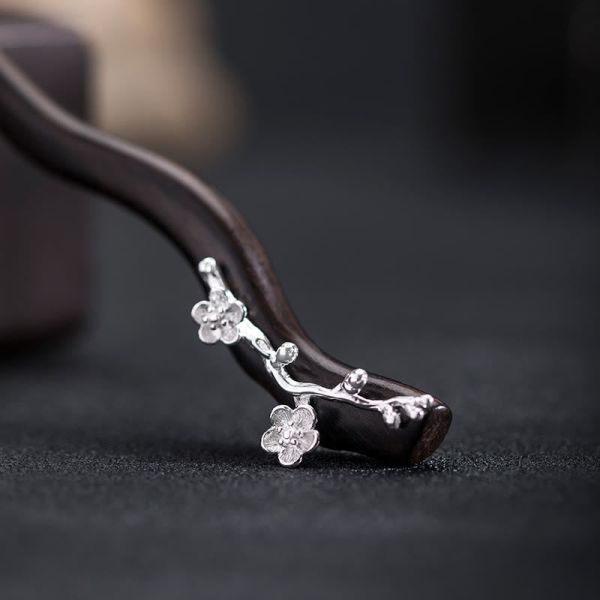 Buddha Stones 925 Sterling Silver Classical Chinese Style Ebony Plum Blossom Blessing HairpinSpecial Price $78.59 Regular Price $110.69
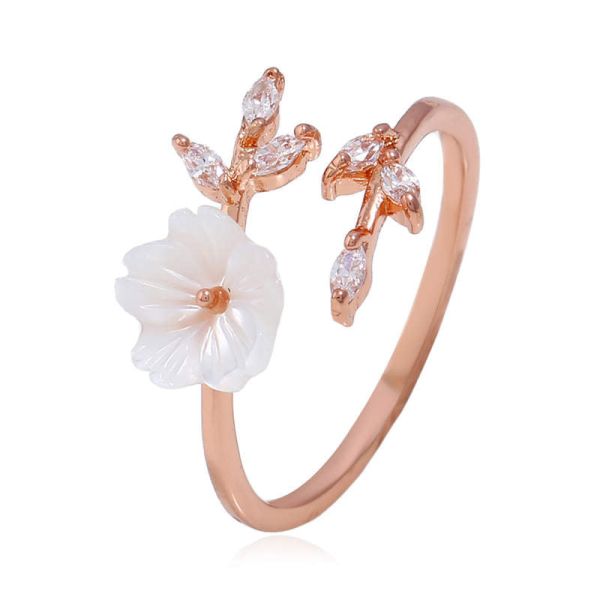 Buddha Stones Plum Blossom Leaf Pattern Copper Luck RingAs low as $25.59 Regular Price $34.12
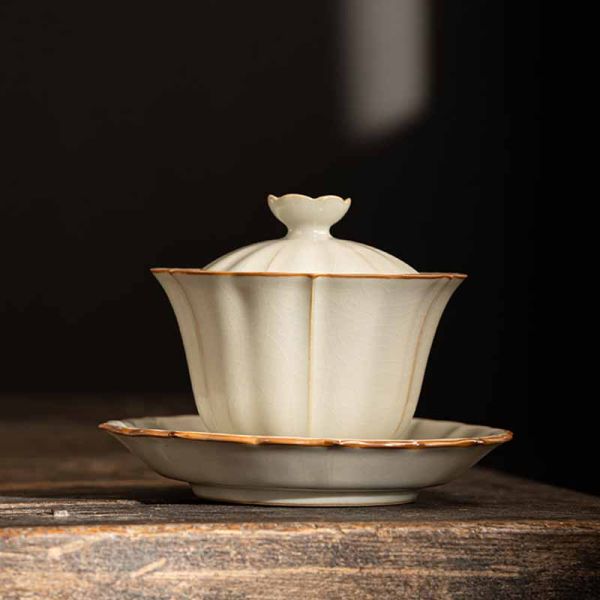 Buddha Stones Beige Plum Blossom Shape Peach Branch Ceramic Gaiwan Sancai Teacup Kung Fu Tea Cup With LidAs low as $49.59 Regular Price $66.12
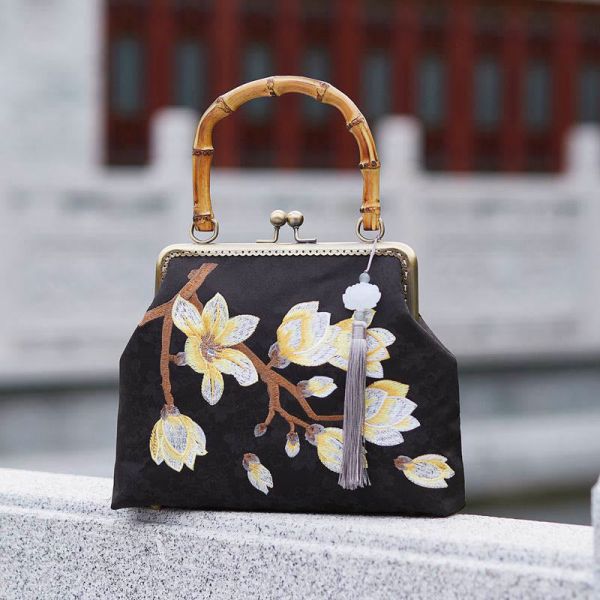 Buddha Stones Plum Blossom Embroidery Bamboo Handle Handbag Crossbody BagSpecial Price $59.59 Regular Price $79.45