How to Use a Hair Stick: A Step-by-Step Guide
A single wooden stick holding up a full bun is a small trick that looks harder than it is. Once you know how to use a hair stick, the gather-twist-coil-pin sequence takes about as long as tying a shoelace, and it will hold through a full day of errands, work, or travel without a single bobby pin or elastic backup. The method is old, the tool is simple, and the only real skill is in the angle of that last push through the coil, which is the part most people skip when they first try it.
In China, the single hairpin, known as a zan, has been used for centuries to hold long hair in place without combs, elastics, or clips. Coming-of-age customs once marked the move into adulthood with the pinning up of a young person’s hair, a small ceremony that turned loose hair into a styled, adult look and signaled a change in how that person was seen by family and community. The stick did all the work on its own: one piece of wood, passed through a coil of hair and locked at an angle, held the whole style together without any other hardware.
How to use a hair stick for a classic twist bun
This is the style most people picture when they think of a hair stick, and it works on hair from shoulder length up, from fine hair to thick. Once you have practiced it a few times on your own head, you can do it by feel, without looking in a mirror or counting the steps out loud.
- Gather your hair into a ponytail at the height you want the bun to sit, using your hand rather than an elastic.
- Twist the gathered length firmly, keeping the twist even from root to tip so it does not go slack in the middle.
- Coil the twisted length around the base of the ponytail, winding it into a flat spiral against your head.
- Hold the coil in place with one hand and slide the tip of the stick in at the top edge of the bun, catching a small section of hair from the coil and the base underneath it.
- Keeping that hair on the stick, turn the stick about halfway around so the tip now points down toward the nape of your neck.
- Push the stick down through the bun, close to your scalp, so it crosses through the coil rather than just resting on top of it.
That cross-through step is what keeps the bun anchored. A stick that only sits on the surface of the coil, without passing through it, is the most common reason buns loosen and tip sideways during the day. Once the stick crosses under and through the coil, the weight of the bun actually helps hold the stick in place instead of working against it.
A quicker half-up style
- Take the top section of hair, roughly from ear to ear, and twist it back toward the center of your head.
- Fold the twisted section under itself once to form a small loop, then pin the loop in place with the stick, running it through the folded hair and into the layer underneath.
This version leaves the rest of your hair down and takes only a few seconds once your hands know the motion. It works well for hair that is too short for a full bun, or on days when you only want part of your hair out of your face.
If the bun keeps slipping
Hair that is freshly washed or naturally silky has less grip, and a smooth coil can slide right off a smooth stick. A little texture, from a day-old wash or a light texturizing spray, gives the twist something to hold onto. A tighter initial twist also helps, since a loose twist unwinds under its own weight before the stick ever goes in, and a heavier head of hair needs a firmer twist than a light one to stay put.
If the stick pokes out at an odd angle
This usually means the stick is too long or too short for the amount of hair in the bun. A longer stick needs a bigger coil to sit flush against the head; a short stick can look buried in thick hair or barely hold thin hair at all, since there is not enough coil for it to cross through properly. Matching the stick to your hair is mostly a matter of length and weight, which is where it helps to know the specifics of the stick you are holding before you buy it.
Choosing a hair stick for your hair length and thickness
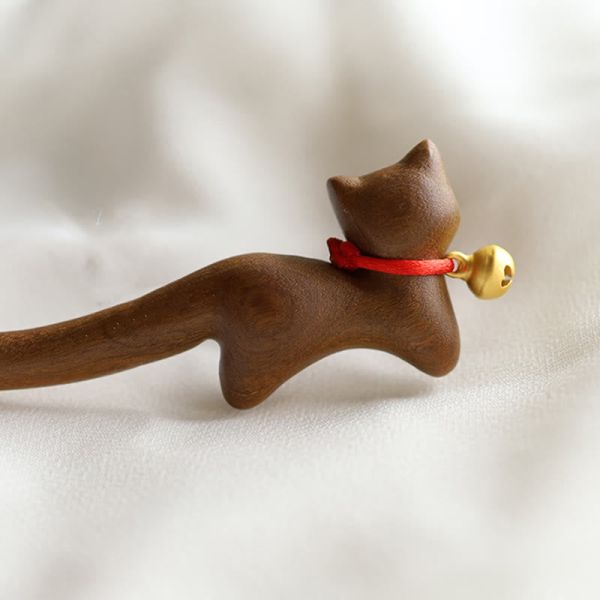
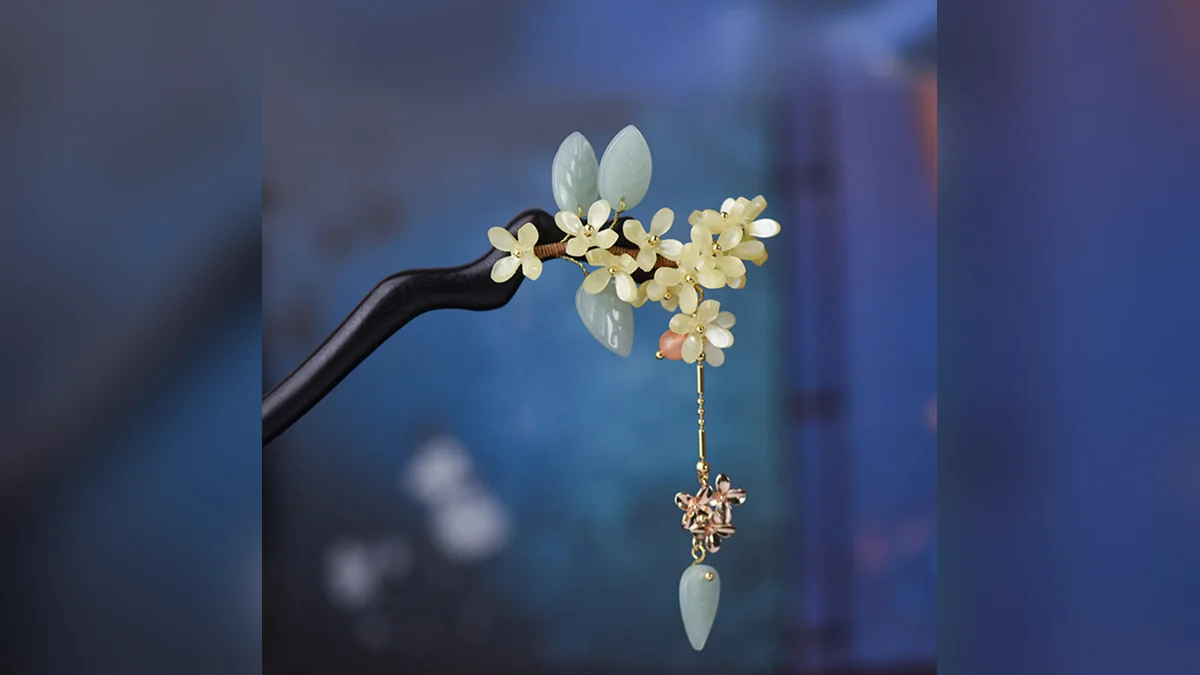
Part of learning how to use a hair stick well is picking one that fits your hair in the first place, since the same technique behaves differently depending on how much hair you are working with. Hair sticks are not one length for everyone. The ebony osmanthus tassel hairpin measures about 22 centimeters, which suits longer or thicker hair that needs a bigger coil to anchor into, and its extra length gives you more surface to cross through on a full bun. The cat-shaped sandalwood hairpin is shorter, about 18 centimeters, a comfortable size for shoulder-length or medium-thickness hair and for the half-up style above, where you do not need as much length to work with. The ebony red string tassel hairpin is also about 18 centimeters and weighs about 18 grams, with a tassel that will swing slightly as you move, so it suits a bun worn a little looser rather than pinned flat. The red sandalwood and green agate ginkgo leaf hairpin is 17.2 centimeters and weighs 15 grams, on the lighter end, which makes it a good match for fine or thin hair that a heavier stick could slip out of over the course of a day. As a general rule, longer and thicker hair can carry a longer, heavier stick, while fine hair holds a shorter, lighter one more reliably, and it is worth trying a style a few times with a given stick before deciding it is the wrong length.
If you want to compare the full range of pins and sticks we carry, our hairpins collection brings them together, alongside the rest of our jewelry pieces.
Caring for your hair stick
These sticks are made of natural wood, and the color of ebony and sandalwood varies from piece to piece; the product notes for the cat-shaped sandalwood pin also mention that the wood darkens slightly with oxidation over time, so the shade you receive may differ a little from any photo. Keep the wood dry, and take the stick out before you sleep or wash your hair, the same way you would with any wooden accessory, rather than leaving it in overnight. When you are not wearing it, store it flat rather than standing it on end or leaving it loose in a bag, where the tip can chip or a tassel can tangle around other items.
Once the twist-coil-pin motion becomes familiar, a hair stick stops feeling like an accessory you have to think about and becomes closer to a tool you reach for without looking. The stick itself barely changes from one day to the next; what changes is how quickly your hands find the right angle, and how little thought the whole routine eventually takes.
Shop the story
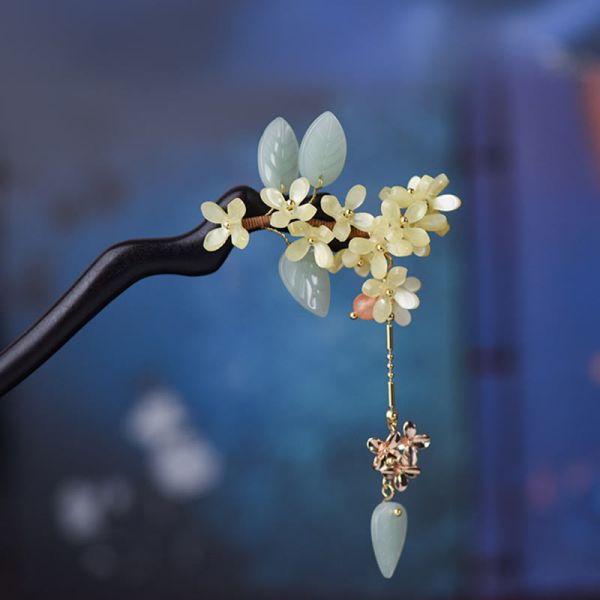 Buddha Stones Natural Ebony Wood Osmanthus Tassel Balance HairpinSpecial Price $29.59 Regular Price $39.99
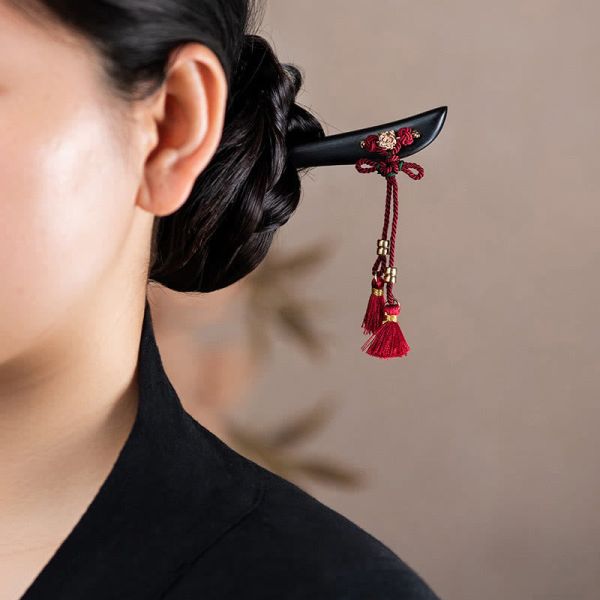 Buddha Stones Ebony Red String Chinese Knot Tassel Protection HairpinSpecial Price $25.59 Regular Price $36.04
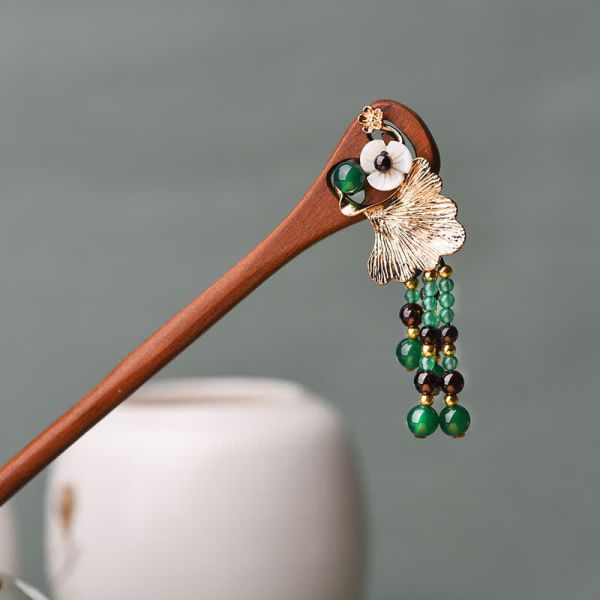 Red Sandalwood Green Agate Ginkgo Leaf Protection HairpinSpecial Price $31.59 Regular Price $43.88