
Pine Symbolism in Chinese Art, Pairings, and Tea
Pine branches form uneven tiers around a twisting trunk in traditional paintings. In Chinese tradition, pine symbolism centers on longevity, steadfastness, and integrity: the evergreen tree stands for endurance through difficult conditions. Its meaning comes from the tree’s appearance and its place in literature and art. Wishes for luck, wealth, or protection attached to auspicious decoration are matters of belief; a motif cannot guarantee those results.
Pine Symbolism Begins with the Winter Tree
The pine stays green through winter, giving artists and writers a clear image of constancy. Its rough bark and spreading limbs also suggest age. These visible qualities help explain why a pine can represent both a long life and a person who remains faithful to their principles.
One familiar literary foundation appears in the Analects, where Confucius uses pines and cypresses enduring the cold to describe qualities revealed by hardship. The comparison connects the tree to moral character. A person’s commitments become clearer when circumstances are difficult, just as the evergreen becomes more conspicuous when other trees lose their leaves.
There is no need to assign the motif a single origin story. Its associations developed across overlapping traditions of poetry, painting, and auspicious decoration. Chinese Buddhist settings can also contain pines, but a pine in a temple landscape should be read alongside its figures, inscriptions, and setting. The tree’s broader cultural meanings remain relevant there.
Where Pine Branches Appear and What to Notice
Landscape paintings and decorative art
A pine in a landscape may lean over a rocky slope, stand beside a pavilion, or frame a distant mountain. An old trunk gives the composition a sense of age, while clusters of needles establish the evergreen character. Notice the tree’s surroundings before assigning a specific message: a solitary pine emphasizes endurance differently from a pine sheltering cranes.
On ceramics and other decorative objects, the whole landscape may be reduced to a few branches. The recognizable details still matter. Long needles distinguish the pine from broad leaves, and a gnarled trunk can carry the association with longevity even when the tree occupies little space.
Textiles and embroidered designs
Pines also appear in woven and embroidered decoration, sometimes as part of a scene with rocks, birds, or other plants. On a textile, repetition may turn a branch into a recurring pattern. A larger composition gives its companions more room to establish a birthday wish, a seasonal theme, or an emphasis on steadfast character.
Jewelry and personal ornaments
Jewelry can use a pine branch, a complete tree, or a small landscape containing pines. A narrow pendant may show only a trunk and needle clusters, so look for those identifying details. The cultural association belongs to the depicted motif; the jewelry’s material does not automatically add a separate meaning or promise.
Festivals and birthday wishes
In seasonal pictures and New Year decoration, pine may join other auspicious motifs to express good wishes for the coming year. Its winter greenery also suits designs featuring the Three Friends of Winter. Birthday imagery often places pine beside cranes or longevity characters, making the wish for a long life more explicit. These are conventional expressions of goodwill.
Companion Motifs Give the Pine a More Specific Message
Pine, bamboo, and plum blossom
The Three Friends of Winter bring pine, bamboo, and plum blossom together. Pine remains green, bamboo retains its leaves through cold weather, and plum blossoms flower in late winter. Together, they traditionally express endurance and integrity under difficult conditions. Their shared winter setting explains the grouping more clearly than treating the plants as interchangeable decorations.
Our article on bamboo symbolism looks more closely at bamboo’s associations. In a combined design, notice how the plants differ: pine needles form clusters, bamboo leaves taper from jointed stems, and plum flowers sit on woody branches. Those distinctions help you recognize the trio even in a compact pattern.
Pine and cranes
Pine and cranes form a familiar longevity pairing in Chinese art. Both carry long-life associations, so their combination reinforces a birthday or longevity wish. A crane standing beneath a pine belongs to this shared visual vocabulary. The bird’s broader cultural associations are covered in our crane symbolism article.
Pine, rocks, and mountains
Rocks and mountains can extend the impression of durability around a pine. They also establish a landscape rather than a stand-alone emblem. Read the complete arrangement: a pavilion, a traveler, or an inscription may give the scene a particular subject. The pine’s meaning contributes to that subject without explaining every detail on its own.
Pine Motifs on Our Ceramic Teaware
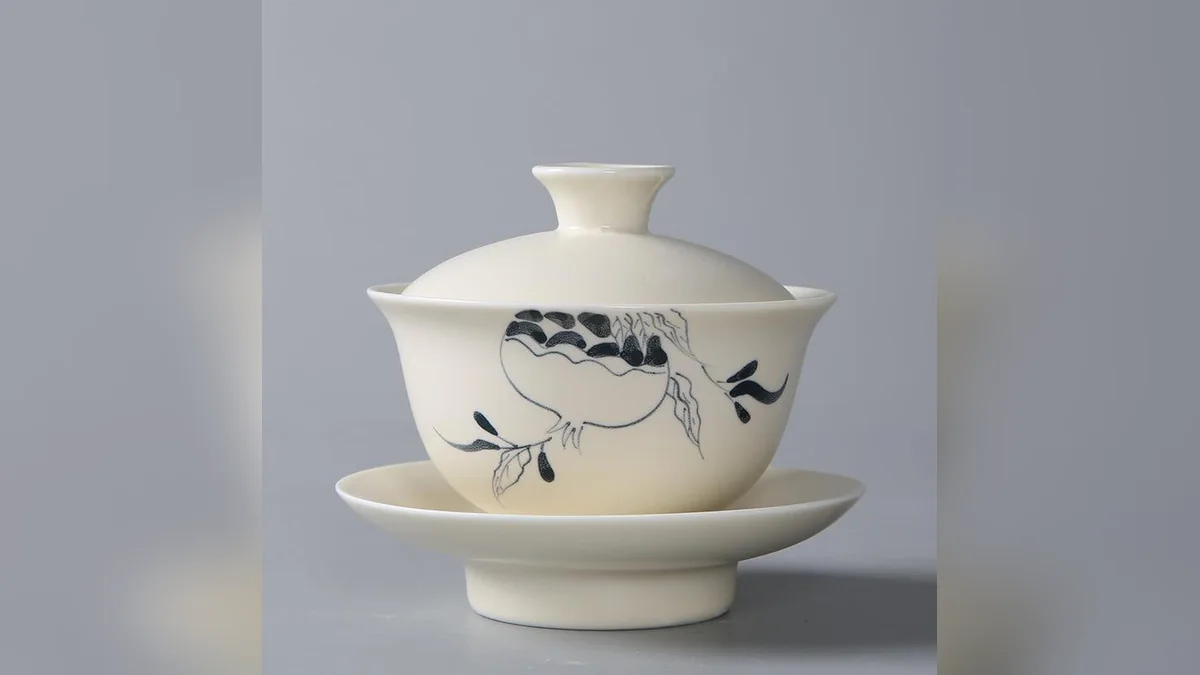
Hand Painted Pomegranate, Hibiscus, Pine, and Lotus Gaiwan
Our Hand Painted Pomegranate Hibiscus Pine Lotus Ceramic Gaiwan has Pine, Pomegranate, Hibiscus, and Lotus among its named options. The material is ceramic, and the listed sizes are 13*9cm*200ml and 9*10cm*170ml. The stated cup capacity is 170-200 milliliters. The product includes one tea cup, one lid, and one saucer.
Retro Plum Blossom, Pine, and Bamboo Gaiwan
The Retro Plum Blossom Pine Bamboo Ceramic Gaiwan offers a Plum Blossom Pine Bamboo option alongside Kirin and Phoenix options. Its ceramic cup has a stated capacity of 190 milliliters, with the size given as 10cm*9.7cm*190ml. One tea cup, one lid, and one saucer are included.
Trees, Pavilion, Mountains, Rivers, and Pine Teacup
The Trees Pavilion Mountains Rivers Pine Ceramic Teacup includes a Pine Trees option measuring 7.5cm*5.6cm*140ml. Other options are Mountains And Rivers, Pavilion, and People And Trees. The material is ceramic, and capacities across the options range from 130-195 milliliters. The purchase includes one tea cup; additional accessories appearing in the photographs are display items excluded from the purchase.
Vintage Plum Blossom, Pine, and Bamboo Teacup
Our Vintage Plum Blossom Pine Bamboo Ceramic Teacup offers Plum Blossom Pine Bamboo in 5.8cm*5.5cm*95ml and 6.1cm*6.5cm*130ml options. Phoenix and Kirin also come in those two listed sizes; Lion Dancing comes in 6.1cm*6.5cm*130ml. The material is ceramic, and one tea cup is included.
Reading the Branches Together
The pine’s meaning becomes easier to recognize when you begin with the tree’s winter greenery, then consider its companions. A lone pine, the Three Friends of Winter, and a pine with cranes share a cultural foundation while expressing different emphases. On a painting, an ornament, or a tea cup, those details let you identify a traditional wish without turning it into a promised result.
Shop the story
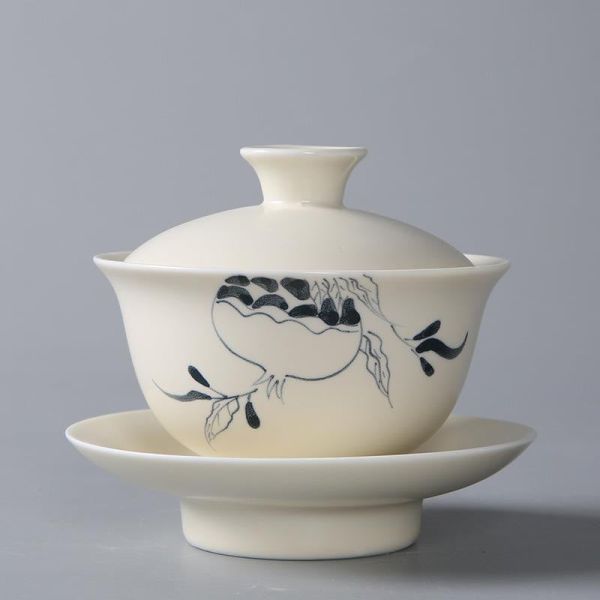 Buddha Stones Hand Painted Pomegranate Hibiscus Pine Lotus Ceramic Gaiwan Sancai Teacup Kung Fu Tea Cup And Saucer With LidAs low as $58.59 Regular Price $81.38
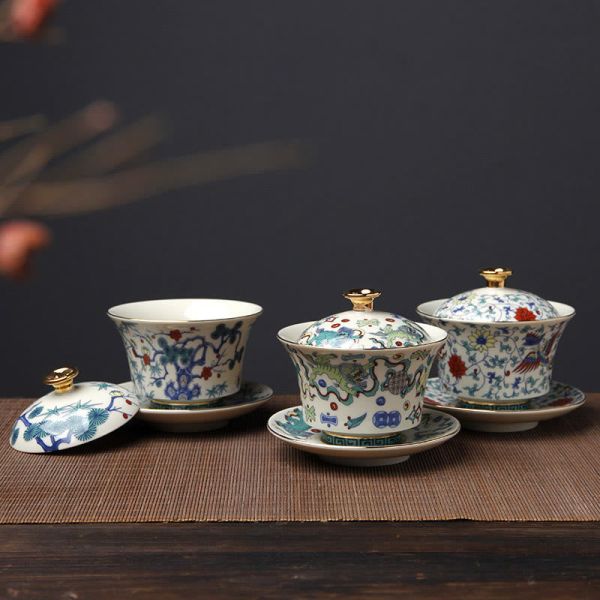 Buddha Stones Retro Plum Blossom Pine Bamboo Phoenix Kirin Ceramic Gaiwan Sancai Teacup Kung Fu Tea Cup and Saucer with LidAs low as $41.59 Regular Price $56.20
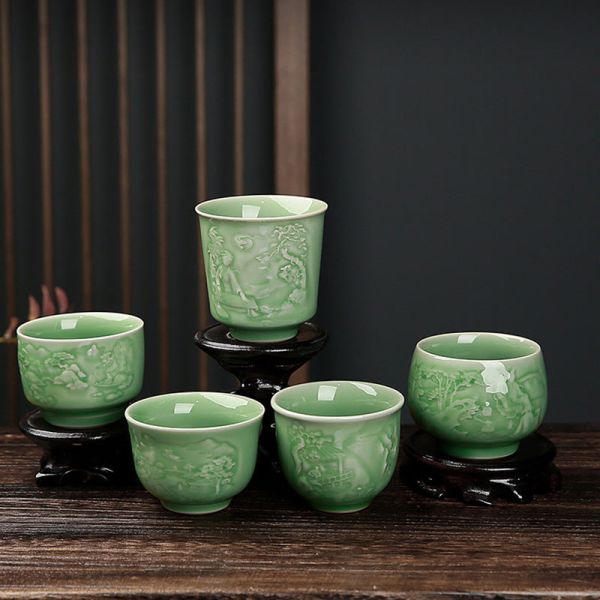 Buddha Stones Trees Pavilion Mountains Rivers Pine Ceramic Teacup Kung Fu Tea CupAs low as $43.59 Regular Price $59.71
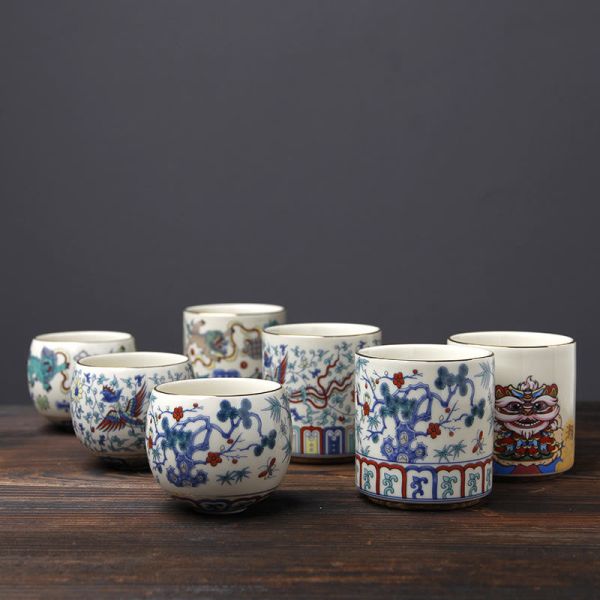 Buddha Stones Vintage Plum Blossom Pine Bamboo Phoenix Kirin Lion Dancing Ceramic Teacup Tea CupsAs low as $32.59 Regular Price $43.45