
Crane Symbolism in China and Japan: Art and Meaning
A red-crowned crane stands on one leg in shallow water, its neck curved above the surface. That distinctive posture helps explain its appeal in art. Across East Asian culture, crane symbolism centers on long life, wisdom, and grace. In Chinese tradition, the bird is also linked to Daoist immortals and high rank. These are inherited cultural associations; a crane motif does not promise a particular outcome.
China and Japan share an affection for the crane, but their traditions give the bird different settings and roles. An immortal’s mount, an official’s badge, a paper wish, and a wedding garment each tell a different part of the story. Looking at those settings makes the motif easier to understand.
China: crane symbolism in legend and rank
In Daoist legend, cranes serve as mounts or companions of immortals. Images of an immortal riding a crane connect the bird with an existence beyond ordinary human limits. The crane’s association with longevity belongs within that legendary world, where a long life and immortality are recurring ideals.
This connection also explains why a crane can suggest more than an attractive bird in a landscape. Its presence may give a scene a celestial character, especially when it appears among clouds. A crane in flight can link the earthly landscape below with the realm of immortals above. The surrounding figures and scenery help establish that reading.
Another Chinese association comes from official dress. In the Ming and Qing dynasties, the crane appeared on civil officials’ rank badges as the emblem of the highest civil rank. Here, the motif carried a specific public meaning: it identified a place within the hierarchy of government service. That use helps account for the crane’s broader association with distinction and high standing.
The legendary mount and the official emblem belong to different contexts. One points toward the world of immortals; the other identifies human office. Recognizing the setting keeps those meanings clear. A bird on a rank badge should be understood through the dress tradition, while a crane carrying an immortal calls for a reading grounded in Daoist legend.
Japan: tsuru, paper wishes, and wedding motifs
In Japan, the crane is called tsuru. A familiar folk saying gives it a life of a thousand years. This is a traditional expression of longevity, rather than a statement about the bird’s actual lifespan. It places the crane among images used to express hopes for a long and flourishing life.
The crane also has a familiar folded-paper form. Senbazuru refers to a thousand paper cranes, folded as an expression of a wish. The individual birds are often gathered into hanging arrangements, so the repeated bird becomes the main form of the display. The emphasis falls on the wish expressed through the folded cranes and the care taken to assemble them.
Paper changes how the crane motif is encountered. In a painting, the bird may belong to a landscape or legend; in senbazuru, the repeated act of folding gives shape to a wish. A single paper crane may serve as decoration, while senbazuru names the thousand-crane arrangement. Keeping that distinction in mind helps when describing a gift or reading a display.
Cranes also appear in Japanese wedding kimono motifs. In that setting, their associations with longevity and enduring partnership suit the occasion. The meaning comes partly from the garment and the celebration around it. Compared with the Chinese official’s badge, the wedding motif expresses a wish for shared life through a different use of the same bird.
Crane pairings in Chinese art
A crane rarely needs to carry the entire meaning of a composition alone. Trees, clouds, and accompanying figures can make the intended association more specific. Two especially useful combinations to recognize are pine with crane and cranes among clouds.
Pine and crane: song he
Pine and crane, often referred to together as song he, form a classic Chinese longevity pairing. The pine’s evergreen character and the crane’s traditional long life reinforce a shared theme of enduring years. Together, they make an established subject for birthday wishes to elders.
In a gift setting, this pairing can express respect and a wish for long life. The relationship between the tree and the bird matters: once you recognize it, a pine beside a crane becomes part of the message rather than background scenery.
Cranes and clouds
Clouds place cranes in an expansive sky and can strengthen their connection with the realm of immortals. A cloud-filled composition invites a different reading from a crane standing beneath a pine. The former emphasizes a celestial setting; the latter makes the longevity pairing more explicit.
These are useful starting points, not a fixed code for every image. A motif’s setting, companions, and use all matter.
Carrying the crane motif day to day
A fan, bag, or tea vessel gives the crane motif a place in ordinary use. The cultural background can guide your choice, while dimensions, materials, and construction help you decide how the object fits your plans.
A folding fan with plum blossom and crane
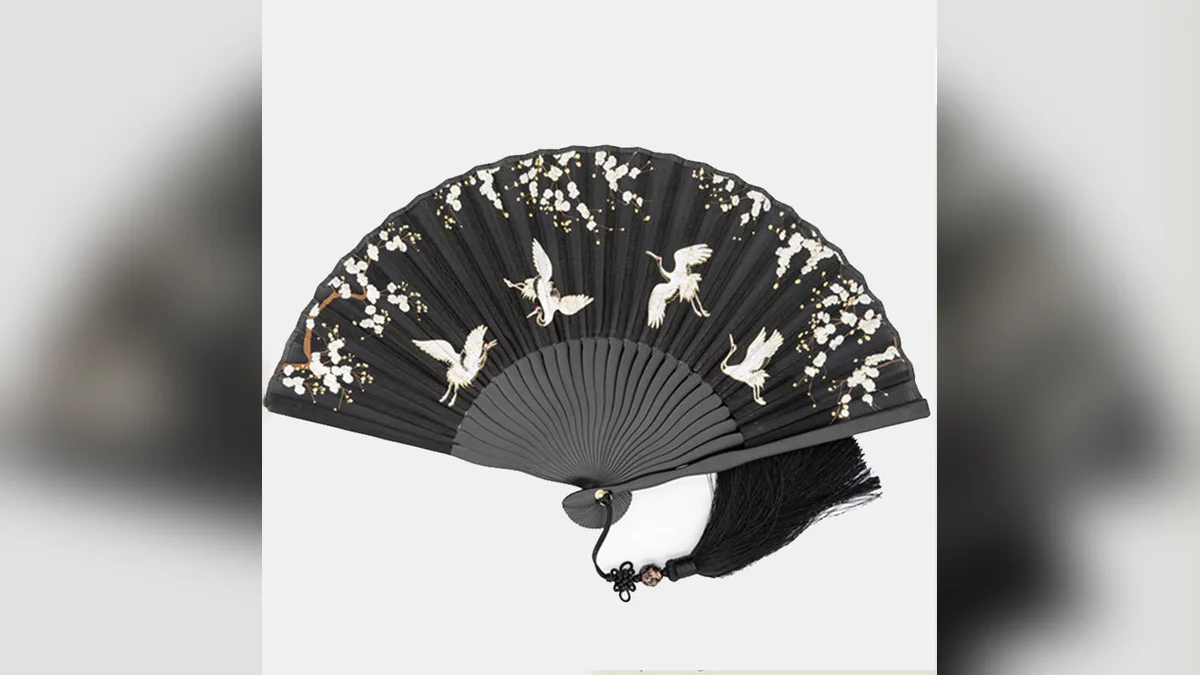
Our Plum Blossom Crane silk handheld bamboo folding fan lists silk, bamboo, tassels, and bead accessories as its materials. Its folded length is 18 cm, and it opens to 32 cm. The box size is 25 × 10 × 2.5 cm. Those measurements distinguish the folded fan, open fan, and box when you are considering storage. Our Chinese folding fan guide offers more context for the fan form.
A crane-and-cloud handbag
The Auspicious Clouds Cranes embroidery bamboo handle bag brings the crane-and-cloud combination into an accessory. It measures 24 × 8.5 × 16.5 cm and lists embroidery fabric, polyester, and wood as its materials. It has one main pocket, one interior pocket, a non-adjustable strap, and a buckle closure. Black, white, or yellow options let you choose the color, while the fixed strap is a practical detail to consider before selecting it.
A crane gaiwan with lid and saucer
The ceramic Red Auspicious Crane gaiwan has a 100 ml capacity. The cup measures 8.4 × 8.8 cm, and the saucer measures 12.4 cm. A cup, lid, and saucer are included. The crane theme becomes part of an object used to prepare and serve tea. Our gaiwan how-to walks through handling this type of vessel.
A teacup with the pine-and-crane pairing
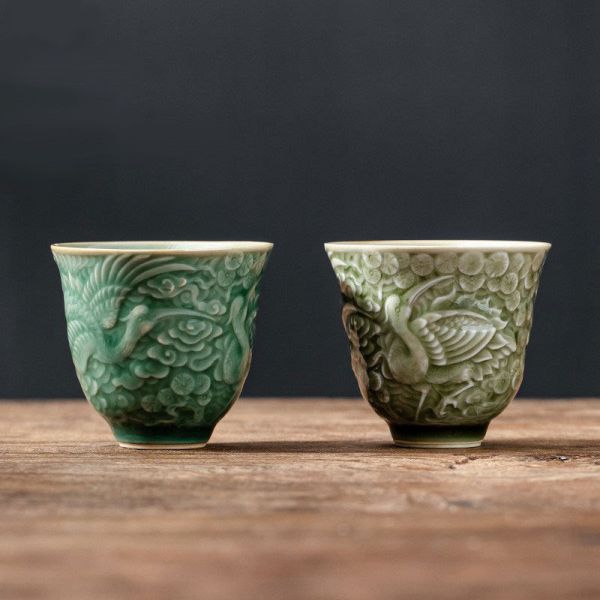
Our Crane Pine ceramic teacup connects directly with the song he pairing discussed above. It measures 7 cm × 6.3 cm, holds 80 ml, and comes in green or light yellow. Photo props are not included. The pine and crane give the cup a particular cultural reference: a traditional wish for long life, expressed through a tree and bird together. That connection can be part of the reason for choosing the design, especially as a birthday gift for an elder.
Shop the story
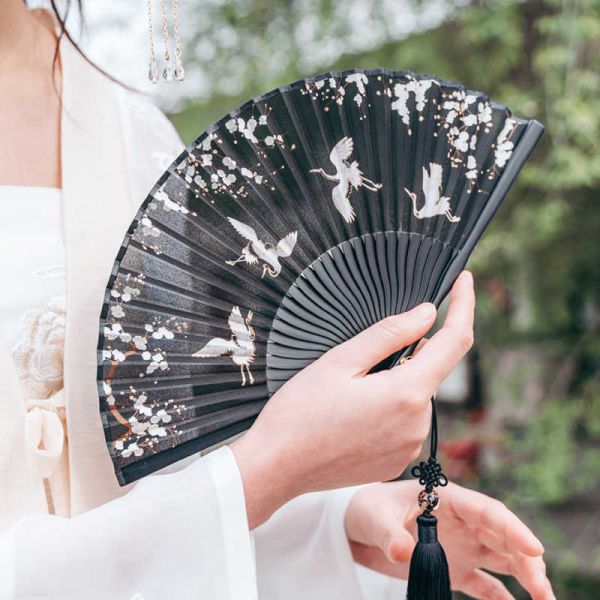 Buddha Stones Plum Blossom Crane Silk Handheld Bamboo Folding FanSpecial Price $85.59 Regular Price $120.55
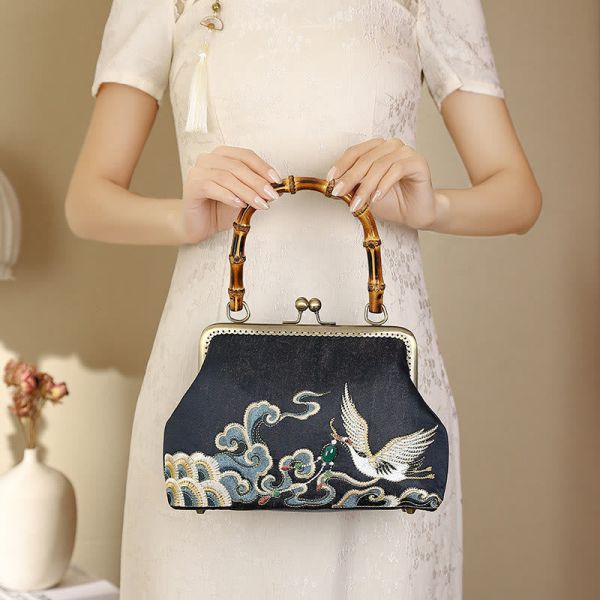 Buddha Stones Auspicious Clouds Cranes Embroidery Bamboo Handle Handbag Crossbody BagAs low as $59.59 Regular Price $79.45
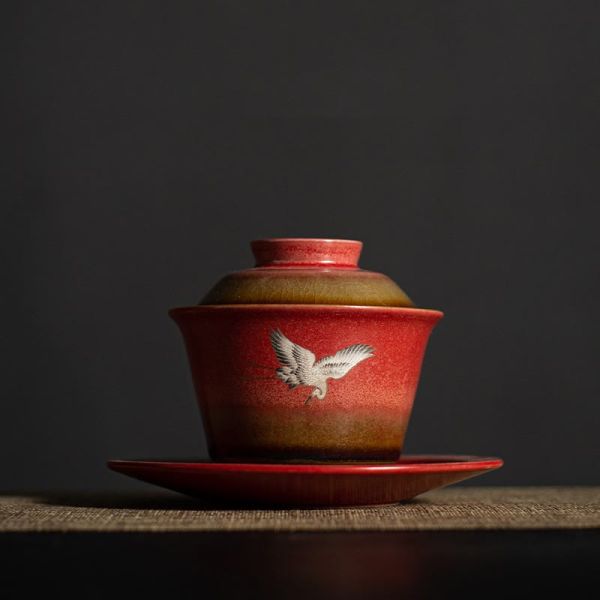 Buddha Stones Red Auspicious Crane Ceramic Gaiwan Sancai Teacup Kung Fu Tea Cup And Saucer With LidSpecial Price $47.59 Regular Price $64.31
 Buddha Stones Crane Pine Ceramic Teacup Kung Fu Tea Cup 80mlAs low as $48.59 Regular Price $68.44