
Orchid Meaning: A Visual Guide to Chinese Motifs
Orchid leaves sweep past a slender stem, leaving broad patches of blank paper between their curves. In Chinese art, orchid meaning centers on integrity, refinement, and modest virtue: qualities valued even when nobody is watching. Associations with luck or wealth belong to cultural belief; an orchid image guarantees neither.
How to recognize the motif
Start with the whole plant rather than the flower alone. Chinese ink paintings often depict orchids with narrow leaves and relatively restrained blossoms. Decorative designs may use fuller flowers, so one feature rarely settles the identification.
- Long, ribbonlike leaves. Look for blades that rise from a shared base, arch outward, and cross one another. Their flowing lines often occupy more space than the flowers.
- Flowers with a distinct center. An orchid bloom has a specialized lip among its flower parts. In simplified artwork, this may appear as a contrasting central mark rather than a botanical detail.
- A low cluster of growth. Traditional ink orchids often emerge close to the ground or beside rocks. They do not usually form the woody, branching framework associated with flowering trees.
- Room around the stems. Unfilled paper can separate leaves and blossoms, making their direction easy to follow. This is a compositional clue, not proof that a flower is an orchid.
- Companions and captions. Bamboo, rocks, brush writing, or a named Orchid option can help establish context. Check the flower itself as well; a product title can group several different designs.
Color alone is unreliable. Orchids come in many colors, and an ink version may omit color entirely. For comparison, our plum blossom guide concerns flowers on woody branches, while the peony guide looks at a much fuller, layered bloom. Those differences are more useful than a shared pink or white palette.
Orchid meaning in Chinese tradition
The orchid belongs to the Four Gentlemen of Chinese painting, together with plum blossom, bamboo, and chrysanthemum. These plants became subjects through which painters and writers expressed admired qualities of character. The orchid is particularly associated with refinement and moral integrity, often through the image of a flower growing away from public attention.
Its fragrance supplies a familiar literary comparison: a flower can remain fragrant in a secluded place, just as a person can maintain good character without praise. This is a metaphor about conduct. A picture of the plant represents that ideal; it does not give its owner the qualities being described.
Modesty here does not mean that the flower must be visually insignificant. An orchid can be the main subject of a painting while still carrying an association with understated virtue. The distinction lies in the cultural reading, not in a rule that the design must be tiny, colorless, or hidden.
Friendship and cultivated taste also appear in traditional readings of orchids. Context matters: a single sprig beside a poem may suggest a different emphasis from a bright floral pattern on an accessory. There is no universal code assigning one fixed message to every petal color, stem direction, or number of blossoms.
This guide uses the Chinese literary and painting tradition as its main frame. An orchid motif by itself does not identify an object as a Buddhist ritual instrument. Its presence on a fan, cup, or bag can be decorative, culturally referential, or both.
Where the orchid motif takes shape
The surface changes how much of the plant you can see. A broad sheet permits long leaf strokes, while a curved cup or narrow panel may show only a cropped cluster. Use these common settings as orientation rather than rigid identification rules.
| Where you see it | How it usually appears |
|---|---|
| Ink painting and calligraphy compositions | A few blossoms among sweeping leaves, sometimes beside rocks, an inscription, or a seal. |
| Folding fan designs | Leaves and stems arranged across the fan surface, with the composition shaped by its spreading outline. |
| Ceramic decoration | A flower cluster or botanical detail adapted to the curved wall of a cup or vessel. |
| Bags and fabric accessories | A floral panel or repeated pattern, sometimes combined with landscape elements. |
Names need a separate check. Orchid Pavilion is associated with Chinese calligraphy and a celebrated gathering of scholars. A title containing those words may refer to that literary setting rather than a close view of orchid flowers. Read the option name alongside the photograph before treating it as a botanical label.
Orchid references in our product selection
Our selection includes a named orchid design, a Butterfly Orchid option, a literary reference, and an orchid-pattern bag. The distinctions below help connect the subject of this guide to the actual option names and specifications.
A named Orchid option on paper and bamboo
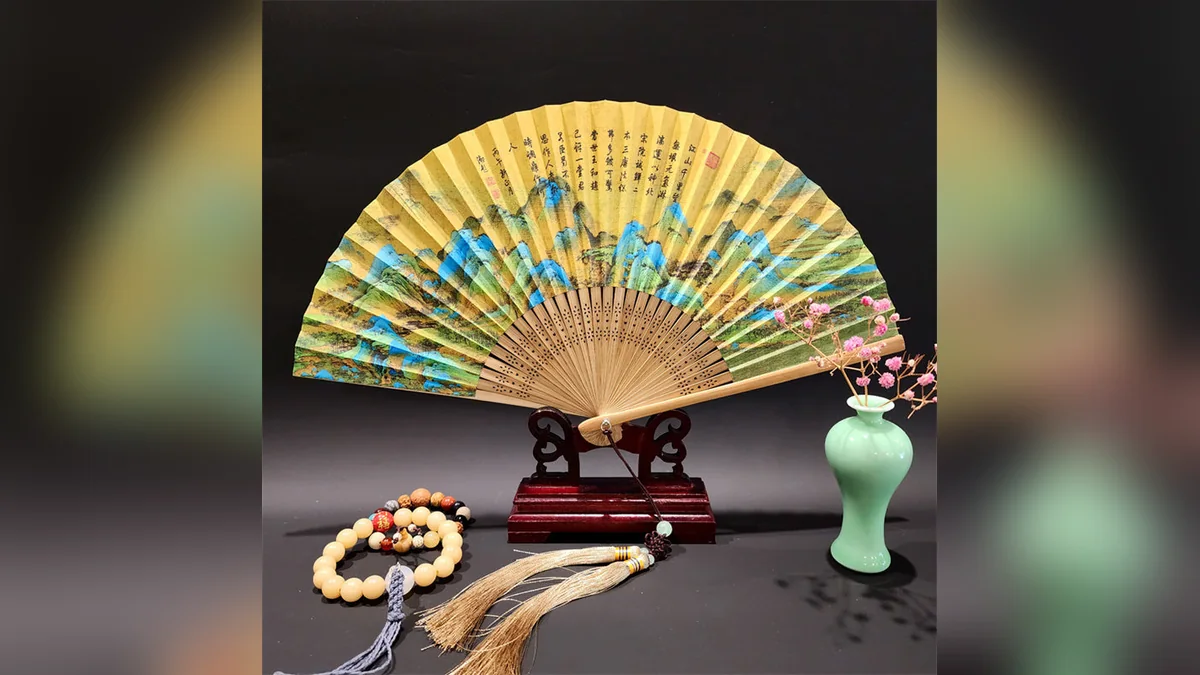
The Buddha Stones paper and bamboo folding fan offers an Orchid 22cm option among its designs. Its folded length is 22cm, and its unfolding size is About 40cm. The specified materials are Paper and Bamboo. Select the Orchid option when that is the motif you want; the long product name covers several alternatives. Jewelry and other accessories shown in its photographs are excluded from the fan purchase.
The Butterfly Orchid option in cotton linen
The Buddha Stones Butterfly Orchid folding fan has three named options: Butterfly 22cm, Butterfly Orchid 22cm, and Cat 22cm. It uses Cotton Linen and Bamboo, measures 22cm folded, and has an unfolding size of 40cm. Tassel colors are random, so a particular tassel color should not be treated as a fixed part of the selected floral design.
An Orchid Pavilion reference on a ceramic cup
The Buddha Stones Orchid Pavilion Gathering ceramic teacup includes Orchid Pavilion Gathering among its option names, alongside Lotus and Mountain Landscape. The material is Ceramic, and the stated cup capacity is 120-150 milliliters. Its title provides a useful example of the naming distinction above: do not assume that the word orchid alone identifies a flower pattern. Other cup accessories appearing in photographs are outside the cup purchase.
An orchid pattern on a crossbody bag
The Buddha Stones Mountain Stone Orchid Pattern crossbody bag comes in Black and White options. Its material specification includes Polyester, Cotton, Pearl Chain, Metal Chain, and Metal, with a Polyester lining. It has one main pocket, one interior pocket, a buckle closure, and a non-adjustable strap. This is the accessory format in the selection, with the orchid identified directly in the product name.
Read the leaves, then the setting
A useful reading begins with what is visible: the leaf curves, the flower center, and the space around the plant. Then consider the cultural setting and the exact design name. The orchid’s traditional association with quiet integrity gives the motif depth, while its visual details let you recognize it on an everyday object without assigning it a promised result.
Shop the story
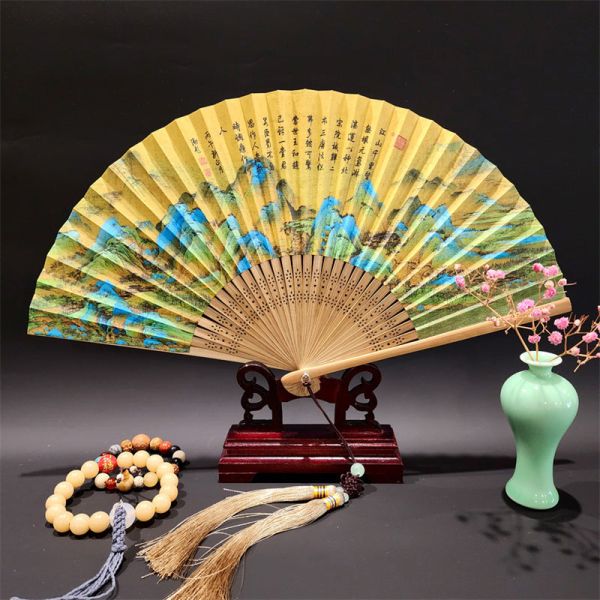 Buddha Stones A Panorama Of Rivers And Mountains Cranes Orchid Flower Paper Bamboo Handheld Silk Bamboo Folding Fan 22cmAs low as $26.59 Regular Price $35.93
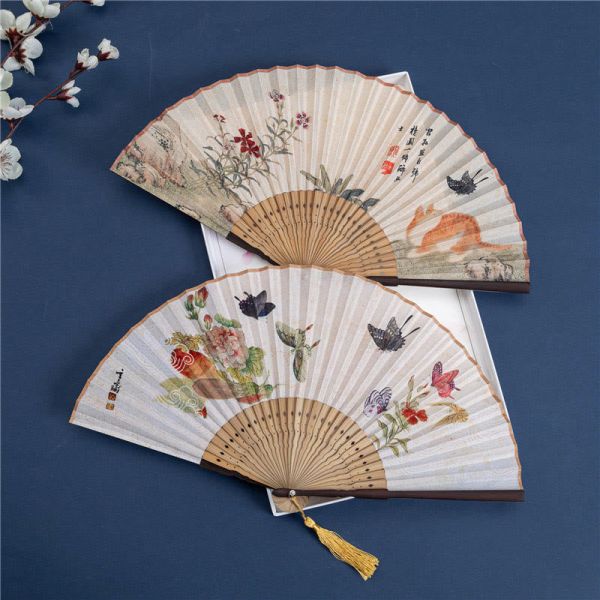 Buddha Stones Butterfly Orchid Cat Handheld Cotton Linen Bamboo Folding Fan 22cmAs low as $18.59 Regular Price $24.79
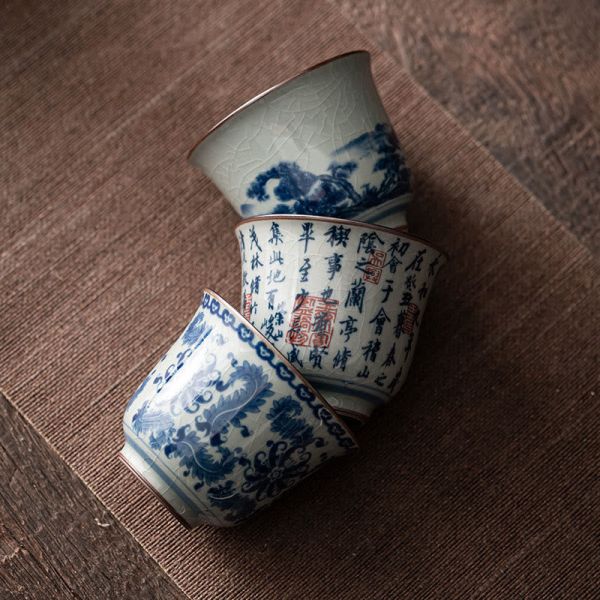 Buddha Stones Mountain Landscape Lotus Orchid Pavilion Gathering Ceramic Teacup Kung Fu Tea CupAs low as $21.59 Regular Price $29.58
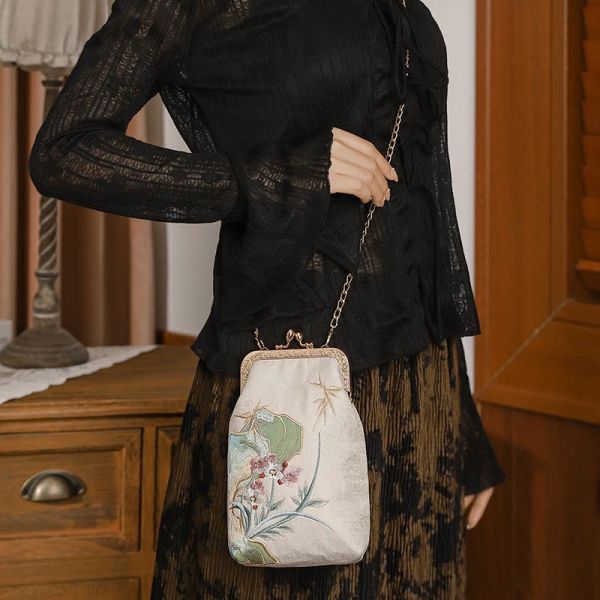 Buddha Stones Mountain Stone Orchid Pattern Pearl Chain Crossbody Bag HandbagAs low as $39.59 Regular Price $52.79