Fish Symbolism in Chinese Festivals and Jewelry
A child cradles a large fish in a traditional Chinese New Year print, with a lotus blossom nearby. The picture gives a seasonal greeting a visible form. The fish symbolism Chinese families recognize in such images centers on abundance and surplus: the Mandarin word for fish, yu, sounds like the word for surplus. Luck, wealth, and protection are matters of traditional belief, and no object guarantees them. Here, the fish carries a wish that the coming year will leave something to spare.
That wish reaches beyond money. Plenty can mean food on the table, resources to share, or enough saved for another season. A familiar tail or curved body can carry a greeting from a festival print into a piece of jewelry, while keeping its meaning symbolic.
Fish Symbolism Chinese Festivals Carry Forward
At Lunar New Year, fish appears both as food and as an image. The greeting nian nian you yu expresses a wish for surplus year after year. Because fish and surplus share a sound in Mandarin, a fish can stand in for the spoken wish. In some families, leaving part of a fish dish uneaten gives that idea a place at the table. Customs vary by household and region.
The print’s lotus adds another layer. The Mandarin word for lotus, lian, sounds like a word meaning continuous or successive. Fish and lotus together can therefore turn a pleasing arrangement into a wish for continuing abundance. The picture works through language as well as appearance; understanding the wordplay changes what the viewer sees.
Paper cutting carries the same visual vocabulary into windows and seasonal decorations. A broad fish body, recognizable fins, and an open tail make the creature legible in a flat silhouette. Paired fish may face one another or curve around a center. The arrangement can suggest togetherness, although a pair alone does not establish one fixed meaning in every setting.
Fish also appear on Chinese ceramics and textiles, where surrounding details help explain the design. A lotus, a child, or a written greeting can narrow the meaning. Begin with the whole composition when interpreting these images. The recurring idea is a wish for plenty, expressed through an animal whose name makes that wish visible.
When the Fish Moves into Jewelry
A festival print has room for a child, flowers, and a greeting. Jewelry compresses that language. A ring can place the fish beside a lotus; a hair ornament can use the tail alone. Even when much of the original scene disappears, the remaining shape can still refer to the broader tradition.
Fish and koi also deserve a small distinction. Fish symbolism covers many kinds of fish and many decorative settings. Koi designs bring carp associations into that larger field, including traditional themes of perseverance and achievement. Our discussion of koi fish meaning considers those associations more closely. A fish motif can express a wish for abundance without referring to a particular carp legend.
Buddhist imagery offers another context. The pair of golden fish belongs to the Eight Auspicious Symbols and can represent liberation from the cycle of rebirth. That religious meaning should not be automatically assigned to any pair of fish on a decorative object. The surrounding symbols and the object’s setting matter. Similarly, a lotus has a distinct place in Buddhist art, discussed in our post on lotus flower meaning in Buddhism.
For a gift, a brief explanation can give the recipient a useful starting point. A note might describe the fish as a traditional wish for enough to share. For personal wear, the motif can express appreciation for Chinese visual culture. Its cultural meaning can be part of choosing an ornament, alongside its form, material, and dimensions.
Four Ways Our Products Carry the Fish Motif
Our selection places fish imagery on hair accessories, rings, and a keychain. The practical differences deserve attention alongside the symbolism. Product names may contain words such as Luck, Wealth, or Success; we use these as expressions of traditional wishes, never as assurances about what ownership will produce.
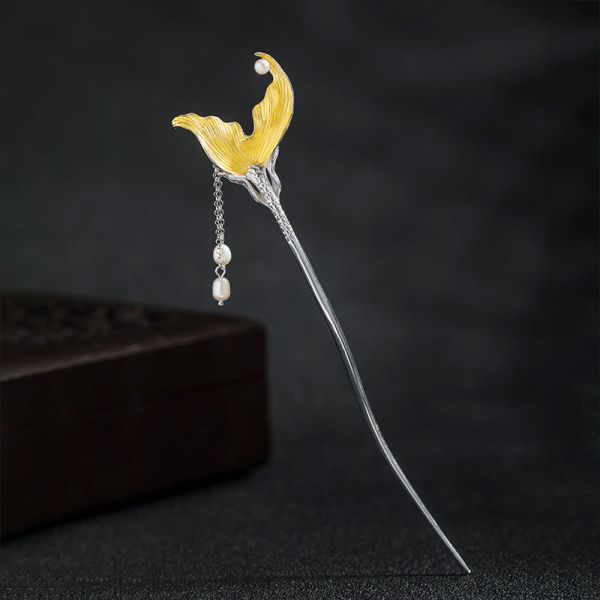
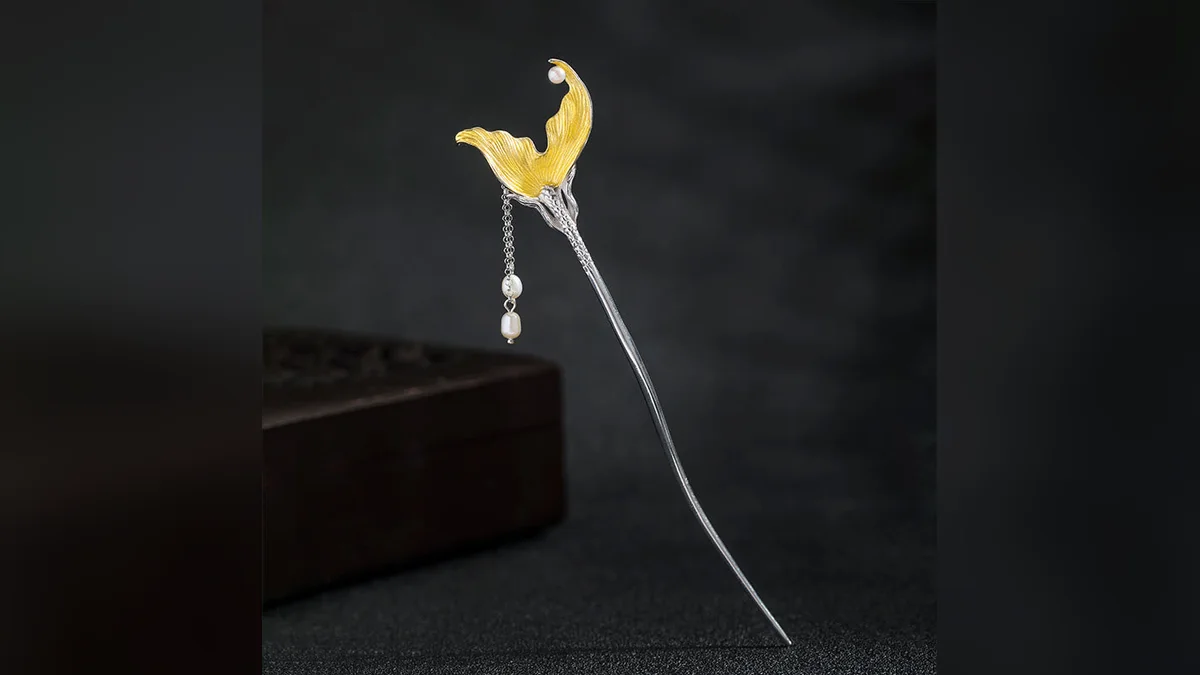
A fish tail with a pearl tassel
The Buddha Stones fish tail pearl tassel hairpin uses 925 sterling silver and pearl. The hairpin length is about 15cm, and the tassel length is about 4.7cm. The fish tail gives this hair accessory a direct connection to the motif without requiring a complete fish scene. Consider the hairpin length and tassel length separately when comparing its proportions with the hairstyle you have in mind.
Koi paired with a lotus
The Buddha Stones koi fish lotus flower ring brings the two named motifs into one ring. Made from 925 sterling silver, it is adjustable and unisex, with a ring width of about 8mm and a weight of about 2.35g. The pairing leaves room to discuss both Chinese decorative wordplay and Buddhist lotus symbolism, while recognizing that those traditions have different contexts.
Koi with a water ripple motif
The Buddha Stones koi fish water ripple ring is an adjustable 925 sterling silver ring. Its height is 2.1cm, its width is 1mm, and its weight is 3.1g. Keep those measurements attached to their stated labels when comparing rings: height and width describe different dimensions. The Luck and Wealth wording in its full name refers to customary wishes associated with fish.
A koi and money bag keychain
The Buddha Stones koi fish money bag design keychain uses silver-plated copper, rope, Star Moon Bodhi Seed, wood, and ebony wood. The pendant weight is approx. 20g, and the package contains 1 × Keychain. Natural materials may vary slightly in color, details, and appearance. The wood components may show different grain and color and develop a natural patina over time. Avoid water exposure.
Fish Motif FAQ: Meanings and Gift Messages
Does a fish always mean wealth?
No. Abundance and surplus are common Chinese associations, but the surrounding design matters. A Buddhist pair of golden fish carries a religious meaning, while fish beside a lotus may communicate a wish through Mandarin wordplay.
Must a symbolic fish be a koi?
No. The connection between fish and surplus comes from language and does not depend on identifying a koi. A stylized fish can communicate the seasonal wish even when its species is unclear.
What should a fish gift message say?
Keep it specific and modest: “This fish motif carries a traditional wish for abundance in the year ahead.” That gives the recipient useful cultural context and leaves the wish as a wish, without turning it into a promise.
Shop the story
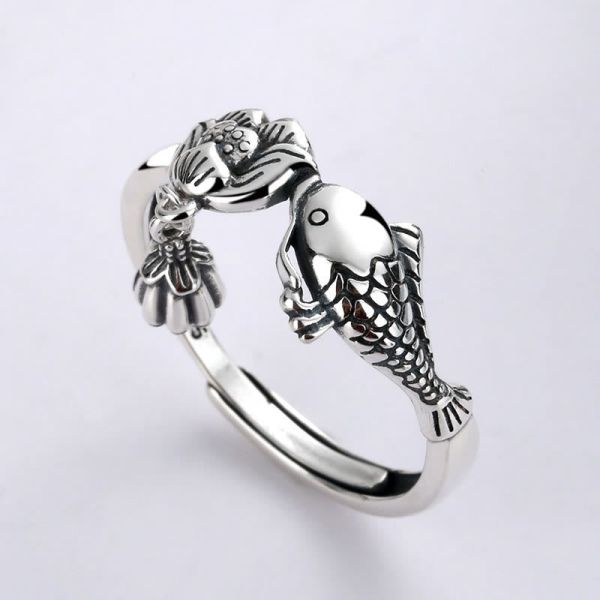 Buddha Stones 925 Sterling Silver Koi Fish Lotus Flower Success RingSpecial Price $59.59 Regular Price $82.76
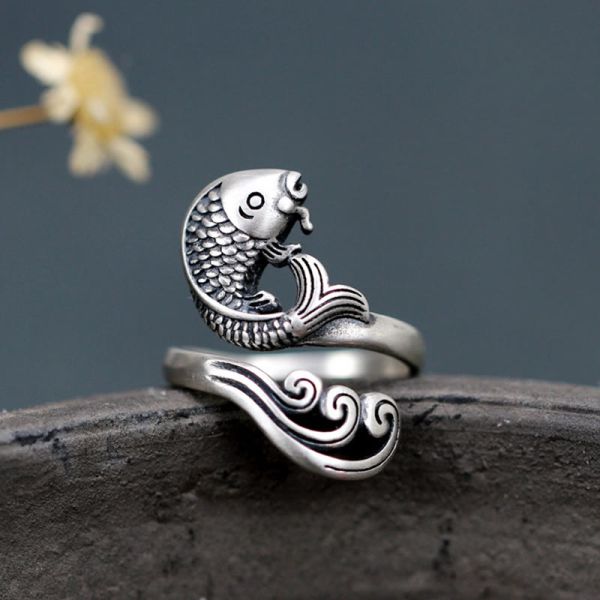 Buddha Stones 925 Sterling Silver Koi Fish Water Ripple Luck Wealth RingSpecial Price $98.59 Regular Price $135.05
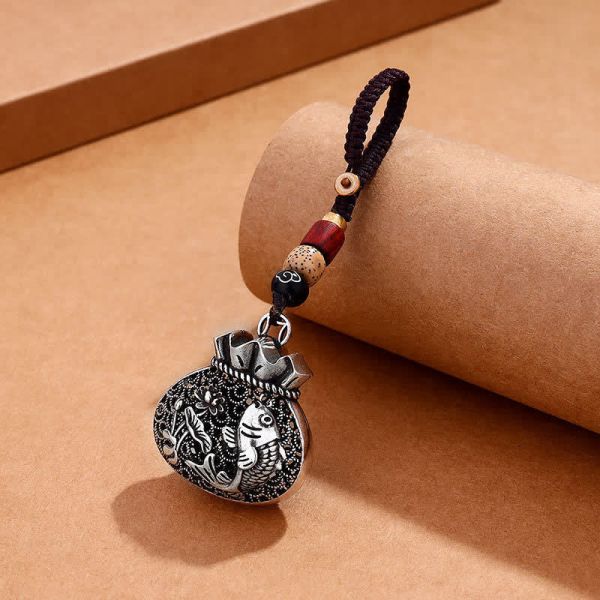 Buddha Stones Antique Copper Koi Fish Money Bag Design Hollow Luck KeychainsSpecial Price $25.59 Regular Price $35.54