
Koi Fish Meaning: The Legend of the Leaping Carp
Every spring, carp pressed upstream along the roughest stretch of the Yellow River, toward a gorge the old stories call the Dragon Gate, or Longmen. The water did not just flow there, it fell, dropping through rapids steep enough to throw spray into the air. Thousands of fish gathered at the base, fins beating against the current, bodies arching again and again as they tried to force their way up through the white water. That struggle against the current, repeated by fish after fish, sits at the root of koi fish meaning long before the word koi ever entered the story.
Most fish were pushed back, carried downstream to rest and circle before trying again. But the story holds that any carp who finally cleared the top of the falls, clearing the lip of the gate in one unbroken leap, did not land in ordinary water. It became a dragon instead, its scales turning to light, its body lifting past the spray and into the clouds rather than falling home to the river.
The carp who never reached the top were not shamed in the telling. They stayed carp, going back to ordinary river life, and the old story remembers them for having tried the hardest climb the river had to offer. It is this image, a fish straining upward against a waterfall for the chance at one transformation, that later generations kept returning to whenever they needed a way to talk about effort, patience, and the kind of change that only comes after a long struggle.
The Koi Fish Meaning Behind the Legend
By the time of China’s imperial examinations, the leap at Longmen had become a stock comparison for a very human kind of effort. Scholars who spent years preparing for the exams, often with no certainty that the work would pay off, were described as carp swimming against the current. Passing the exam and being recognized is still described with the same phrase used for the fish that clears the falls, “a carp leaping over the dragon gate.” In this reading, koi fish meaning has little to do with water. It is about discipline applied over a long stretch of time, and about the moment effort is finally allowed to matter.
Fish carry a second, separate meaning that has nothing to do with climbing anything. In Chinese, the word for fish, yu, sounds the same as the word for surplus or abundance. This near match is why fish appear so often around the New Year, in sayings that wish for “surplus year after year,” and why a fish motif on a scroll, a dish, or a piece of jewelry is understood as a quiet wish for enough, rather than a reference to any single fish or any single leap.
A pair of fish carries its own reading, separate again. Two fish shown together are read as a symbol of harmony, often between partners, since fish are thought to move easily and without friction through water. In Buddhist art, a pair of golden fish is one of the Eight Auspicious Symbols, standing for a kind of fearless movement through life, free of obstruction. The image shows up on temple textiles and ritual objects long before it ever appeared on a pendant or a bracelet.
The brightly patterned koi kept in garden ponds today are a separate, more recent branch of this story. Those ornamental carp were bred for color and pattern in Japan, and the garden pond tradition that grew up around them sits alongside the older Chinese legend rather than replacing it. The two threads have overlapped for long enough that most people now use “koi” for the ornamental pond fish and the Dragon Gate carp almost interchangeably, even though the stories behind them started in different places.
How a koi is shown can matter as much as the fish itself. A koi pointed upward is usually read as a fish still mid-climb, caught in the act of trying. A koi angled downward is sometimes read instead as a fish that has already completed the leap, settled and at rest after the effort. People do not agree on a single correct reading, and interpretations vary by region and by household, which is part of why a koi incense burner is often sold in both head-up and head-down versions, leaving the choice to whatever the piece means to the person placing it.
Koi Fish Pieces to Carry the Story
The four pieces below carry this symbol in different forms, drawn from our wider koi fish collection.
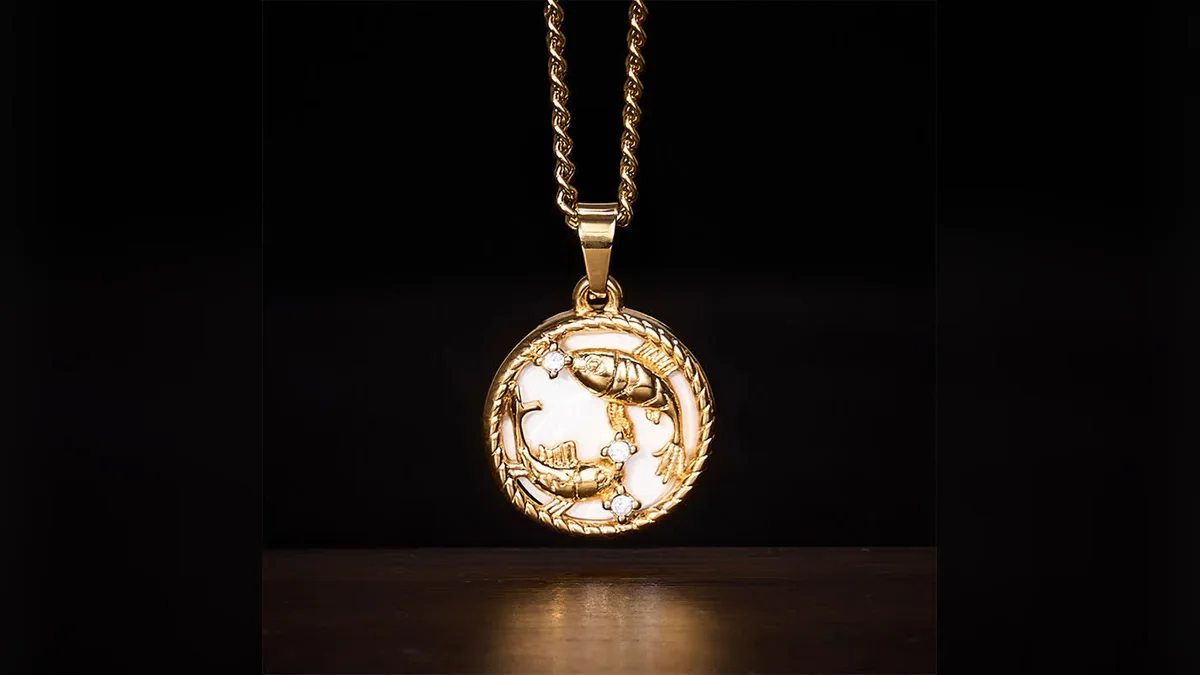
The titanium steel koi fish pendant necklace keeps the symbol close on an adjustable-length necklace. The necklace measures approximately 21.9 inches with about 3.5 inches of adjustable length, and the round pendant measures approximately 0.6 by 1.0 inches. It is made of titanium steel, with one necklace included in the package.
The gold-plated brass koi fish cuff bangle carries the symbol as a rigid band on the wrist. It is made of brass with a gold-plated finish, with an inner diameter of approximately 2.4 inches and a band width of about 0.6 inches. Because it is rigid rather than a flexible strand, the product page suggests taking the measurement across your palm at its widest and comparing that measurement with the bangle’s inner diameter before you order.
The wood koi incense burner is built from wood and iron, shaped around a koi resting on a base, and designed to hold incense sticks rather than cones or coils. It comes in four versions — head-up or head-down koi, each on a short or long base — so the direction the fish faces is a choice you make rather than one fixed by the design. Incense itself is not included.
The koi fish drop earrings pair copper alloy bodies finished in enamel with 925 sterling silver posts, so the posts that pass through the ear are sterling silver even though the fish bodies themselves are copper alloy with an enameled finish. Each earring measures approximately 58 by 19 millimeters, long enough to show the full curve of the fish when it hangs, and sits alongside other pieces in our earrings collection.
In the telling, the carp that fell short simply rested and tried the leap again, season after season. Whether what draws you in is the climb, the surplus promised by a pair of fish, or the quieter idea of two fish moving through life without friction, the leap at the falls stays the same image underneath it: effort offered again and again, with no guarantee, toward a change that only shows itself at the very top.
Shop the story
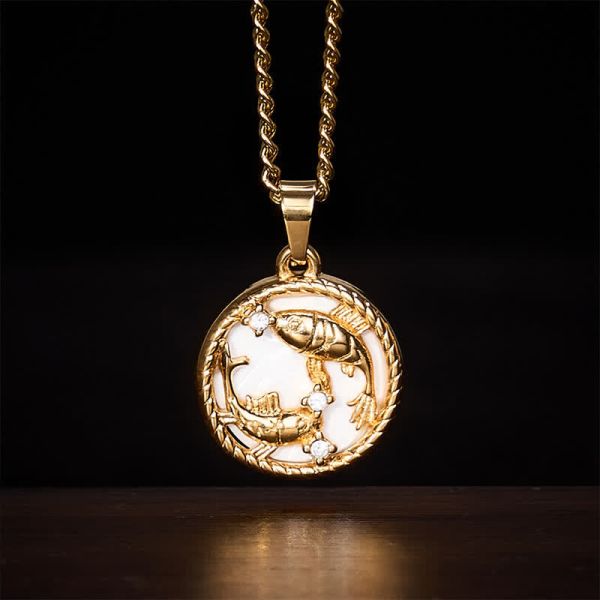 Buddha Stones Titanium Steel Koi Fish Strength and Success Round Pendant NecklaceSpecial Price $25.59 Regular Price $36.04
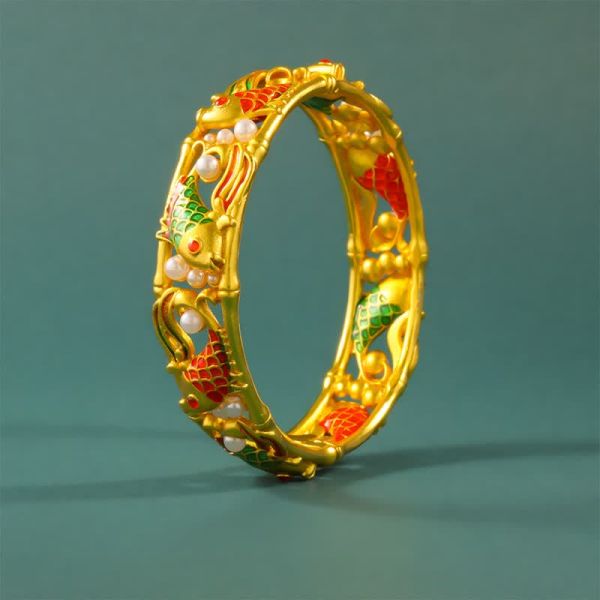 Buddha Stones Gold-Plated Brass Koi Fish Success Vintage Chinese Cuff Bracelet BangleSpecial Price $39.59 Regular Price $53.50
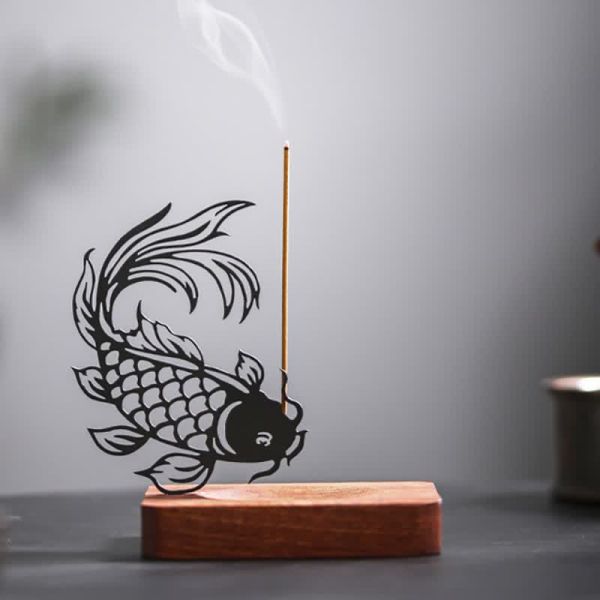 Buddha Stones Wooden Base Koi Fish Success Zen Incense BurnerAs low as $46.59 Regular Price $62.12
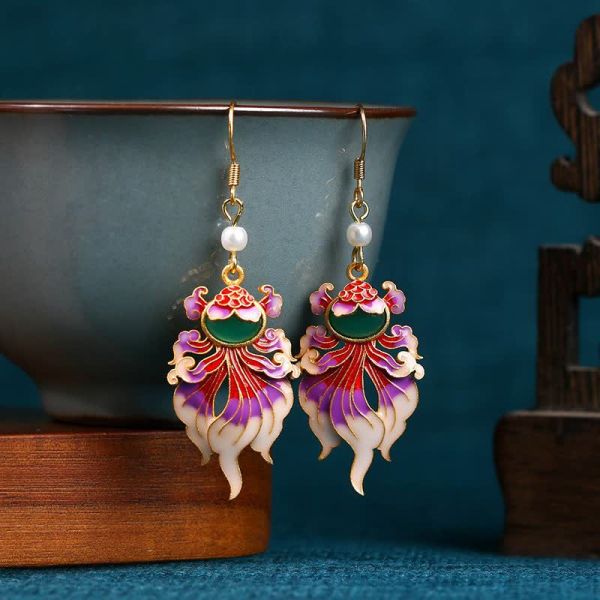 Buddha Stones Retro Copper Koi Fish Wealth Drop EarringsSpecial Price $27.59 Regular Price $38.86