
Lotus Flower Meaning in Buddhism: Purity and Awakening
The lotus plant roots itself in the mud at the bottom of ponds and slow-moving water. Its stem rises up through that murky water, and its leaves carry a natural coating that sheds water and dirt — rain beads up and rolls straight off, taking debris with it. When the flower opens, it sits clean and untouched above the surface, as though the mud below had never touched it. This single botanical fact is the root of the lotus flower meaning in Buddhism, and it shows up in temple carvings, paintings, and everyday objects across Buddhist cultures.
Lotus flower meaning in Buddhism
In Buddhist teaching, the lotus is read as a picture of the mind. The mud stands for ordinary life — confusion, desire, difficulty — and the water above stands for the possibility of clarity. The flower itself represents a mind that can develop purity and insight while still living fully inside the ordinary world, rather than apart from it. Because the plant does not need clean water to produce a clean flower, the lotus flower meaning in Buddhism is often tied to the idea that awakening grows out of ordinary conditions instead of requiring an escape from them.
The lotus is counted among the Eight Auspicious Symbols, or Ashtamangala, used in Tibetan Buddhism alongside objects such as the conch shell, the endless knot, and the parasol. Within that set, it represents purity and the gradual unfolding of good qualities, and it is one of the images most often placed on altars, painted in thangkas, or worked into ritual objects.
Buddhas and bodhisattvas are traditionally shown seated or standing on a lotus throne — a flower rendered in stone, wood, or paint beneath the figure. The throne sets an enlightened being above the ordinary world while keeping that figure rooted in it, echoing the same idea as the plant itself: growth through difficulty, not away from it.
The flower also gives its name to one of the most widely read Mahayana texts, the Lotus Sutra. Its fuller title translates roughly as the Sutra of the Lotus of the Wonderful Dharma, using the flower as a metaphor for the teaching itself: something offered whole and clean, regardless of the conditions it grew out of.
A common teaching image traces the lotus through three stages: a closed bud, a half-open flower, and a fully open bloom. The closed bud is compared to a mind that has not yet begun to turn inward. The half-open flower stands for a mind already in practice, and the fully open bloom represents awakening or Buddha nature, depending on the source. These stages appear often in sculpture and painting as a way of showing progress along a path rather than a fixed, finished state.
Color is sometimes layered onto this symbolism, though accounts vary from source to source and are worth holding loosely rather than treating as settled doctrine. White is generally tied to purity of mind, pink to the historical Buddha or to the tradition as a whole, red to compassion, and blue to wisdom. Different teachers and schools describe these associations somewhat differently, so they read best as traditional reference points rather than a fixed code.
The lotus also sits inside the well-known mantra Om Mani Padme Hum, where “padme” refers to the lotus itself — a connection worth knowing, even though the mantra’s own meaning belongs to its own subject.
Wearing and displaying the lotus
Many people who find this symbolism meaningful choose to keep it nearby in physical form — worn, carried, or displayed at home. We group a number of these pieces together in our lotus-themed collection, and four of them show the range of how the symbol can be used.
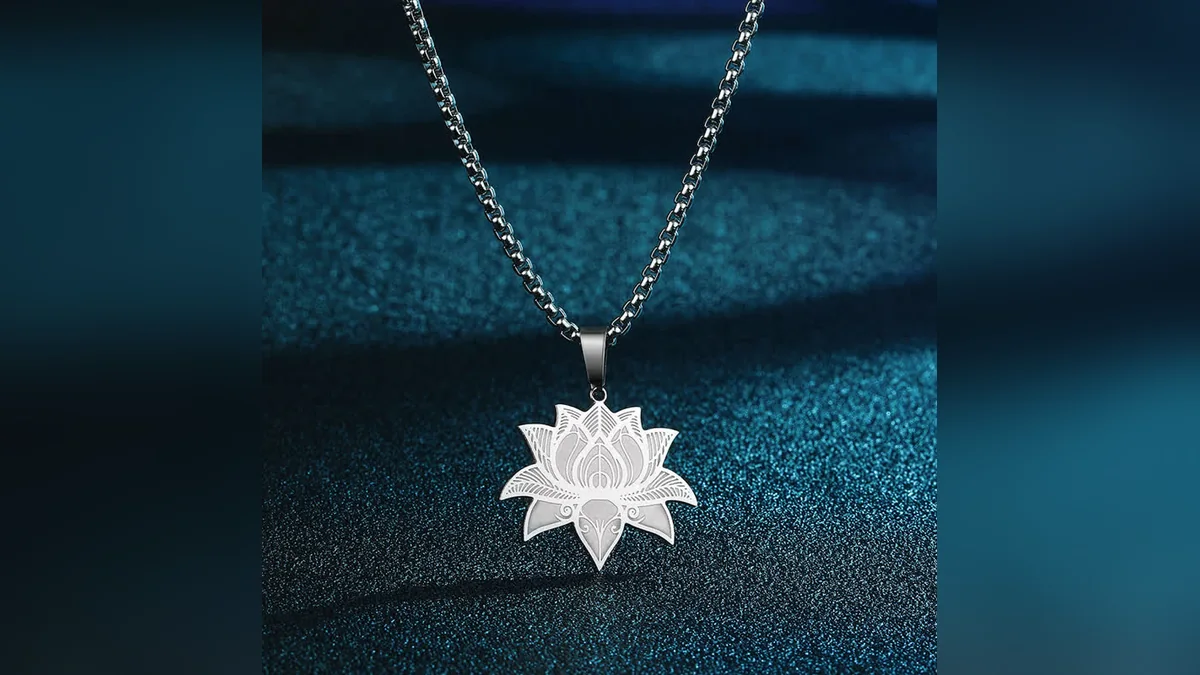
The meditation lotus necklace sets a small lotus pendant, about 2.7 by 2.5 cm, on a 60 cm titanium steel chain, available in gold or steel finishes. Titanium steel is a practical everyday material — it holds up to regular wear without much upkeep — so this piece suits someone who wants the symbol on them daily rather than saved for occasions.
The white porcelain lotus bracelet is strung from 8mm white porcelain beads on elastic cord, sized for a wrist of about 14 to 15 cm. The plain white color echoes the purity theme the lotus already carries. Because the sizing runs on the smaller side, it is worth checking that measurement against your own wrist before ordering, since it will not sit comfortably on a larger wrist.
The sappanwood lotus pendant carries a lotus carved in relief into a sappanwood and teak pendant, about 50 by 35 mm, on a cord. Wood grain and tone vary from piece to piece, and the surface is meant to pick up a natural patina with handling over time. It is best kept away from water; take it off before washing up or swimming, since the wood is not meant to get wet.
For a fixed display rather than something worn, the matte black lotus wall art is cut from iron into an open lotus silhouette, with small holes at the top and bottom for hanging. It comes in a run of sizes from about 25 cm up to 60 cm across, so it can work as a small accent near a shelf or as a larger piece on its own wall. Placed above a meditation cushion or grouped with other wall art, it keeps the symbol visible without asking anyone to wear it. The two necklaces above sit within our wider necklaces and pendants collection, alongside other symbols.
Living with the symbol
Outside of formal practice, people tend to use the lotus in small, repeatable ways. Wearing a pendant on a plain chain means catching sight of it in a mirror or feeling its weight at the collarbone through the day — a small prompt to notice whatever is happening in the moment you notice it. A bracelet works the same way at the wrist, closer to hand and easier to touch without thinking during a stressful meeting or a quiet commute. A wall piece works differently: instead of carrying the reminder with you, you pass it on the way out the door, or sit facing it for a few quiet minutes, letting its stillness stand in for the reminder instead.
None of these uses require a particular belief to make sense on their own. The lotus simply gives a concrete, visible form to an abstract claim long held in Buddhist teaching: that clarity does not require clean conditions to begin with, only a willingness to keep rising toward the surface.
Shop the story
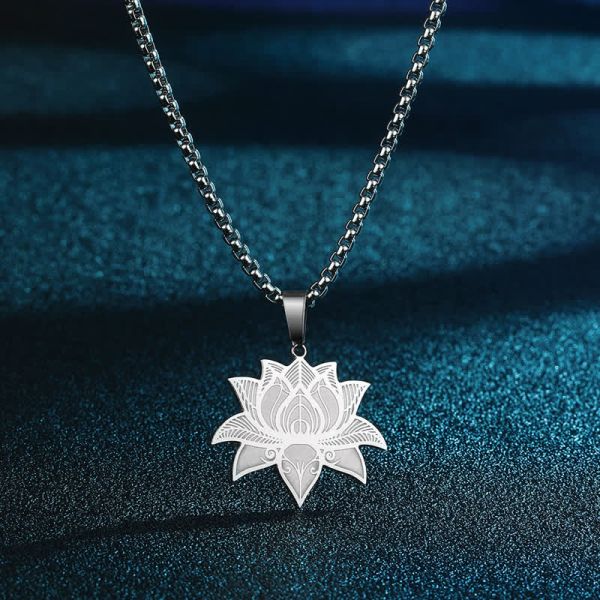 Buddha Stones Meditation Lotus Titanium Steel Chain Protection and Purity NecklaceAs low as $25.59 Regular Price $35.54
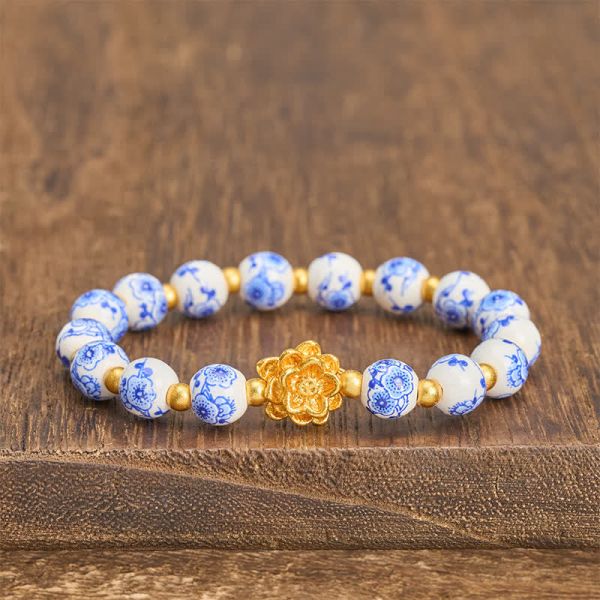 Buddha Stones White Porcelain Lotus Enlightenment Round Bead BraceletSpecial Price $25.59 Regular Price $34.12
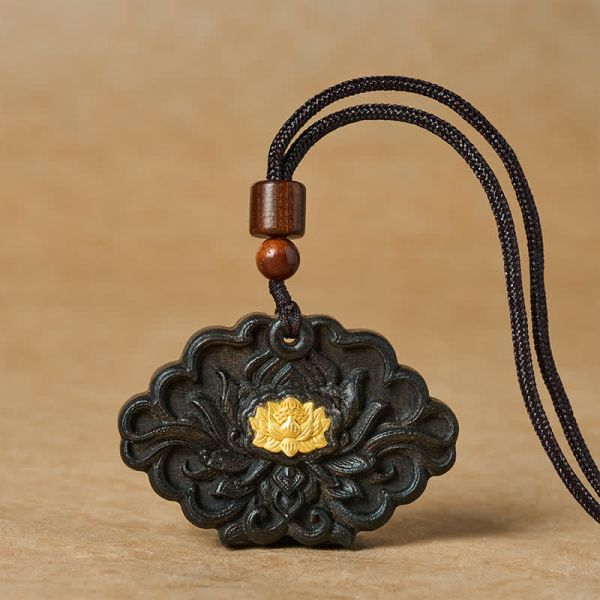 Buddha Stones Sappanwood Lotus Enlightenment Relief Carved Pendant NecklaceSpecial Price $25.59 Regular Price $35.05
 Buddha Stones Matte Black Lotus Purity Zen Iron Metal Meaningful Symbols Wall ArtAs low as $23.59 Regular Price $33.23