
Dragon and Phoenix Pairing: Meaning Across Chinese Art
A dragon’s curling body faces a phoenix’s spreading wings in a familiar Chinese decorative motif. The dragon and phoenix pairing traditionally represents harmony, complementary qualities, and a happy marriage. It also appears in wishes for prosperity and good fortune. These are cultural beliefs: the image cannot guarantee luck, wealth, protection, or a successful relationship. At Buddha Stones, we describe the pair through the settings where people encounter it, because a wedding ornament and an imperial textile do not tell exactly the same story.
How the dragon and phoenix pairing took shape
The dragon and the fenghuang developed as distinct figures in Chinese tradition before becoming a familiar decorative couple. Dragons have long been associated with rain, authority, and auspicious events. The fenghuang, commonly translated as “Chinese phoenix,” is associated with virtue and harmonious rule. It is different from the bird reborn from ashes in Western phoenix stories; that rebirth narrative should not automatically be applied to a Chinese design.
There is no single origin story that explains every example of the pair. Their meanings accumulated through court imagery, decorative arts, and marriage customs. Imperial contexts often connect the dragon with the emperor and the phoenix with the empress. Wedding contexts carry that relationship into a wish for a harmonious union.
The familiar association of dragon with yang and phoenix with yin belongs to this paired reading. It does not mean that every dragon or fenghuang image has a fixed gender. Context matters more than a universal symbol dictionary. Our Chinese dragon symbolism article provides a separate discussion of the dragon on its own.
What changes when the motif moves between settings
Paintings, ceramics, and architectural decoration
On a painted vessel or decorative panel, the creatures may face one another, circle a shared center, or occupy opposite sides. Their arrangement makes the relationship visible: two different forms belong within one composition. Clouds, flowers, and surrounding ornament can add further auspicious associations, but the object’s purpose still matters. A palace setting may emphasize imperial authority, while a household decoration may express wishes for harmony and flourishing family life.
Before assigning a meaning, identify both creatures. A long, scaled body and claws suggest a dragon; wings, a beak, and an elaborate feathered tail suggest a fenghuang. A bird beside a flower is a different composition from a dragon facing a phoenix.
Wedding embroidery and other textiles
Wedding garments, embroidered panels, and bedding are familiar settings for the pair. Here, the central message is usually marital harmony and a wish for the couple’s shared future. The creatures can face each other across the textile or appear within a larger pattern of flowers and clouds.
Placement alone cannot establish a textile’s age, regional origin, or intended wearer. Nor does an embroidered phoenix automatically identify an imperial garment. Contemporary accessories can borrow the same imagery for decorative use. Read the object’s description alongside its motif, and keep its stated construction separate from the traditional meaning of its design.
Jewelry worn together or as a pair
Dragons and phoenixes appear on pendants, rings, bracelets, and wedding jewelry. Some designs place both creatures on one object; others divide them between two pieces. The symbolism concerns their relationship, so an isolated dragon pendant should not automatically receive the full marriage interpretation.
When choosing a symbolic gift, explain the wish in ordinary language: harmony, mutual regard, or a shared life. Traditional male and female associations describe a historical convention. They do not prescribe who may wear a design or determine how a couple must understand it.
Festival decorations and public celebrations
Festival imagery often gathers several auspicious motifs in one setting. Dragons, phoenixes, flowers, and celebratory lettering may appear on lanterns, banners, or decorative displays. A dragon performance, however, does not by itself constitute a dragon and phoenix composition.
Read what is actually present. At a wedding celebration, the two creatures together may emphasize the marriage wish. In broader festive decoration, they may express a more general hope for harmony and prosperity. Neither use makes a prediction about the coming year or the people attending.
Neighboring motifs with different relationships
A phoenix with a peony often carries associations of distinction and prosperity in traditional decoration. Two phoenixes create another paired bird composition, but they are not the same pairing as a dragon and a phoenix. The number and identity of the figures both affect the reading.
Lotus imagery has its own meanings, including purity in Buddhist contexts. Our article on lotus flower meaning in Buddhism addresses that separate tradition. A lotus on an accessory does not establish a marriage theme simply because it appears near other auspicious designs.
A dragonfly is an insect, despite the English word containing “dragon.” It should not stand in for a Chinese dragon when interpreting a bag or pendant. Keeping these distinctions clear lets you appreciate floral and animal motifs without merging them into one symbolic message.
Phoenix, lotus, and dragonfly bags at Buddha Stones
Our bag selection includes the following named designs and options. The details below describe their materials, dimensions, and construction.
A cotton linen bag with a phoenix option
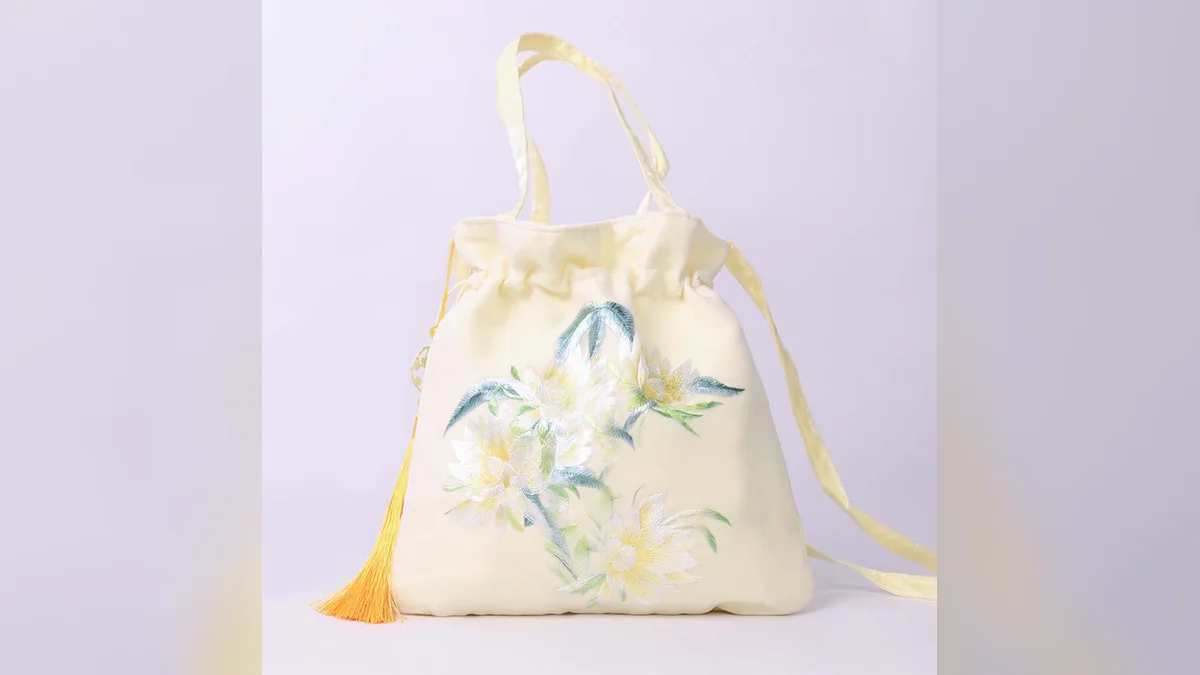
The Lotus Peony Epiphyllum Phoenix Suzhou Embroidery Bag comes in Yellow Epiphyllum, Yellow Golden Lotus, Yellow Golden Peony, and Yellow Golden Phoenix options, each designated 21*22cm. Its materials are cotton linen fabric and ceramic bead accessories. The adjustable shoulder strap has a stated length of 130cm. There is one main pocket and a strap closure; the package contains one bag.
A small dragonfly bag with a metal chain
The Small Dragonfly Metal Chain Crossbody Bag measures 11*19*3cm(Height*Width*Thickness). Its specified materials include polyester, cotton, metal, metal chain, tassels, and jade accessories, with cotton lining. It has one main pocket, a buckle closure, and an adjustable strap. The shoulder bag metal chain strap length is 120cm. One bag is included, and the stated pre-sale period is 3 days.
A canvas bag with lotus and dragonfly options
The Handmade Canvas Ink Lotus Dragonfly Shoulder Bag uses canvas fabric and measures 31*35cm. Options include Big Flower, Dragonfly, Pink And Yellow, Pink Flower, and Pink Lotus. It has one main pocket, one zipper pocket, a zipper closure, and a non-adjustable strap. Its weight is about 180g, and the package contains one bag.
A shopping handbag with a Double Phoenix option
The Money Tree Peony Phoenix Apple Blossom Double-Sided Embroidery Handbag includes Double Phoenix and Chinese Money Tree options alongside named apple blossom and peony options. The specified materials are cotton, canvas fabric, and polyester. Dimensions are 31*10.5*23cm(Length*Width*Height), and its weight is 180g. It has one main pocket, a zipper closure, and non-adjustable straps. The package contains one bag.
Let the surrounding details guide the reading
The paired creatures express a relationship, and their setting gives that relationship its emphasis. Notice the figures, their arrangement, and the object carrying them. A traditional wish for harmony can remain meaningful without becoming a promise about what an object will deliver.
Shop the story
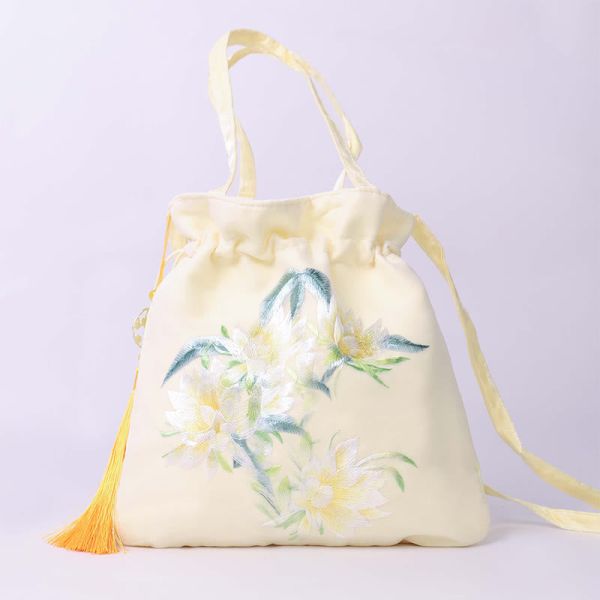 Buddha Stones Lotus Peony Epiphyllum Phoenix Suzhou Embroidery Cotton Linen Tote Crossbody Bag Shoulder Bag HandbagAs low as $22.59 Regular Price $32.27
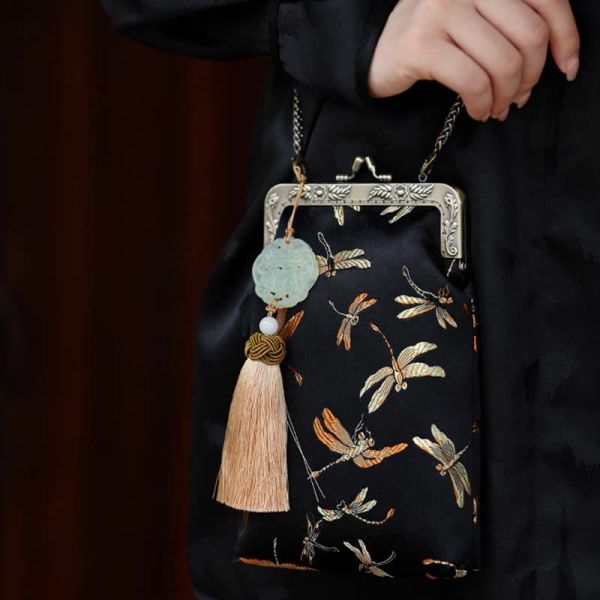 Buddha Stones Small Dragonfly Metal Chain Crossbody Bag Shoulder Bag Cellphone BagSpecial Price $99.59 Regular Price $134.58
 Buddha Stones Large Capacity Handmade Canvas Ink Lotus Dragonfly Shoulder Bag Shopping BagAs low as $24.59 Regular Price $33.23
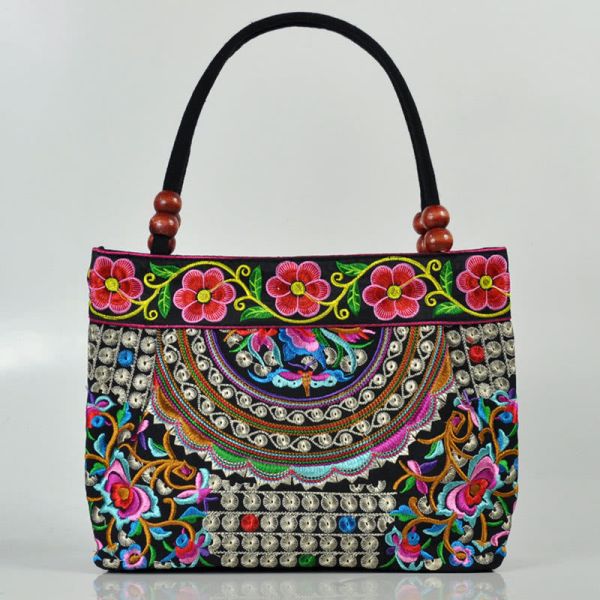 Buddha Stones Money Tree Peony Phoenix Apple Blossom Double-Sided Embroidery Cotton Canvas Shopping Purse HandbagAs low as $19.59 Regular Price $27.21