
Dorje and Bell Set: Buddhist Symbols in Context
The bell's handle echoes the curved prongs of the dorje beside it. A dorje and bell set traditionally represents the union of compassionate action and wisdom in Tibetan Vajrayana Buddhism. The dorje stands for method, or skillful means, and the bell for wisdom. Their meaning depends on their relationship: Buddhist practice brings these qualities together. Wishes for luck, wealth, or protection belong to traditional belief; no object guarantees them.
A shared bell shape does not give different objects an identical religious meaning.From an Indian thunderbolt to a Buddhist ritual pair
Dorje is the Tibetan name for the object called vajra in Sanskrit. The vajra has roots in Indian religious tradition, where the god Indra carries a thunderbolt. Buddhist traditions adapted its form and symbolism within their own teachings. The association with the steadfastness of a diamond also became important.
The paired bell is called ghanta in Sanskrit and drilbu in Tibetan. Together, these implements became central to Tibetan tantric ritual. Their use also belongs to a wider world of Buddhist ritual traditions, with regional differences in form and interpretation.
The useful distinction is between a symbol's earlier background and its meaning within a particular practice. Knowing the thunderbolt connection helps explain the dorje's history, but the Buddhist pairing centers on wisdom and compassionate action. Our article on vajra meaning considers the scepter's symbolism separately.
How a dorje and bell set expresses one teaching
The dorje and bell are commonly held in the right and left hands, respectively. During ritual recitation, prescribed gestures bring the objects into relation with the spoken practice. Their positions belong to a ritual vocabulary rather than a general rule for arranging home decorations.
Method means skillful means: compassionate action directed toward the welfare of others. Wisdom concerns understanding reality, including the Buddhist teaching of emptiness. In this context, emptiness means that things do not exist independently through a permanent nature of their own; it does not mean that nothing exists.
The pair makes this relationship visible. Neither component gives the complete explanation by itself. Traditional descriptions sometimes associate the dorje with a masculine principle and the bell with a feminine principle. These are symbolic categories within the teaching, not rules assigning wisdom or compassion to people according to gender.
Formal use follows a particular lineage and its instructions. Recognizing the symbolism is different from learning a ritual sequence, so a teacher's guidance matters when an object is intended for religious practice.
Reading the motif in art, cloth, and public ceremony
Hands and attributes in sacred art
Vajradhara is often depicted holding a dorje and bell with his hands crossed before his chest. The paired attributes help identify the figure and express the inseparability of wisdom and method. Paintings and sculptures make the relationship legible through both the objects and the gesture.
Look at the hands before drawing conclusions from an isolated shape. A bell may be partly concealed, while a small dorje can blend into surrounding ornament. The figure, gesture, and accompanying attributes provide context that a single detail cannot.
Textiles and wearable versions
Thangkas carry sacred imagery on cloth, and textile forms can include embroidery and applique as well as painted scrolls. When a figure holds the pair, the objects retain their identifying role within that image. The fabric is the medium; the figure and its attributes supply the meaning.
Jewelry can reduce a ritual form to a small emblem. A dorje pendant may refer to Buddhist symbolism without including a bell. Likewise, a bell charm can belong to another decorative tradition. When considering a wearable motif, identify what is actually shown before treating it as a representation of the complete pair.
Festival and monastery settings
Tibetan monastic festivals can include ritual music, prayer, and masked dance. A dorje or bell encountered in that setting should be understood through the particular ceremony. Festival programs vary among monasteries, and the presence of bells alone does not identify a rite.
A monastery's explanation can clarify who uses an implement and what its gesture means. This keeps the object connected to a living religious practice rather than treating its appearance as a general festival decoration.
Companion objects and pairings that mean something else
The bell and dorje may share a ritual setting with a damaru, a small hand drum, or with offering vessels. Proximity does not make these objects interchangeable. The specific relationship between wisdom and method belongs to the bell and dorje pairing.
Tingsha are another distinct pair: hand cymbals sounded by bringing their edges together. They are not a bell accompanied by a scepter. Our explanation of tingsha bells covers that instrument without treating different Buddhist sound objects as substitutes.
A home display also needs context. If you keep religious implements, their arrangement can follow the guidance of your tradition. Our selection of prayer and altar items offers a separate place to consider objects intended for that setting.
Bell decorations and accessories from Buddha Stones
Our products below connect with the bell motif through decoration and jewelry. Their stated item types are distinct from the ritual pair discussed above. Words such as Wealth, Luck, and Lucky in their names express traditional wishes, not promised results.
A hanging chime with a cat motif
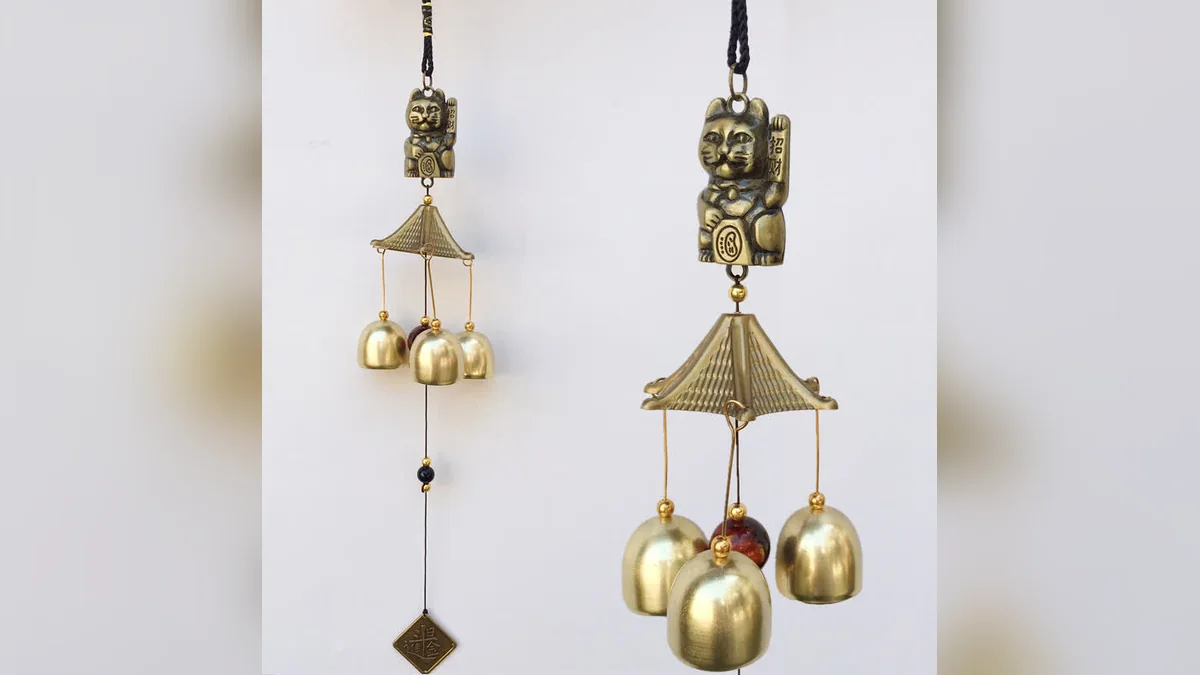
The Buddha Stones Auspicious Wealth Cat Wall Hanging Chime Bell is a decoration and hanging chime bell. Its specified materials are copper and alloy. Length is 43cm, weight is 72g, and the package contains one bell.
A koi-themed key chain
The Buddha Stones Colorful Koi Fish Hollow Bell Key Chain has a length of 10.5cm. Alloy and rope are its specified materials, and its item type is key chain.
A coin-and-bell anklet
The Buddha Stones Copper Coins Bell Charm Anklet uses titanium steel and a premium buckle. Anklet circumference is 8.3-10.2 in (21-26 cm). Available options are named Gold Anklet, Rose Gold Anklet, and Silver Anklet.
A red string bell bracelet
The Buddha Stones FengShui Lucky Red String Bell Bracelet comes in Dark Red and Red options. Both options specify Wrist Circumference 14-21cm. The bracelet specifications separately give Perimeter: 14-24cm and identify it as unisex.
Keep the relationship in view
The bell's significance changes with its companion, setting, and use. Beside a dorje in Tibetan Buddhist practice, it expresses wisdom joined with compassionate action. Recognizing that relationship lets you read the sacred pair more accurately while giving decorative bells their own place.
Shop the story
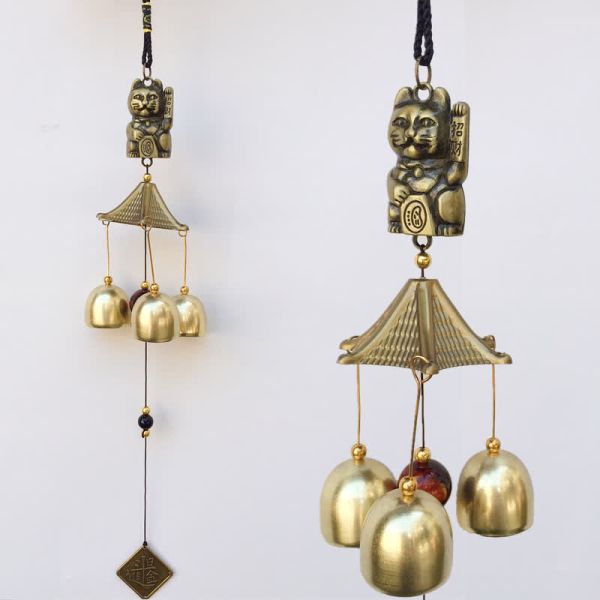 Buddha Stones Auspicious Wealth Cat Wall Hanging Chime Bell Copper Luck Handmade Home DecorationSpecial Price $23.59 Regular Price $32.76
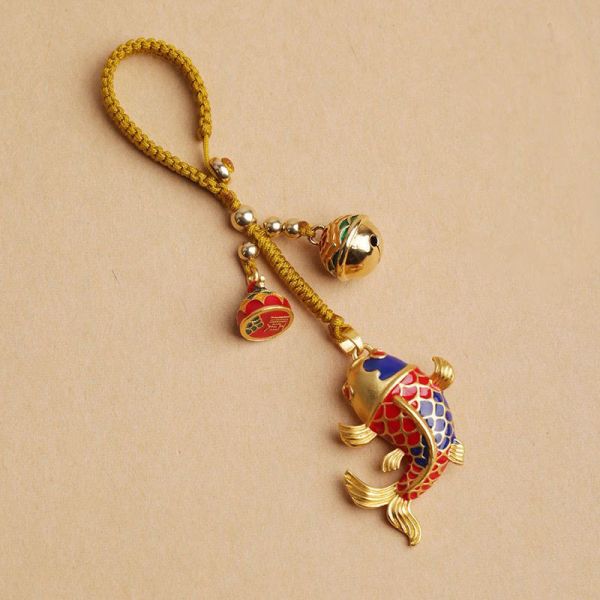 Buddha Stones Colorful Koi Fish Hollow Bell Wealth Luck Key ChainSpecial Price $25.59 Regular Price $34.58
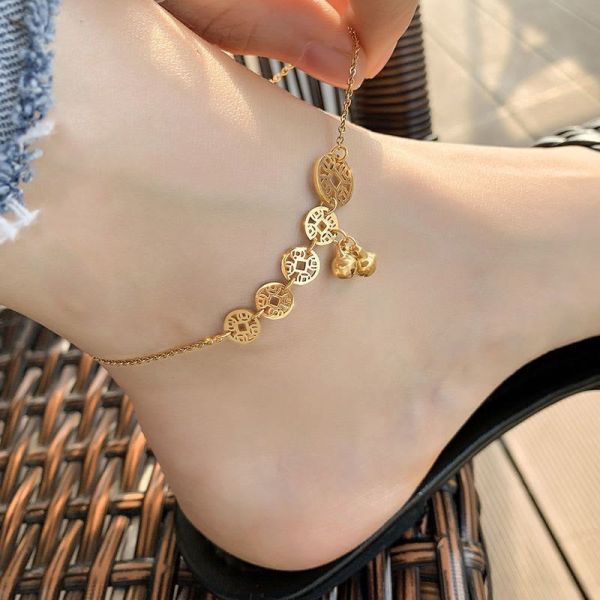 Buddha Stones Copper Coins Bell Charm Titanium Steel Strengthen AnkletAs low as $25.59 Regular Price $34.12
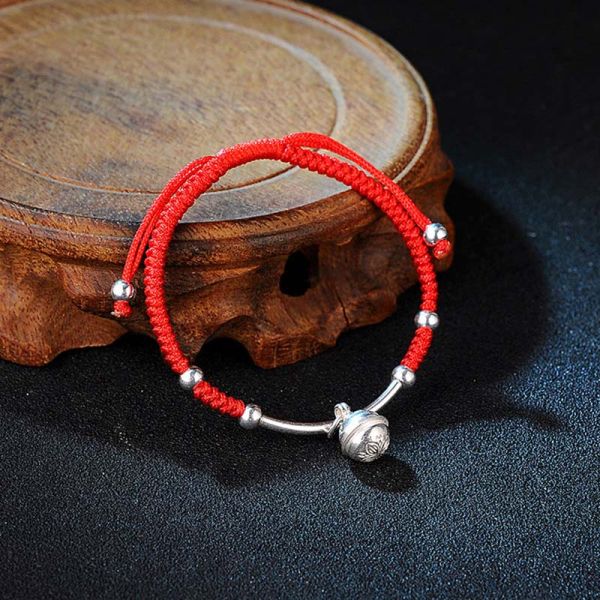 Buddha Stones FengShui Lucky Red String Bell BraceletAs low as $26.59 Regular Price $37.99