
Tingsha Bells Explained: A Short Glossary
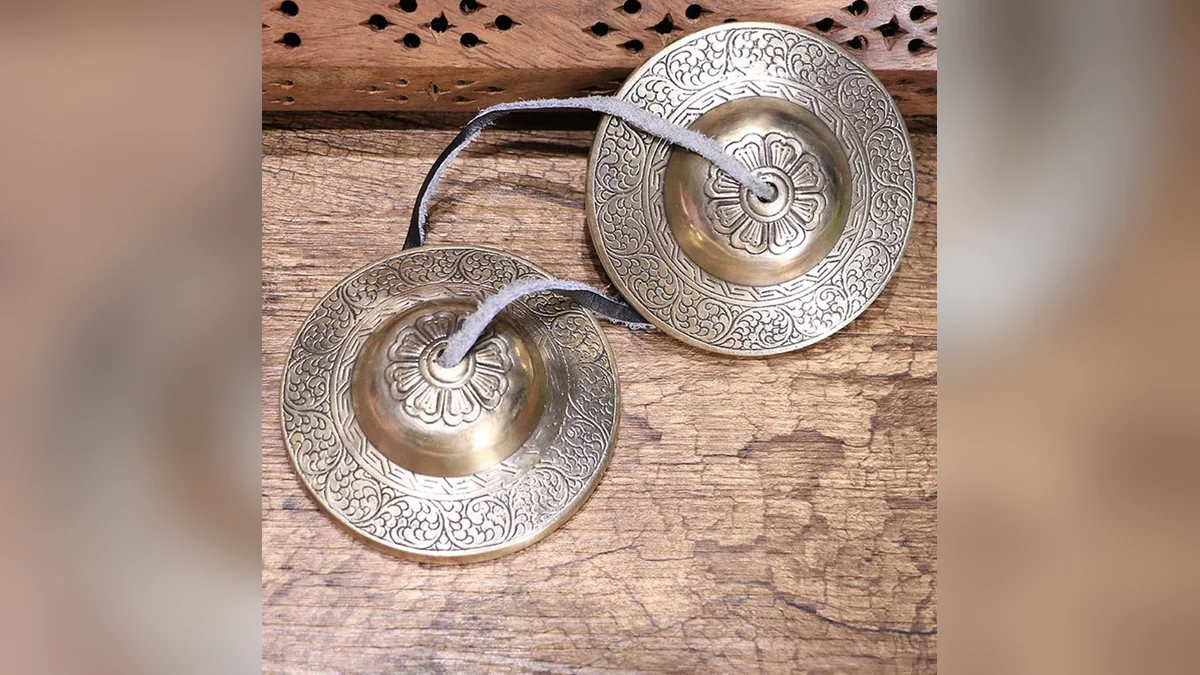
Metal touches metal for an instant, and what follows is a clear, high note that keeps unspooling long after the strike itself has ended. That sound belongs to tingsha bells, a pair of small, thick cymbals joined by a cord or strap and used in Tibetan Buddhist settings to mark a moment rather than fill a room with noise.
This page works like a glossary: short entries, in alphabetical order, for the words that tend to come up around tingsha. For the fuller range of pairs we carry, our tingsha selection sits inside the broader meditation section of the store.
A short glossary of tingsha bells terms
Cord
The two cymbals of a tingsha pair are never free-standing on their own; they are joined by a cord, strap, or short length of chain so they hang at a natural distance from each other when not in use. Holding the cord, rather than gripping the metal itself, keeps the disks free to vibrate instead of damping against your fingers. Length and material vary from set to set, but the function stays the same: let the cymbals swing apart before the strike, then let them separate again afterward so the ring is not cut short.
Dorje / vajra
In Tibetan Buddhist practice, a hand bell is traditionally paired with a dorje, also called a vajra, a short ritual object with pronged ends. Tradition reads the bell as a stand-in for wisdom and the dorje as method, or skillful means, the two held together as one idea rather than two separate tools. Collectors sometimes keep the two pieces resting on a small stand at the altar when they are not being used. Tingsha are a different pair of objects again, closer in spirit to a signal than to this bell-and-dorje set, though both belong to the same broader practice of marking moments in ritual through sound.
Edge strike
Hold the cord so the two disks hang freely, then bring their outer edges together in a glancing contact rather than a flat clap. The edge strike is what gives tingsha their long, ringing decay; a face-to-face clap, where the whole flat surface meets at once, mutes the ring almost immediately and produces a dull knock instead. A slight twist of the wrist just after contact changes the texture of the decay without changing the volume much. Most people find the right angle after a few tries: a light touch at the rim, not a swing with force behind it.
Feng shui bell
A feng shui bell belongs to a separate tradition from tingsha, Chinese rather than Tibetan Buddhist, and it is not struck as a pair the way tingsha are. In Chinese homes these bells are often hung near doors mainly as decoration, and in folk belief they are treated as a symbol of good fortune for the household. Our feng shui bell is made of copper and brass and works as a small hanging piece near an entryway, kept apart from any meditation routine. Placement near a door is a matter of custom rather than any fixed rule.
Ghanta
Ghanta is the term for the hand bell used in Tibetan Buddhist ritual, usually rung on its own rather than struck against a partner cymbal the way tingsha are. It is traditionally held in one hand and paired with a dorje in the other during chanting. Our meditation bell and vajra dorje set is made of copper, weighs between 430 and 445 grams, and is handmade with an old-style dark finish that can be wiped off or left as it is.
Offering and ritual use
Tingsha are commonly used to mark the start or close of a period of meditation, a way of signaling a shift in attention without speaking. Some practitioners strike the cymbals once at each point, others repeat the sound a few times before settling into silence. In some settings they appear alongside offerings as well. Exact practices vary by lineage and teacher, so any specific ritual instructions are better learned from a teacher or community than from a short general description like this one. The sound itself, rather than a fixed sequence of steps, is the constant across these uses.
Six True Words
Many tingsha pairs, including some of ours, are cast with the Six True Words, the syllables of Om Mani Padme Hum, as part of the design on the metal. We cover the meaning of that mantra in a separate post, so we will not go through it again here. Our Auspicious Cloud tingsha pair, made of copper, measuring 7.9 cm across and 0.8 cm thick, and weighing 322 grams as a pair, is offered in two designs, Auspicious Cloud and Six True Words, the second carrying these syllables.
Storage
Keep tingsha somewhere dry, ideally wrapped in cloth or kept in a small bag when not in use, since copper can tarnish with handling and humidity over time. Our Dragon tingsha pair ships with a bag, though the style and color of that bag are assigned at random and not something you can choose in advance. A bag also keeps the two disks from knocking against other objects in a drawer, protecting the strike edges that give the sound its ring.
Sustain
How long a tingsha pair rings out depends on size and thickness as much as on how it is struck. Our Auspicious Cloud pair measures 7.9 cm across and 0.8 cm thick at 322 grams, while our Dragon pair is smaller and thinner, at 6.5 cm across and 0.3 cm thick, weighing 200 grams for the pair. A larger, thicker pair often holds its note longer than a smaller, thinner one, though the exact result still depends on where the edges meet on a given strike.
One habit is worth carrying over from how tingsha are traditionally used: once the edges meet, let the ring finish on its own before you speak or move on to whatever comes next. The sound fades at its own pace, and cutting it short, by hand or by talking over it, ends the one part of the instrument that has no real equivalent in speech. That pause matters whether the pair was struck to open a session or simply to bring one to a close.
Shop the story
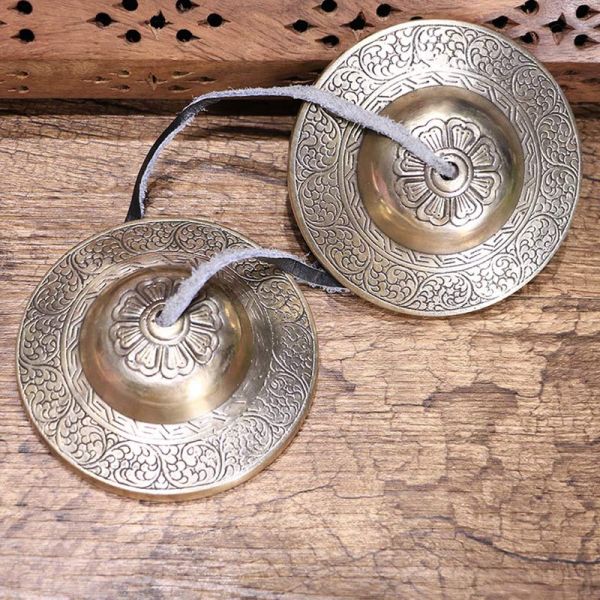 Buddha Stones Tibetan Tingsha Bell Auspicious Cloud Six True Words Copper Wealth DecorationAs low as $179.59 Regular Price $252.94
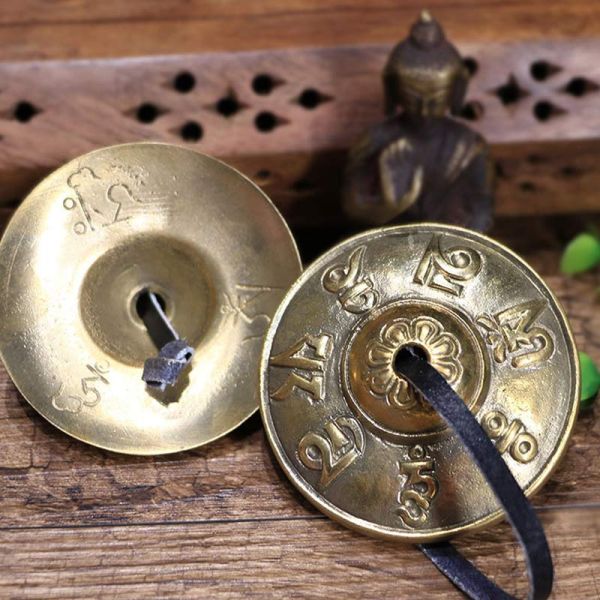 Buddha Stones Tibetan Tingsha Bell Six True Words Dragon Copper Balance Decoration With BagAs low as $49.59 Regular Price $69.85
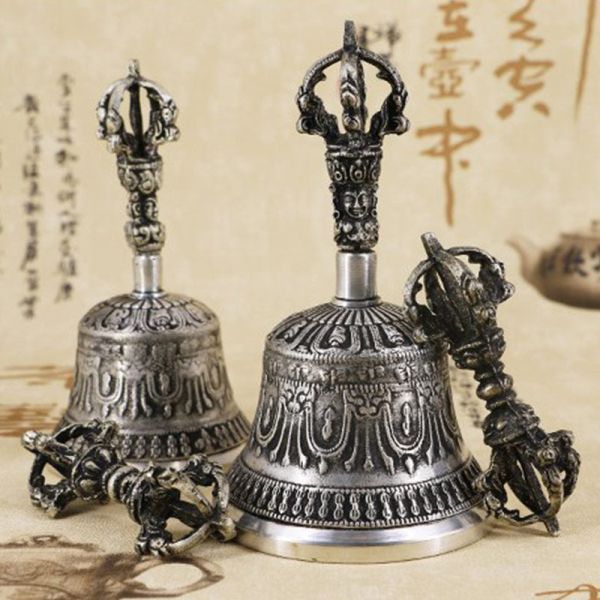 Buddha Stones Tibetan Meditation Bell and Vajra Dorje Copper Decoration SetAs low as $72.59 Regular Price $102.24
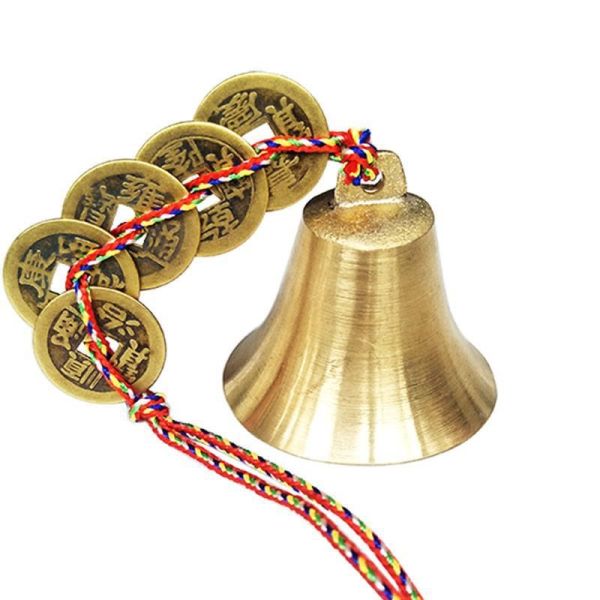 Feng Shui Bell Wealth Success Luck DecorationSpecial Price $33.59 Regular Price $46.65