Chinese Phoenix Meaning: Fenghuang, Harmony, and Art
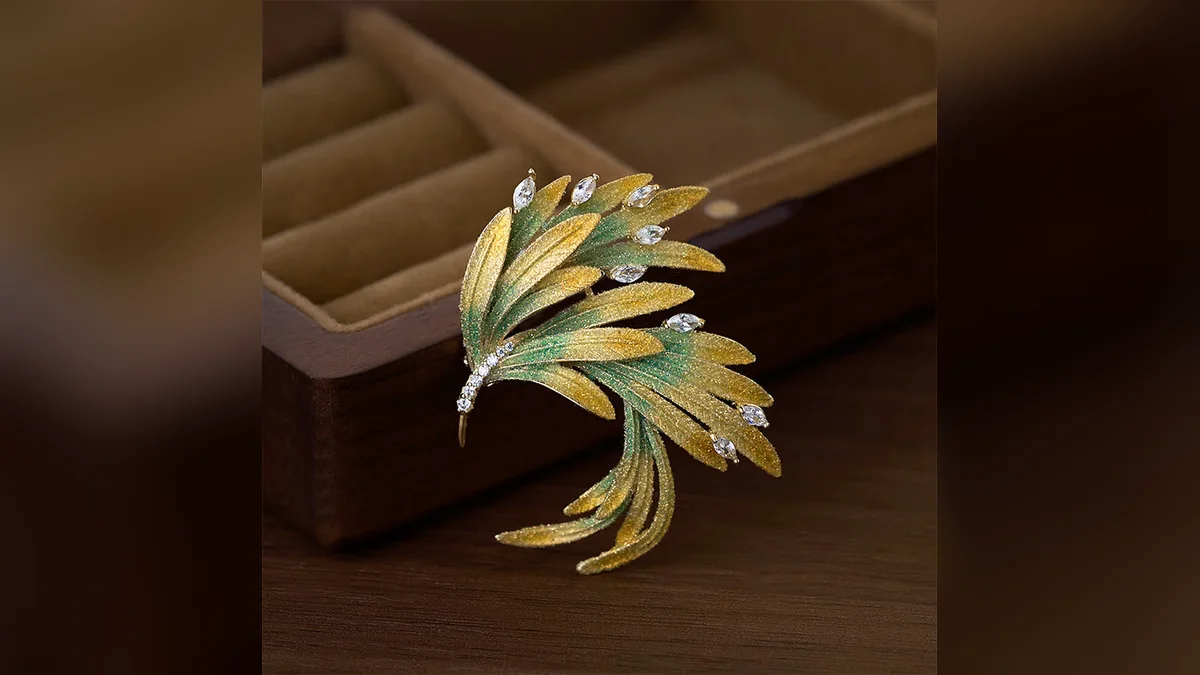
Artists give the fenghuang long, sweeping tail feathers, a crest, and a body borrowed from several birds. Its flowing outline belongs to myth rather than any single species. The Chinese phoenix meaning centers on virtue, harmony, peace, and good fortune: the fenghuang (凤凰) is a mythical bird associated with these ideals in Chinese culture. In imperial tradition, it became the paired emblem of the empress beside the emperor’s dragon. Those associations help explain why the bird appears in wedding designs, decorative objects, and personal accessories.
Chinese phoenix meaning: a bird of virtue and peace
The fenghuang is traditionally admired for what it represents as much as for its appearance. Virtue gives its beauty a moral dimension. Harmony suggests things existing in a fitting relationship, while peace connects the bird to a well-ordered world. Good fortune belongs to this symbolic language too, as a wish expressed through an image.
Legend says the fenghuang appears in times of peace and good rule. That story describes the conditions people hoped to see around them. The bird’s arrival signals an ideal society within the legend; owning an object with its image does not produce those conditions.
A pair already lives within the name
The name joins feng and huang, traditionally read as male and female. In that understanding, the bird itself already holds a pair. This matters because the familiar association of phoenix with empress can otherwise make its identity seem exclusively female. Different symbolic uses have developed around the same creature, and they do not all fit into one fixed definition.
In one classic list, the fenghuang is one of the Four Benevolent Animals, alongside the qilin, tortoise, and dragon. Chinese traditions contain different groupings of mythical creatures, so this is one specific grouping. It places the phoenix among beings associated with auspicious signs and an ideal order.
The dragon and phoenix at a wedding
The imperial pairing gives the dragon and phoenix a formal relationship: emperor and empress, presented through two recognizable emblems. In wedding tradition, the pairing expresses a wish for a balanced marriage and marital harmony. It is a symbolic statement about partnership, rather than a prediction about the couple’s future.
You can read the two figures together without treating them as identical. Their different shapes let an artist create a balanced composition while keeping each creature distinct. Our guide to Chinese dragon symbolism gives more context for the dragon’s side of that pairing. Here, the phoenix remains the focus: its presence changes a single-creature design into an image of relationship.
Read the companions around the bird
A phoenix rarely needs a written explanation to suggest a theme, but nearby motifs can guide your reading. These three pairings offer useful starting points. Their meanings depend on context, so treat them as traditional associations rather than a code with only one answer.
- Phoenix with peony: The peony is traditionally associated with prosperity and honor. Beside the phoenix, it can express wishes for flourishing circumstances and distinction.
- Phoenix with dragon: Together, the creatures traditionally represent marital harmony. In wedding imagery, their pairing expresses the hope for a balanced marriage.
- Phoenix with clouds: Clouds give the mythical bird a celestial setting. In auspicious imagery, the combination can suggest a favorable, harmonious order beyond an ordinary landscape.
Different myths: fenghuang and the fire phoenix
The English word “phoenix” can blur two different traditions. The Western phoenix is associated with fire and rebirth, especially the familiar account of a bird rising again from ashes. That story should not be used as the basic explanation of the Chinese fenghuang.
For the fenghuang, virtue, harmony, and its legendary appearance during peaceful rule provide the clearer starting point. A long tail or a dramatic pose does not make a Chinese phoenix a bird of fiery resurrection. When a description mixes both traditions, look at which story it is actually telling. Shared English naming does not make the myths interchangeable.
The phoenix on objects you can choose by detail
Our phoenix designs bring the motif into different kinds of objects. Once you understand the traditional associations, practical details can guide your choice: the material, the listed dimensions, and the particular design option. The symbolism offers context; the specifications describe the product.
A feather on a lapel
Our Phoenix Feather copper brooch lists copper and metal as its materials. It comes in blue phoenix or green phoenix options and measures about 1.77 × 1.73 in (4.5 × 4.4 cm). Those dimensions give you a reference when considering its placement on a garment. Our brooch styling guide covers fastening and placement. A decorative bird can be chosen for its outline and color as well as its traditional meaning.
A phoenix at the tea table
The Phoenix White Porcelain ceramic teacup is ceramic, with a listed size of 7.5 cm × 6 cm and a capacity of 180 ml. The listing includes one teacup and one gift box. Other accessories appearing in the photos are props and are not included. Reading that distinction keeps the photograph separate from what you will receive.
Combs and embroidered bags
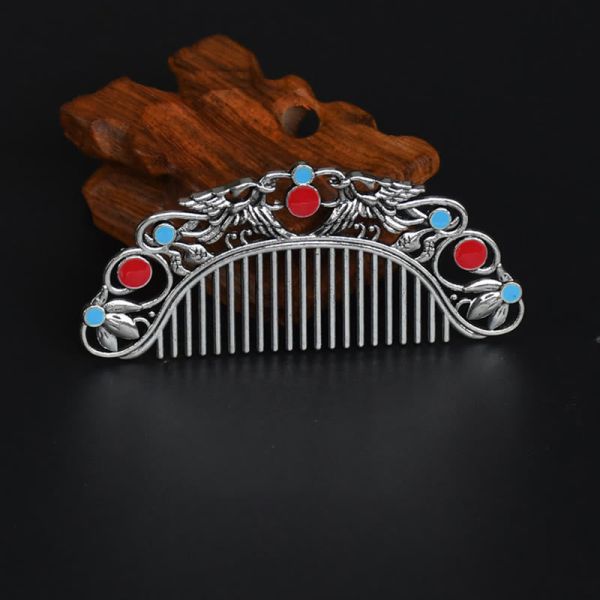
Our Lucky Dragon Phoenix comb is made of zinc alloy plated gold, with listed sizes of 4 × 11 cm and 4 × 14 cm. Design options include Double Phoenix, Dragon Phoenix, Feather, Phoenix Hollow, Phoenix Pattern, Happiness, and Peony; the listing also offers a Gift Box option. Check the selected option carefully, since the name covers several designs. The Dragon Phoenix option connects directly with the traditional pairing discussed above.
The Fish Flower Phoenix Embroidery Xiangyunsha silk shoulder bag lists mulberry silk, xiangyunsha silk, cow split leather, polyester, and metal. Its dimensions are 53 × 14 × 36 cm, and it has a magnetic clasp. Options include black or saddle brown phoenix embroidery, alongside fish-flower versions in those colors. Select a phoenix embroidery option if the bird is the motif you want; the fish-flower versions are separate choices within the listing.
Let the design keep its own meaning
Understanding Chinese phoenix meaning starts with recognizing the fenghuang on its own terms. Notice the crest and sweeping tail, then consider its companions and setting. A dragon points toward partnership; flowers or clouds offer another context. The same bird can carry an imperial association, a wedding wish, or a broader ideal of harmony. Its long tail draws attention to the design, while its traditional associations give you another way to read the image.
Shop the story
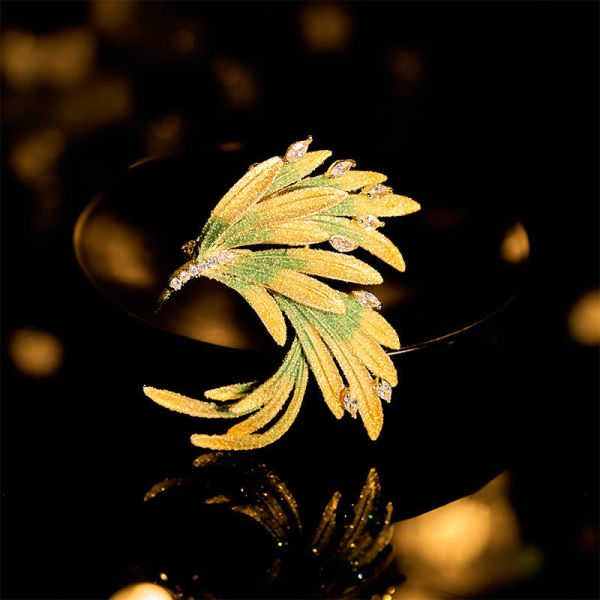 Buddha Stones Phoenix Feather Strength Copper BroochAs low as $35.59 Regular Price $48.09
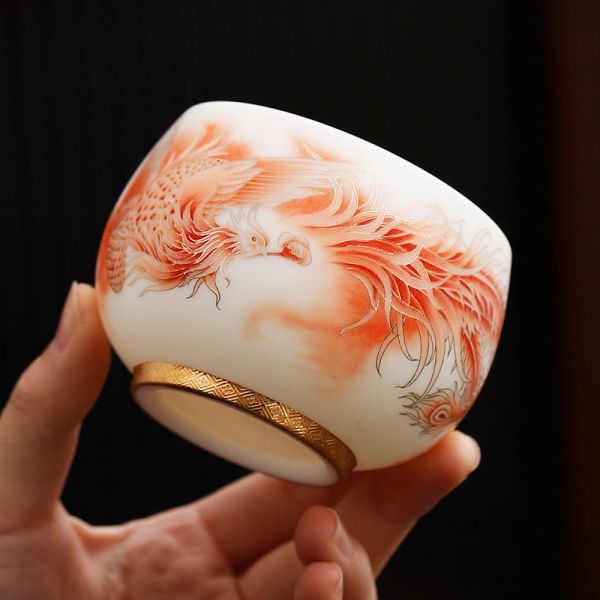 Buddha Stones Phoenix White Porcelain Ceramic Teacup Kung Fu Tea CupSpecial Price $69.59 Regular Price $98.01
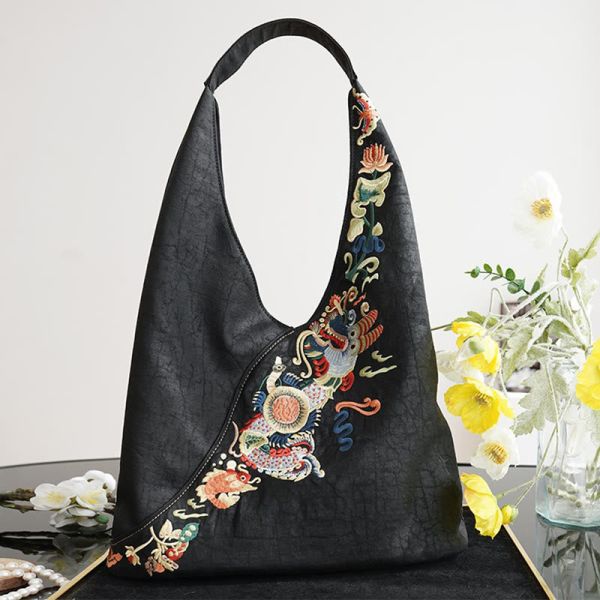 Buddha Stones Fish Flower Phoenix Embroidery Xiangyunsha Silk Shoulder BagAs low as $149.59 Regular Price $199.45