
How to Wear a Brooch: Eight Places to Pin a Flower
A small fabric flower pinned to a gray coat lapel adds color while leaving the coat’s shape in view. The practical answer to how to wear a brooch starts with the fabric: choose a supported spot, fasten the clasp securely, and check that the pin does not pull the garment out of shape. At Buddha Stones, we suggest treating placement as part of the outfit, with enough clear space around the flower to show its outline.
Where a brooch can go
Coat or blazer lapel
The lapel is a classic starting point. Pin the brooch where a lapel buttonhole would sit, using the folded fabric to help support it. Either side can work; check the position with the coat open and closed. Our Cultural Heritage Handcrafted Silk Art Red Camellia brooch is made of silk and copper and measures about 11 × 5.5 cm, making it the largest of these four designs. Allow enough room for its outline to stay within the lapel.
High on a plain sweater’s shoulder
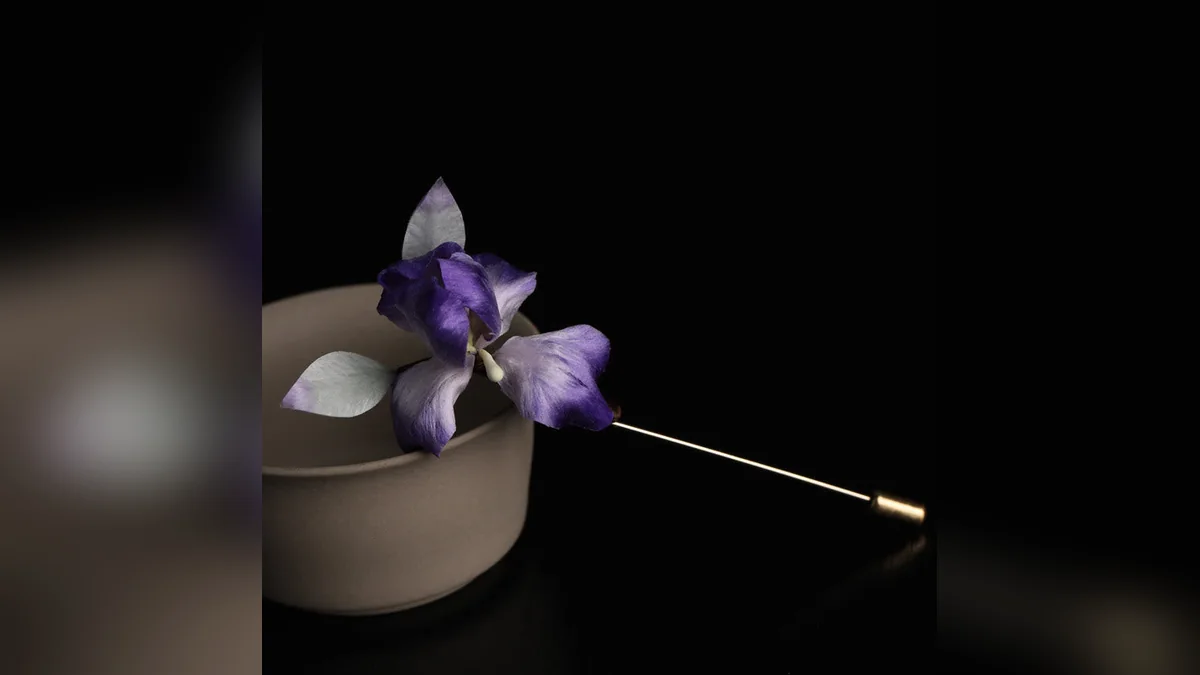
A flower high on the shoulder gives a plain sweater a clear point of interest. Choose a position below the shoulder seam, away from the neck opening, and check that the fabric stays level. Our Handmade Silk Art Purple White Iris brooch is made of silk and copper and is about 7 cm long. Use a sweater with a firm knit, and avoid stretching the stitches apart to push the pin through.
At a collar point or closing a collar
Place a small pin on one collar point for an off-center detail, or position it at the meeting point of a closed collar. The collar should already sit comfortably; the brooch should not have to pull the edges together. Our Handcrafted Silk Art Golden Peony brooch combines silk, copper, and pearl and measures about 7 cm long. Check its length against the collar before fastening, leaving the flower clear of the folded edges.
On a scarf or shawl
A brooch can decorate a scarf or shawl while holding overlapping fabric in place. Arrange the folds first, then pin through both layers where they naturally meet. Our Handcrafted Silk Art Velvet Flower Ginkgo Leaf brooch is made of silk fibers and copper alloy and is about 7–8 cm long. Leave enough ease to move your arms without tugging the fastening. Keep the flower on the outside of the folds so the fabric does not press against it.
On a hat band
A hat band offers a defined line for placing a brooch. Position it slightly to one side, with the flower resting clear of the brim. Where the band allows it, pin through the band itself without piercing the hat underneath. Check the inside before putting the hat on: the pin tip must be fully enclosed in its clasp. Avoid a spot where the flower would brush against a coat collar each time you move your head.
Cinching a cardigan instead of a button
Use a brooch to join the front edges of a cardigan where you want it to close. Let the cardigan hang naturally, overlap the edges slightly, and fasten through both layers. This works best when the pin holds an easy overlap rather than drawing a tight garment together. Watch for a drooping neckline or stretched stitches, which signal that the fabric needs more support. A firm cardigan edge gives a better anchor than a loose, open knit.
On a bag strap or tote
A fabric tote or broad fabric bag strap can carry a brooch away from your clothing. Choose an outward-facing area that will not sit under your hand, against your body, or beneath another strap. Pin through a sturdy fabric section and check that the clasp cannot catch the bag’s contents. Avoid piercing leather or coated surfaces, where holes may remain visible. For fabric flowers, choose a position that stays clear of the bag’s base and other places likely to be crushed.
In a cluster of two or three small pins
Group two or three small pins within one area, such as a broad lapel or the upper front of a jacket. Lay out the arrangement before fastening anything. Leave a little space between the pieces so their edges do not rub, and try a loose triangle or a short diagonal line. Shared colors can connect different shapes. Check the combined weight against the fabric: several individually small pins can still make a thin garment sag.
Pinning without damage
Check the fabric and fastening before choosing the final position. If the pin resists, stop and reposition it instead of forcing the point through.
- Pin through two layers for support. Use a folded lapel, overlapping scarf ends, or a garment edge. Keep the layers smooth so the pin does not trap a bulky wrinkle.
- Match heavier pieces to thicker fabric. A firm coat or jacket usually offers more support than a thin blouse. If the fabric pulls downward, choose another position or garment.
- Be careful with delicate silk and fine knits. The point may snag threads or leave a visible hole. Avoid these fabrics, or fasten through a suitable hidden layer without piercing the delicate outer fabric.
- Open and close the clasp fully. Give the pin room to pass through, then secure the tip inside the catch. Check it before wearing.
- Remove the brooch before washing. Unpin it before the garment goes into the laundry, and check scarves and cardigan fronts as well as lapels.
Velvet flowers, a Chinese craft
Silk velvet flowers, known as ronghua, have been made in China for centuries. Their flower and leaf forms are shaped from silk fibers, bringing textile work into small decorative ornaments. Beijing velvet flowers are a recognized traditional craft within this broader tradition.
The name ronghua sounds like words associated with glory and prosperity. In Chinese tradition, this association helped make velvet flowers fitting hair ornaments and gifts, carrying wishes expressed through the name and the floral form. These are traditional associations attached to the ornament and the act of giving it. A flower brooch offers another place for this type of textile ornament: on a lapel, a folded shawl, or another supported patch of fabric.
How to wear a brooch with care
Keep fabric flowers away from water and anything that could crush their shape. Handle the base when fastening or removing a brooch, rather than pressing the petals. Store it flat in a box with enough room around the flower; do not stack other jewelry on top. If dust settles on the surface, brush it off gently with a soft brush, using light strokes without pulling at the fibers.
The best position gives the flower room and the fabric enough support. A lapel offers a familiar starting point, while a shoulder, collar, or scarf changes where the detail sits. Keep the fastening secure and the petals clear, and let the shape of the garment guide the placement.
Shop the story
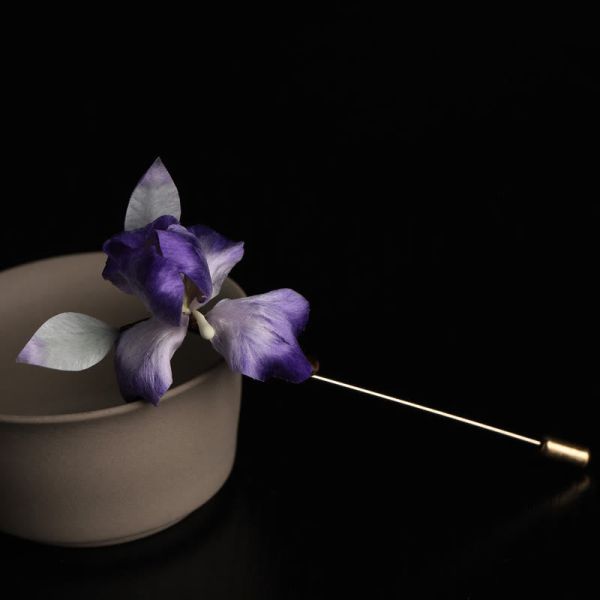 Buddha Stones Handmade Silk Art Purple White Iris Protection BroochSpecial Price $25.59 Regular Price $34.58
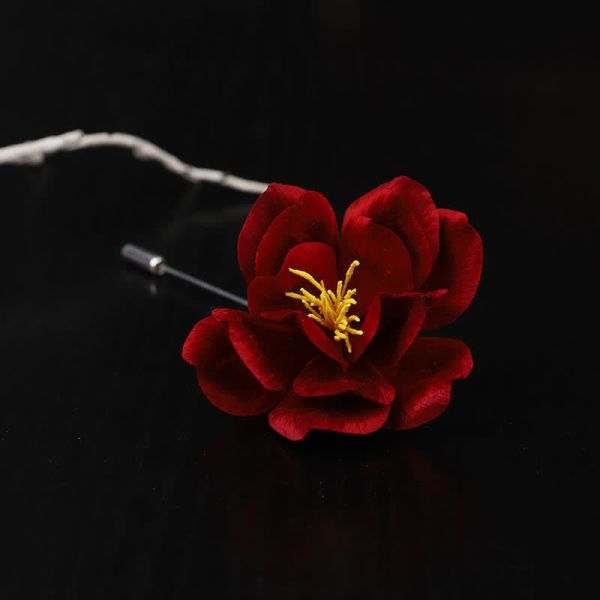 Buddha Stones Cultural Heritage Handcrafted Silk Art Red Camellia Blessing Sincerity BroochSpecial Price $45.59 Regular Price $64.21
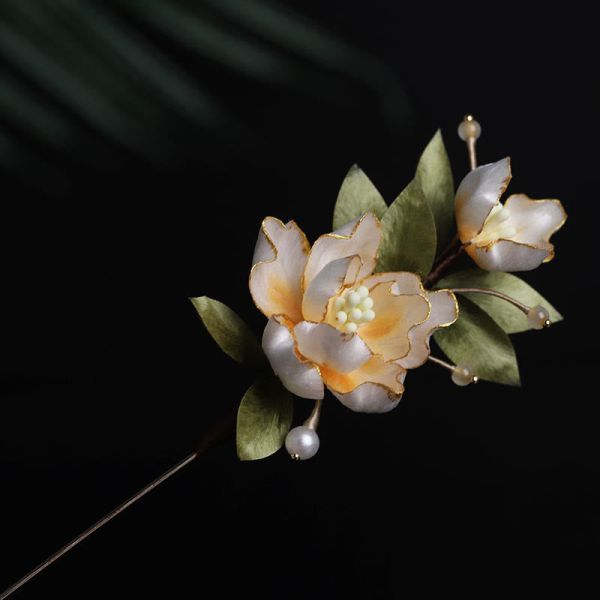 Buddha Stones Handcrafted Silk Art Golden Peony Flower Good Fortune BroochSpecial Price $42.59 Regular Price $56.79
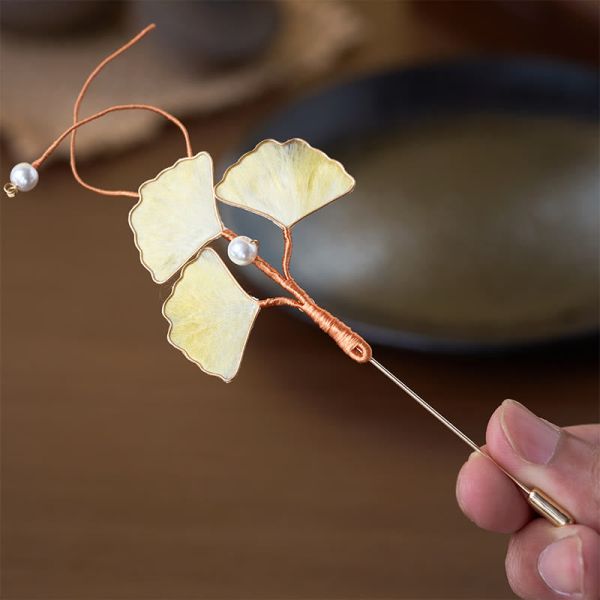 Buddha Stones Handcrafted Silk Art Velvet Flower Ginkgo Leaf BroochSpecial Price $25.59 Regular Price $34.58