
Chinese Lantern Meaning: Festivals, Shapes and DIY
Strings of red lanterns hang along streets and doorways at the New Year. In Chinese tradition, lanterns stand for light, celebration, reunion, and wishes for good fortune. That is the heart of Chinese lantern meaning, though particular colors, shapes, and occasions add their own associations. Red lanterns are traditionally hung for festivals and weddings, marking a place prepared for celebration.
A lantern can also be something to carry, assemble, or read a riddle from. Understanding the occasion helps you choose a design and explain its symbolism without treating a traditional wish as a promised result.
Chinese lantern meaning: red color and round shape
Red is traditionally associated with joy, celebration, and good fortune in Chinese festive decoration. A red lantern beside a doorway belongs to that same visual language. At a wedding, it can express happiness for the couple; during the New Year, it joins other decorations that convey hopes for the coming year.
The round lantern carries a related idea: reunion and completeness. Its continuous outline offers a fitting symbol for a family gathering. Color and shape work together, so a round red lantern can combine a festive welcome with wishes for togetherness.
These associations are cultural traditions, and interpretations vary among families and communities. We describe them as symbolic meanings. A decoration cannot guarantee luck, wealth, or any other outcome, even when its name expresses one of those wishes.
The Lantern Festival and its riddles
The Lantern Festival, or Yuanxiao, is held on the first full moon of the lunar year (the fifteenth day of the first month) and closes the Spring Festival season. Lantern displays are central to the occasion, giving the closing celebration its familiar English name. The festival brings the lantern's associations with light and reunion into a shared public setting.
Lantern riddles, often called caidengmi when referring to the guessing activity, are written on or attached to lanterns. The display becomes something to read as well as admire. A short clue may invite wordplay or ask the reader to identify an object.
For a celebration at home, you can attach a separate riddle card near a lantern. Leave the light and its switch accessible, and keep the card clear of moving doors or walkways.
Mid-Autumn lanterns and children's lanterns
At the Mid-Autumn Festival, children carry lanterns, often in animal shapes. Rabbits, fish, and other recognizable creatures give a child a design to point out and name. This carrying tradition gives lanterns a different role from the red decorations suspended above a New Year street.
The festival's connection with the moon and family reunion also helps explain the appeal of moon and rabbit designs. A lantern does not have to be round or red to belong to a festival celebration; its picture, outline, and intended occasion all matter.
Popular explanations sometimes link deng (灯), the word for lantern, by sound with ding (丁), meaning sons or descendants. This is a traditional word association connected with hopes for family continuity. It should be understood as folk symbolism rather than a literal translation of “lantern.”
Reading common lantern shapes
A shape can suggest a theme, while a printed character makes a wish more explicit. These brief associations can help you read a display without assigning one fixed meaning to every design.
- Rabbit: Rabbit lanterns are closely associated with Mid-Autumn celebrations and the traditional moon rabbit story. They suit a display centered on the festival's lunar imagery.
- Koi: Fish imagery traditionally expresses wishes for abundance, while carp also appear in stories about perseverance. Our koi fish meaning guide discusses the broader symbolism beyond lantern decoration.
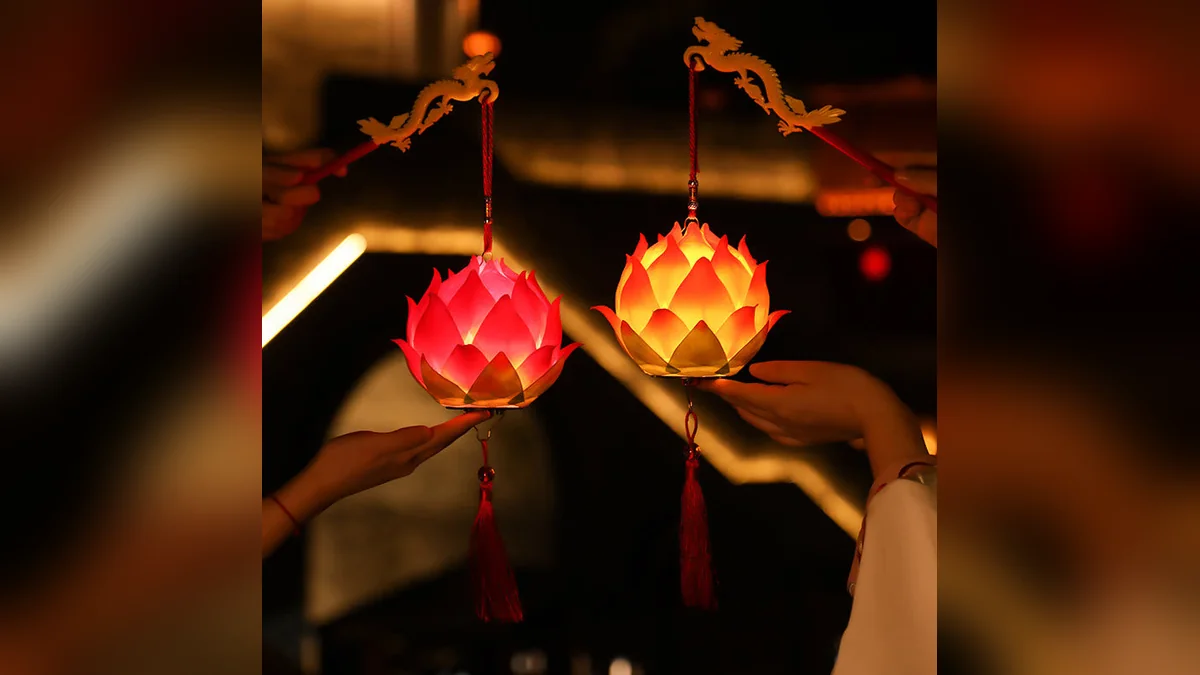
- Lotus: A lotus outline adds a flower form associated with purity in Buddhist symbolism. The lotus flower's meaning in Buddhism provides context for that association.
- The fu character: Fu (福) means good fortune or blessing. On a lantern, the written character expresses a traditional wish and may appear alongside rabbits, flowers, or other motifs.
- Dragon: Dragon designs draw on traditional associations with strength and auspiciousness. A dragon image can be part of a round lantern's decoration as well as a lantern's overall outline.
DIY lantern kits to compare
Our DIY options offer different shapes, materials, and dimensions. Compare the selected style's measurements with your planned display space, allowing room below for any tassels. Words such as “Good Luck” in product names express traditional wishes.
Lotus flower lantern
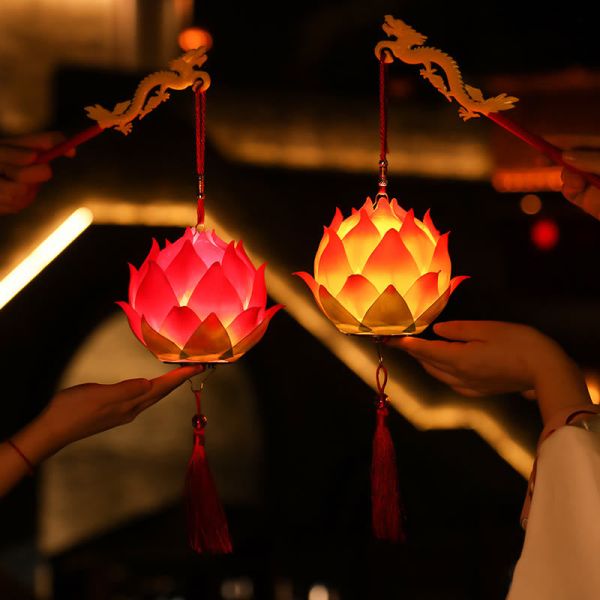
Our DIY Lotus Flower Dragon Lantern Tassel Lamp requires self-assembly. It measures 43 cm in length, with a lotus size of 12 × 15 cm. Its materials are plastic, silk cloth, and electronic components. Color options are light pink, light yellow, purple, red, and rose red. Choose the color for its place in your decoration scheme; the lotus shape supplies the floral theme.
Rabbit paper lantern
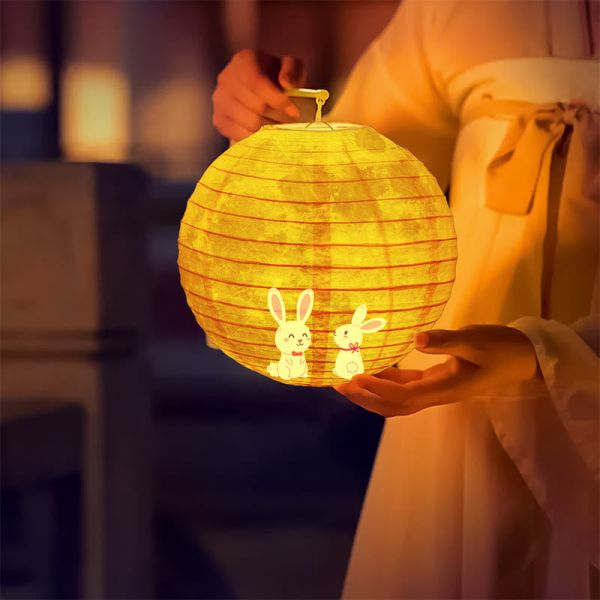
The DIY Rabbit Paper Lantern comes in blue moon rabbit, two rabbits, and white fu character rabbit styles. This paper lantern measures 25 × 25 cm. The package contains the lantern, a 26 cm handle, a lamp bead, a bracket, and two button batteries. Its stated lantern size and separate handle length are useful measurements when planning a hanging position.
Rabbit, moon, and festive character options
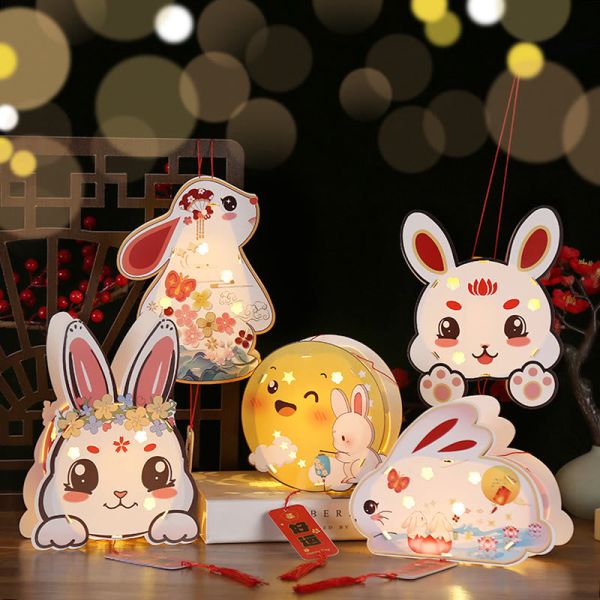
The DIY Good Luck Cute Rabbit Paper Lantern has 14 styles, including several rabbits, a fu character lantern, a lucky moon lantern, a round dancing dragon lantern, and a round God of Wealth lantern. The material is paper. Sizes vary by style; examples include 16 × 18 cm, 21 × 43 cm including tassels, and 17 × 53 cm including tassels. The kit contains front and back pattern pieces, two side pieces, red rope, a lamp, a pendant decoration, a tassel, a handle rod, and a button battery.
Koi fish paper lantern
The DIY Good Luck Koi Fish Paper Lantern is paper, with color printing and graffiti type options measuring 33 × 16 × 36 cm, and a lucky koi option measuring 33 × 18 × 34 cm. The stated weight is 139 g, or 121 g for the graffiti type. The kit includes a folded red lantern, two nylon half-rounds, five modeling cards, a lantern rod, red and orange adhesive non-woven fabric, two alcohol glues, red rope, string lights, and a button battery.
Assembling and displaying a DIY lantern
Prepare a clear, dry work surface before opening the kit. Let an adult manage batteries and any adhesive, and give delicate paper pieces enough space to lie flat.
- Lay out the parts. Compare the contents with the kit instructions and keep loose components in a shallow tray.
- Follow the supplied instructions. Work in the order given for your selected design. Avoid forcing tabs or folds into place.
- Check the light before closing. Confirm that it turns on and that you can reach the switch and battery compartment.
- Choose a clear display position. Keep the lantern away from water, cooking areas, open flames, and places where a tassel could catch.
These lanterns use small battery lights rather than candles. Keep button batteries and small parts away from young children. An adult should install and replace batteries and supervise children's assembly and carrying.
Leave enough space around the finished lantern for its outline to be visible. A rabbit beside a moon motif or a single lotus above a table can keep the chosen festival theme easy to recognize.
Shop the story
 Buddha Stones DIY Lotus Flower Dragon Lantern Tassel Lamp DecorationAs low as $68.59 Regular Price $93.96
 Buddha Stones DIY Rabbit Paper Lantern Lamp Mid-Autumn Festival Lantern DecorationAs low as $45.59 Regular Price $60.79
 Buddha Stones DIY Good Luck Cute Rabbit Paper Lantern Lamp Mid-Autumn Festival Lantern DecorationAs low as $39.59 Regular Price $53.50
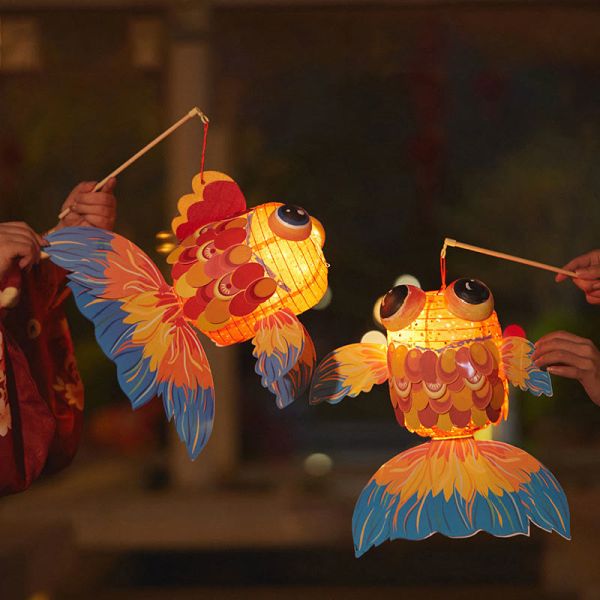 Buddha Stones DIY Good Luck Koi Fish Paper Lantern Lamp Mid-Autumn Festival Child Kids Lantern DecorationAs low as $28.59 Regular Price $39.71