White Turquoise Meaning: A Practical Buying Guide
White turquoise beads often have a milky surface crossed by gray or black veins. The answer to white turquoise meaning starts with a naming distinction: this jewelry trade label commonly refers to howlite, a borate mineral, or magnesite, a carbonate mineral, rather than turquoise itself. In jewelry symbolism, white can represent purity, while accompanying yin yang designs traditionally express complementary opposites. These associations describe symbolism, not a stone’s effects.
White turquoise meaning and the name on the label
A buying decision begins with the material description. Howlite and magnesite are separate minerals that can look similar as pale beads. Howlite commonly appears white with gray or dark veining; magnesite can be white, gray, or cream to beige. Neither becomes turquoise simply because a seller uses that word.
Turquoise belongs to the phosphate mineral family and contains copper and aluminum. Its familiar color range runs from blue to green. Pale color or a webbed pattern alone cannot establish that a bead belongs to this mineral family.
Compact howlite used for ornamental objects is commonly given a Mohs hardness of about 3.5; magnesite is about 3.5–4.5. These figures are general material references, not test results for our bracelets. Because the trade name covers different possibilities, there is no single hardness number you should assign to everything sold as white turquoise.
Our product descriptions below retain the material names supplied on our pages. They do not establish a separate identification as howlite or magnesite. If mineral identity is central to your purchase, seek specific identification rather than treating a product name as a laboratory finding.
Quality checks beyond a bright white surface
Quality involves clear disclosure and sound bead finishing. A nearly plain bead and a heavily veined bead can both suit a design. Decide which appearance you prefer, then look for consistency between the description, available photographs, and selected option.
- Surface finish: Look for chips, conspicuous pits, and cracks, especially near drill holes. A dark line may be part of the pattern; a visible opening deserves closer attention.
- Drilling: Hole edges should look smooth enough that they are unlikely to abrade the string. Large chips around a hole are different from ordinary color variation.
- Matching: Similar bead dimensions can make a strand look orderly. Differences in veining do not automatically indicate poor quality.
- Disclosure: A useful description distinguishes the named material, treatment information when known, and the dimensions of the selected design.
Howlite and magnesite can be dyed, including blue to imitate turquoise. Ask whether color has been added and whether a coating, wax, or resin treatment is present. Dye changes appearance; resin impregnation is used in the gemstone trade to fill pores and support porous material. A treatment should be described rather than inferred from shine.
A white appearance does not prove that a stone is untreated. Equally, a glossy surface alone does not prove resin use. Photographs can help you judge appearance, but they cannot settle every identification or treatment question. Avoid scratch tests, acids, hot needles, and solvent tests on finished jewelry; these can damage beads or their stringing.
From pale stone to a finished bead bracelet
Stone beads are generally produced by cutting material into smaller blanks, shaping them, drilling holes, and finishing the surfaces. Round beads are smoothed to a curved profile before stringing. This describes a common manufacturing sequence, not a documented production method for a particular Buddha Stones bracelet.
Designers may arrange pale beads alone or alternate them with darker materials. Black and white arrangements can refer to yin yang symbolism, although color pairing by itself does not establish a specific traditional design. Decorative forms and letter beads provide other ways to organize a bracelet.
Bead diameter and bracelet fit are separate measurements. Larger beads create a broader profile, while the inner opening and stringing affect fit. Measure around your wrist with a flexible tape and compare that measurement with the product information. Do not calculate bracelet length by multiplying bead size by an assumed bead count.
Gentle cleaning and a separate place to rest
When mineral identity or treatments are uncertain, keep routine care simple. Wipe dust away with a clean, dry, soft cloth. For a small mark, use a cloth lightly dampened with water, then dry the surface promptly. Avoid soaking an assembled bracelet, particularly when it contains elastic string or mixed materials.
Keep pale beads away from perfume, household cleaners, cosmetics, and strongly colored liquids. Put jewelry on after applying lotions or fragrance. Remove it before washing, swimming, or tasks that expose it to chemicals or repeated impacts. Skip ultrasonic cleaners and steam cleaning when the material and treatment history are unknown.
Place the bracelet in its own fabric pouch or a padded compartment so neighboring jewelry cannot rub against it. Choose a dry location away from prolonged direct sunlight and heat. Roll an elastic-string bracelet gently over your hand instead of pulling it wide. Our gemstone jewelry cleaning guide gives broader care guidance for mixed-material pieces.
Four Buddha Stones bracelets to compare by their details
The following descriptions use our supplied product information. Wealth and Blessing in product names express traditional wishes. They do not guarantee prosperity, good fortune, or any other result.
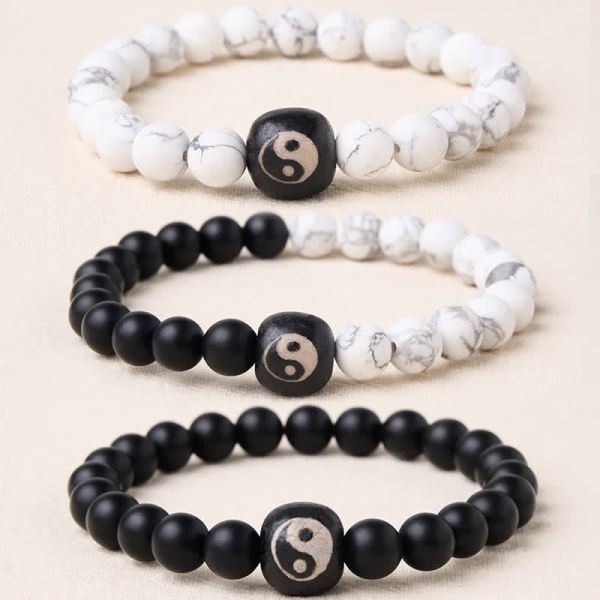
Yin yang bracelet with black obsidian
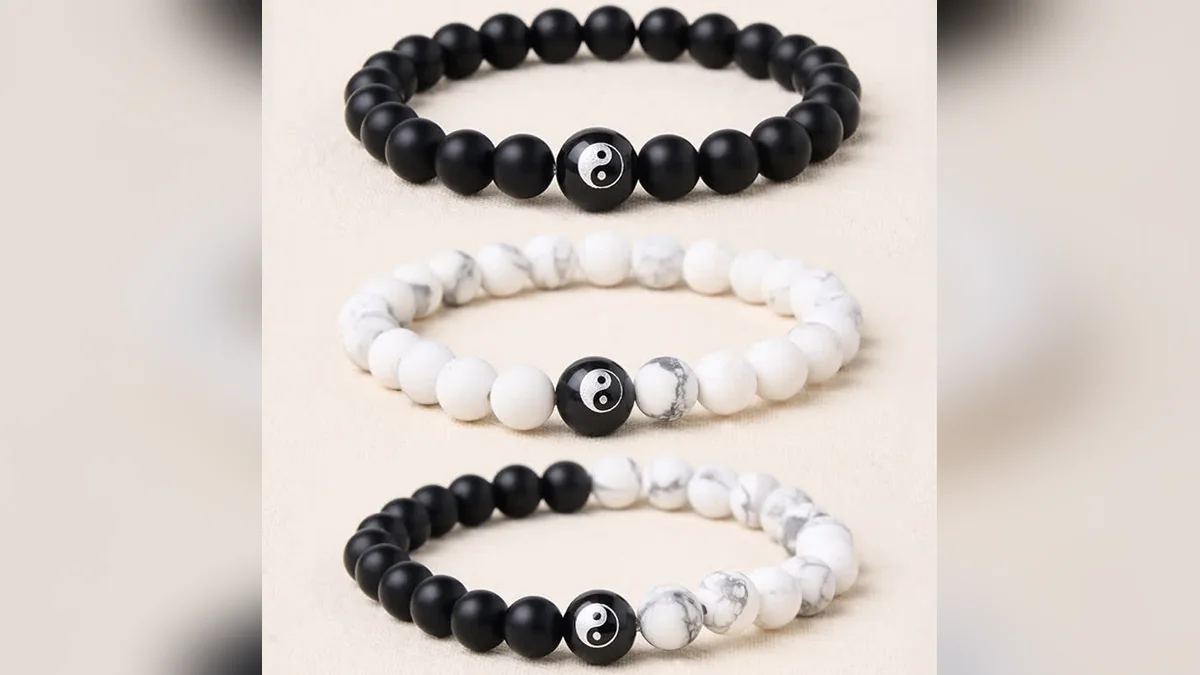
Our Black Onyx White Turquoise Yin Yang Black Obsidian Balance Bracelet has three named options: Black Onyx, Black Onyx And White Turquoise, and White Turquoise. The specifications name Black Onyx, White Turquoise, and Black Obsidian, with bead sizes of 8mm and 10mm. Check the chosen option when comparing materials.
It uses Premium Elastic String and gives a wrist circumference of 5.9–6.3 in (15–16 cm). The package contains 1 × Bracelet. Its product note allows for slight variations in color, details, and overall appearance.
Turtle design with a traditional wish
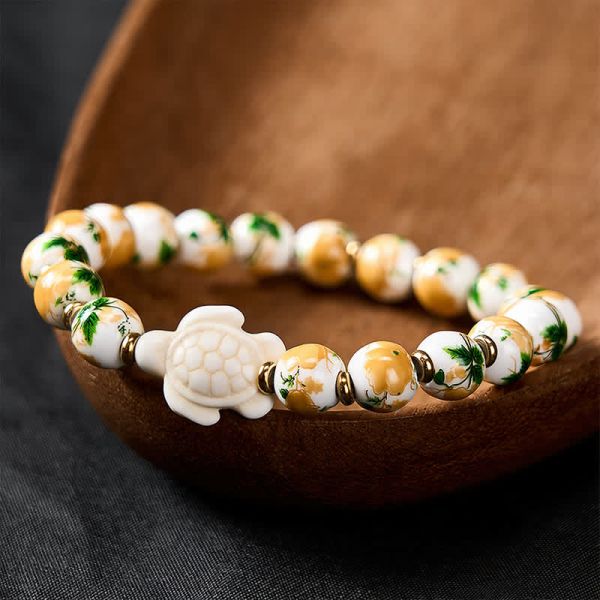
The Natural White Turquoise Turtle Design Wealth Bracelet is identified by SKU BS216542E1443. Its name identifies the turtle design and white turquoise. Treat Wealth as symbolic wording when considering this design; it is not a promised outcome.
Frosted stone and letter beads
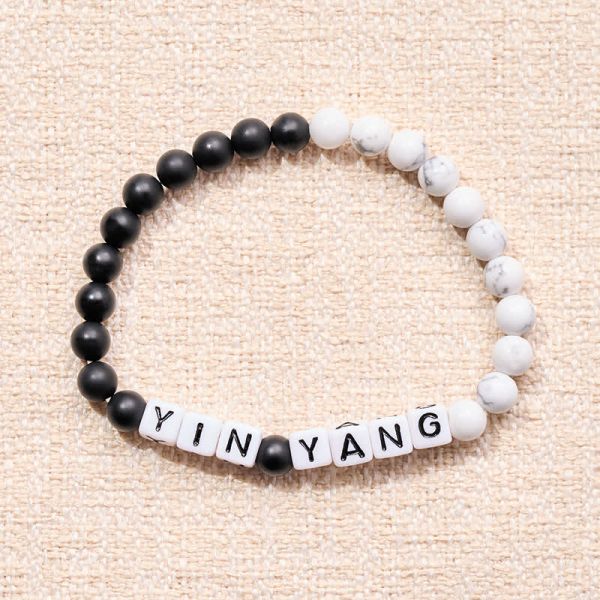
Our White Turquoise Frosted Stone YIN YANG Letters Beads Blessing Bracelet specifies White Turquoise and Frosted Stone. It has 6mm beads and Premium Elastic String. The wrist circumference given is 5.9–6.3 in (15–16 cm), and the package contains 1 × Bracelet. The material term Frosted Stone does not identify a particular mineral species.
Round bead balance bracelet
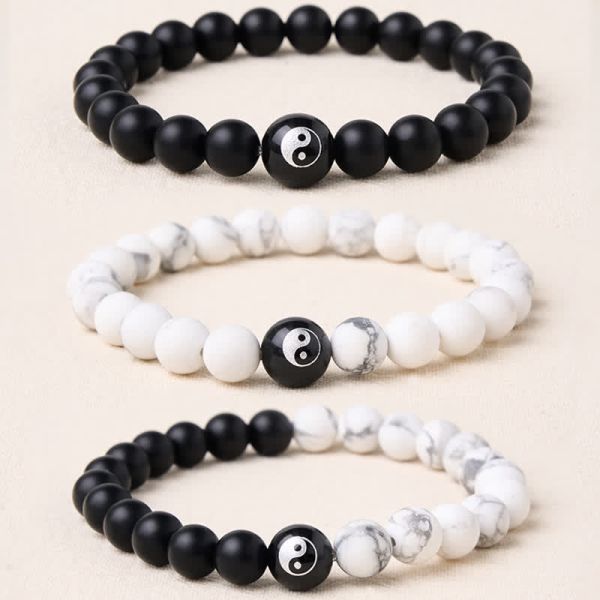
The Black Onyx White Turquoise Yin Yang Balance Round Bead Bracelet offers Black Onyx, Black Onyx And White Turquoise, and White Turquoise options. Its specifications name Black Onyx and White Turquoise, Premium Elastic String, and bead sizes of 8mm, 11*12mm.
The wrist circumference is 5.9–6.3 in (15–16 cm), with 1 × Bracelet included. A product note describes possible slight differences in color, details, and overall appearance.
Choose pale beads for the appearance you prefer, and read their material label with care. Clear identification, disclosed treatments, suitable dimensions, and gentle upkeep give you practical reasons for choosing a bracelet. Traditional symbolism can remain a personal consideration alongside those details.
Shop the story
 Buddha Stones Black Onyx White Turquoise Yin Yang Black Obsidian Round Bead Balance BraceletAs low as $25.59 Regular Price $35.05
 Buddha Stones Natural White Turquoise Turtle Design Wealth BraceletSpecial Price $25.59 Regular Price $35.05
 Buddha Stones Black Onyx White Turquoise Yin Yang Balance Round Bead BraceletAs low as $25.59 Regular Price $34.60