
How to Clean Gemstone Jewelry Without Harsh Methods
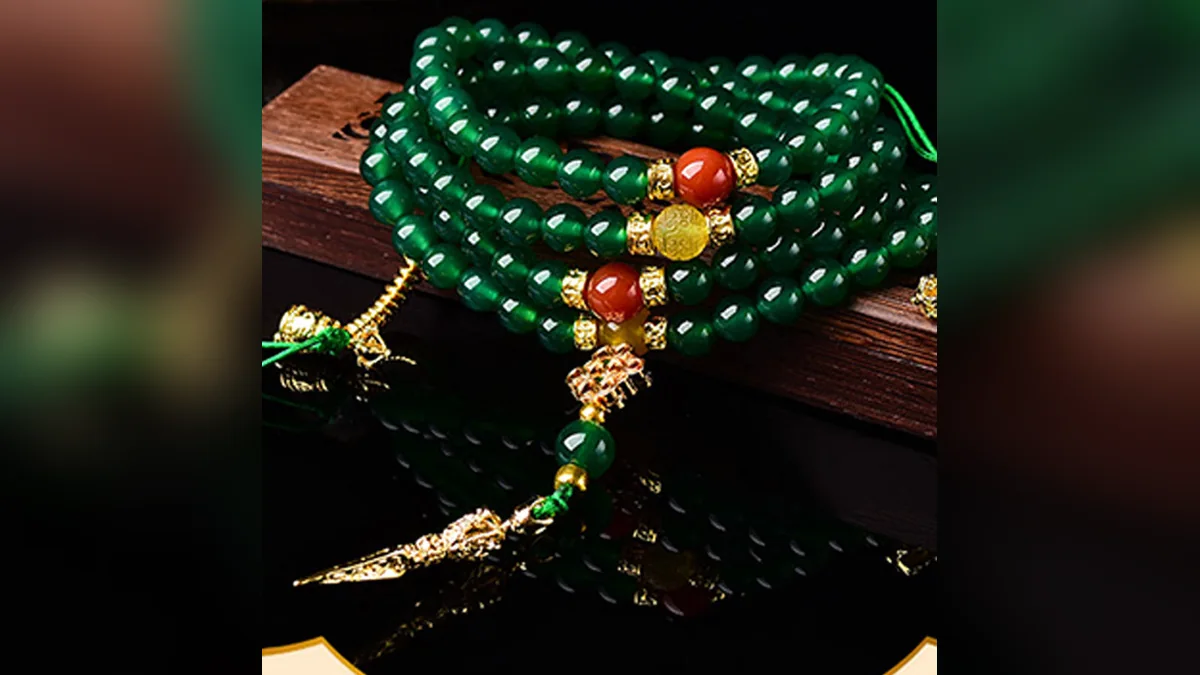
Cleaning starts with a check of the stones, string, and settings. To understand how to clean gemstone jewelry, learn to identify the materials, remove loose dust, choose a suitable cleaning method, and dry the piece before putting it away. A dry cloth is a useful starting point when care instructions are missing. Water, soap, and brushes belong later in the process, after you have confirmed that the whole piece can tolerate them.
1. Identify the materials before adding moisture
Read the product description and any care instructions that came with your jewelry. Check more than the stone name: cord, elastic, wood, metal components, and glued details can change the cleaning method. A strand containing several materials needs an approach suitable for its most delicate component.
Look for loose beads, frayed thread, stretched elastic, chipped edges, or a stone that moves in its setting. Stop if you find damage. Cleaning can wait until a jeweler has assessed a loose setting or damaged strand.
Keep unknown stones and pieces with uncertain treatments dry. Color alone cannot tell you whether a bead has been dyed, coated, or otherwise treated. Avoid trying to identify a material by scratching it or applying a household chemical.
2. Choose how to clean gemstone jewelry by material
Start with the care directions for the specific piece. Some gemstone jewelry can tolerate brief cleaning with lukewarm water and mild soap; other pieces require dry care or professional attention. A stone's ability to tolerate water does not establish whether its string, finish, or other components can do the same.
Porous stones, delicate surfaces, and treated materials need particular caution. Pearls and other delicate jewelry also require their own care instructions. When the construction or treatment is uncertain, limit home cleaning to gentle dust removal and ask a jeweler about further care.
Wood belongs in a separate care routine. Keep it away from water when its instructions require this. Do not apply a gemstone cleaning method to a wooden mala simply because the beads share a similar shape.
3. Prepare a padded surface and remove loose dust
Place a clean towel on a stable table, away from an open drain. Gather a soft, clean, lint-free cloth and check it for grit. A cloth previously used for polishing metal may contain compounds unsuitable for gemstones, so choose a separate untreated cloth.
Support the jewelry on the towel while you wipe. Turn beads gently between your fingers without stretching the strand. Use light pressure around bead holes and settings. If dust remains in a narrow gap, resist digging into it with a pin or other pointed tool. Leave stubborn debris for a suitable next step.
4. Use minimal moisture only when care directions allow
For a piece confirmed suitable for wet cleaning, prepare a little lukewarm water with a small amount of mild liquid soap. Avoid hot water, strong detergents, and products containing abrasive particles. Dampen a clean cloth with the solution and squeeze out excess liquid before touching the jewelry.
Wipe a short section at a time. Keep liquid away from any component whose care instructions prohibit moisture. Do not immerse a strung bracelet or mala unless its care directions specifically allow soaking. Water can remain around bead holes and inside stringing materials after the outside looks dry.
Remove soap with a second cloth lightly dampened with plain water, provided the piece permits it. Repeat gently until no residue remains. Stop if color transfers to the cloth, a surface changes, or a component loosens. Persistent dirt is a reason to seek advice, rather than increase pressure or try a stronger solution.
5. Dry the strand before checking it again
Blot permitted moisture with a clean, dry cloth. Lay the jewelry flat on a dry towel with space around it so air can circulate. Let it dry fully before wearing or storing it; do not assume that dry bead surfaces mean the thread is dry inside.
Keep drying jewelry away from radiators, hair dryers, and direct sunlight. Heat can affect finishes and stringing, while strong light can alter the color of some gemstones. Once dry, inspect bead holes, knots, and settings again. If something looks damaged, put the piece aside for repair before wearing it.
6. Adjust storage and everyday handling
Place clean, dry jewelry in individual compartments or pouches to limit rubbing and tangling. Avoid leaving several bracelets loose together in a pocket or bag. Keep clasps and pendants from scraping across bead surfaces.
Remove jewelry before swimming, bathing, or using household cleaners. Apply lotion and perfume before putting it on, and allow those products to dry first. A gentle wipe after wear can remove surface residue before it builds up. Check the cloth as you work so that collected grit does not travel across the next bead.
Mistakes to avoid during gemstone cleaning
- Using toothpaste or scouring powders. Abrasive ingredients can scratch surfaces or affect their finish.
- Putting unfamiliar pieces in ultrasonic or steam cleaners. Suitability depends on the stone, its treatments, and the construction. Ask a jeweler first.
- Scrubbing elastic and knots. Pulling and brushing can damage stringing. Support the strand and use gentle contact.
- Applying silver polish across mixed materials. Metal care products may be unsuitable for neighboring beads. Our silver jewelry cleaning guide explains the separate metal care task.
- Repeating wet cleaning when marks remain. A visible feature may be part of the material. Stop before trying stronger methods.
Product details for planning your care routine
Our product specifications provide a starting point for identifying materials. Check the selected option as well as the product name before deciding how to handle a strand.
Green agate mala
The Buddha Stones Natural Green Agate Success Bracelet Mala has 108 green agate beads. Its bead size options are 6mm, 8mm, and 10mm. The item types are bracelet, necklace, and mala, and the design is unisex.
Picture jasper bracelet
The Buddha Stones Picture Jasper Mala Lotus Courage Bracelet uses picture jasper and has an 8mm bead size. Its specifications identify it as a unisex bracelet.
Wenge wood options
The Buddha Stones Wenge Wood Mala Blessing Meditation Bracelet uses Wenge Wood (Dye). Options are 15mm Bracelet, 18mm Bracelet, 20mm Bracelet, 6mm*108, and 8mm*108. Its care note says to avoid water contact because water may damage the wood. Color and grain may vary, and patina develops over time with wear. Blessing expresses a traditional wish; the name carries no promise of a particular outcome.
Amethyst and green aventurine strand
The Buddha Stones Amethyst Green Aventurine Lotus Meditation Bracelet combines amethyst and green aventurine. It has 108 beads, an 8mm bead size, and premium elastic string. Bracelet and Necklace options are available, and the design is unisex.
Let the materials set the cleaning method. Identify first, wipe gently, add moisture only when permitted, and allow complete drying. If the next step requires guessing, pause and seek advice before changing the jewelry's surface.
Shop the story
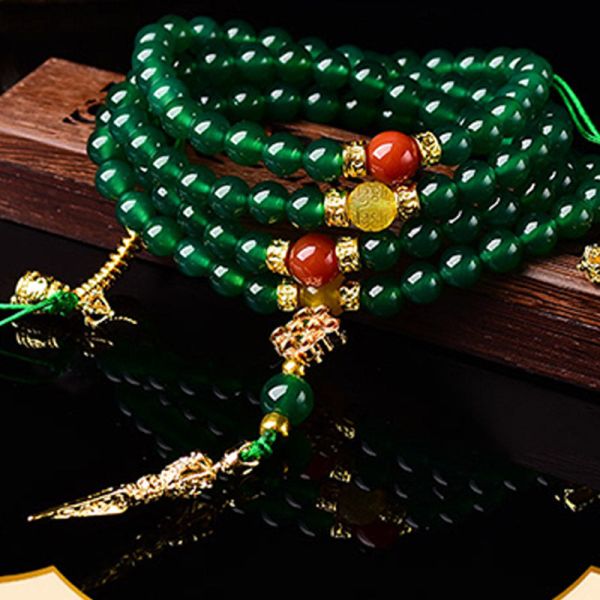 Buddha Stones 108 Beads Natural Green Agate Success Bracelet MalaAs low as $62.59 Regular Price $85.74
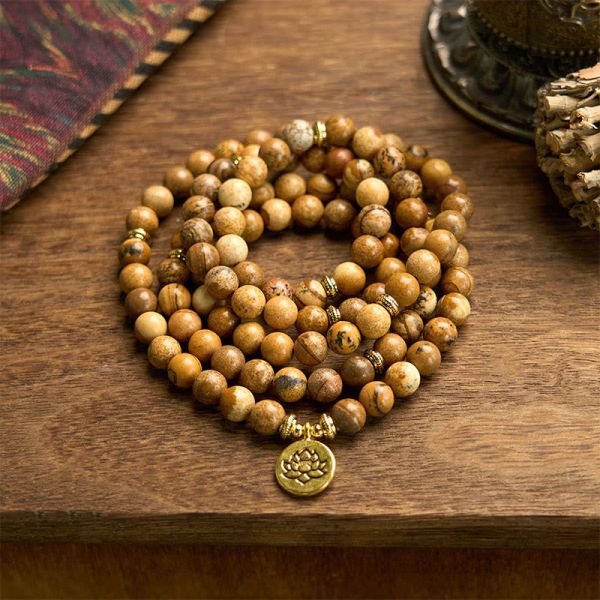 Buddha Stones 108 Beads Picture Jasper Mala Lotus Courage BraceletSpecial Price $32.59 Regular Price $45.26
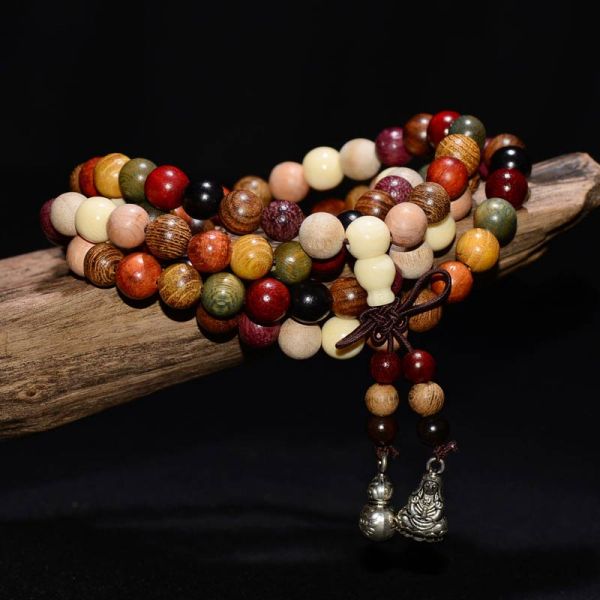 Buddha Stones 108 Beads Wenge Wood Mala Blessing Meditation BraceletAs low as $25.59 Regular Price $33.23
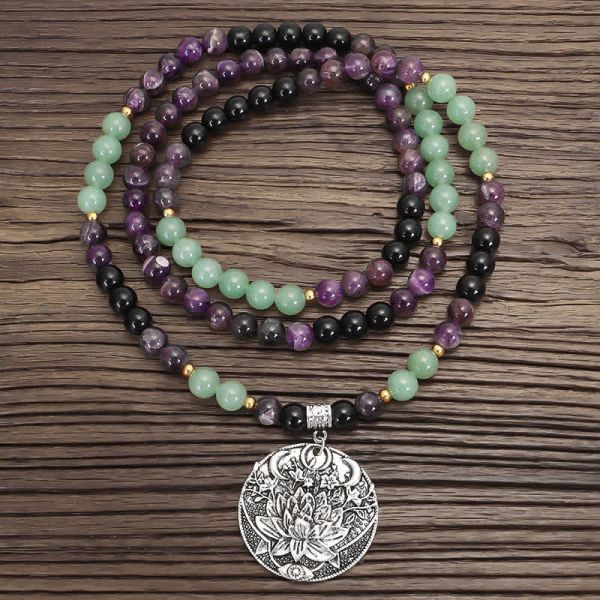 Buddha Stones 108 Mala Beads Amethyst Green Aventurine Lotus Meditation BraceletAs low as $25.59 Regular Price $36.04