
What Is Pixiu? A Symbol in Legend, Art, and Jewelry
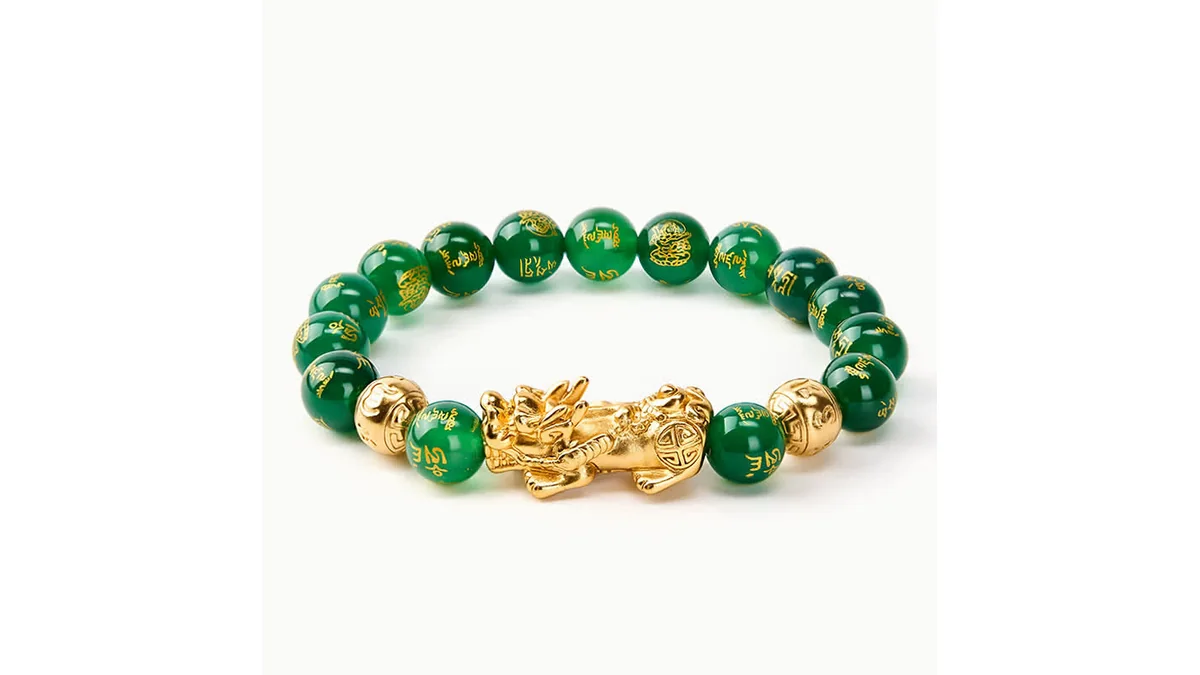
Pixiu has a broad mouth, a lionlike body, and often a pair of wings. The answer to “what is pixiu” begins with Chinese tradition: it is a mythical creature associated with wishes for wealth, good luck, and protection. These meanings belong to folklore and feng shui belief. A Pixiu image offers no guarantee of prosperity, safety, or good fortune.
The motif appears in several settings, from decorative sculpture to small jewelry charms. Its meaning becomes clearer when you consider the object around it, the symbols beside it, and the story being told. At Buddha Stones, we describe these associations as cultural traditions rather than promises attached to an object.
What Is Pixiu in Legend and Folk Belief?
Pixiu, also written Pi Xiu and sometimes called Pi Yao, is an imagined beast rather than a real animal. Artists combine animal features to give it a recognizable presence: a prominent head, an open mouth, a sturdy body, and, in many versions, wings. Horns and other details vary. There is no single outline that every depiction follows.
A familiar folk explanation says Pixiu eats gold, silver, or jewels and retains what it consumes. Some tellings explain this through a body with no outlet. That story underlies the traditional association with keeping wealth. It is a symbolic account of abundance and retention, not a description of how money or possessions behave.
Other tellings emphasize the creature's fierce character and role as a guardian. These strands help explain why one image can express both prosperity wishes and a wish for protection. Details differ between accounts, so a precise family tree or fixed list of abilities can make a flexible tradition sound more uniform than it is.
Pixiu belongs to Chinese folklore and is widely discussed in feng shui contexts. It is not a Buddha or a bodhisattva. Its appearance beside Buddhist wording on a modern object does not turn the creature itself into a Buddhist deity.
Reading the Motif Across Art and Everyday Objects
Sculpture and decorative art
A freestanding figure gives the animal's posture room to develop. Wings, paws, a turning head, or a raised chest can become prominent parts of the design. A small pendant compresses those features into a much smaller outline. The same name can therefore refer to objects that look quite different at first glance.
Identification deserves care. Chinese decorative art includes several mythical and guardian creatures with overlapping features. A horned or winged animal should not automatically be labeled Pixiu. An object's description, setting, and accompanying motifs can be more helpful than one feature alone.
Textiles and patterned surfaces
On a woven or embroidered surface, an animal becomes part of a repeating pattern or a larger arrangement. Borders, clouds, flowers, and neighboring creatures can change how the design reads. Where a textile is identified as showing Pixiu, its auspicious meaning belongs to that broader composition.
Do not assume that every animal woven into an old-looking fabric is Pixiu, or that a contemporary pattern reproduces a particular historical design. Labels matter here, especially when stylized animals share curling tails, horns, or open mouths.
Jewelry and personal ornaments
Jewelry brings the motif into a portable format. The creature may appear as a pendant or as a charm among beads. That change in scale does not create a new guaranteed function; it gives the traditional image a different setting.
When browsing our bracelets, distinguish the motif's cultural meaning from the specifications of the object. Materials, bead size, and fit describe the bracelet you are considering. Folklore explains why the image may appeal to you.
Festive displays and gifts
Pixiu also fits within the wider vocabulary of auspicious imagery used for celebrations and gifts. Around Lunar New Year, wishes for prosperity can give the motif particular relevance. Its presence is not a requirement of the festival, and customs differ among households and communities.
A festive setting may place several auspicious symbols together. Read the arrangement as a collection of wishes rather than a formula. There is no need to treat a decorative gift as carrying an obligation to follow one universal set of rituals.
How Neighboring Symbols Shape the Message
Coins and ingot shapes emphasize Pixiu's traditional connection with wealth. Together, they make the prosperity theme more explicit. The combination expresses a wish; the number of symbols on an object does not establish a greater likelihood of financial success.
Mantra wording creates a different pairing. Om Mani Padme Hum is associated with Avalokiteshvara, the bodhisattva of compassion. When that wording and Pixiu share a product name, two distinct cultural references are present. Understanding them separately keeps the mantra's Buddhist context clear.
Lotus imagery has its own established Buddhist associations, including purity and awakening. Our discussion of lotus flower meaning in Buddhism explains that context. A lotus and Pixiu appearing together should not be treated as interchangeable symbols.
Bead materials are another part of a design, but a stone's name does not establish what a Pixiu figure means. Start with the creature's traditional associations, then consider any additional motif on its own terms. This makes room for layered designs without assigning an unsupported story to every detail.
Our product names include words such as Harmony, Success, Protection, and Optimism. These express symbolic wishes, not promised results.
Four Pixiu Bracelets: Names and Specifications
Green agate with mantra wording
The Natural Green Agate Om Mani Padme Hum PiXiu Harmony Bracelet combines green agate and copper plated gold. It uses premium elastic string and 10mm beads. Wrist circumference: 6.3–6.7 in (16–17 cm). The package contains 1 × Bracelet. Natural materials may show slight differences in color, details, and overall appearance.
A second green agate option
The Natural Green Agate Om Mani Padme Hum Color Change PiXiu Success Bracelet has green agate and copper alloy. Its specifications give premium elastic string, 10mm beads, and a wrist circumference of 6.3–6.7 in (16–17 cm). Included: 1 × Bracelet. Slight variations in color, details, and overall appearance may occur because of the natural materials.
Cyan jade and a protection wish
The Natural Cyan Jade Beaded PiXiu Protection Bracelet uses cyan jade and copper plated gold. Bead size is 10mm, and the band is premium elastic string. It is specified for a wrist circumference of 6.3–6.7 in (16–17 cm), with 1 × Bracelet included. Its natural materials allow slight differences in color, details, and overall appearance.
Pearl and strawberry quartz
The Natural Pearl Strawberry Quartz PiXiu Optimism Charm Bracelet has pearl and strawberry quartz as its materials. It uses premium elastic string, with 8mm beads and a wrist circumference specification of 14-19cm.
A Creature Understood Through Its Setting
Pixiu's broad mouth and animal form make it recognizable, while its surroundings help explain the intended message. A prosperity motif, a Buddhist inscription, and a material specification tell different parts of an object's story. Keeping those distinctions clear lets you appreciate the design and its traditional wishes without expecting the object to determine an outcome.
Shop the story
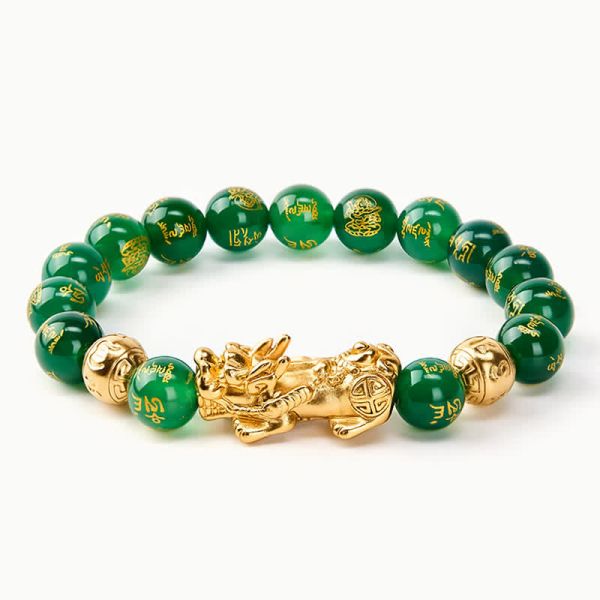 Buddha Stones Natural Green Agate Om Mani Padme Hum PiXiu Harmony BraceletSpecial Price $32.59 Regular Price $44.64
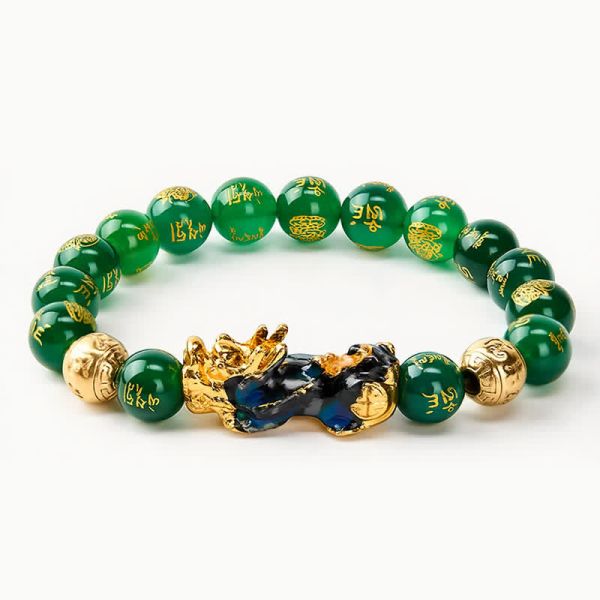 Buddha Stones Natural Green Agate Om Mani Padme Hum Color Change PiXiu Success BraceletSpecial Price $29.59 Regular Price $41.10
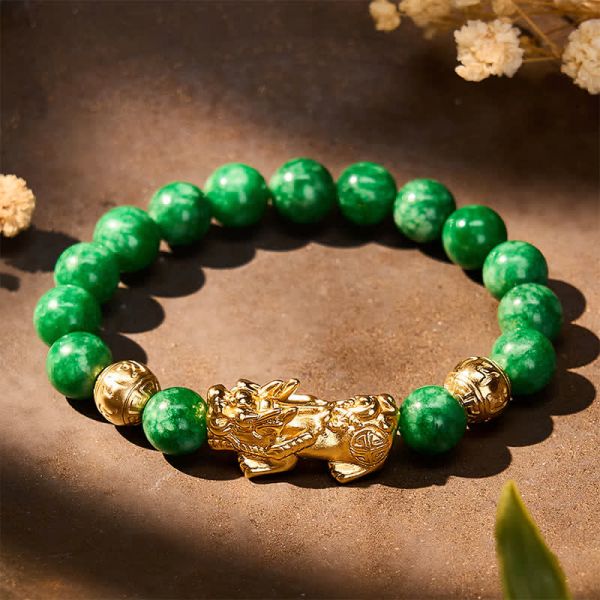 Buddha Stones Natural Cyan Jade Beaded PiXiu Protection BraceletSpecial Price $29.59 Regular Price $39.45
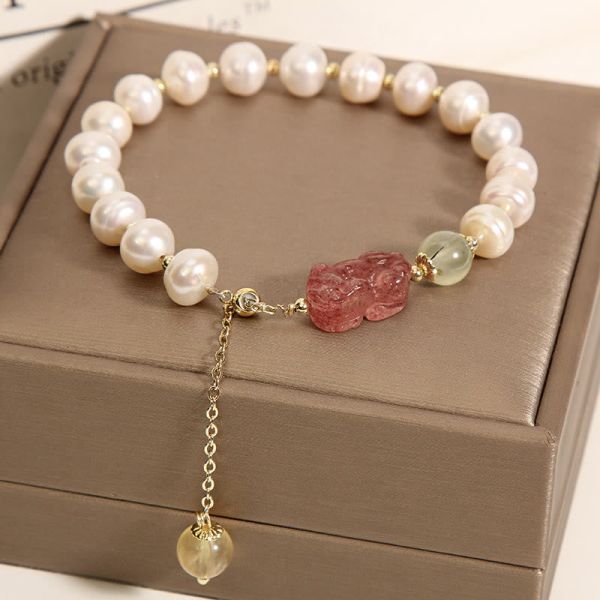 Buddha Stones Natural Pearl Strawberry Quartz PiXiu Optimism Charm BraceletSpecial Price $28.59 Regular Price $39.71