
What Is Peony? A Visual Guide to the Floral Motif
Ruffled petals crowd a broad flower head, while pointed leaves spread beneath the bloom. This rounded, layered shape is a useful starting point for recognizing a peony in decorative art.
What is peony? A peony is a flowering plant, and its blossom is a familiar motif in Chinese decoration. In that tradition, it represents beauty and honor, with wealth and luck understood as traditional wishes. A peony design cannot guarantee those outcomes. At Buddha Stones, we look at the flower's outline, surrounding leaves, and place in a pattern to help distinguish it from neighboring floral motifs.
How to recognize the motif
Start with the whole silhouette, then move inward. A decorative peony often looks broad and full, but artists simplify flowers differently. Use several clues together instead of treating one petal shape as proof.
- A generous, rounded outline. The blossom commonly spreads outward in a loose circle. Its edge may look scalloped or uneven rather than forming a neat, sharply defined star.
- Overlapping layers of petals. Many peony motifs show petals folded over one another, with smaller shapes gathered toward the center and wider petals opening around them.
- Ruffled or curling edges. Petal tips may bend, ripple, or turn back. These irregular contours help give the flower its full appearance, even when the design uses only a few colors.
- Divided, pointed foliage. Look below and beside the bloom for leaves with pointed sections or lobes. Leaf treatment varies, so use foliage to support the identification rather than settle it alone.
- Buds beside an open flower. A rounded bud on a branching stem may accompany the main blossom. Together, the bud, open petals, and foliage make the plant easier to read.
Then check the flower's setting. A lotus motif may include a broad, round leaf or a recognizable seedpod; a plum blossom is often shown as a simpler flower on a woody branch. Peonies can resemble roses or camellias when heavily stylized, so a dense ring of petals is not enough by itself. When a design remains ambiguous, its option name can provide a useful second clue.
For a closer comparison with another frequently used flower, our lotus flower guide explains that motif's Buddhist context. Keep the comparison visual here: outline, leaves, and accompanying details are more useful than assuming that every large decorative flower is a peony.
What is peony associated with in Chinese tradition?
In Chinese decorative tradition, the peony's abundant blossom is associated with beauty, honor, and prosperity. Its visual fullness helps explain why it appears in designs expressing wishes for abundance. These are cultural meanings attached to the image, rather than properties of the object carrying it.
Context also shapes the reading. A single bloom places attention on the flower itself; a spreading floral pattern makes it part of a larger ornamental arrangement. Other plants or animals may add separate associations. Avoid assigning a fixed message to a combination unless its context is known.
The peony also appears in secular decoration. Its presence alone does not establish that an object is a Buddhist ritual item. You can appreciate the flower as a recognizable design, understand its traditional associations, or choose it simply because you like its rounded petals and branching foliage.
Where peony patterns appear
The same flower changes character across different surfaces. This field guide describes common decorative treatments; it does not identify the materials or construction of any particular product.
| Where you see it | How it usually appears |
|---|---|
| Bags and textile accessories | A main bloom or floral spray fills a panel, with leaves arranged around the flower and stems following the available space. |
| Ceramics and teaware | Blossoms may sit inside a border, repeat around a vessel, or extend along its curved surface as a flowering branch. |
| Paintings and decorative prints | Open flowers, buds, and foliage form a larger composition, giving more room to compare the plant's different shapes. |
| Jewelry and small ornaments | The design often simplifies into a compact rosette, making petal layers more prominent than stems or leaves. |
Scale matters when identifying the motif. On a small ornament, foliage may disappear completely. On a larger textile panel, the surrounding stems can be as helpful as the flower head. If only a cropped blossom is visible, leave room for uncertainty.
Peony options among our embroidered bags
Our product titles include several motifs within one listing. Choose the named peony option when that is the flower you want; a title containing “peony” does not mean every available option uses it. The four listings below offer different color choices and two sets of dimensions.
Yellow Golden Peony in cotton linen fabric
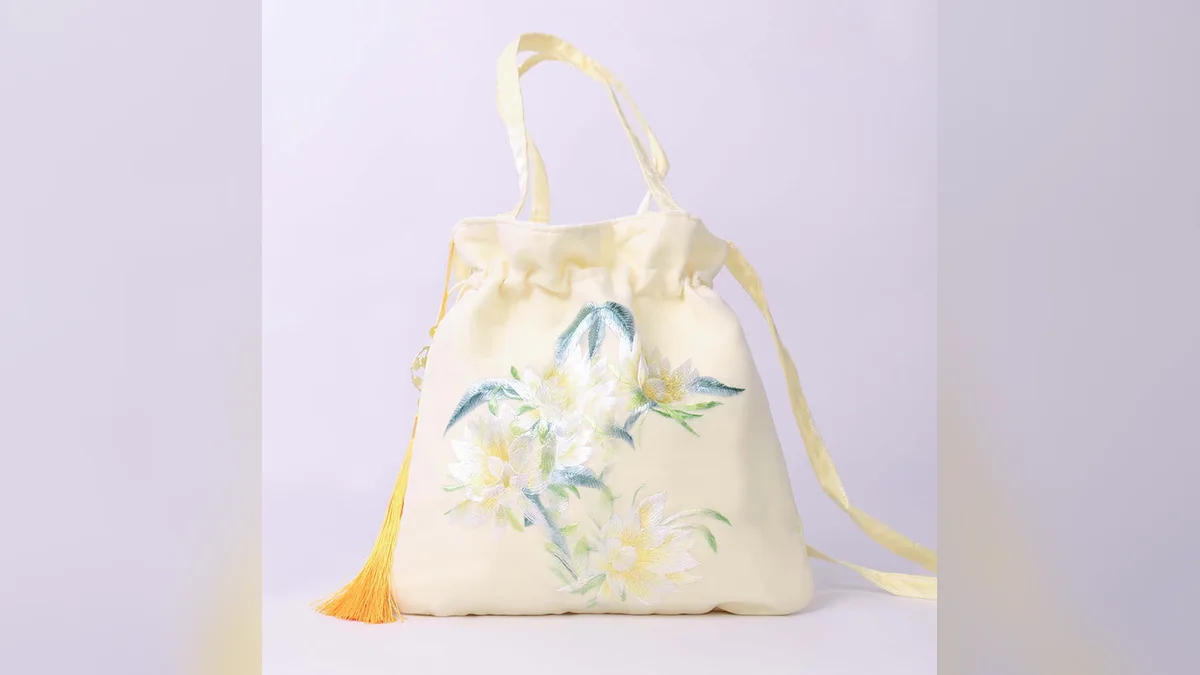
The Buddha Stones Lotus Peony Epiphyllum Phoenix cotton linen bag includes a Yellow Golden Peony option. Its specifications give cotton linen fabric and ceramic bead accessories, a size of 21*22cm, and an adjustable shoulder strap with a stated length of 130cm. It has one main pocket and a strap closure. Other choices in this listing are Yellow Epiphyllum, Yellow Golden Lotus, and Yellow Golden Phoenix. Select by the option name rather than the sequence of flowers in the title.
White Peony in cotton linen fabric
A White Peony option appears in the Buddha Stones Lotus Deer Epiphyllum Peony Rabbit cotton linen bag listing. The bag measures 21*22cm and uses cotton linen fabric with ceramic bead accessories. Its adjustable shoulder strap has a stated length of 130cm; the interior contains one main pocket, and the closure type is strap. This listing also includes separately named epiphyllum, cherry blossom, lotus and deer, rabbit, and fox choices. White Peony is the relevant option for this flower guide.
Light Green Golden Peony in silk fabric
The Buddha Stones Rabbit Lotus Epiphyllum Peony Magnolia silk bag offers a Light Green Golden Peony option. The specified materials are silk fabric and ceramic bead accessories, and the dimensions are 20*20*7cm. Its interior has one main pocket and one zipper interior pocket. An adjustable shoulder strap has a stated length of 130cm, and the bag uses a strap closure. These pocket details provide a practical point of comparison with the cotton linen designs above.
Light Blue Peony in silk fabric
The Buddha Stones Camellia Magnolia Peony Lotus silk bag includes Light Blue Peony among its options. This bag is 20*20*7cm, with silk fabric and ceramic bead accessories. It has one main pocket, one zipper interior pocket, a strap closure, and an adjustable shoulder strap with a stated length of 130cm. Other named choices include magnolia, orchid grass, wisteria, lotus, and camellia. Compare the selected option's name as well as the bag specifications before deciding.
Read the flower before the symbolism
Return to three details: the broad outline, overlapping petals, and surrounding foliage. Together they offer a more reliable identification than color alone. When a flower is highly simplified, its name and accompanying motifs can help resolve what the shape leaves uncertain.
A peony can carry a traditional wish and still be appreciated as a flower. We keep those two readings together: understand the cultural association, then consider the actual pattern, option name, dimensions, and pockets of the object you are choosing.
Shop the story
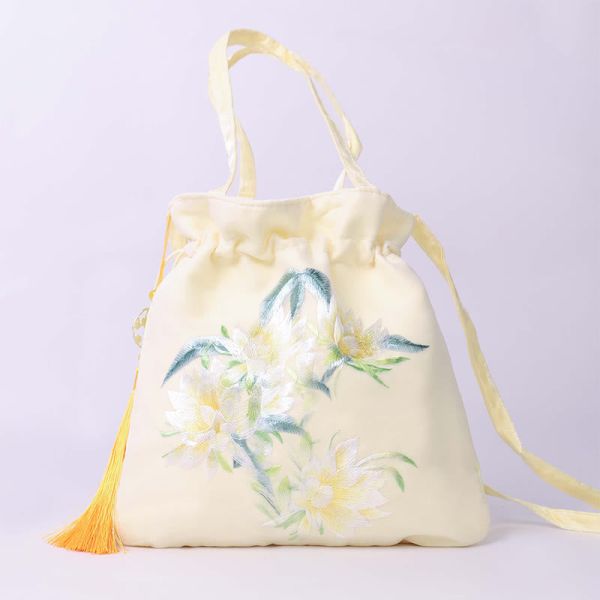 Buddha Stones Lotus Peony Epiphyllum Phoenix Suzhou Embroidery Cotton Linen Tote Crossbody Bag Shoulder Bag HandbagAs low as $22.59 Regular Price $32.27
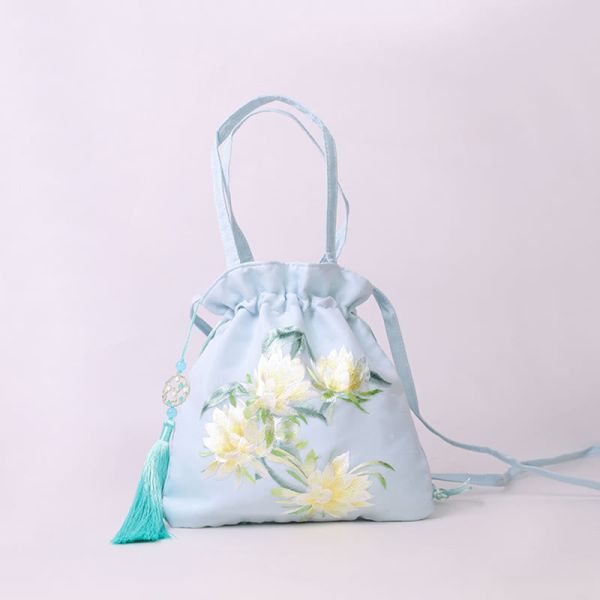 Buddha Stones Suzhou Embroidery Lotus Deer Epiphyllum Peony Rabbit Cotton Linen Tote Crossbody Bag Shoulder Bag HandbagAs low as $22.59 Regular Price $31.82
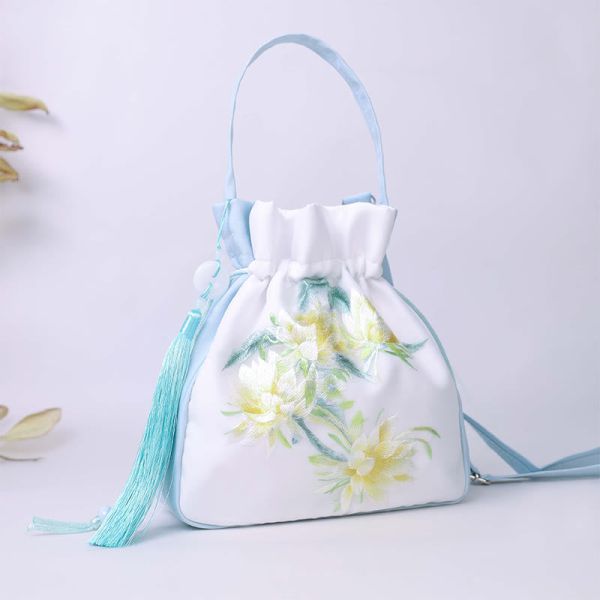 Buddha Stones Suzhou Embroidery Rabbit Lotus Epiphyllum Peony Magnolia Silk Tote Crossbody Bag Shoulder Bag HandbagAs low as $26.59 Regular Price $36.93
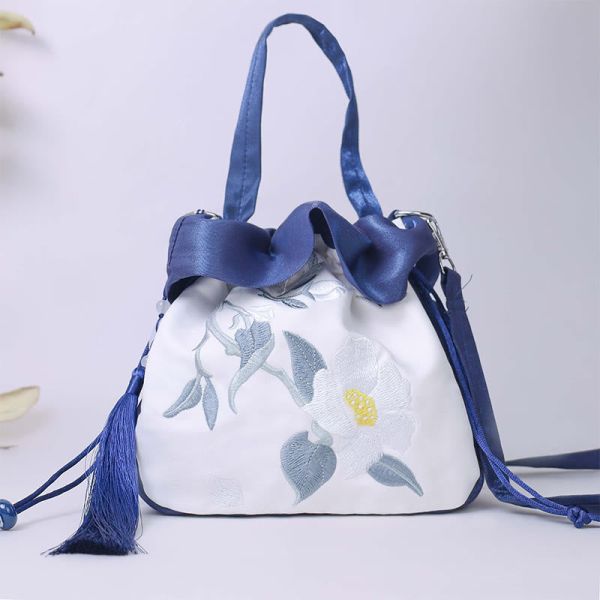 Buddha Stones Suzhou Embroidery Camellia Magnolia Peony Lotus Silk Tote Crossbody Bag Shoulder Bag HandbagAs low as $22.59 Regular Price $30.95