What Is Lotus? Reading the Symbol Across Traditions
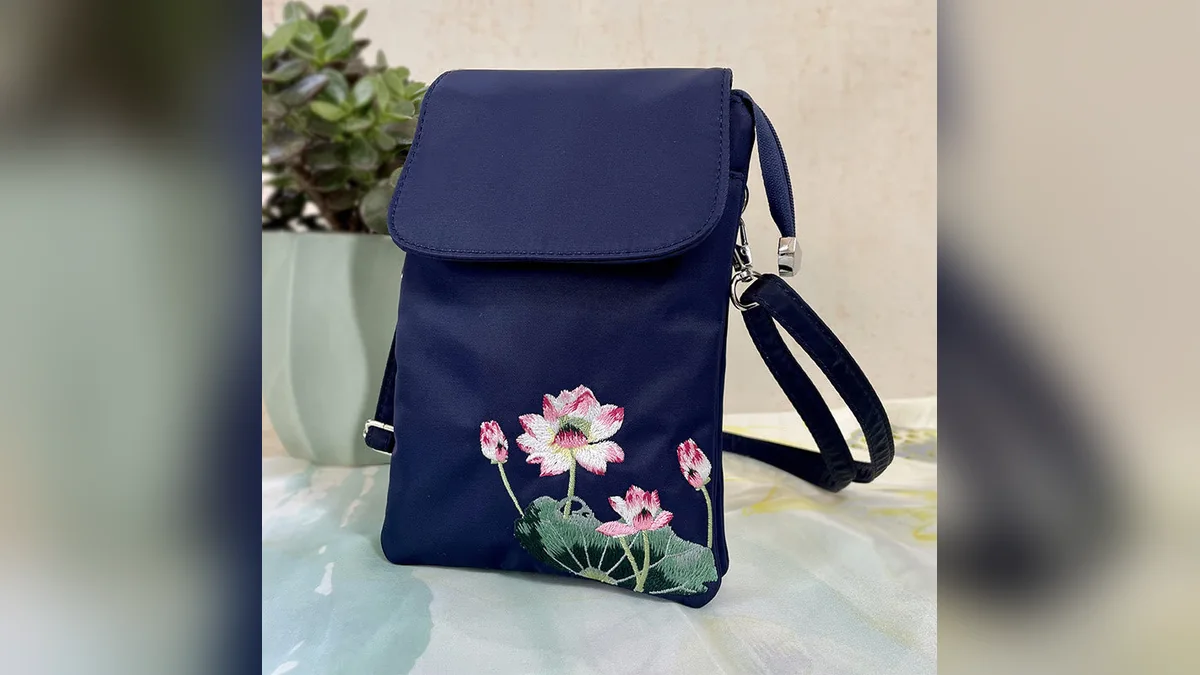
Layered petals surround a broad center in the lotus motif. The question “what is lotus” has both a botanical and a cultural answer: it is an aquatic flower and a traditional symbol of purity and awakening, especially in Buddhist art. Other settings connect it with creation, continuity, or harmony. Associations with luck, wealth, and protection belong to belief; a flower design cannot guarantee those results. At Buddha Stones, we read the motif through its setting, its companion images, and the object that carries it.
What is lotus in Indian religious tradition?
Indian religious art gives the lotus a sacred role in Hindu and Buddhist traditions. The living flower provides the starting point. Lotus plants grow in water, with roots anchored below and flowers rising above the surface. That visible separation helped make the flower an image of purity in Buddhist tradition. Artists could communicate a religious idea through a form that people recognized from ponds and gardens.
The lotus also has a place in Hindu sacred imagery, including depictions of Lakshmi and Brahma. Its meanings belong to the particular deity, story, and tradition surrounding it. There is no single explanation that covers every lotus across Asian art, and a decorative flower does not automatically identify an object as Buddhist.
Our article on lotus flower meaning in Buddhism looks more closely at that religious setting. Here, the emphasis is on recognizing how the same flower changes roles across objects and occasions.
Reading petals in paintings and sculpture
A lotus beneath a sacred figure works differently from a lotus growing beside a bird in a painting. In Buddhist sculpture, rows of petals can form a pedestal or throne. The flower becomes part of the composition’s structure, marking a sacred seat rather than simply filling empty space.
In a pond scene, stems, broad leaves, buds, and seedpods place the blossom within a recognizable landscape. An artist may show several stages of the plant together. You can begin by identifying those details before assigning a meaning to the whole scene.
A flower seen from above may become a symmetrical rosette. Seen from the side, its petals can resemble a shallow cup. Highly simplified versions sometimes resemble other flowers, so a label, inscription, or surrounding scene may tell you more than petal count alone. Color also needs context: a pink or blue design on a modern accessory is not enough to establish a specific religious meaning.
How textiles and jewelry reshape the flower
Fabric gives the lotus room to repeat. A border might alternate blossoms and leaves, while a larger panel can show a complete pond scene. Embroidery outlines the motif with stitches; weaving builds a pattern into the fabric. The technique describes how the image is made, while the surrounding design helps explain what it means.
Placement changes the visual effect. A single blossom at the center of a bag becomes a focal point. Small flowers repeated across a surface create an overall pattern. A cropped leaf or curling stem may connect separate blossoms without turning the design into a religious scene.
Jewelry often reduces the motif further because the available surface is small. A pendant can retain a flower’s outline, while a bead or charm may show only a few petals. If you are browsing our bracelets, distinguish the design you can see from any symbolic interpretation attached to it. A lotus can express an interest in tradition without making a statement about the wearer’s religious identity.
Lotus shapes at festivals and in shared spaces
Lotus-shaped lanterns appear in some Buddhist celebrations. Their flower form connects a temporary festival object with familiar sacred imagery. Practices vary by place and community, so the same shape should not be treated as evidence of one universal festival custom.
A lantern, an offering arrangement, and a decorative bowl also serve different purposes. The setting matters: an object used during a religious observance has a context that a similar shape on a household shelf may not share.
For lotus motifs among our home decor, look first at the object’s stated purpose and visible design. Decorative use can acknowledge the flower’s traditional associations without turning ordinary placement into a rule about fortune or protection.
What companion motifs add to the scene
A lotus paired with fish is a familiar combination in Chinese decorative art. Fish are traditionally associated with abundance, while the lotus can contribute associations of continuity and harmony. Together, they can express an auspicious wish. That reading describes a cultural convention, not a prediction about the owner’s finances.
Butterflies, birds, and dragonflies can also accompany the flower. Sometimes they carry additional symbolic associations; sometimes they simply create a garden or waterside scene. It is sensible to leave room for both readings rather than assign a fixed message to every animal.
Keep the whole composition in view. A koi beside a lotus, a butterfly above a blossom, and a lone flower on a plain background are different designs. Product names may group several available patterns together, so check the selected option before assuming that every named motif appears on one bag.
Lotus bag designs at Buddha Stones
Nylon crossbody with lotus options
Our embroidered lotus flowers crossbody bag is made from Nylon Fabric and measures 20*13cm. It has an adjustable strap with a stated length of 120cm, buckle and zipper closures, and a weight of 200g. The internal structure comprises one main pocket, two interior compartments, and one additional pocket. Options include Blue Four Lotus, Blue Lotus Dragonfly, and Gray Lotus Dragonfly. The package contains one bag.
Canvas tote with a lotus pattern
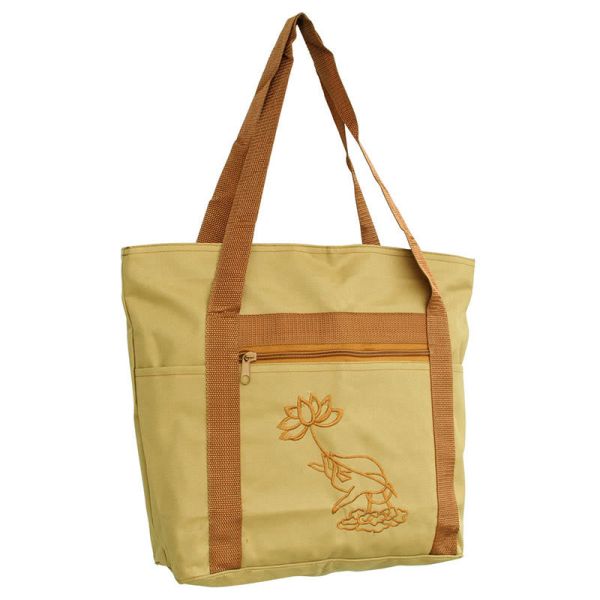
The Spiritual Mind Practice lotus canvas tote uses Canvas Fabric. Its dimensions are 31*12*31CM (Length*Width*Height), and its strap dimensions are 68*6cm (Length*Width). The straps are non-adjustable. A zipper closes the bag, which has one main pocket, one interior zipper pocket, one front zipper pocket, and one back zipper pocket. Its stated weight is 240g, and the package contains one bag.
Hanfu bag with flower and animal options
The Luck Embroidery lotus and koi Hanfu bag is made from Polyester. Options include Koi Fish Lotus and Koi Fish Peony. The size entry specifies Summer Lotus 22.3*16cm; it should not be applied to other options. The strap length is 100-110cm, the stated weight is 77.6g, and the package contains one bag. “Luck” in the product name expresses a traditional wish only.
Cotton linen bag with ceramic bead accessories
Our butterfly lotus cotton linen bag uses Cotton Linen Fabric and Ceramic Bead Accessories. It measures 20*20*7cm and has an adjustable strap with a stated shoulder bag strap length of 130cm. Its internal structure consists of one main pocket and one back zipper pocket, with a strap closure. Options include Green Koi Fish Lotus and Light Blue Butterfly Lotus. The package contains one bag.
Let the setting guide the interpretation
The lotus is recognizable across many forms, but its surroundings give it specificity. Notice the seat beneath a figure, the leaves around a blossom, or the fish beside a stem. We value those distinctions because they let a familiar flower retain the particular traditions and design choices that give it meaning.
Shop the story
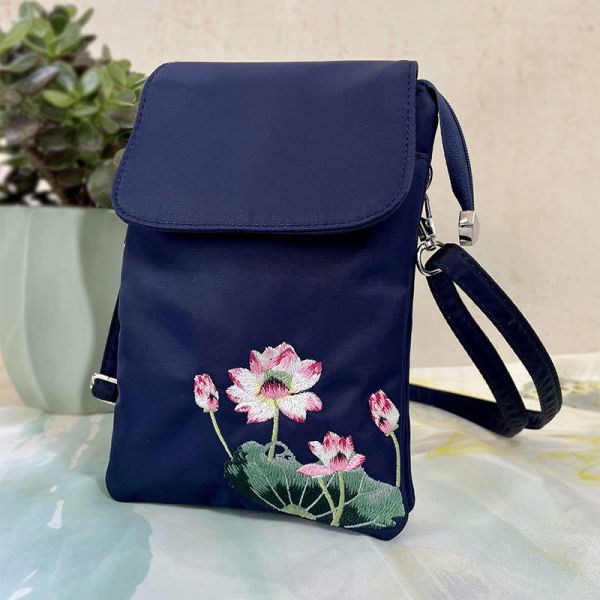 Buddha Stones Waterproof Handmade Embroidered Lotus Flowers Crossbody Bag Shoulder Bag Cellphone BagAs low as $25.59 Regular Price $34.12
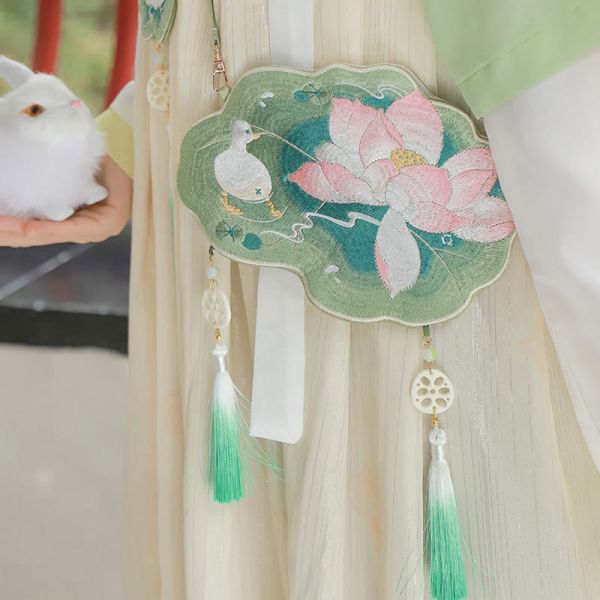 Buddha Stones Luck Embroidery Lotus Koi Fish Rabbit Flower Hanfu Bag Crossbody Bag Shoulder BagAs low as $29.59 Regular Price $39.45
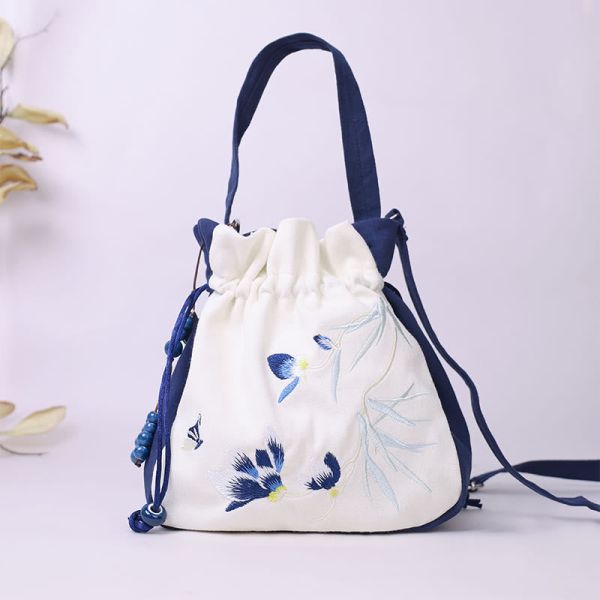 Buddha Stones Embroidered Butterfly Lotus Magnolia Cotton Linen Tote Crossbody Bag Shoulder Bag HandbagAs low as $25.59 Regular Price $35.05