
What Is Koi? A Visual Field Guide to the Fish Motif
A curved fish body, a forked tail, and curling water lines can turn a small textile panel into a pond scene. If you are asking what is koi, the answer begins with ornamental carp, often recognized by their patterned colors. In decorative traditions, koi commonly symbolize perseverance and a wish for abundance. Associations with luck, wealth, or protection are beliefs, and no object guarantees those outcomes. At Buddha Stones, we read the motif through its visible details, surrounding symbols, and place in a design.
How to recognize the motif
Start with the outline, then look at the setting. Decorative fish are often simplified, so several cues together are more useful than one feature. A product title can confirm a koi reference when a tiny motif leaves little room for anatomical detail.
- A long, rounded body: Koi are usually shown with a substantial middle that narrows toward the tail. A bent body suggests swimming and gives the design a direction. Follow that curve before studying the smaller details.
- Fins and a divided tail: Side fins and a forked tail help establish the fish silhouette. Artists may stretch or curl these shapes to suit the available space. A flowing tail alone does not establish that a fish is koi.
- Small whiskers near the mouth: Koi have barbels, which can appear as short lines beside the mouth. These are useful identifying details when present, although small jewelry motifs and textile patterns may leave them out.
- Patches rather than a fixed color code: White, red, orange, black, and yellow can appear in koi imagery. Color is a supporting clue, not a complete identification system. A monochrome design can still depict koi.
- A watery or floral setting: Ripples, waves, pond leaves, and flowers often surround the fish. Read the fish separately from its companions first, then consider how the whole scene fits together.
What is koi in traditional decorative art?
The living fish and the decorative motif share a name, but an ornament does more than record anatomy. In Chinese and Japanese decorative traditions, koi can stand for perseverance. In Chinese imagery, fish also carry associations with abundance, supported by the resemblance between the spoken words for fish and surplus.
Keep those meanings broad. There is no universal rule assigning a personal message to every tail position, color patch, or number of fish. A pair may suggest togetherness in a particular design, but two fish do not automatically make a yin yang symbol. Context matters more than a convenient label.
Companion motifs add another layer. A lotus introduces a separate set of traditional associations; our post on lotus flower meaning in Buddhism explains that symbol in its own setting. Seeing a lotus beside koi does not make the entire design a Buddhist emblem. Likewise, clouds can serve as decorative surroundings without depicting a literal pond.
Words such as “Luck” and “Protection” in our product names express traditional wishes. They do not promise a result or describe a function of the item.
Four places to spot the fish design
Scale changes what you can see. A broad textile surface allows a scene to spread out, while a bracelet may reduce the fish to a small outline. Use this field guide to decide which details deserve a closer look.
| where you see it | how it usually appears |
|---|---|
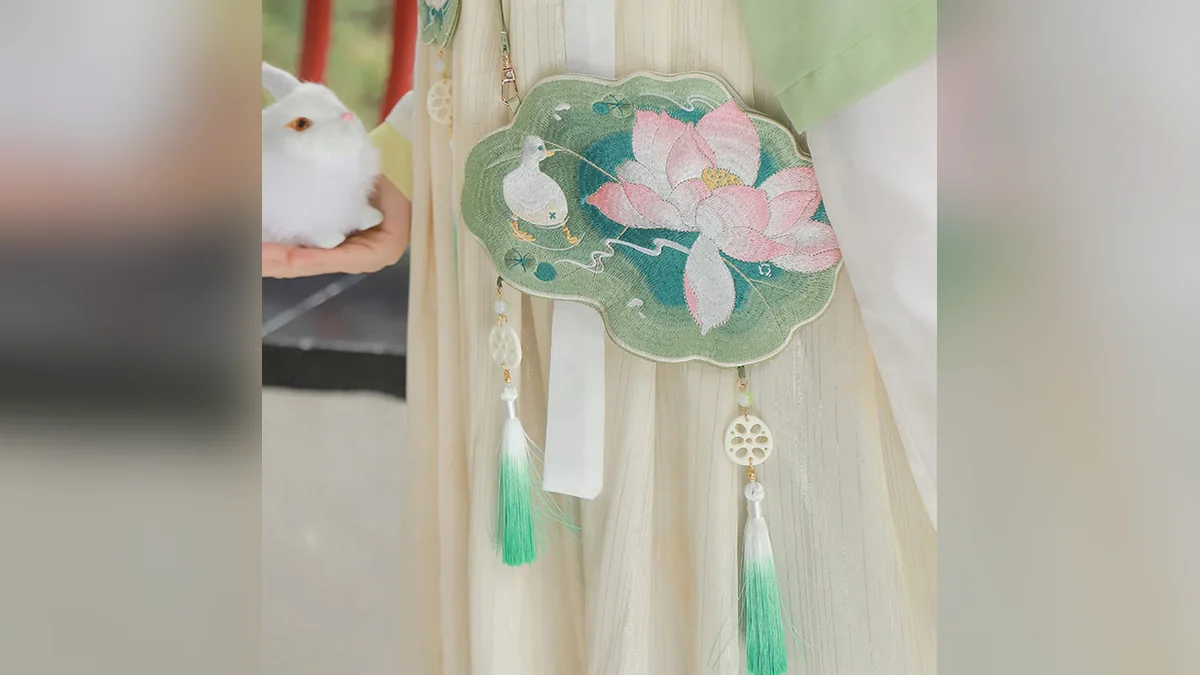
| Bags and pouches | A fish shares a defined panel with flowers or leaves; the option name may identify the combination. |
| Shawls and scarves | Fish sit within a wider pattern, sometimes alongside clouds or water shapes; folds reveal portions of the composition. |
| Bead bracelets | A small fish detail appears among beads or other decorative elements, making its outline more important than its color. |
| Cord bracelets | The fish forms part of an arrangement with cord, beads, or a character, so nearby elements need separate identification. |
When comparing product photos, locate the fish first and trace its head, body, and tail. Then check which image belongs to the selected option. A shared product page may contain floral designs without koi as well as fish designs. Do not assume that the pattern shown in one photo applies to every selection.
Koi motifs in four Buddha Stones products
Our examples place the motif on two textiles and two bracelets. Compare the named design with the material and dimensions supplied for that product; symbolism alone does not tell you its construction or fit.
A bag with several named koi options
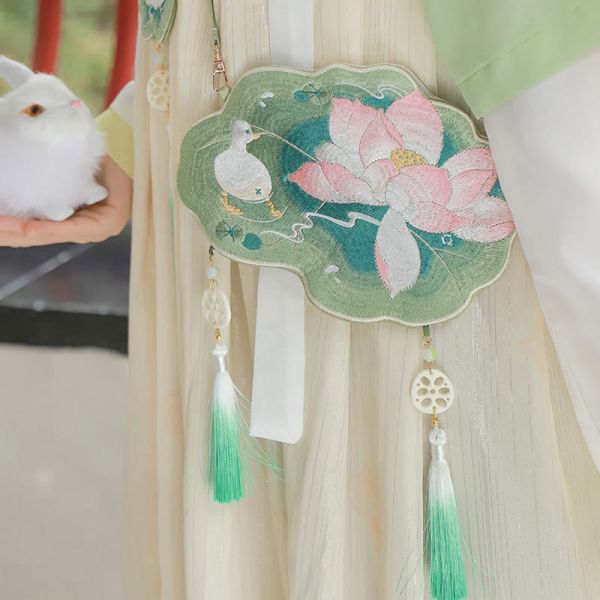
The Buddha Stones Embroidery Hanfu Bag has options named Koi Fish Flowers And Birds, Koi Fish Iris, Koi Fish Lotus, and Koi Fish Peony. Those names offer a starting point for identifying the fish and its floral companions. Other options feature different motifs, so select by the full option name.
The bag material is polyester. Its specifications give a strap length of 100-110cm and a weight of 77.6g. The size entry reads “Summer Lotus 22.3*16cm”; that wording ties the measurement to Summer Lotus rather than confirming dimensions for the koi options.
A shawl pairing koi with clouds
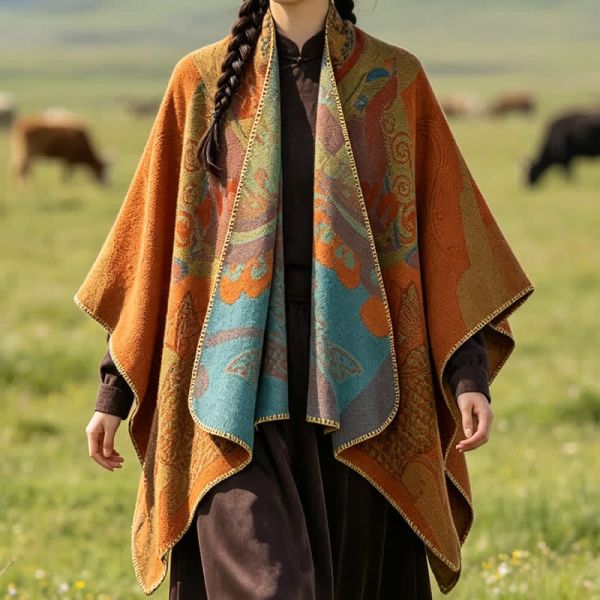
The Buddha Stones Koi Fish Clouds Shawl names both motifs directly. For visual comparison, separate the fish outline from the surrounding cloud forms before considering the pattern as a whole.
The material is 50% Polyester, 50% Acrylic, and the size is Approx. 130 cm × 150 cm / 51.2 in × 59.1 in. Color options are Black, CadetBlue, DarkOliveGreen, DimGray, Peru, and Tan. A color option identifies the selection; it does not establish a different traditional meaning.
An obsidian bracelet with a peace buckle
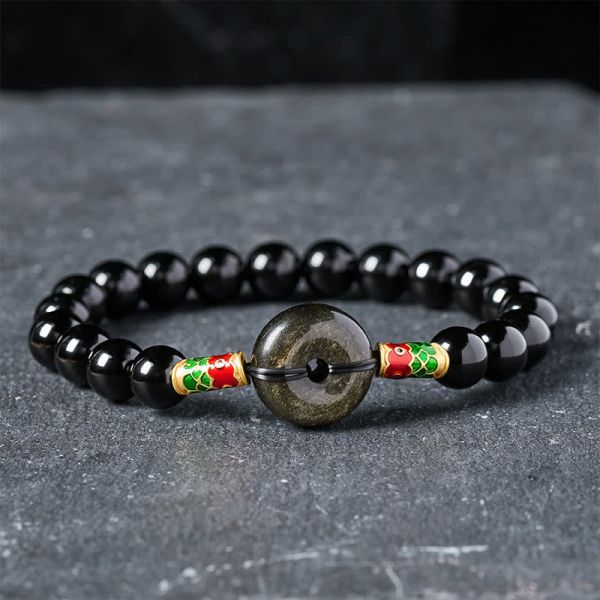
The Buddha Stones Obsidian Peace Buckle Koi Bracelet combines Golden Sheen Obsidian, Black Obsidian, and Copper Alloy. Its name identifies both a koi motif and a peace buckle, which should be read as separate elements.
It uses Premium Elastic String, with wrist circumference given as 5.9–6.3 in (15–16 cm) and bead size as Approx. 8mm. Natural stone may show slight differences in color, details, and overall appearance.
A cord bracelet with koi and Fu
The Buddha Stones Hand-Woven Koi Fish Fu Character Jade Beads Bracelet places two named symbols in one design. Fu is a Chinese character associated with happiness and good fortune in tradition; it is distinct from the fish motif.
This adjustable cord bracelet has a wrist circumference of 5.9–8.3 in / 15–21 cm. Materials are String, Hetian Jade, Copper Alloy, and Copper Plated Gold Bead. Options are Dark Red and Red. The jade may vary slightly in color, details, and overall appearance.
A useful reading begins with what the design actually shows: a fish outline, a companion flower, a cloud, or a character. Identify those elements before attaching a traditional meaning. That approach leaves room to appreciate koi as both a recognizable fish and a flexible decorative motif, without treating a pattern as a prediction.
Shop the story
 Buddha Stones Luck Embroidery Lotus Koi Fish Rabbit Flower Hanfu Bag Crossbody Bag Shoulder BagAs low as $29.59 Regular Price $39.45
 Buddha Stones Fall Winter Koi Fish Clouds Oriental Draped Soft ShawlAs low as $41.59 Regular Price $57.76
 Buddha Stones Golden Sheen Obsidian Peace Buckle Black Obsidian Koi Fish Protection Round Bead BraceletSpecial Price $25.59 Regular Price $34.58
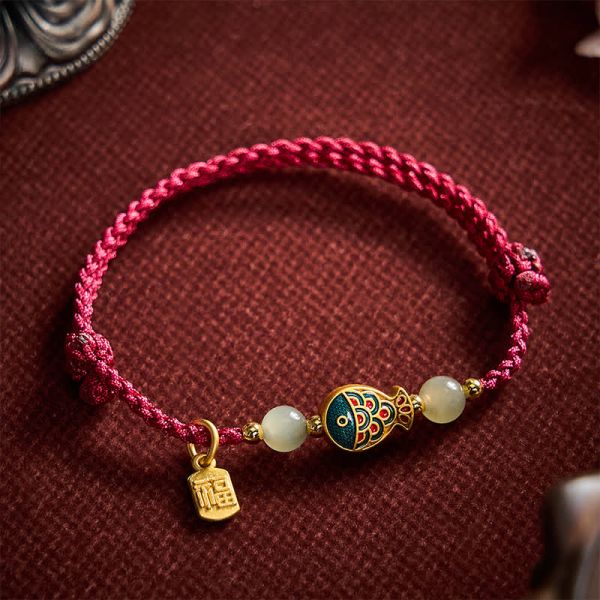 Buddha Stones Hand-Woven Koi Fish Fu Character Jade Beads Protection Rope BraceletAs low as $25.59 Regular Price $34.12