
What Is Fish in Chinese Festival Art and Jewelry?
Chinese families traditionally served fish at the Lunar New Year table as an expression of hope for the coming year. Its place in the meal carried meaning beyond food. For readers asking “what is fish” as a traditional Chinese symbol, the plain answer is abundance and surplus. Wishes for luck, wealth, or protection belong to cultural belief; no object or symbol guarantees those outcomes.
The connection rests partly on language: the Chinese word for fish, yu, sounds like the word for surplus. A familiar food could therefore express a wish that a household would have more than enough. From that table, the same idea appears across paper decorations, ceramics, textiles, and personal ornaments. At Buddha Stones, we describe these associations as traditions, while keeping the physical details of an accessory separate from its symbolic meaning.
What is fish saying at the New Year table?
A fish served during a New Year meal participates in a larger custom of choosing foods for their auspicious associations. The wish is practical and domestic: enough food, enough resources, and something remaining for the future. That gives the motif a particular warmth. Abundance can mean a household provided for, with enough to share.
Some families leave part of the fish uneaten to echo the idea of surplus. Practices differ between households and regions, so a single serving rule should not stand for every celebration. The shared thread is the use of an ordinary meal to express a hope. A fish on a plate and a fish on a festival decoration can speak the same symbolic language without being used in the same way.
This context also helps when giving a fish-themed present. A short explanation such as “a traditional wish for enough to share” keeps the meaning personal and clear. The giver can express that hope without making predictions about the recipient’s finances or future.
When the fish moved into paper, thread, and clay
In Chinese decorative traditions, fish appear in paper cuts, embroidery, and ceramic designs. Their shape offers artists a recognizable outline: a body, fins, and a tail can remain legible even when reduced to a few curves. A paper cut relies on its silhouette and open spaces. Embroidery can describe scales and flowing fins through stitches. A ceramic surface gives the motif another setting, often alongside water or plants.
These different crafts matter because a shared subject does not make their construction identical. An embroidered fish and a woven fish pattern may look related while being made through different processes. When describing a finished product, its actual material and documented construction deserve as much attention as the pattern.
Fish can also appear beside flowers, birds, or clouds. The accompanying forms change the composition and may carry their own traditional associations. It is better to look at the combination in front of you than assign one fixed message to every fish design. A lotus beside a fish deserves its own attention; our discussion of the lotus flower in Buddhist symbolism provides context for that separate motif.
A small fish motif in modern jewelry
On jewelry, a fish becomes a detail that can be worn apart from a festival setting. Someone may choose it for a family association, its traditional wish for abundance, or simply its form. A personal choice does not require a prescribed belief, and decorative jewelry does not need to be treated as a ritual object.
Scale changes how the design is read. A fish spread across fabric can be part of a broad scene; a fish on a bracelet sits among beads, cord, or metal details. For a purchase, start with the materials and fit information, then consider how much symbolic detail you want. A motif can carry a meaningful reference while the decision still rests on ordinary preferences about color, dimensions, and fastening.
If the accessory is a gift, explain the symbol as a wish. Words such as Luck and Protection in our product names refer to traditional wishes. They do not establish what will happen to the person receiving the item.
Four Buddha Stones designs carrying the fish motif
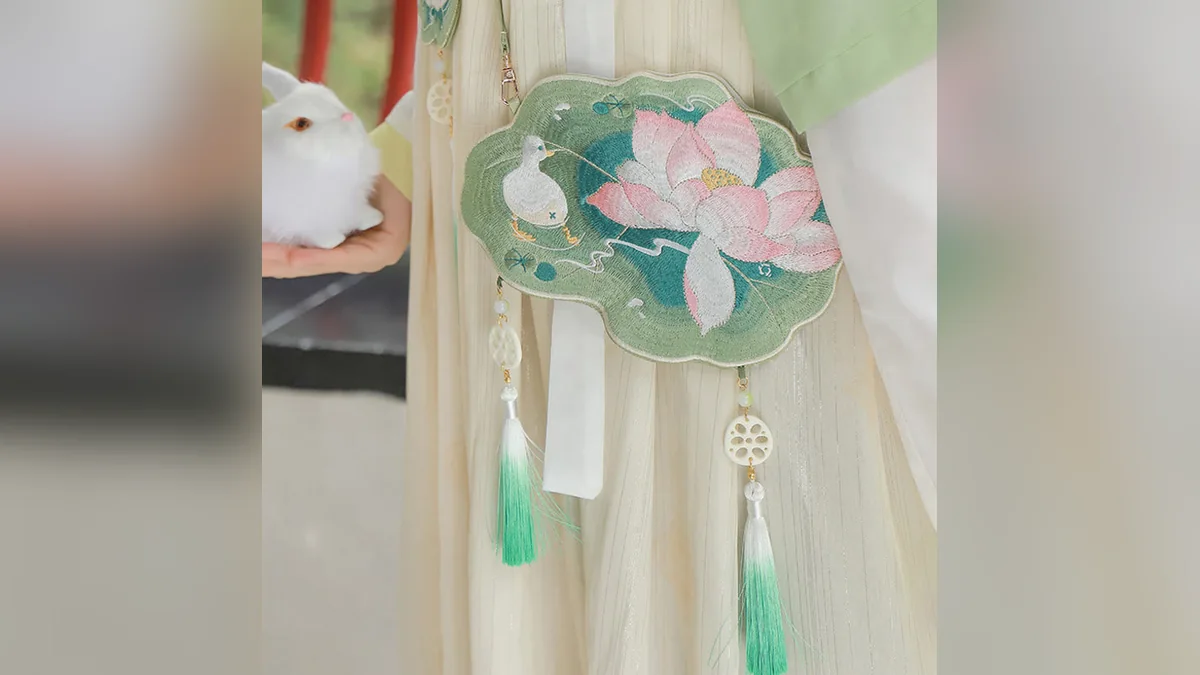
A bag with named pattern choices. Our Buddha Stones Lotus Koi Fish Hanfu Bag is made of polyester. Some options are named Koi Fish Flowers And Birds, Koi Fish Iris, Koi Fish Lotus, and Koi Fish Peony. The size entry specifically reads Summer Lotus 22.3*16cm; it should not be assumed to describe every option. Strap length is 100-110cm, and weight is 77.6g. The package contains one bag. Choose by the named option, since the product title gathers several different motifs.
Fish and clouds on a shawl. The Buddha Stones Koi Fish Clouds Shawl uses 50% Polyester, 50% Acrylic. Its dimensions are Approx. 130 cm × 150 cm / 51.2 in × 59.1 in. The color options are Black, CadetBlue, DarkOliveGreen, DimGray, Peru, and Tan. One shawl is included. Here the named fish and cloud motifs place the subject on fabric, offering a different format from a small jewelry detail.
Obsidian beads with fish and peace buckle references. The Buddha Stones Obsidian Koi Fish Peace Buckle Bracelet combines Golden Sheen Obsidian, Black Obsidian, and Copper Alloy. It uses Premium Elastic String, with a wrist circumference of 5.9–6.3 in (15–16 cm) and a bead size of Approx. 8mm. The package contains one bracelet. The natural stone may vary slightly in color, details, and overall appearance, so those features can differ between pieces.
An adjustable cord with a Fu character reference. Our Buddha Stones Hand-Woven Koi Fish Fu Character Jade Bracelet has an Adjustable Cord and a wrist circumference of 5.9–8.3 in / 15–21 cm. Its materials are String, Hetian Jade, Copper Alloy, and Copper Plated Gold Bead. Red and Dark Red options are available, and one bracelet is included. The jade may show slight differences in color, details, and overall appearance. The Fu character adds another traditional reference to good fortune, expressing a hope for the wearer.
FAQ: Reading fish designs with care
Does every fish design mean wealth?
No. Abundance is a familiar Chinese association, but context matters. Fish may also be decorative subjects, and a wearer can choose a design without adopting a symbolic interpretation.
Are fish motifs only for New Year?
No. Their festival associations help explain the tradition, but fish also appear on everyday decorative objects and accessories. There is no general requirement to reserve them for a holiday.
How can I explain a fish-themed gift?
Describe the traditional wish and the reason you chose the design. A simple note about having enough to share carries the table’s original association into the gift, without predicting its recipient’s future.
Shop the story
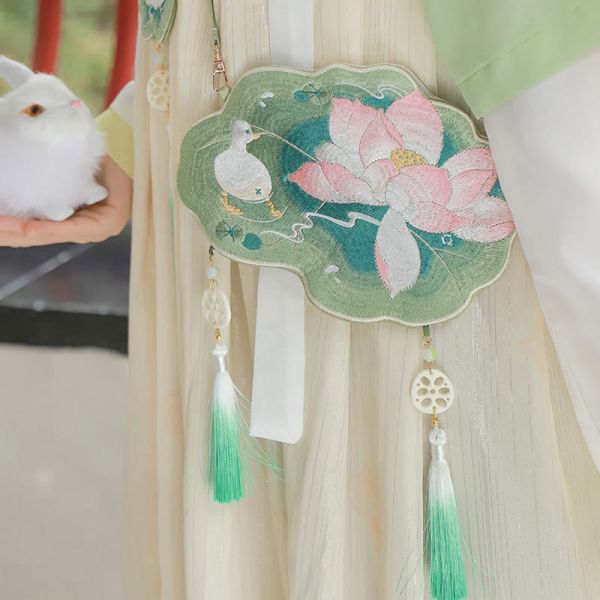 Buddha Stones Luck Embroidery Lotus Koi Fish Rabbit Flower Hanfu Bag Crossbody Bag Shoulder BagAs low as $29.59 Regular Price $39.45
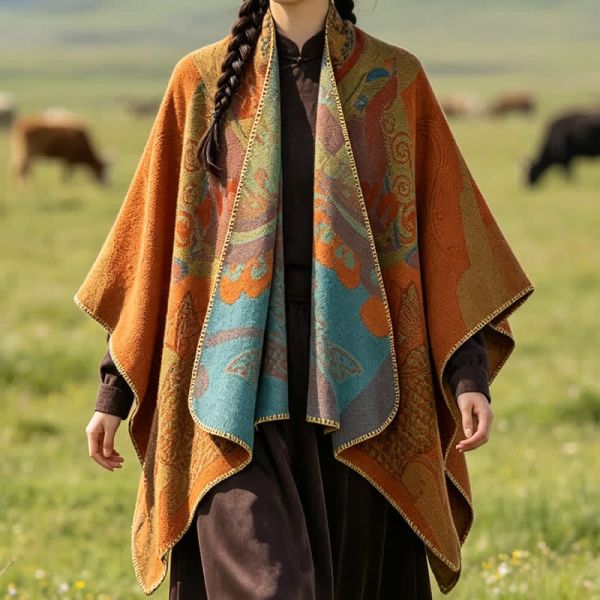 Buddha Stones Fall Winter Koi Fish Clouds Oriental Draped Soft ShawlAs low as $41.59 Regular Price $57.76
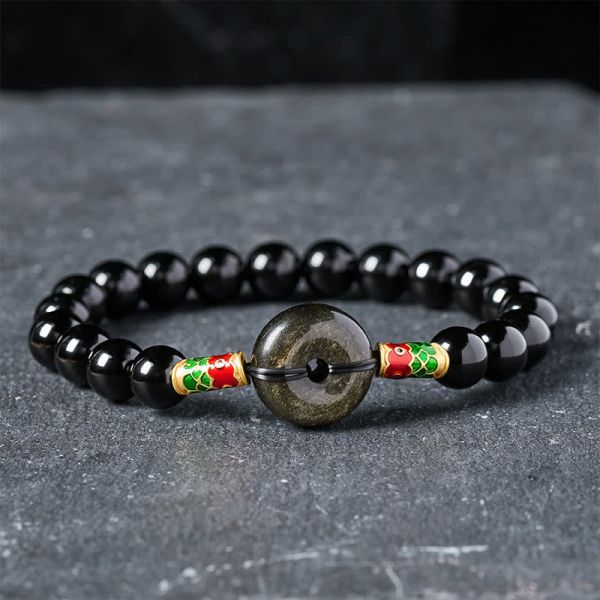 Buddha Stones Golden Sheen Obsidian Peace Buckle Black Obsidian Koi Fish Protection Round Bead BraceletSpecial Price $25.59 Regular Price $34.58
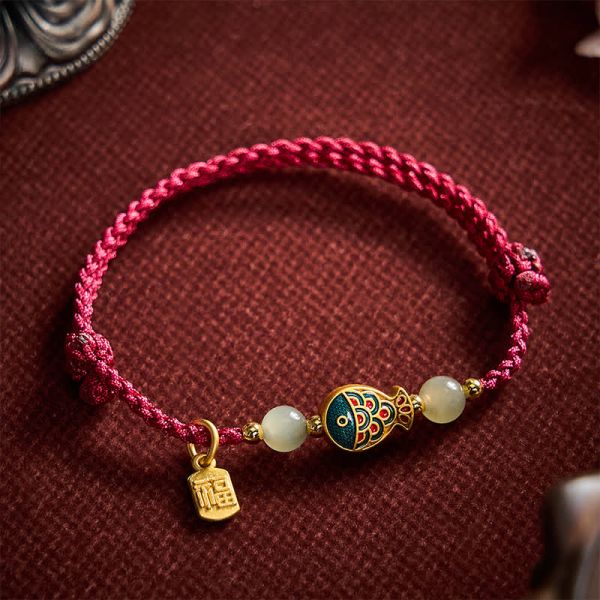 Buddha Stones Hand-Woven Koi Fish Fu Character Jade Beads Protection Rope BraceletAs low as $25.59 Regular Price $34.12