
What Is Bodhi? From the Buddha's Tree to Jewelry
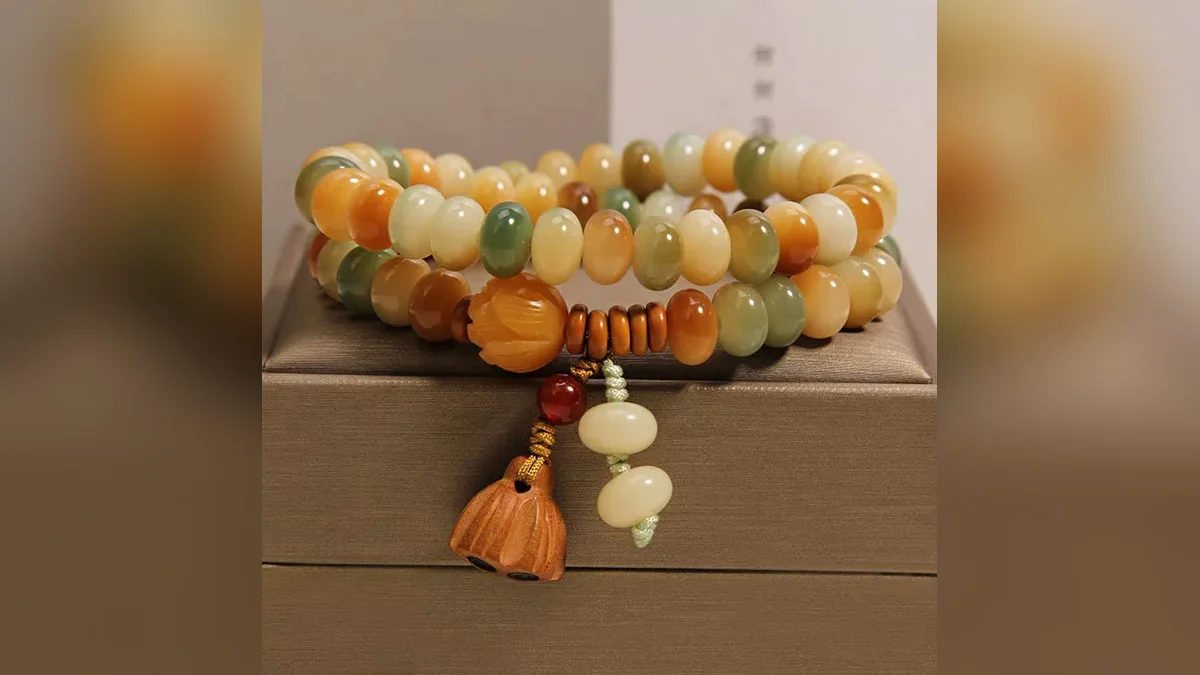
Siddhartha Gautama sat beneath a fig tree at Bodh Gaya. In Buddhist tradition, this is where he attained awakening and became known as the Buddha. The answer to “what is bodhi” begins here: bodhi means awakening, often translated as enlightenment. It refers to a Buddhist understanding of the nature of existence. Luck, wealth, and protection belong to traditional beliefs about symbolic objects; none is guaranteed by a bead or bracelet.
The tree became known as the Bodhi tree because of that event. Its name points back to the awakening beneath its branches. Following that distinction makes the word easier to understand as it passes from religious teaching into festivals, art, and the names of contemporary jewelry.
What is bodhi beyond the tree's name?
Bodhi is a term used in Sanskrit and Pali, two languages central to Buddhist literature. It names awakening rather than a particular material. The Buddha's title, commonly understood as “the awakened one,” belongs to the same family of words.
In the traditional account, the tree marks a place where a decisive event occurred. It is not presented as something that granted awakening simply through contact. This matters when a sacred word appears on an object for sale: the object's name can refer to a teaching without making the object a substitute for religious practice.
A tree, a leaf motif, and a strand of beads can therefore share an association while remaining different things. A Bodhi tree is a tree connected with the awakening story. Bodhi seed is a jewelry material description. That description alone does not establish a botanical species or prove that beads came from the tree associated with the Buddha.
At Buddha Stones, we keep the meaning and the material description distinct. A familiar religious name deserves an explanation that respects both the teaching and the facts available about a piece.
A remembered awakening in observance and craft
The scene beneath the tree continues to be remembered in Buddhist observances. Bodhi Day commemorates the Buddha's awakening in some traditions. Japanese Zen communities use the name Rohatsu, and observances may include seated meditation, chanting, and study. Customs differ between communities; there is no single celebration that represents every Buddhist tradition.
Such observances return attention to the event itself. The tree provides a recognizable setting, while recitation and teaching place the story within a continuing religious practice. A festival name can preserve a word across generations even when the people using it speak different everyday languages.
Art gives the story another form. In early Buddhist sculpture, the Bodhi tree could stand for the Buddha and his awakening. Branches and leaves made the setting recognizable without requiring a written explanation. That use of a visible object to refer to a teaching helps explain why Buddhist imagery remains meaningful in decorative work.
Bead stringing belongs to a different craft tradition. Prayer beads give recitation a physical counting method: a bead can mark a repetition. The arrangement serves a practical role within devotion, while the choice of material may carry a cultural association. A bead's name and its counting function should not be confused with a promise about what wearing it will accomplish.
How the old word enters modern jewelry
In contemporary jewelry, bodhi often appears beside words such as seed, mala, bracelet, and lotus. These describe different aspects of a piece: its material, its form, or a symbol included in the design. Reading them separately gives a clearer picture than treating a long product name as a single religious claim.
The lotus, for example, has its own place in Buddhist symbolism. It is associated with purity and awakening, so its appearance beside bodhi creates a related reference. Our article on lotus flower meaning in Buddhism discusses that symbol separately. Neither a lotus detail nor a bodhi label establishes that an item has received a religious blessing.
You can appreciate the design while learning the vocabulary attached to it. If the jewelry is intended as a gift, a short explanation of the awakening story gives the recipient useful context. It also leaves room for the recipient's own beliefs instead of assigning an expected result to the gift.
Practical details still matter. Bracelet measurements describe fit, bead dimensions describe scale, and material information identifies what a page actually specifies. Symbolic language cannot fill gaps in those details.
Four bodhi seed designs in our collection
Our White Bodhi Seed Lotus Purity Double Wrap Bracelet uses bodhi seed and Premium Elastic String. Its wrist circumference is 5.5-5.9 in / 14-15cm, with a bead size of Approx. 6mm. Grain and color may vary, and the bodhi seed may develop a natural patina over time with wear. The care instruction for this bracelet is to avoid water exposure.
The White Bodhi Seed Resin Barrel Bead Lotus Pendant Round Meditation Bracelet combines White Bodhi Seed, Resin, and Copper Alloy. It has Premium Elastic String, a wrist circumference of 6.3–6.7 in (16–17 cm), and a bead size of Approx. 10mm. Slight differences in color, details, and overall appearance may occur.
Our Natural White Bodhi Seed Mala 108 Beads Wealth Bracelet is described as both a bracelet and a necklace. The material is Bodhi Seed, and the bead size options are 6*8mm, 7*9mm, and 8*10mm. It is unisex. Here, “Wealth” expresses a traditional wish, not an assured financial result.
The Handmade Tibetan Tiger Eye Bodhi Seed Peace Bracelet pairs Bodhi Seed with Tiger Eye. This unisex bracelet has 108 beads and offers bead size options of 6*8mm, 7*9mm, and 8*10mm. “Peace” expresses an aspiration in the product name.
These descriptions give different kinds of information. Compare the supplied fit measurements where available, and avoid treating a bead size option as a wrist measurement. A meaningful name and a suitable fit answer separate questions.
Questions that follow the awakening story
Does bodhi mean good luck?
No. Its traditional meaning is awakening or enlightenment. Associations with luck are beliefs attached to objects or customs, rather than the word's basic meaning. Jewelry offers no guarantee of luck.
Are bodhi beads from the Buddha's tree?
The material name alone cannot establish that connection. For the products described here, use the supplied material descriptions rather than assuming a particular botanical species or sacred origin.
Is a bodhi bracelet a religious commitment?
Wearing a bracelet does not by itself declare a formal Buddhist commitment. Its symbolism still deserves respect. The story beneath the tree gives the name its context, even when the object carrying it is everyday jewelry.
Shop the story
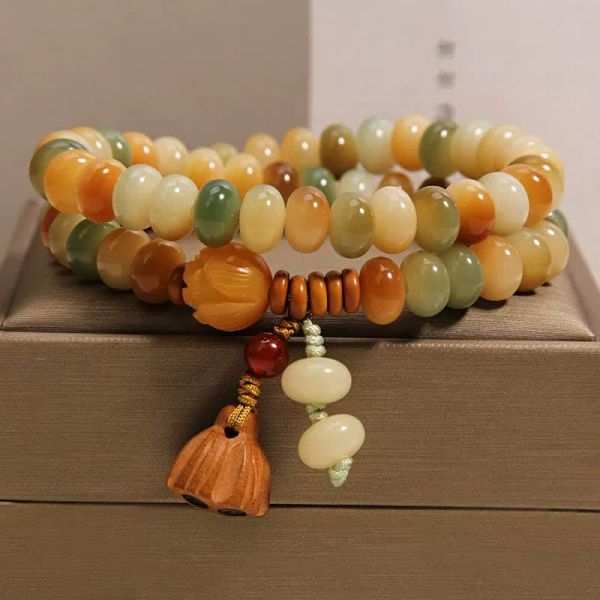 Buddha Stones White Bodhi Seed Lotus Purity Double Wrap BraceletAs low as $25.59 Regular Price $34.12
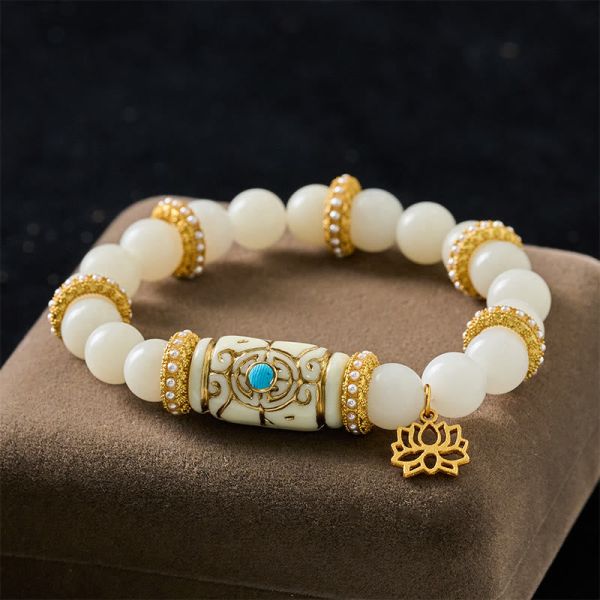 Buddha Stones White Bodhi Seed Resin Barrel Bead Lotus Pendant Round Meditation BraceletSpecial Price $27.59 Regular Price $38.86
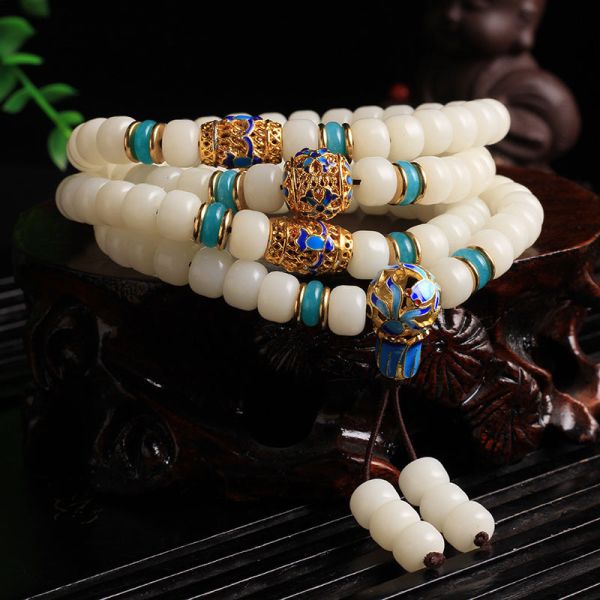 Buddha Stones Natural White Bodhi Seed Mala 108 Beads Wealth BraceletAs low as $38.59 Regular Price $52.86
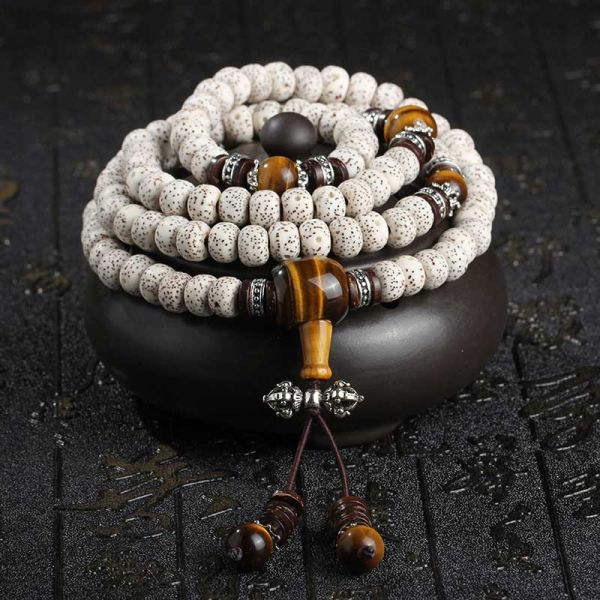 Buddha Stones Handmade Tibetan Tiger Eye Bodhi Seed Peace BraceletAs low as $52.59 Regular Price $72.04