Tibetan Bell Meaning in Ritual, Art, and Jewelry
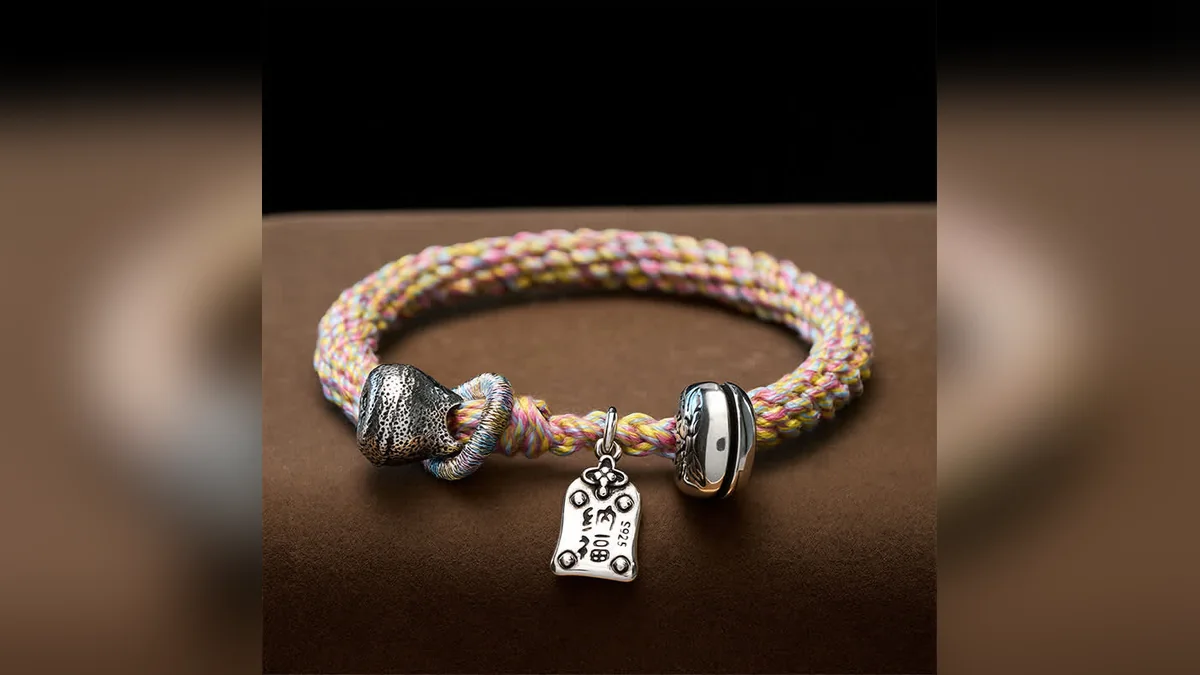
A Tibetan ritual bell has a flared mouth beneath an upright handle. In Tibetan Buddhist tradition, the bell represents wisdom, especially the understanding of emptiness, and is commonly paired with a vajra representing compassionate action. This is the central Tibetan bell meaning; decorative bells can carry different associations. Luck, wealth, and protection associated with bell charms belong to traditional beliefs and wishes. A bell does not guarantee any of them. At Buddha Stones, we keep that distinction clear when discussing jewelry and decor.
From Indian ritual traditions to Tibetan practice
The Tibetan Buddhist handbell belongs to the ritual traditions of Vajrayana Buddhism, which developed in India and spread to Tibet. Its Sanskrit name is ghanta; in Tibetan, it is called drilbu. These names identify a ceremonial implement with an established place in religious practice.
A ritual bell may have a handle topped by part of a vajra, with additional symbolic decoration around its body. The shape connects the bell visually to its usual companion. Details vary, so a single feature cannot explain every bell or identify its precise ritual use.
Its background is better understood through religious practice than through a single origin legend. There is no need to attach a story about a magical bell to explain its importance. The lasting connection is between the object, Buddhist teachings, and the ceremonies in which it is used.
Tibetan bell meaning: wisdom expressed through ritual
Wisdom is the bell’s central traditional meaning. In this context, wisdom includes understanding emptiness: the Buddhist teaching that things do not exist independently, with a permanent essence of their own. Emptiness does not mean that nothing exists or that actions have no importance.
The bell also serves as a musical offering in Buddhist ritual. Its sound belongs to a sequence that may include recitation, gestures, and other instruments. Within that setting, ringing is part of a learned practice rather than a general instruction to make any particular thing happen.
A small bell on a bracelet may recall this religious symbolism. Its presence alone does not establish that the bracelet has been blessed, used in a ceremony, or made for formal ritual. We distinguish a reference to a sacred object from the object’s specific ceremonial role.
Where the bell appears and what its setting tells you
Painted figures and textile images
In Tibetan Buddhist art, a bell may appear in the hand of a deity or religious teacher. Look at the accompanying objects and the figure’s gestures before reading it as an isolated symbol. A bell beside a vajra gives a different context from a bell used as a decorative border detail.
This imagery also appears in textile forms of religious art, including painted cloth thangkas and works made with embroidery or appliqué. A bell represented on cloth retains its connection to the figure and composition. It is not automatically a separate wish for good fortune simply because it appears on fabric.
Jewelry and small decorative objects
Jewelry translates the bell into a motif that can be worn. A product name may connect it with a lotus or a mantra, adding another symbolic reference. Read those references separately before combining them; a bell, a flower, and a written phrase do not all mean the same thing.
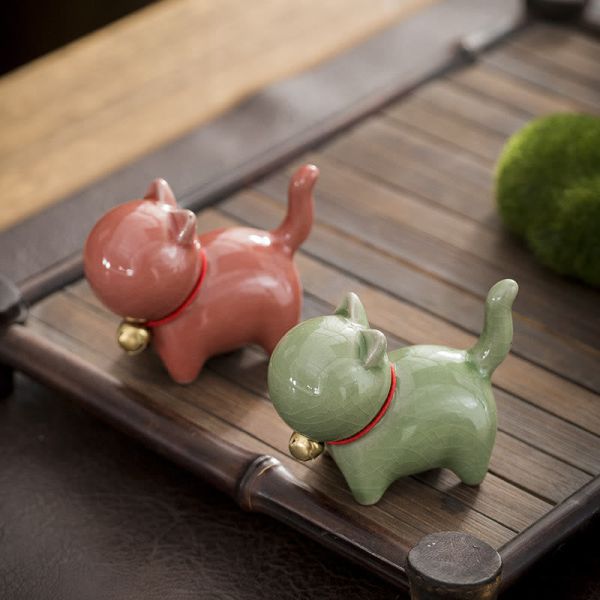
A bell on a cat figurine belongs to another decorative context. It does not make the cat a Tibetan Buddhist ritual object. Identifying the whole design matters more than treating every bell shape as evidence of the same tradition.
Festivals and public ceremonies
Bells may be used during religious ceremonies held around Buddhist festivals. Their role comes from the ceremony and its tradition, rather than the festival date alone. A bell seen in a public celebration should therefore be understood through what participants are doing and which religious setting is involved.
If you attend a ceremony, follow the host’s guidance about photography, handling objects, and participation. Watching a ritual does not supply the instructions needed to reproduce it. A decorative bell can be appreciated without presenting its use as a formal Buddhist rite.
The vajra, lotus, and mantra beside the bell
The bell and vajra are commonly held in the left and right hands, respectively. The vajra represents method, often explained through compassionate action, while the bell represents wisdom. Their pairing expresses the Buddhist teaching that these qualities belong together on the path to enlightenment.
The lotus adds a separate association with purity and awakening in Buddhist imagery. When it accompanies a bell, you can recognize both references without assigning a fixed meaning to every detail of a modern design.
A mantra provides a further textual context. Our explanation of Om Mani Padme Hum discusses that phrase in its own right. A product name containing the mantra does not, by itself, confirm where lettering appears or how it is arranged.
Bell bracelets and ceramic cats from Buddha Stones
Our product details distinguish the following bracelets and decorations. The word “Lucky” in the cat product names expresses a traditional wish; it does not promise a result.
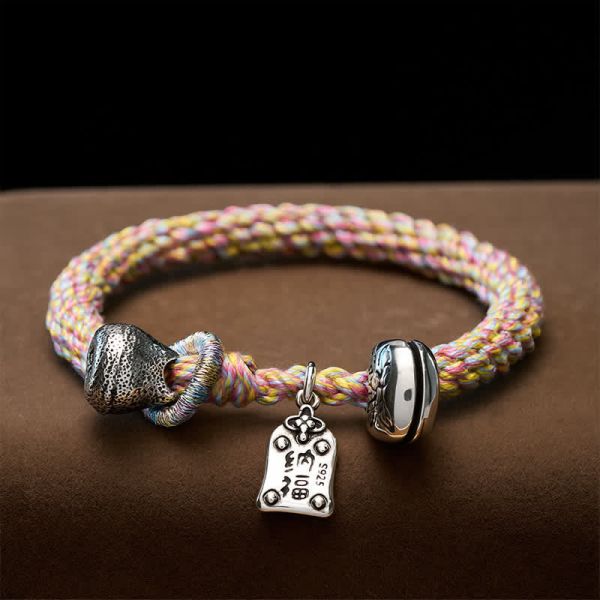
A lotus bell bracelet in seven sizes
The Tibetan Copper Lotus Bell Hand-Woven Bracelet uses string and copper with an adjustable cord. Its wrist circumference options are:
- 4.7–5.1 in (12–13 cm)
- 5.1–5.5 in (13–14 cm)
- 5.5–5.9 in (14–15 cm)
- 5.9–6.3 in (15–16 cm)
- 6.3–6.7 in (16–17 cm)
- 6.7–7.1 in (17–18 cm)
- 7.1–7.5 in (18–19 cm)
The package contains one bracelet. Multicolored cord tones, shades, and pattern distribution may differ slightly between batches as part of handmade production.
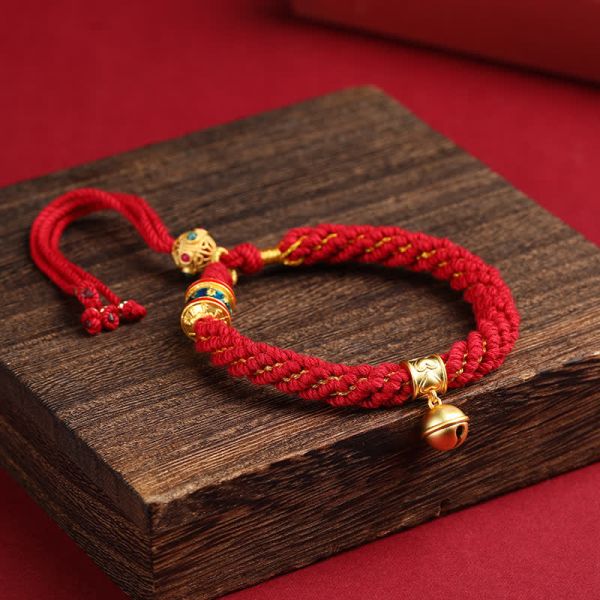
A bell charm bracelet named for a mantra
The Hand-Woven Tibetan Om Mani Padme Hum Wisdom Bell Charm Bracelet has an adjustable cord and uses string and copper alloy. Wrist circumference is 5.9–6.7 in / 15–17 cm. Options include Black, Blue Green, Burgundy, Green, Khaki Blue, Red Multicolor, Sapphire Blue, and Yellow. One bracelet is included. Cord color, shade, and pattern distribution can vary slightly between handmade batches.
A standing ceramic cat with a red rope bell
The Mini Lucky Standing Cat Red Rope Bell Decoration is ceramic. Its size is about 3*1.53*2.2 in(7.6*3.9*5.6cm). Color options are Beige, Blue, Dark Blue, and Green. The package contains one cat.
A ceramic bell cat tea pet decoration
The Mini Cute Lucky Bell Cat Tea Pet Decoration is a ceramic decoration measuring 7*3.4*5.8cm. Options are Lucky Cat Black, Lucky Cat Gray, Lucky Cat Gray White, Lucky Cat Green, Lucky Cat Orange, and Lucky Cat Pink. One cat is included.
Let the surrounding details guide the reading
Tibetan bell meaning begins with wisdom in Buddhist ritual. Art, jewelry, and decorative figures give the bell different settings, so the surrounding details deserve attention. We describe those connections as cultural and religious symbolism, leaving room to appreciate a design without assigning it a promised result.
Shop the story
 Buddha Stones Tibetan Copper Lotus Bell Hand-Woven BraceletAs low as $26.59 Regular Price $36.42
 Buddha Stones Hand-Woven Tibetan Om Mani Padme Hum Wisdom Bell Charm Multicolor Rope BraceletAs low as $25.59 Regular Price $35.05
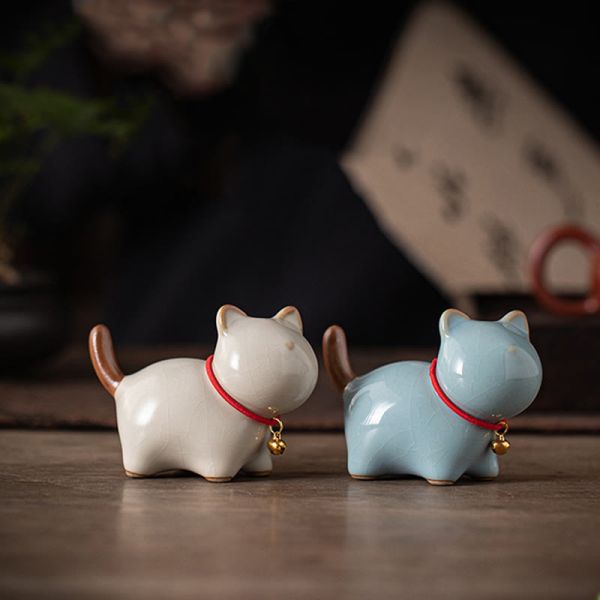 Buddha Stones Mini Lucky Cute Standing Cat Red Rope Bell Ceramic Figurine DecorationAs low as $25.59 Regular Price $35.05