
Tea Pet Types: Set Up a Practical Tea Tray Display
A thin stream of tea runs from a pitcher over a small figure, then drains through the tea tray below. This is one traditional way to include a tea pet in a brewing session. Tea pet types can be grouped by material, shape, and intended use: some suit a pouring routine, while others serve as dry decorations beside the teaware. Traditionally, the figure sits on or near the tea tray. Start by deciding where liquid will go and how much room your brewing tools need.
Step 1: Sort Tea Pet Types by Your Setup
Choose the role before choosing the animal or motif. A figure intended to receive tea needs a place where liquid can drain. A decorative figure can stand beside the tray, where it stays visible without occupying the brewing surface. The product name alone does not establish that its finish is suitable for repeated pouring.
Material and surface finish are separate considerations. A ceramic description does not tell you whether a piece is glazed, and a material name does not replace care instructions. If wet-use guidance is unavailable, begin with a dry display. You can still include the figure in the arrangement without pouring anything over it.
Then consider shape. A gourd, fox, or frog offers a different outline, but the practical question is the same: will its position leave enough room to handle the teaware? At Buddha Stones, we recommend comparing the stated dimensions with the space you actually have available.
Step 2: Reserve Space for Brewing First
Place your teapot or gaiwan, pitcher, and cups before adding a figure. Leave room to lift a lid, turn a handle, and set down a filled vessel without reaching across the decoration. Your usual hand movements should determine the open space around the brewing tools.
For traditional tea-tray placement, choose an unused area toward the side or back, provided it does not obstruct the drain. There is no universal compass direction required for a tea pet. Turn the figure so its details are visible from your seat, then check that it stands securely on the surface.
A dry display belongs outside the area that regularly gets splashed. Keep it clear of the tray edge and the route between kettle and brewing vessel. If you are also arranging new teaware, our gaiwan instructions explain the handling sequence that your layout needs to accommodate.
Step 3: Check the Layout Before Adding Hot Water
With the vessels empty and cool, rehearse the brewing movements. Lift the brewing vessel, move the pitcher toward the cups, and return everything to its place. Reposition the figure if your hand passes close to it or if it hides the spot where a vessel needs to land.
Check the base as well as the overall dimensions. Tray slats, ridges, or drainage holes can make an otherwise convenient position uneven. Choose a level area that supports the figure without rocking. Do not balance it across a gap just to preserve a symmetrical arrangement.
If space feels crowded, move the decoration beside the tray. A single figure in a clear position is easier to accommodate than several figures sharing the pouring area. Leave enough access to lift the tray cover or empty its reservoir, if your tray has those features.
Step 4: Choose a Pouring or Dry-Display Routine
For a tea pet whose care instructions permit pouring, direct a small amount of plain tea over it while it stands within the draining area. Keep the stream away from hands, cups, and the table edge. Pouring is optional; a tea pet does not need to receive liquid during every session.
Avoid adding milk, sugar, or flavored syrups. They leave residues that complicate cleanup. Do not try to force a darker surface through prolonged soaking or concentrated tea. A change in appearance is not a requirement for using or displaying a tea pet.
For a dry arrangement, leave the figure beside the tray throughout brewing and move it before wiping up spills. Afterward, empty collected liquid and let the tray dry. Follow the figure’s own care directions for cleaning; avoid assuming that instructions for one material or finish apply to another.
Common Setup Mistakes to Avoid
- Choosing by height alone: Compare the full stated dimensions with the available space around your teaware.
- Blocking drainage: Keep the figure clear of outlets and removable tray parts.
- Assuming every tea pet can be soaked: Confirm suitable use before introducing liquid.
- Reaching over the figure: Leave a clear route for the kettle, pitcher, and brewing vessel.
- Making symbolism a placement rule: Traditional associations do not require an awkward or unstable arrangement.
Buddha Stones Products to Plan Around
The following dimensions can help you compare positions on or beside a tray. Words such as Wealth, Luck, Lucky, and Protection in our product names express traditional wishes. There is no guarantee that a decoration will produce those results.
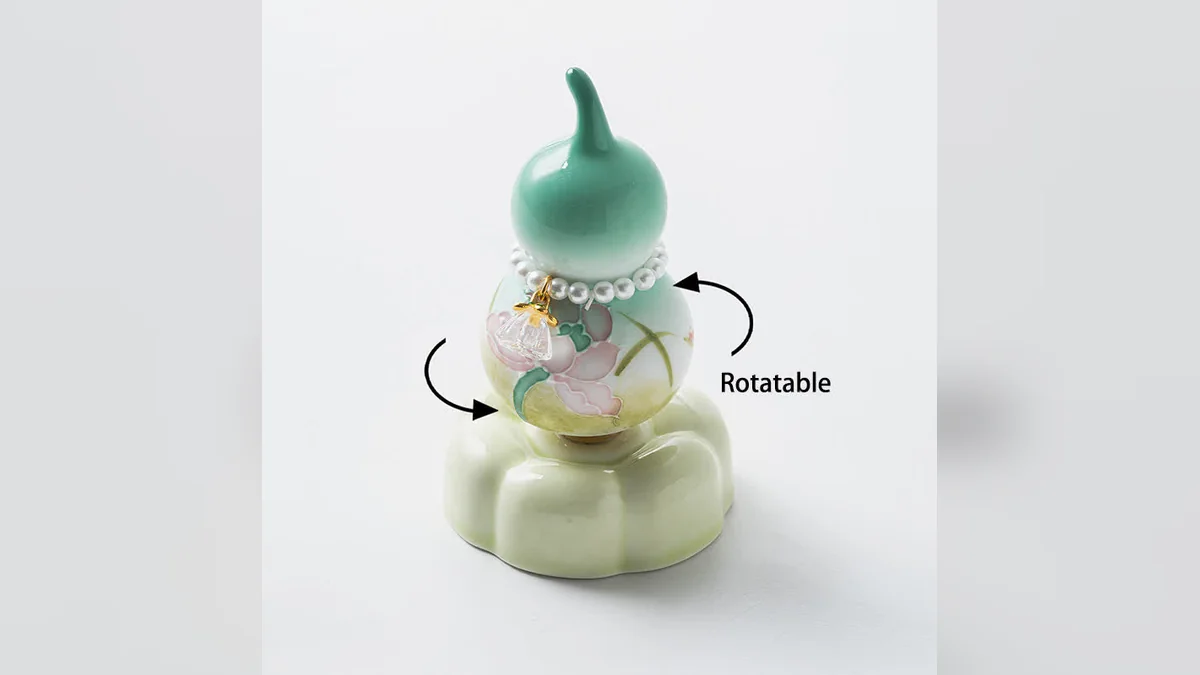
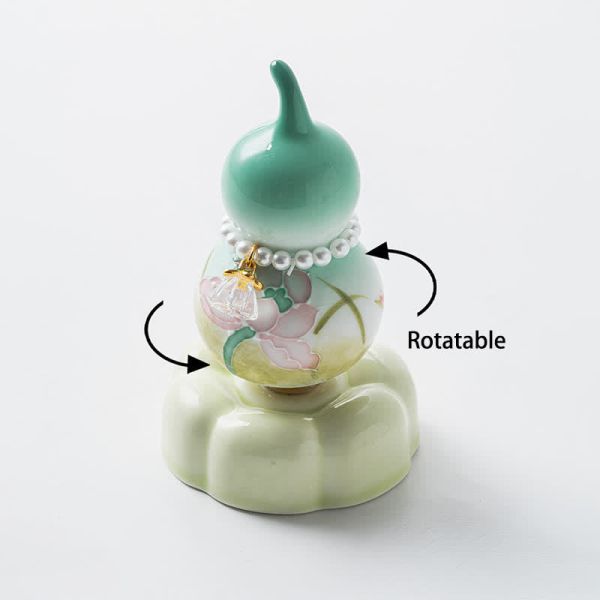
Green Lotus Gourd
Our Hand-Painted Ceramic Green Lotus Gourd Tea Pet is ceramic, with a size of Approx. 5.4 cm × 5.4 cm × 8.6 cm (L × W × H) / 2.1 in × 2.1 in × 3.4 in (L × W × H). The package contains Ceramic Tea Pet × 1 and Gift Box × 1. Its handmade nature can produce slight differences in color, shape, and size; firing and hand-painting also create variations in color and patterns.
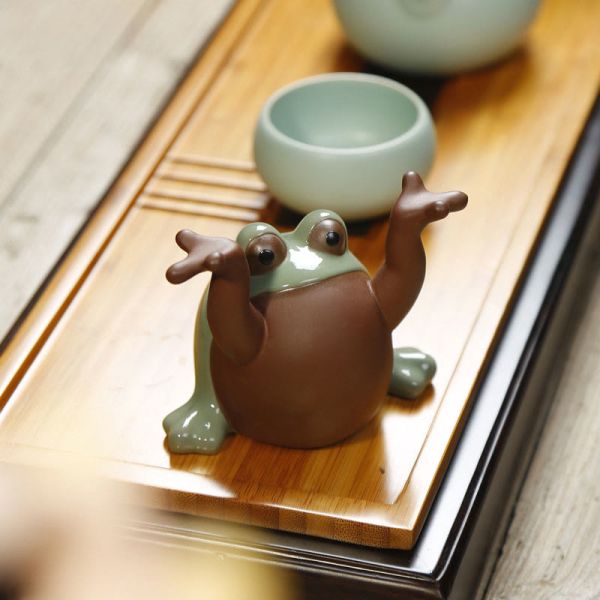
Frog With Two Arm Positions
The Cute Frog Tea Pet Figurine has Ceramic, Purple Clay in its material specification. Choose between Frog Arms Up 10.5*8.8cm and Frog Arms Down 8.7*6.2cm. One frog is included. Compare the dimensions of the selected option before reserving its place.
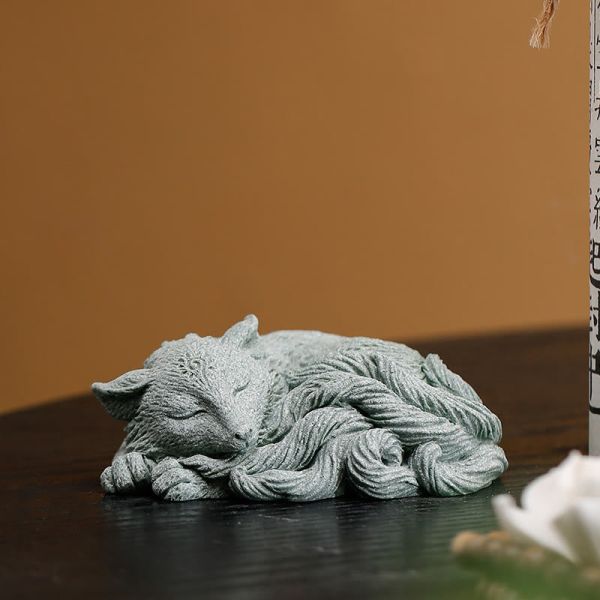
Nine-Tailed Fox
Our Small Nine Tailed Fox Tea Pet Figurine is sandstone and measures 10*7.5*3.7cm. Use the complete measurements when planning its position; the specification does not label which measurement corresponds to each direction.
Mini Frog Options
The ceramic Mini Meditation, Lotus, and Resting Frog Tea Pet offers three options: Meditation Little Frog 4.6*2.7*5.7cm, Lotus Little Frog 4*3.5*5.9cm, and Resting Little Frog 4.5*3.2*5.7cm. Match the chosen option’s measurements to your layout rather than treating the options as one size.
FAQ
Does a frog tea pet need to face the door?
Tea-tray placement does not require a frog to face a doorway. For this setup, prioritize a secure base, visibility, and room to pour. Decorative frog figures should not automatically be assigned the placement customs associated with other feng shui objects.
Can a tea pet stay on a shelf instead?
Yes. A dry shelf display is a practical choice when the tea tray has limited room or wet-use instructions are unavailable. Position the figure securely, with space to lift it for cleaning, and keep it away from accidental splashes.
How many figures should go on one tray?
There is no required number. Begin with the space left after arranging the brewing tools. Add another figure only if you can still handle the vessels, access drainage, and clean the surface easily. The tray’s working space sets the limit.
Shop the story
 Buddha Stones Hand-Painted Ceramic Green Lotus Gourd Tea Pet Mindful Living DecorSpecial Price $29.59 Regular Price $39.45
 Buddha Stones FengShui Wealth Lucky Cute Frog Ceramic Tea Pet Figurine DecorationAs low as $65.59 Regular Price $88.64
 Buddha Stones Small Nine Tailed Fox Protection Home Tea Pet Figurine DecorationSpecial Price $65.59 Regular Price $89.85
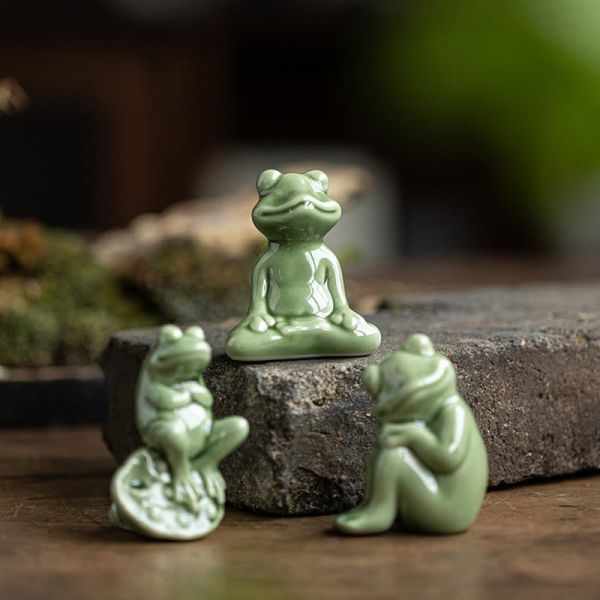 Buddha Stones Mini Small Meditation Lotus Resting Frog Ceramic Wealth Luck Home Tea Pet Figurine DecorationAs low as $25.59 Regular Price $34.58