
Tassel Meaning on Malas: A Guide to Use and Care
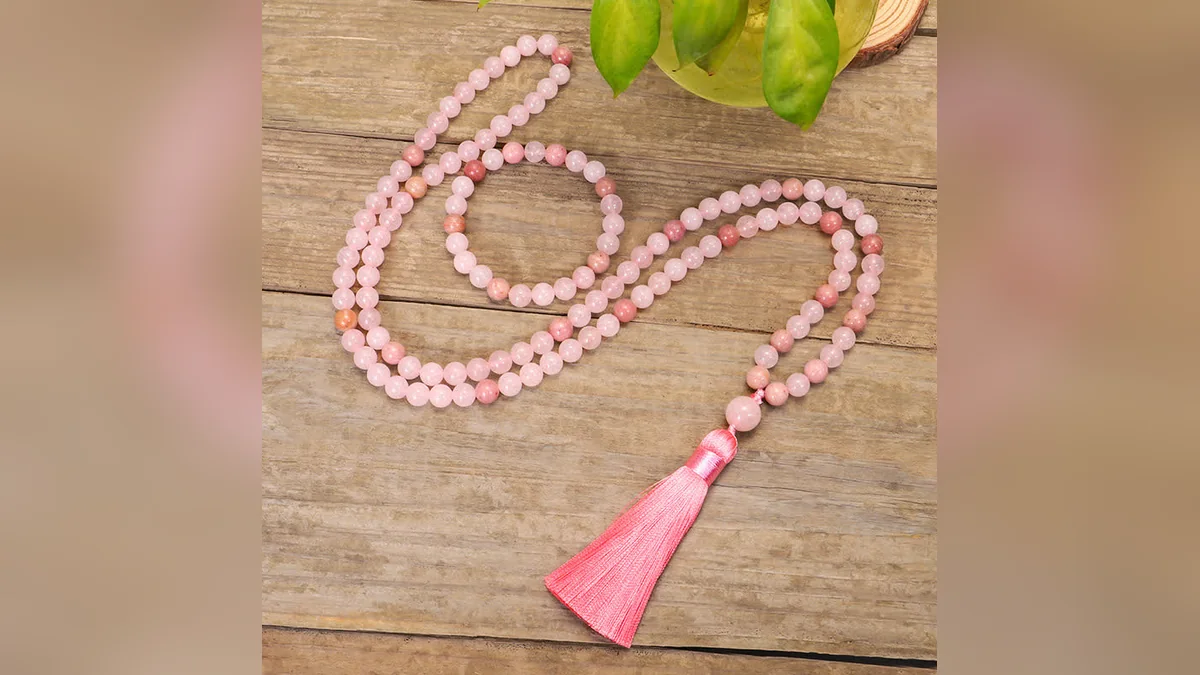
The tassel marks a useful starting point when you examine a mala. The tassel meaning on malas is often explained as many strands gathered into one, a symbol of connection or unity in some interpretations. It also provides a visible reference beside the place where a strand joins. This guide shows you how to recognize those roles, handle the tassel during bead counting, and care for its threads. We treat symbolism as tradition or interpretation, rather than a promise of results.
1. Read the tassel meaning on malas in context
Begin by separating the tassel’s construction from its symbolism. A tassel consists of loose threads secured together at one end. On a mala, it commonly hangs below the joining point, sometimes beneath a larger bead called a guru bead. Designs vary, so do not assume that every strand has the same arrangement.
The gathering of threads can represent unity or the connection between individual lives. Treat that reading as one interpretation, not a rule shared by all Buddhist communities. A decorative tassel may also have been chosen simply for its appearance. Its presence alone does not establish a particular religious lineage or ritual purpose.
Ask what the maker or your teacher actually says about the design before assigning a specific meaning. If no explanation is available, describe what you can observe: the attachment, the gathered threads, and the position below the beads. Leave uncertain meanings open.
2. Locate the attachment before counting beads
Lay the mala on a clean surface with the tassel extended. Follow the threads upward to find where they connect to the strand. Identify any larger joining bead separately from the smaller beads used for counting. This makes the structure easier to understand without pulling it apart.
For a simple counting practice, choose a bead beside the joining point as your starting place. Move through the counting beads one at a time according to the practice you follow. The tassel serves as a visual reference; its individual threads are not additional counting beads.
Some traditions teach practitioners to reverse direction at the guru bead instead of passing over it. Follow your teacher’s instructions when they apply. A tassel does not, by itself, tell you which counting method to use, and decorative jewelry need not be treated as a prescribed ritual instrument.
3. Support the beads and let the tassel hang freely
Hold the strand by its beads or support it across your fingers. Leave the tassel loose rather than winding its threads around a finger. Pulling on the tassel places strain on its attachment, especially if the beads catch against another object.
As you move from bead to bead, check that the threads have not slipped between your fingers and the strand. If they catch, stop and release them before continuing. Avoid using the tassel as a handle for lifting the whole mala or tugging it through a tight opening.
When setting the strand down, place the beads first and arrange the tassel beside them. Keep its threads clear of drawer tracks, bag zippers, and jewelry clasps. These small handling choices help prevent tangles and accidental pulling without requiring a particular ceremonial routine.
4. Choose a clear position for the tassel
Decide where the tassel can rest without catching on clothing or nearby objects. For a strand worn around the neck, check that the hanging end clears closures and accessories. For a bracelet arrangement, keep the threads away from a watch clasp or cuff fastening.
Do not force a strand into extra wraps just to make its tassel sit in a preferred place. Check the product’s measurements and intended format first. Our guide to wearing mala beads covers broader wearing choices; here, the key check is whether the tassel has enough room to hang without being trapped.
There is no universal rule that a decorative tassel must point in a particular direction. If you follow a religious custom, let that custom guide placement.
5. Untangle gently and store without compression
Inspect the tassel before choosing a cleaning method. The bead material does not tell you what the tassel threads are made from. If the thread composition and care instructions are unknown, avoid soaking, steam, heat, or cleaning products until you have suitable guidance.
To address a loose tangle, support the gathered top and separate the threads gently with your fingertips. Work from the free ends toward the attachment. Stop if resistance increases; force can tighten a knot or pull threads loose. Do not cut a knot near the attachment without understanding how the tassel is secured.
For storage, give the tassel space to lie straight beside the strand. Avoid folding it sharply beneath the beads or closing a lid over the threads. If the attachment loosens, set the mala aside for repair rather than pulling the tassel to test it.
Mistakes to avoid when reading and handling tassels
- Assigning one meaning to every tassel. Check the context before treating a decorative feature as a specific religious symbol.
- Reading color as a universal code. A color can carry different associations across traditions or be a design choice.
- Counting the tassel as another bead. Identify the counting beads and joining point before beginning your chosen practice.
- Assuming the thread material. A product’s bead specifications do not establish the tassel’s fiber or cleaning requirements.
- Pulling a snag free. Release the caught threads with your fingers while supporting the strand.
- Treating symbolic names as promises. Traditional wishes do not guarantee an outcome.
Compare our mala and tassel product details
Use these specifications to compare formats and measurements. Keep a mala’s counting function separate from the use of a tassel on another kind of object.
Pink crystal mala: bracelet and necklace options
Our Buddha Stones Pink Crystal Tassel Mala has Bracelet and Necklace options. Its specifications give 108 beads, an 8mm bead size, Pink Crystal material, and premium elastic string. The measurements are Wrist Circumference: 15-20cm, Inner Perimeter: 16cm, and Necklace Length: 86cm. Check the selected option alongside those measurements.
Turquoise and picture jasper: total length
The Buddha Stones Turquoise Picture Jasper Tassel Bracelet has 108 beads measuring 8mm. Materials are Turquoise and Picture Jasper, with Total Length: 90cm and Weight: About 100g. Its item type is Bracelet. Total length is a different measurement from the circumference of a fitted bracelet.
Bodhi seed and dzi bead: size choices
Our Buddha Stones Bodhi Seed Dzi Bead Tassel Mala offers 15cm, 16cm, 17cm, and 18cm options. It has 108 beads, premium elastic string, Bodhi Seed 8mm beads, and a Dzi Bead 28mm. Materials are Bodhi Seed, Dzi Bead (hand painted), Agate, and Copper. “Luck” and “Auspiciousness” in its full name express traditional wishes; neither guarantees a result.
Printed folding fan: a separate tassel context
The Buddha Stones Bamboo Floral Fruit Print Tassel Folding Fan has a Bamboo frame and a Cotton, Polyester surface. Fan Size (Open): Approx. 28 cm / 11.0 in; Fan Size (Closed): Approx. 22 cm / 8.7 in. The package includes 1 × Folding Fan, with a complimentary tassel whose color may vary. It is a folding fan, so do not transfer mala counting customs to its tassel.
Start with the attachment, identify the counting beads, and give the threads room to hang. Let any symbolic reading follow the tradition you practice or the explanation supplied for the design. Careful handling and clear distinctions keep a tassel’s practical role easy to understand.
Shop the story
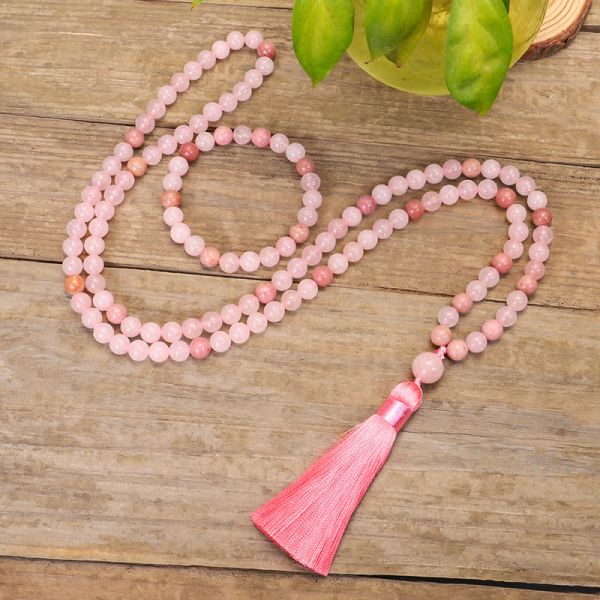 Buddha Stones 108 Mala Beads Pink Crystal Love Tassel BraceletAs low as $25.59 Regular Price $36.04
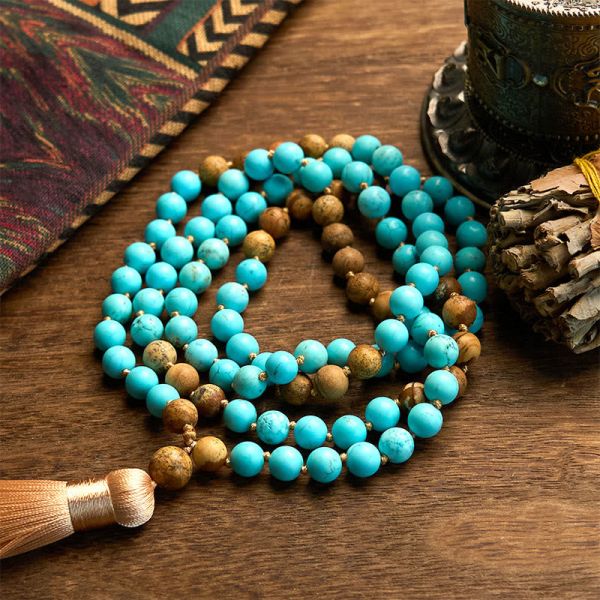 Buddha Stones 108 Mala Beads Turquoise Picture Jasper Bead Tassel Balance BraceletSpecial Price $32.59 Regular Price $44.04
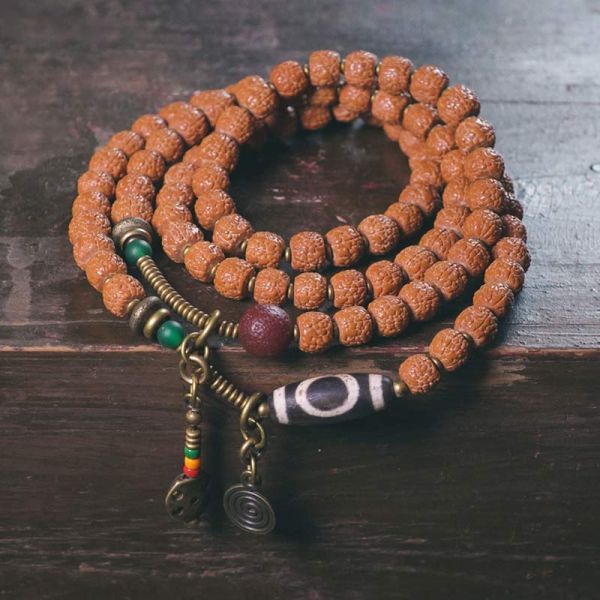 Buddha Stones 108 Mala Rudraksha Beads Bodhi Seed Dzi Bead Luck Auspiciousness Tassel BraceletAs low as $259.59 Regular Price $393.32
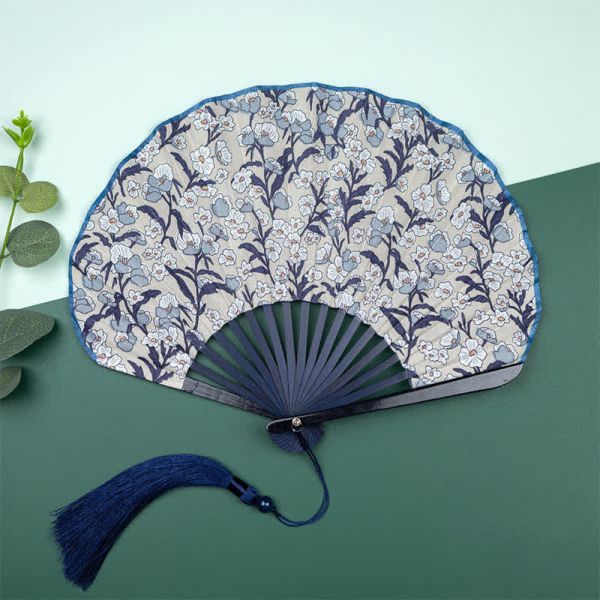 Buddha Stones Bamboo Floral Fruit Print Tassel Folding FanAs low as $23.59 Regular Price $31.45