How to Wear Mala Beads: Necklace, Wrist, or Both
You picked up a strand of 108 beads and your first question was probably the simplest one: does this go around your neck, or around your wrist? There is no single right answer, and that is exactly why so many people searching for how to wear mala beads end up confused. A mala can be worn both ways, plus a few smaller ways, and each has its own purpose. This guide walks through the parts of a mala, the necklace-versus-wrist question, wrist and pocket malas, the traditional way malas are used for counting, common etiquette, and the care notes listed on our mala beads product pages.
What a mala actually is
A traditional mala is built around 108 beads, strung on a cord or elastic string. At the top sits one bead that is slightly larger or set apart from the rest, known as the guru bead; it marks the start and end of the strand and is traditionally not counted or crossed over during a round. Below the guru bead you will often find a tassel, which finishes the strand and gives it a bit of movement and weight. The Buddha Stones Black Obsidian Protection Handcrafted Round Tassel 108 Bead Mala is a straightforward example: 108 beads of about 6mm with a round tassel finish, as its name says.
How to wear mala beads: necklace or wrist wrap
This is the part most people ask about first, and the honest answer depends on the length of the strand and the size of the beads. A longer 108-bead mala, with a perimeter closer to a metre, can be slipped over the head and worn as a necklace, draping down over the chest. The Buddha Stones Lotus Symbol Tiger Eye Beaded Strength Mala, for example, has a mala perimeter of about 38.58 in (98 cm), which is long enough to wear this way.
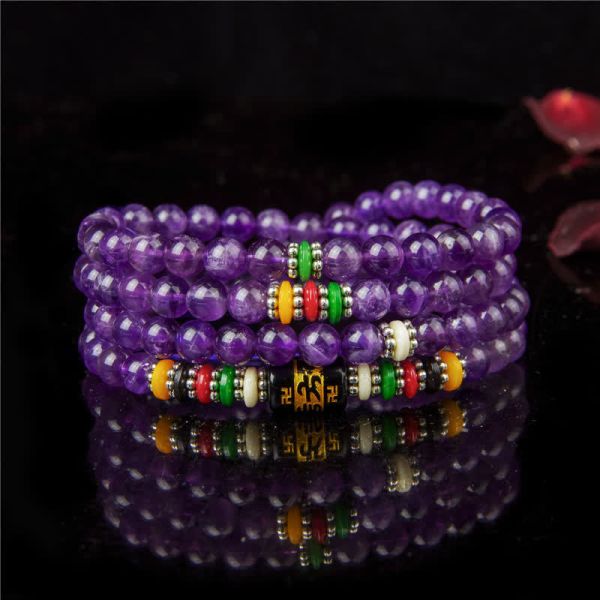
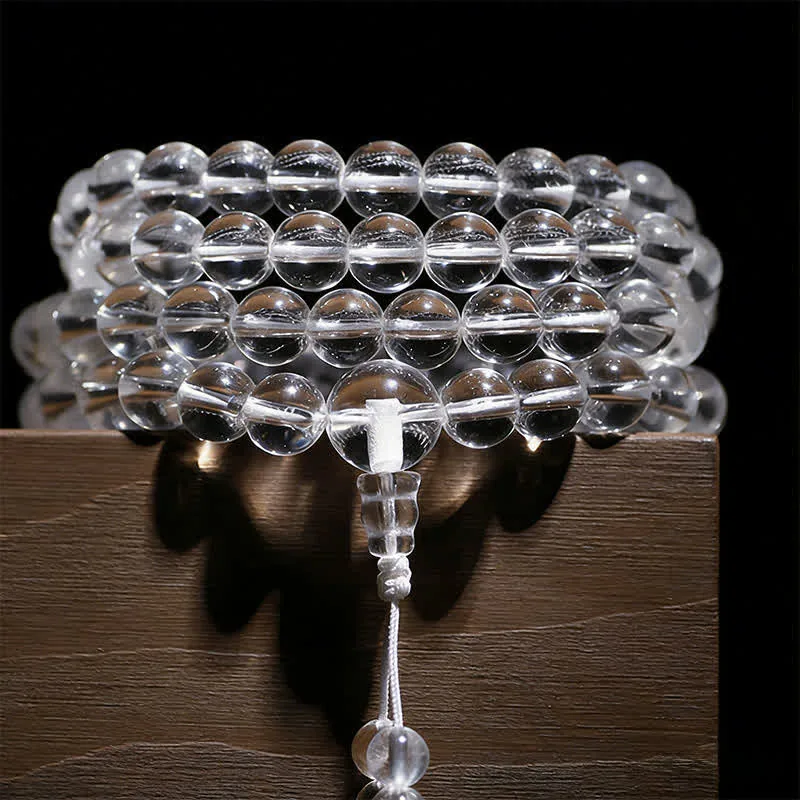
Many 108-bead malas on elastic string are sized closer to a wrist circumference and are meant to wrap several times instead. The Buddha Stones 108 Clear Quartz Beads Protection Mala and the Buddha Stones Amethyst Om Mani Padme Hum Purity Prayer 108 Bead Mala are both built this way: a wrist circumference of roughly 6.3-7.1 in (16-18 cm) for the quartz and 6.3-6.7 in (16-17 cm) for the amethyst, typically wrapping two to four times around the wrist depending on the bead size and your own wrist measurement. If you are between sizes, our size guide is a useful reference before you order.
Neither way of wearing a mala is more correct than the other. If you want it on display while you work or walk around, wrapping it on the wrist keeps it secure. If you prefer it close during meditation or seated practice, slipping it over the head as a necklace keeps both hands free until you are ready to use it.
Wrist malas and pocket malas
Not every mala has 108 beads. Smaller wrist malas are built specifically to sit on the wrist rather than wrap several times, and some of these come with a short tassel or charm that hangs free. A pocket mala is the same idea taken a step further: a short strand small enough to carry in a pocket or bag, or to hang in a car — several of ours are named “Pocket Mala Car Decoration” for exactly that reason — rather than worn on the body at all. These shorter malas are useful when a full 108-bead strand feels like more than you want to wear or carry day to day, and they work well as a simple stand-in during a quick count. Our wrist malas collection groups these shorter styles together.
Using a mala for mantra counting
The main traditional use of a mala is keeping count while reciting, chanting, or mentally repeating a mantra or a name. In Tibetan Buddhism, malas of 108 beads are the standard length, and one full pass around the strand is traditionally counted as 100 recitations, with the extra eight beads allowed for any mistakes in pronunciation or lapses in attention during the round. A common, neutral way to go about it looks like this:
- Hold the mala in one hand, resting your thumb near the guru bead where the strand begins.
- With each recitation, draw the next bead toward you with your thumb and move on to the following one.
- Continue bead by bead around the strand, keeping the pace steady rather than rushed.
- When you reach the guru bead again, you have completed one full round of 108 beads.
- Common custom is to turn the mala around rather than cross over the guru bead, then begin the next round in the opposite direction.
Some people pair this practice with a specific mantra, such as Om Mani Padme Hum, which is engraved or referenced on malas like the Amethyst Om Mani Padme Hum mala mentioned above. Others simply use the beads to count breaths or a single repeated word. The counting method stays the same either way.
Common etiquette around wearing a mala
A few customs come up often enough to be worth knowing, even if none of them are strict rules. Many people avoid letting a mala touch the floor or get tangled with other jewelry, treating it as something separate from everyday accessories. It is also common to use one hand consistently for counting rather than switching back and forth, and to avoid crossing over the guru bead mid-round, as noted above. Lending a mala to someone else, or wearing one that belonged to another person, is sometimes treated with more care than lending ordinary jewelry, simply because of the personal, repetitive use it is associated with. None of this is required to wear or use a mala; it is simply common practice that has built up around how malas are handled.
Storage and care
The malas in this guide are made from natural materials such as clear quartz, obsidian, amethyst, and tiger eye, strung on premium elastic string or cord. Because of that, our product notes are consistent across these pieces: take the mala off before you sleep or wash. Measurements listed on each product page are taken by hand, so a slight deviation from the stated size is normal. These pieces are also handmade, so slight variations in color, texture, and finish from one mala to the next are expected rather than a flaw, and lighting in photos can make color look slightly different from the piece you receive.
Choosing your first mala
Working out how to wear mala beads for the first time really comes down to two decisions: length against your body, and material against your taste. A plain, pale strand like the 108 Clear Quartz Beads Protection Mala is an easy starting point if you want something versatile and not too heavy. If you would rather wear it as a necklace that drapes rather than wraps, the Lotus Symbol Tiger Eye mala’s longer perimeter makes that simple. Someone drawn to a darker, rounder bead with a traditional tassel finish might prefer the Black Obsidian mala, while anyone planning to pair their mala with a specific mantra may lean toward the Amethyst Om Mani Padme Hum piece. There is no wrong starting point among these; the right first mala is usually just the one whose size, color, and material feel right in the hand, since you will be the one wearing and counting on it.
Shop the story
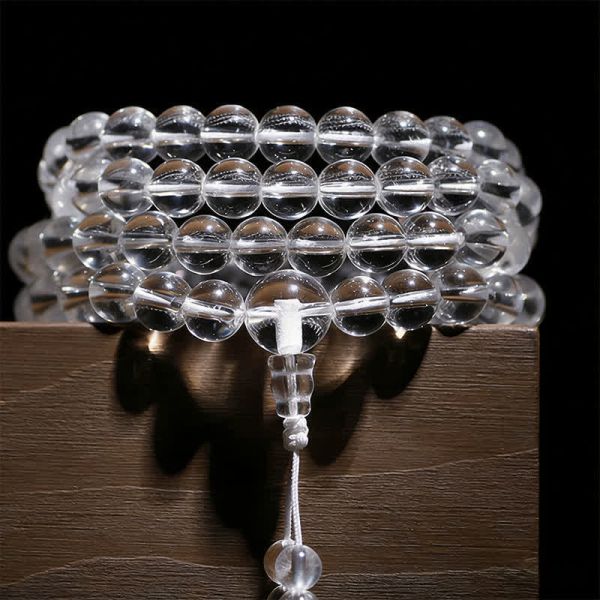 Buddha Stones 108 Clear Quartz Beads Protection MalaAs low as $76.59 Regular Price $102.12
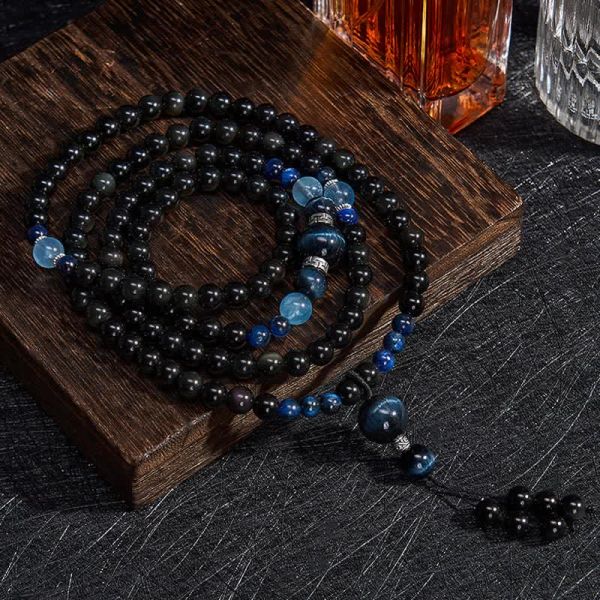 Buddha Stones Black Obsidian Protection Handcrafted Round Tassel 108 Bead MalaSpecial Price $55.59 Regular Price $78.30
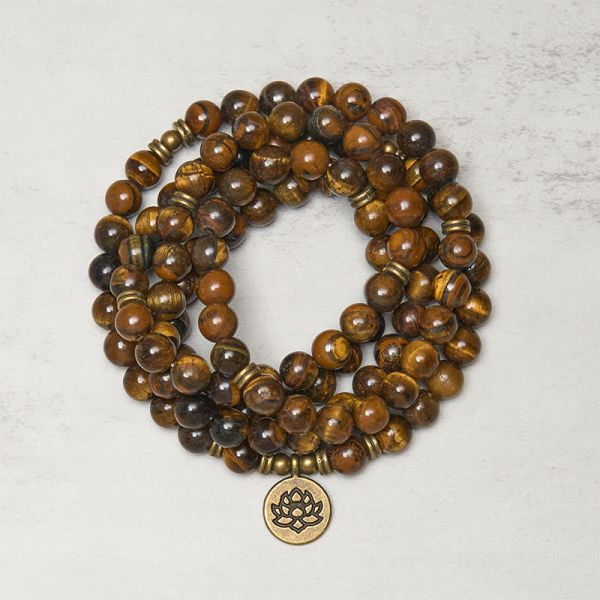 Buddha Stones Lotus Symbol Tiger Eye Beaded Strength MalaSpecial Price $29.59 Regular Price $39.99