
Sodalite Meaning: A Guide to Color, Quality, and Care
Sodalite shows white veins across a blue background. For buyers exploring sodalite meaning, the starting points are its feldspathoid mineral identity and its associations with truth, harmony, and intuition in contemporary crystal traditions. These associations express beliefs, not promised results. A blue stone can appeal for its pattern alone, while a symbolic name may add personal significance without describing something the material will do.
Sodalite meaning and its mineral identity
Sodalite belongs to the feldspathoid group, a family of silicate minerals distinct from quartz. Its composition includes sodium, aluminum, silicon, oxygen, and chlorine. The material used in beads is commonly blue to blue-gray, sometimes with violet tones, and often contains white patches or veins of calcite. Sodalite also occurs in other colors, but blue is the familiar choice for jewelry.
Most sodalite beads look opaque. Their appearance depends on the balance between blue areas and the lighter minerals running through them. Some buyers prefer broad blue sections; others choose a more varied, veined pattern. Neither preference establishes a universal quality grade.
Sodalite measures about 5.5 to 6 on the Mohs scale. That makes it softer than quartz and calls for some care around abrasive surfaces. It can also chip under a sharp impact. Its blue color can resemble lapis lazuli, but the two are different materials. Our lapis lazuli article offers a separate introduction to that stone; color alone cannot establish either identity.
Reading color, finish, and treatment information
Start by deciding which patterns you like, then examine how well the beads are finished. An even polish should let you see the stone rather than distracting scratches. Around drill holes, look for chipped rims or cracks extending into the bead. White veining is not automatically damage, although a visible fracture along a vein deserves closer attention.
Matching also matters differently from one design to another. A strand may use beads with similar blue tones or deliberately varied markings. Compare the overall arrangement rather than expecting identical patterns. Photographs taken under different lighting can shift the apparent color, so a single saturated image is a limited basis for judging a purchase.
Treatment disclosure deserves its own question. Dye can alter color, while coatings or resin impregnation may change a stone's surface or appearance. Ask whether any of these processes have been used, and do not assume that a polished surface means the stone has received a separate coating. Polishing and treatment are different matters.
- Check for clear material identification rather than relying on a poetic trade name.
- Look for photographs that show bead surfaces, drill holes, and the fastening.
- Request treatment information if it is absent from the description.
- Treat unusually uniform color as a reason to ask questions, not proof of dye.
A photograph cannot reliably settle every identity or treatment question. Avoid home scratch, acid, or solvent tests, which can damage the item without providing a dependable answer.
From stone rough to bracelets and beads
For typical stone beads, producers cut rough material into smaller blanks, shape them, drill holes, and polish the surfaces. Rounded beads require different shaping from faceted cylinders, whose flat faces create a more angular appearance. The order of individual steps can vary with the bead shape and equipment.
Drilling and assembly deserve attention alongside the stone. Rough hole edges can wear against string, and chipped openings can interrupt the finish. On an elastic bracelet, the cord passes through the beads and allows the strand to stretch over the hand. A clasp bracelet opens at a fastening instead, so the closure and its usable length become part of the buying decision.
A bead count describes quantity, not wrist fit. Bead diameter, strand length, and construction also matter. Keep wrist circumference separate from bracelet inner circumference when comparing specifications. For a broader view of available formats, our bracelet category groups jewelry beyond this particular stone.
Cleaning and storage that respect the material
Use a clean, slightly damp cloth for routine surface cleaning, then dry the piece promptly. Avoid prolonged soaking, especially when the item includes cord, elastic, or metal components. If treatment information is unavailable, keep cleaning simple and avoid experimenting with chemical cleaners.
Keep sodalite away from acids, bleach, and abrasive powders. Steam cleaners and ultrasonic machines are poor choices for routine home care because heat, mechanical movement, or existing fractures can complicate cleaning. Remove jewelry before washing, swimming, or work that could knock the beads against hard surfaces.
For storage, give the piece a padded compartment or wrap it in a clean cloth so neighboring jewelry cannot rub against it. Do not leave elastic stretched around an oversized display. Check cord and fastenings periodically for visible wear. A damaged string or loose clasp needs attention before further use, regardless of how good the stone still looks.
Four Buddha Stones options with sodalite
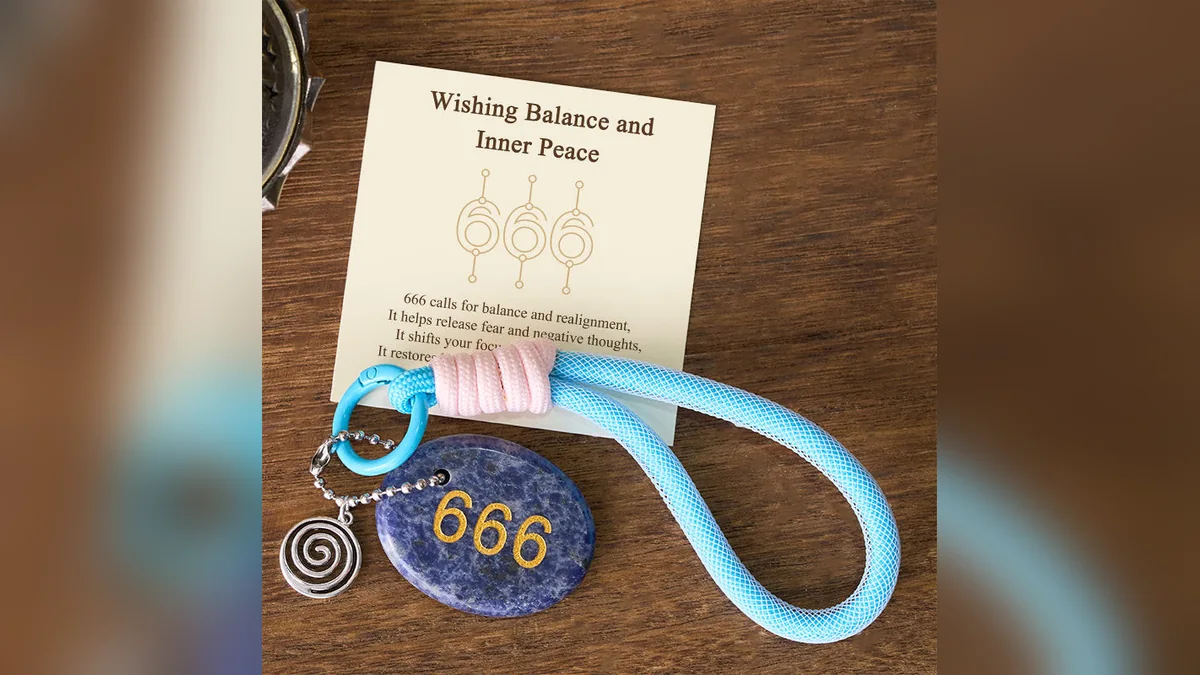
666 angel number key chain
Our Buddha Stones 666 Angel Number Natural Sodalite Key Chain carries the title “Wishing Balance and Inner Peace.” Its materials are sodalite, rope, and copper alloy, with premium string specified for the band. Length is About 4.72 in (12 cm). The angel number charm measures About 1.38 × 1.77 × 0.24 in (35 × 45 × 6 mm). The package includes one key chain, one message card, and one standard gift box. Color, details, and overall appearance may vary.
108-bead sodalite and zebra jasper mala
The Buddha Stones 108 Mala Beads Sodalite Zebra Jasper Crystal Lotus Strength Bracelet combines sodalite, zebra jasper, and alloy. It has 108 beads, an 8mm bead size, and a weight of 100g. Premium elastic string forms the band. Its sizing information gives 15-19cm for wrist circumference.
Faceted cylinder accent bracelet
The Buddha Stones Truth Faceted Cylinder Accent Bracelet offers separate Amazonite, Amethyst, Sodalite, and Strawberry Quartz options. The specifications name those stones and copper alloy; the options should not be read as a promise that one bracelet contains every stone. This clasp design has a wrist circumference of 5.9–7.1 in (15–18 cm), with beads measuring Approx. 4 × 2 mm. The package contains 1 × Bracelet. The stone may show slight differences in color, details, and overall appearance.
Black obsidian and sodalite couple bracelet
Our Buddha Stones Black Obsidian Sodalite Crystal Copper Strength Couple Bracelet includes a Black Obsidian&Sodalite option among several stone combinations. The design specifies copper and premium elastic string. Inner circumference choices are 15cm, 16cm, 17cm, and 18cm; bead sizes are 6mm and 8mm. The size guide pairs those inner circumferences with wrists measuring 14-14.5cm, 15-15.5cm, 16-16.5cm, and 17-17.5cm, respectively. Check the selected combination and size together.
Choose sodalite by balancing the blue pattern you prefer with clear material information, sound construction, and suitable dimensions. Symbolism can be part of that choice, while careful comparison and straightforward care help you make a practical purchase.
Shop the story
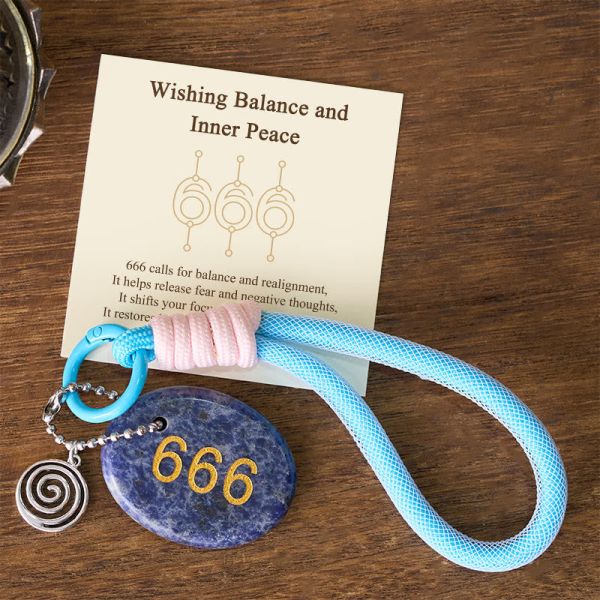 Buddha Stones "Wishing Balance and Inner Peace" 666 Angel Number Natural Sodalite Key Chain Hanging Decoration Includes Gift Message CardSpecial Price $25.59 Regular Price $36.04
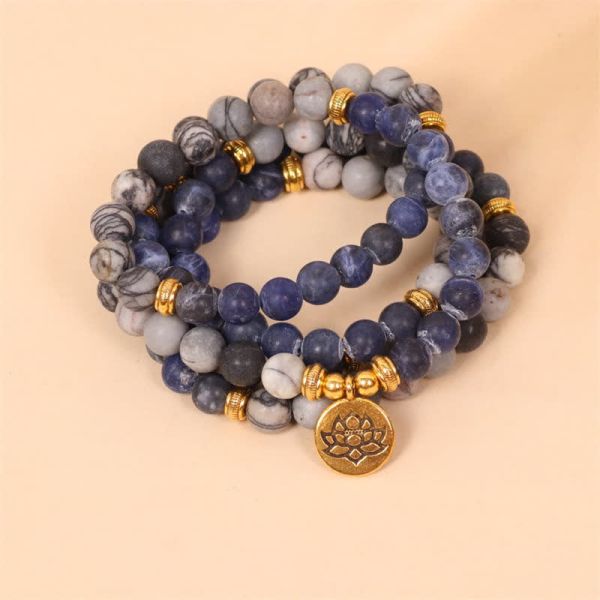 Buddha Stones 108 Mala Beads Sodalite Zebra Jasper Crystal Lotus Strength BraceletSpecial Price $34.59 Regular Price $48.04
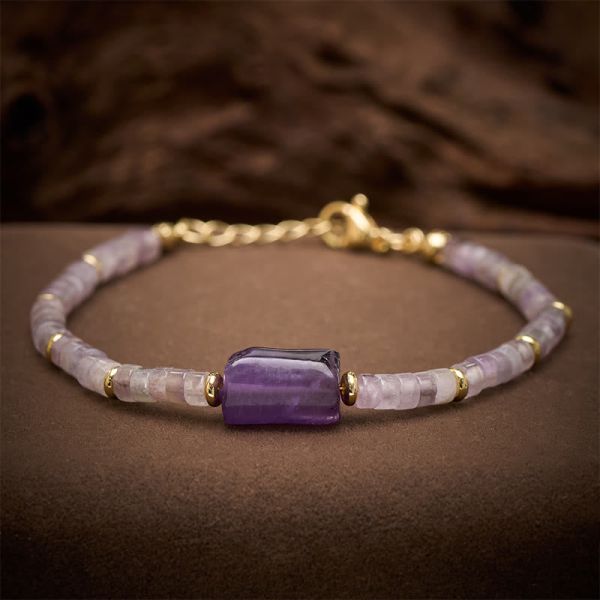 Buddha Stones Amethyst Amazonite Strawberry Quartz Sodalite Truth Faceted Cylinder Accent BraceletAs low as $25.59 Regular Price $35.05
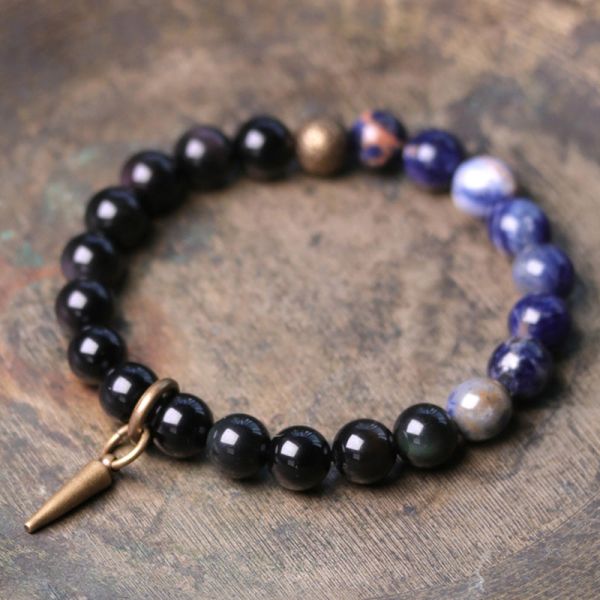 Buddha Stones Black Obsidian Sodalite Crystal Copper Strength Couple BraceletAs low as $42.59 Regular Price $59.99