
Lapis Lazuli Meaning: A History Told in Five Scenes
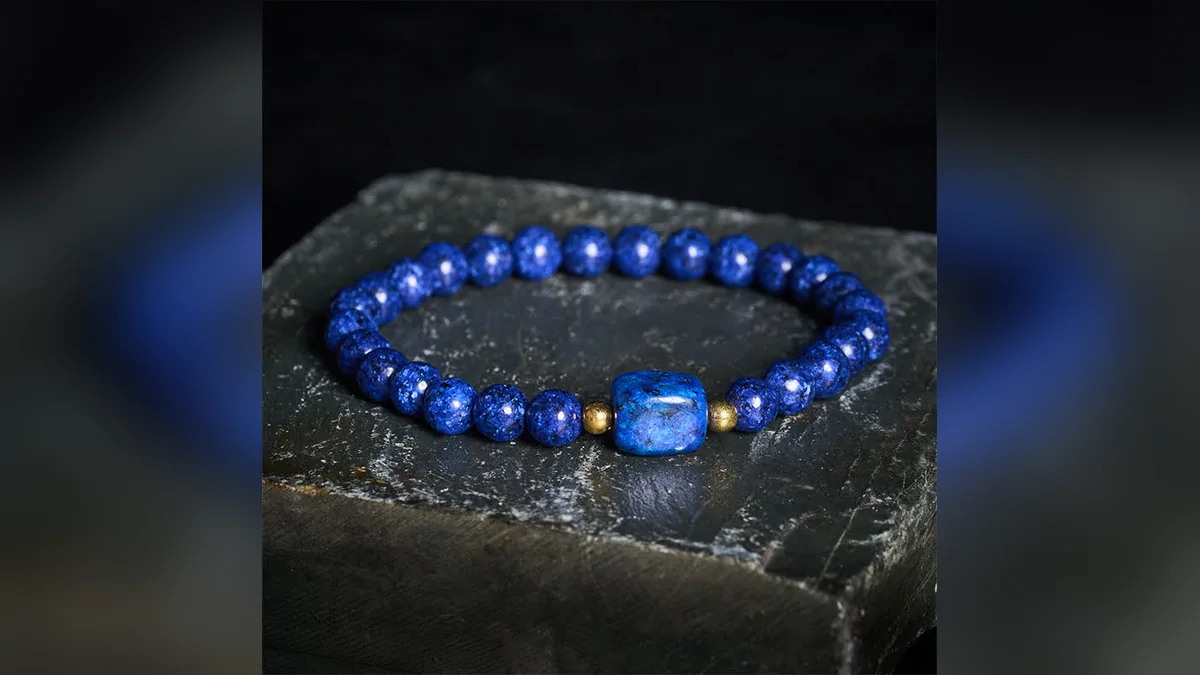
Deep blue, scattered with gold-colored specks, lapis lazuli can resemble a fragment of night sky. To understand lapis lazuli meaning, begin with the material: a rock made mostly of the blue mineral lazurite, often with white calcite and brassy pyrite flecks. Across cultures, traditions have associated it with royalty, truth, and the sky, although those associations have taken different forms.
Ancient Badakhshan: lapis lazuli meaning at its source
The first scene belongs to the mountain mines of Badakhshan, in what is now northeastern Afghanistan. Worked since ancient times, these deposits supplied blue stone that traveled far beyond the region. Before lapis appeared in a royal ornament or a painted robe, it had to be separated from the surrounding rock and carried out of mountainous terrain.
That distance matters to its history. Lapis was a material obtained through trade, linking places that lay far apart. Its blue color made it recognizable, while the difficulty of obtaining it helped make it a valued material for objects of distinction.
Ancient Egypt: blue within royal jewelry
In ancient Egypt, lapis appeared in royal jewelry and decorative inlay. Its deep blue could sit beside gold and other colored materials, creating sharply defined areas of color. Small pieces could form part of a much larger design; a stone did not need to be large to be visually prominent.
Here, the association with royalty has a clear material setting. Lapis belonged among the costly materials used in objects made for rulers and their surroundings. The stone’s connection with the sky also belongs to the symbolic language through which ancient cultures interpreted blue.
Ancient Mesopotamia: traded stone, carved seals
In Mesopotamia, lapis was traded and shaped into seals and ornaments. The imported blue rock became something that could be carved, worn, or used to leave an identifying impression. Its history here includes both adornment and the practical work of marking ownership or authority.
Seals brought detailed images onto a small surface. A carved design could appear in reverse when pressed or rolled into clay, allowing the same image to be repeated. Lapis was one of several materials used for this purpose, rather than the material of every ancient seal.
This scene adds another dimension to the stone’s story: blue could belong to an object with a specific use. Modern associations with truth are traditions of meaning; we should not assume that every ancient seal maker or owner understood lapis in exactly the same way.
Renaissance Europe: blue reserved for painted robes
In Renaissance Europe, lapis entered paintings as ultramarine. Grinding the stone was part of the process, but obtaining a strong blue pigment also required separating the blue material from other components. The result was prized and expensive, making its placement in a painting a deliberate choice.
Ultramarine was often saved for the robes of the Virgin Mary. The color could mark the importance of her figure within a religious composition, and its cost made the choice significant to the commission. This was a material with both visual and devotional value.
The transformation is striking: a rock valued for carving became a source of color spread across a painted surface. A blue robe and a blue bead may look very different, yet both belong to the history of how people have used lapis.
Tibet and the Himalayas: medieval Buddhist art
In Buddhist art, particularly in Tibetan and Himalayan traditions, the Medicine Buddha is traditionally depicted with a lapis-blue body. This is an iconographic tradition: color forms part of the established visual language used to represent a particular figure.
A description of a lapis-blue body identifies the depicted color. It does not, by itself, tell us which pigment an artist used. A painting’s materials and the meaning of its colors are related questions, but each needs its own evidence.
The comparison with lapis makes the hue specific: a deep blue with a recognizable material reference. Across these different settings, the stone has served as an ornament, a carved object, a pigment, and a way to describe color. We read its symbolism within each tradition.
Reading a lapis bead
The white areas in lapis are commonly calcite; the gold-colored flecks are pyrite, not gold. They may appear as scattered points, streaks, or larger patches. Since lapis is a rock containing several minerals, variation is part of understanding its appearance.
Lighter or patchy beads can contain more visible white material or a less even distribution of blue. Color alone does not settle identity or treatment. Nor does a lack of obvious pyrite automatically rule out lapis: some pieces show little visible metallic flecking.
Sodalite is a blue look-alike that, as a general guide, is usually less uniform in color and lacks the characteristic pyrite flecks associated with lapis. Treat this as a visual clue rather than a conclusive identification test. Photographs and lighting can make comparison difficult.
Some lapis is dyed to deepen its color. Ask sellers whether the material has been dyed or otherwise treated, especially when a photograph shows an unusually even blue. An answer about treatment is more useful than guessing from color intensity alone.
Lapis sits around 5 to 5.5 in Mohs hardness, which makes it relatively soft. Avoid knocks, prolonged water soaks, perfume, and cleaning sprays. Put jewelry aside before washing or using household cleaners, clean it with a light pass of a soft cloth, and store it where harder jewelry cannot rub against it.
Four bracelets, with their details in view
Our Lapis Lazuli Minimalist Stretch Bead Bracelet lists lapis lazuli beads measuring about 8 mm, strung on elastic. Its stated wrist circumference is 15–16 cm.
The Lapis Lazuli Straight Cut Flat Bead Bracelet uses flat beads measuring about 4 × 2 mm, with elastic and a stated wrist circumference of 15–16 cm. The design is offered in lapis lazuli, moss agate, amazonite, picture jasper, or agate; these are material options.
Our Lazurite Lapis Lazuli Sodalite Black Onyx Bracelet lists lapis lazuli, also labeled lazurite, alongside sodalite and black onyx. It has 8 mm beads, elastic, and a stated wrist circumference of 15–16 cm. The combination offers a chance to see lapis and sodalite side by side.
The Lapis Lazuli Silver Sheen Obsidian Citrine Bracelet lists lapis lazuli, silver sheen obsidian, citrine, and copper. Its beads measure 8 mm, with elastic and a stated wrist circumference of 15–16 cm.
White calcite and brassy pyrite give lapis details beyond its blue. The mines, royal ornaments, seals, painted robes, and Buddhist images place that color in different settings, each with its own use and traditions. A bead carries the material; its history gives us more to notice.
Shop the story
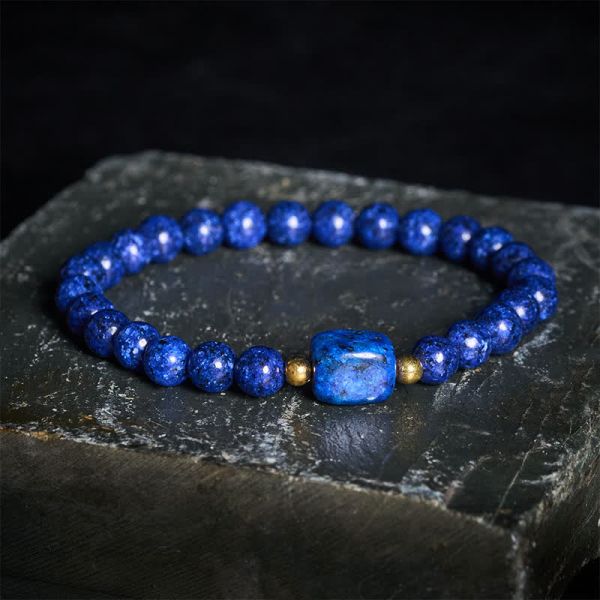 Buddha Stones Lapis Lazuli Minimalist Stretch Bead Wisdom BraceletSpecial Price $25.59 Regular Price $34.12
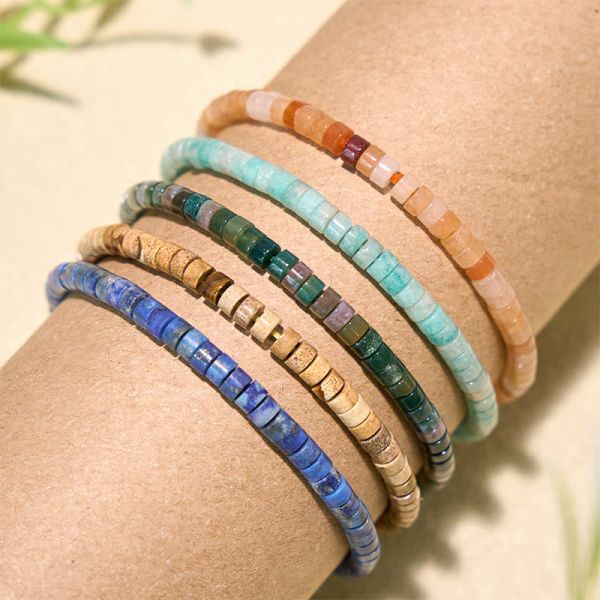 Buddha Stones Lapis Lazuli Truth Straight Cut Flat Bead BraceletAs low as $25.59 Regular Price $34.58
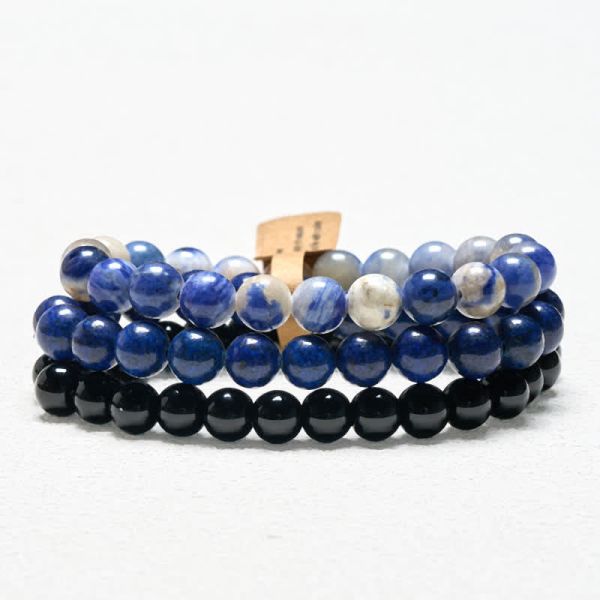 Buddha Stones Lazurite Lapis Lazuli Sodalite Black Onyx Bead Positive BraceletSpecial Price $25.59 Regular Price $36.04
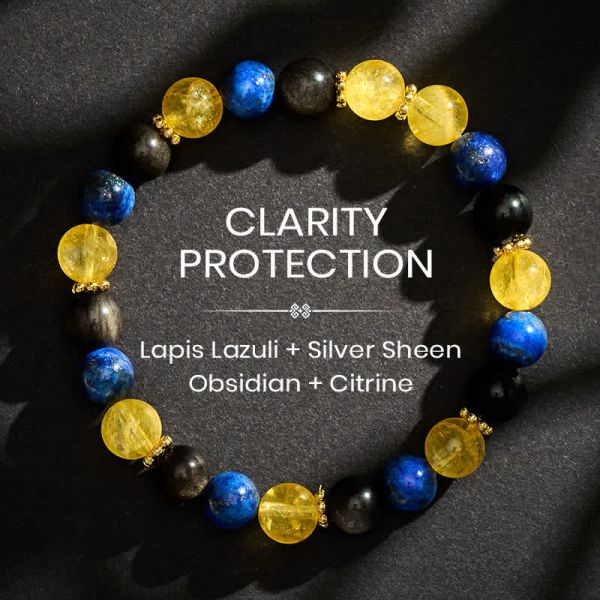 Buddha Stones Lapis Lazuli Silver Sheen Obsidian Citrine Beads Serenity BraceletSpecial Price $25.59 Regular Price $34.12