
Snake Symbolism: White Snake Tales and Zodiac Art
Bai Suzhen drinks wine at the Dragon Boat Festival, and her human appearance gives way to a white snake. In the Chinese Legend of the White Snake, this revelation tests her marriage to Xu Xian. The snake is a wife and central character, capable of devotion as well as transformation. In Chinese tradition, snake symbolism commonly includes wisdom and renewal, with renewal suggested by the shedding of skin. Associations with luck, wealth, and protection belong to cultural belief; an animal motif cannot guarantee any of them.
The legend survives in different versions, so its meaning cannot be reduced to a single moral. Some tellings emphasize separation, others reunion. Bai Suzhen may appear sympathetic even when other characters fear her. That tension makes the serpent an interesting subject: the same creature can invite affection, caution, or admiration, depending on the story around it.
Snake symbolism in festival performance and craft
The festival scene gives Bai Suzhen’s hidden identity a public setting. Dragon Boat Festival observances and the opera repertoire meet in this episode, where a familiar celebration becomes the turning point of a marriage. Performances of the tale have helped carry the white snake beyond the written page. A viewer encounters a character with choices and relationships, rather than a detached emblem labeled with one meaning.
The [Ashmolean Museum’s account of White Snake](https://jameelcentre.ashmolean.org/collection/921/per_page/100/offset/100/sort_by/date/start/993/end/2100/object/12487) describes the revelation scene and its festival performance tradition.
Decorative art carries those stories into another setting. New Year woodblock pictures have depicted episodes from the legend, bringing its characters into household decoration. A scene involving Xu Xian and the pagoda can refer to a whole narrative without showing a snake-shaped body. Recognizing the story matters as much as recognizing the animal.
[The Met’s New Year picture of the legend](https://www.metmuseum.org/art/collection/search/63869) preserves an example of this household decoration.
Zodiac crafts use a different visual language. The Snake occupies the sixth place in the twelve-animal Chinese zodiac, following the Dragon and preceding the Horse. On a paper cutting or a decorative figure, a curling body may identify the animal without recounting Bai Suzhen’s marriage. Such an image can mark a birth sign or a zodiac year. It does not automatically represent the White Snake legend.
These distinctions leave room for several readings. A festival performance can explore trust; a zodiac ornament can acknowledge a family connection; a shed skin can suggest renewal. We describe the context first because assigning the same meaning to every serpent would erase those differences.
From a coiled line to a piece of jewelry
Jewelry gives the snake another scale. Its long body can follow a ring’s curve, form a pendant outline, or become a repeating decorative pattern. A coiled shape may be chosen simply for its line. Unless a design includes a clear narrative reference, there is little reason to call it Bai Suzhen, a Buddhist figure, or a particular mythological serpent.
For someone choosing snake jewelry, renewal offers a straightforward personal interpretation. The animal sheds its skin; the wearer may choose that image to mark a change in work, family life, or personal commitments. That is a meaning assigned to an object, not an effect produced by wearing it. Wisdom is likewise a traditional association, rather than a claim about a person’s abilities.
A birth-sign connection is another reason to wear the motif. Chinese zodiac descriptions often attach character traits to animals, but those descriptions belong to tradition. A Snake pendant does not establish its wearer’s personality. Someone can also appreciate the design without having been born in a Snake year.
When choosing a gift, a brief explanation is more useful than a prediction. You might explain that the snake recalls renewal, or that the animal connects with the recipient’s zodiac sign. Keep the interpretation specific to the person and occasion. For a design shown biting its own tail, also check the stated cultural context: that circular motif has histories beyond the Chinese zodiac and should not automatically be given a Chinese meaning.
Our selection includes a snake option alongside other zodiac animals. Words such as Luck, Protection, Prosperity, and Abundance in product names express traditional wishes, rather than promised results. The following pieces offer different materials and subjects; the animal shown remains an important part of the choice.
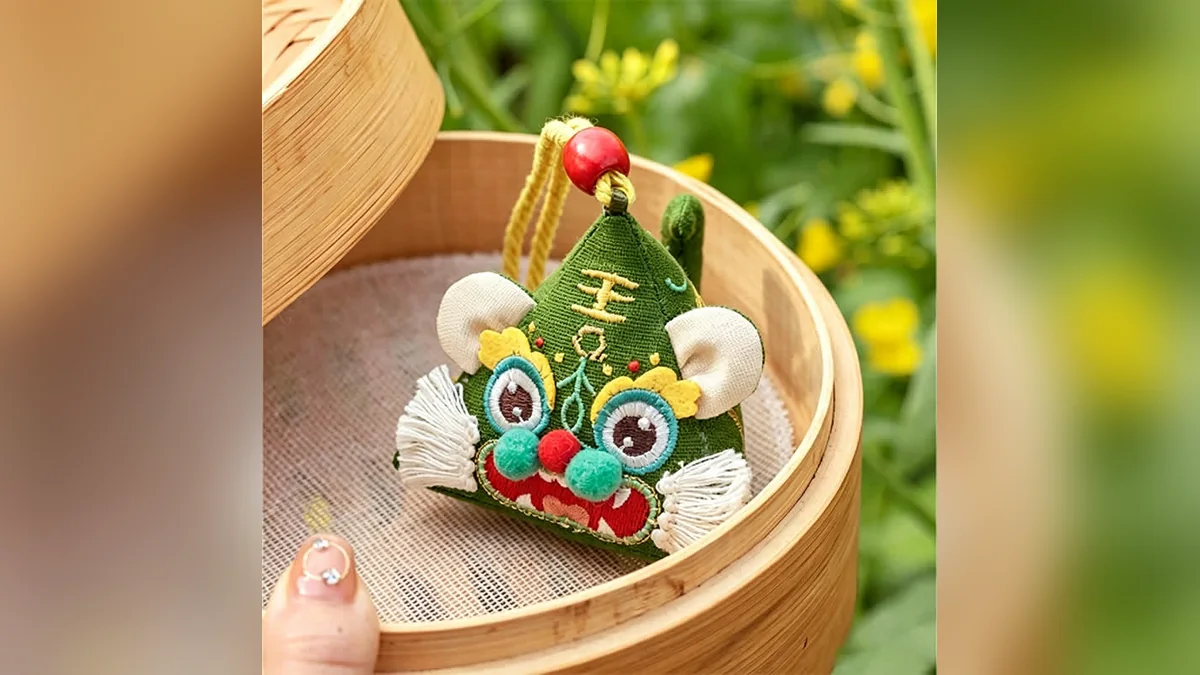
The Buddha Stones Dragon, Tiger, and Snake Triangle Animal Decor has a Snake option, as well as Tiger, Green Dragon, Navy Dragon, Pink Dragon, and Red Dragon options. Its material is cotton, its size is approximately 7 cm × 7 cm / 2.8 in × 2.8 in, and the package contains one animal decor item. Because the item is handmade, color, shape, and size may vary slightly. Here, the snake appears as a decorative animal rather than a wearable pendant.
The Buddha Stones Handmade Yellow Dragon Liuli Art Piece offers a neighboring zodiac subject. It uses liuli glassware/crystal glass and comes with one statue decoration and one base. The Dragon and Snake occupy separate places in the zodiac and have distinct symbolic traditions. Our article on the Chinese dragon’s traditional meanings provides context for that distinction.
The Buddha Stones Kiln-Change Glaze Ceramic Zodiac Ram Decor comes in Purple Ram Figurine, Speckled Green Ram Figurine, and White Ram Figurine options. It is ceramic and measures approximately 3.94 × 2.20 × 4.13 in / 10 × 5.6 × 10.5 cm. Slight differences in color, shape, and size can occur because it is handmade. A ram belongs to the zodiac animal commonly translated into English as Goat, Sheep, or Ram.
For a wearable zodiac reference, the Buddha Stones Natural Jade Chinese Zodiac Pendant Necklace uses jade and is designated unisex. Options include Dragon, Goat, Ox, and Rabbit. Those animals offer their own zodiac connections; choosing one calls for its own explanation. We keep the material description separate from symbolic wishes so that the object’s physical facts remain clear.
Bai Suzhen’s story gives the snake a face and a relationship. A decorative figure or pendant can carry a much shorter reference, but knowing which story, sign, or personal meaning it represents makes that reference more precise.
FAQ
What does a snake traditionally represent?
In Chinese contexts, wisdom and renewal are common associations. Zodiac identity adds another layer. Snake symbolism changes with the setting, so a festival character, a birth-sign ornament, and a modern ring need not share the same meaning.
Is a snake always an unfavorable sign?
No. Chinese stories can portray snakes as sympathetic or feared, sometimes within the same tale. Bai Suzhen’s devotion complicates a simple favorable-or-unfavorable reading. Interpret the character or design within its particular tradition.
Must snake jewelry match your birth sign?
No. You can choose the motif for its shape, a story, or a personal association with renewal. A zodiac connection is one possible reason to wear it, and wearing the design promises no particular result.
Shop the story
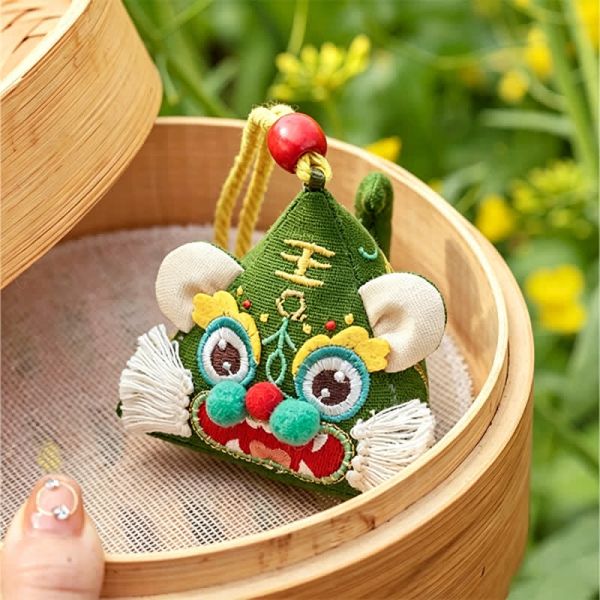 Buddha Stones Charming Dragon Tiger Snake Triangle Cute Animal DecorAs low as $32.59 Regular Price $43.45
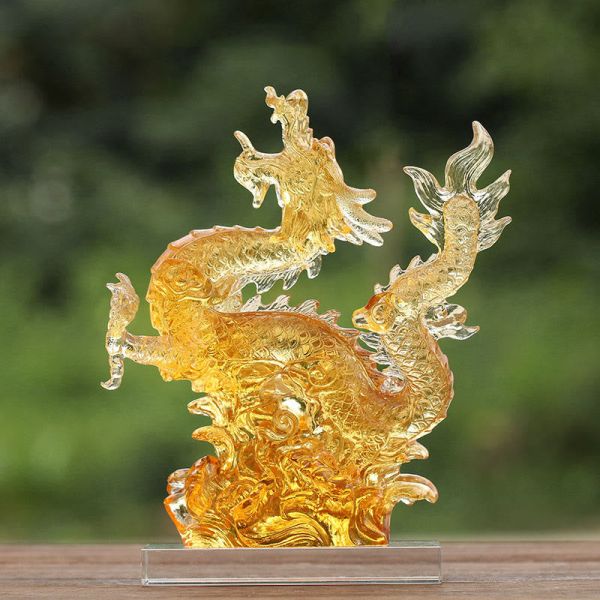 Buddha Stones Handmade Chinese Zodiac Yellow Dragon Liuli Crystal Art Piece Luck Protection Home Office DecorationSpecial Price $1,199.59 Regular Price $1,643.27
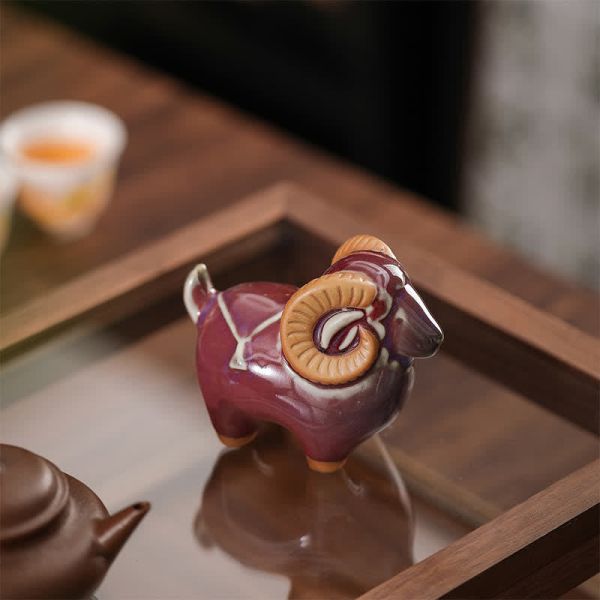 Buddha Stones Kiln-Change Glaze Ceramic Chinese Zodiac Ram Prosperity Cute Animal DecorAs low as $33.56 Regular Price $46.61
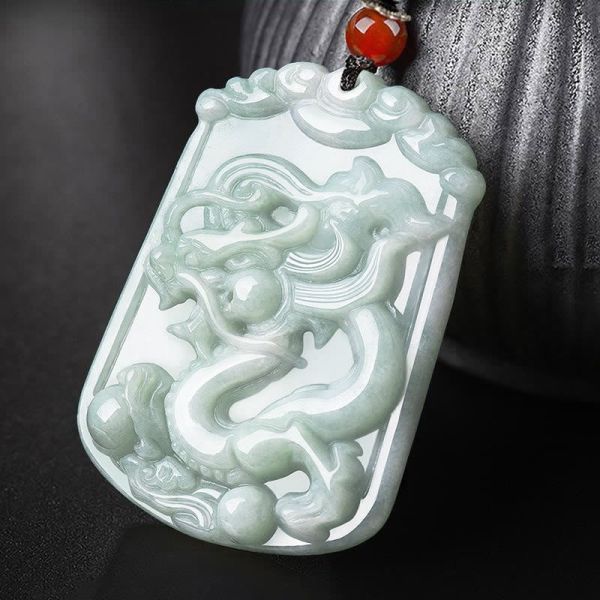 Buddha Stones Natural Jade 12 Chinese Zodiac Abundance Amulet Pendant NecklaceAs low as $49.59 Regular Price $68.88