
Rose Quartz Bracelet Care: Cleaning and Daily Use
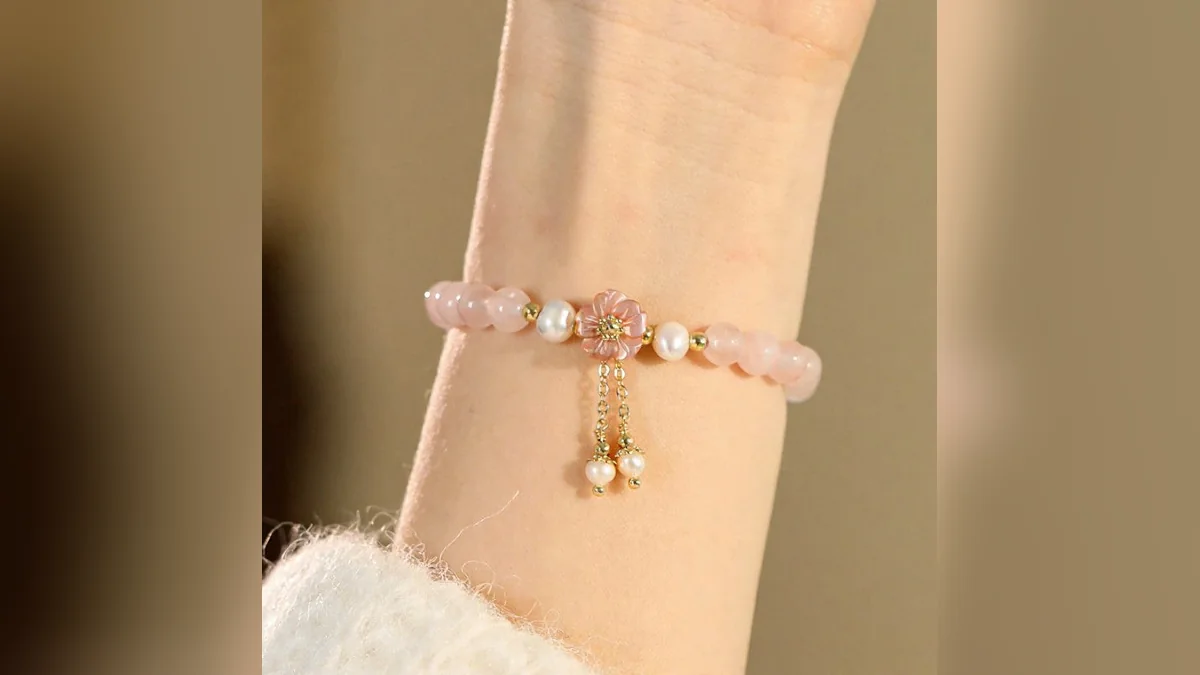
A bracelet can collect lotion residue where the beads meet. Rose quartz bracelet care means removing surface dirt gently, checking the string and fittings, and storing the piece dry between wears. This manual explains how to do those tasks without soaking a mixed-material bracelet or putting unnecessary strain on its fastening.
At Buddha Stones, we recommend choosing a cleaning method for the entire bracelet. Pearls, metal details, and string may need gentler handling than the quartz beads themselves. Begin with a dry wipe, then use only as much moisture as the construction allows.
Tools and materials for a gentle cleaning session
Prepare a clear, well-lit surface before removing your bracelet. Work over a folded towel or shallow tray so a loose component cannot roll away. Keep the bracelet away from an open sink drain.
- A clean, soft cloth: Choose a smooth, lint-free cloth without abrasive fibers or embedded grit.
- A second dry cloth: Use this to blot moisture and support the bracelet while it dries.
- Plain, room-temperature water: Dampen a corner of the cleaning cloth; you do not need to immerse the jewelry.
- A separate storage compartment: A lined box or smooth pouch keeps the bracelet from rubbing against other jewelry.
Set chemical jewelry dips and polishing compounds aside. An ordinary cleaning cloth is different from a chemically treated metal-polishing cloth. If you cannot identify a cloth or cleaner, leave it out of this routine.
Rose quartz bracelet care: the step-by-step routine
- Inspect before wiping. Lay the bracelet flat and look at the bead holes, visible string, knots, and any fittings. Check for sharp chips, loose parts, stretched sections, or fraying. Stop if cleaning would pull on a damaged area.
- Remove loose dust. Support a bead between your fingers and wipe its surface gently with the dry cloth. Move around the bracelet without pulling beads apart. Avoid dragging grit from one bead across the next.
- Lift surface residue carefully. If a dry wipe leaves a film, touch a barely damp cloth to the affected surface. Work locally rather than wetting the whole strand. Keep moisture away from knots and bead holes as much as possible.
- Give delicate components separate attention. Wipe pearls gently, without scrubbing. Use a clean area of cloth for metal details. Do not pick around settings or string with a needle, pin, or other sharp tool.
- Blot and air-dry. Remove visible moisture with the second cloth. Rest the bracelet flat in a shaded, ventilated place. Leave it out of its pouch until the surfaces and spaces between components are dry.
- Check before wearing again. Look for a shifted knot, a loose fitting, or a section that no longer returns to its usual shape. Put the bracelet aside for repair if anything has changed.
Use the dry-wipe portion after wear when residue is visible. Reserve damp wiping for dirt the dry cloth cannot remove. Repeated cleaning without a reason adds handling without improving the result. For a broader approach to mixed materials, our gemstone jewelry cleaning guide offers related care guidance.
Put jewelry on after lotion, perfume, and other applied products have dried. Remove it before washing, swimming, household cleaning, exercise involving equipment, and bedtime. When taking off an elastic bracelet, guide it gently over your hand with both hands instead of pulling one bead away from your wrist.
What to keep out of the routine
- Soaking: A bowl of water wets the string and spaces inside bead holes. Brief surface wiping gives you more control, especially when the bracelet combines several materials.
- Salt and abrasive powders: Do not bury the bracelet in salt or scrub it with baking soda, toothpaste, or gritty pastes. These methods can damage finishes and delicate components.
- Strong cleaners: Avoid bleach, household detergents, acidic mixtures, and alcohol-based cleaning products. A cleaner suitable for one component may be unsuitable for another.
- Steam, ultrasonic machines, and heat: Do not use these as a shortcut for an assembled bracelet. Keep it off radiators and out of hot cars.
- Prolonged direct sunlight: Choose shaded drying and storage. A sunny windowsill is unnecessary for cleaning and can expose the bracelet to heat and fading.
Do not twist an elastic strand into tight loops or stretch it to inspect hidden string. Remove a bracelet before activities where it could catch on handles, tools, or clothing. During storage, give charms and beads enough space to lie without pressure.
When to restring, replace, or retire a piece
Replace worn string before it breaks. Fraying, persistent gaps, exposed sections, or elastic that stays elongated are reasons to stop wearing the bracelet and arrange restringing. Do not test questionable string with a firm tug. Keep any loose beads together in a closed container for assessment.
A chipped bead needs attention when its edge feels sharp, catches fabric, or rubs against the string. Loose fittings, bent connections, and a knot that slips also warrant repair. A jeweler can assess whether the affected component can be replaced while retaining the rest.
Color variation alone does not establish damage. Compare the condition of the surface and fastening, rather than expecting identical beads. Retire the bracelet from regular wear if damage cannot be repaired reliably, or if it no longer fits without strain. There is no fixed replacement calendar that suits every construction.
Our rose quartz bracelets: care details to check
Pearl and flower charm combination
The Rose Quartz Pearl Flower Charm Love Bracelet combines rose quartz, pearl, and copper alloy with Premium Elastic String. Its bead size is Approx. 6mm, and its wrist circumference is 5.5–5.9 in (14–15 cm). The pearl component makes gentle wiping particularly relevant; skip abrasive polishing across the assembled bracelet.
A double-wrap design
Our Natural Strawberry Quartz Rose Quartz Peach Blossom Love Double-wrap Bracelet combines strawberry quartz, rose quartz, Yanyuan agate, jade, and copper alloy. It uses Premium Elastic String; bead size is Approx. 5-6 mm, and wrist circumference is 5.9–6.3 in (15–16 cm). Support both wraps during removal, and lay the strand down without twisting it tightly.
Two bead sizes in jade and quartz
The Jade Rose Quartz Harmony New Chinese Style Bracelet uses Hetian jade and rose quartz with Premium Elastic String. Its bead sizes are 6mm Jade, 10mm Rose Quartz; wrist circumference is 5.5–5.9 in (14–15 cm). Wipe around the differently sized beads individually, supporting them without stretching the string.
Checking details before choosing a method
For the Thinking Of You Rose Quartz Rhodonite Carnelian Relationships Bracelet, confirm the materials and fastening details before selecting a wet-cleaning method. A product name alone does not provide a complete construction specification. Until those details are clear, keep care to gentle dry wiping and inspection.
Make inspection part of putting it away
Finish rose quartz bracelet care by checking that the bracelet is dry, its components are secure, and its storage space is clear. Keep the cloth nearby for the next wipe. Small, careful actions make dirt and wear easier to notice before a repair becomes urgent.
Shop the story
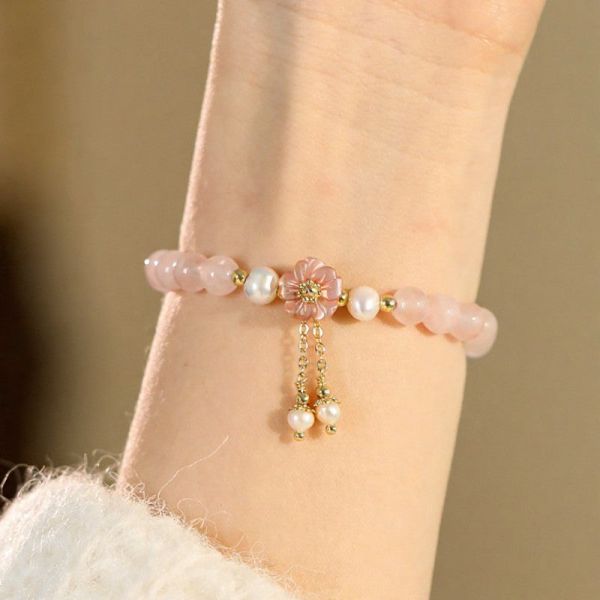 Buddha Stones Rose Quartz Pearl Flower Charm Love BraceletSpecial Price $27.59 Regular Price $37.28
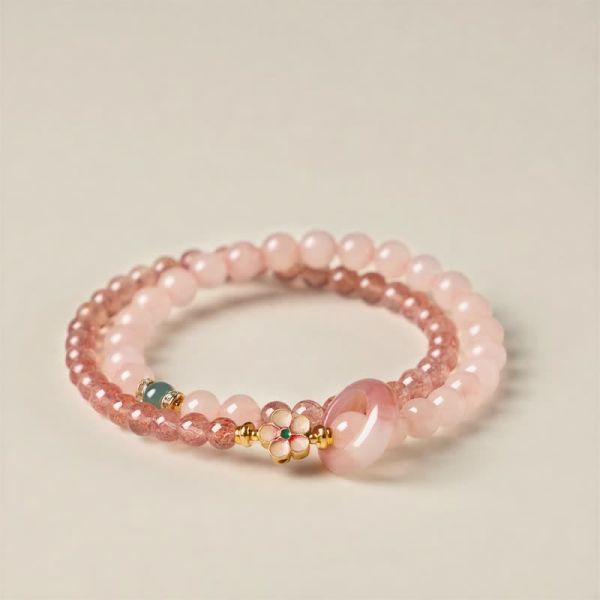 Buddha Stones Natural Strawberry Quartz Rose Quartz Peach Blossom Love Double-wrap BraceletSpecial Price $43.59 Regular Price $58.12
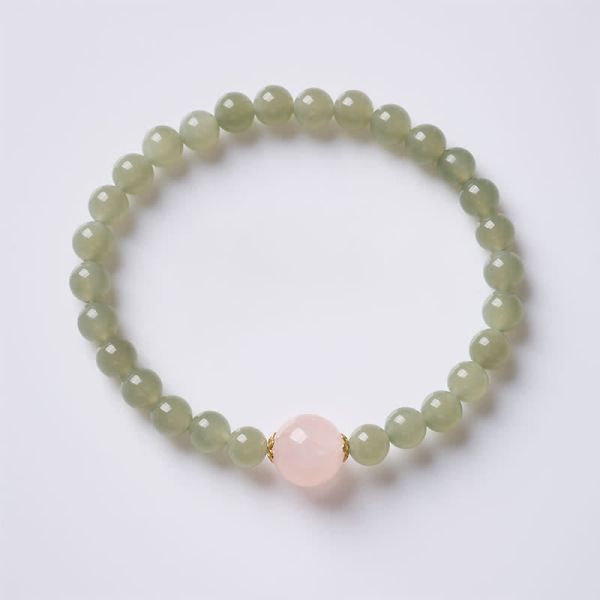 Buddha Stones Jade Rose Quartz Harmony New Chinese Style BraceletSpecial Price $62.59 Regular Price $86.93
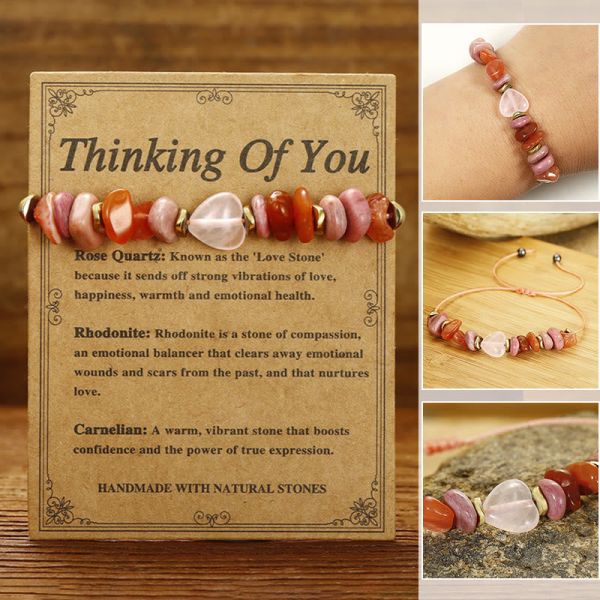 Buddha Stones Thinking Of You Rose Quartz Rhodonite Carnelian Relationships BraceletSpecial Price $25.59 Regular Price $35.54