
Peony Symbolism: From Painted Silk to Daily Dress
Chinese painters depicted peonies on silk scrolls, arranging broad blossoms among leaves and branches. Their painted flowers remained on view after the garden blooms had faded. In Chinese tradition, peony symbolism centers on prosperity, honor, beauty, and distinction. Its associations with wealth and luck belong to cultural belief. Neither a flower nor an accessory bearing its image can guarantee good fortune, financial success, or protection.
The move from garden to painting changed how people could encounter the flower. A seasonal blossom became something that could be displayed, given, and kept. Its rounded petals supplied a recognizable shape, while its traditional associations gave the image a place in decorative art. The subject could speak through a large painted bloom or a smaller detail on fabric.
That movement continues in accessories. A peony on a pendant or bag carries a familiar floral subject into a different setting. At Buddha Stones, we describe those associations as traditions and wishes. Understanding them can help you choose a design, but the flower also leaves room for a straightforward preference: its shape, color, or arrangement may simply appeal to you.
Peony symbolism at spring festivals and in textile traditions
Spring peony festivals begin with the living plant. Gardens become gathering places while the flowers are in bloom, and visitors encounter differences in color, petal shape, and fullness. The celebration depends on a season that passes. A painted or stitched peony answers that brief flowering period by giving the blossom a form that can remain in use throughout the year.
This helps explain the relationship between floral celebrations and decorative objects. A festival presents the flower at garden scale; an accessory brings its outline close enough to carry. The two experiences share a subject, though they serve different purposes. One marks the flowering season. The other makes the peony part of clothing, household decoration, or a gift.
In Chinese textile traditions, flowers offer possibilities for composition as well as meaning. A broad peony can occupy the center of a design, while stems and leaves connect it to the surrounding space. Embroidery translates those shapes into stitches. Suzhou embroidery belongs to this wider Chinese textile tradition, in which floral subjects have an established place.
Look at the arrangement before assigning a meaning to every detail. A single blossom draws attention differently from a cluster. An open flower and a bud create a different composition from two full blooms. Color contributes to the design, but a particular shade does not need to carry a fixed message. Context matters more than a rigid symbolic dictionary.
The garden flower becomes a jewelry motif
Modern jewelry changes the scale again. On a pendant, ring, or pair of earrings, a designer may simplify the flower so that its layered outline remains readable in a small space. Some designs emphasize the open center; others concentrate on overlapping petals. These are ways of interpreting a flower rather than evidence that every floral piece follows one historical pattern.
You can approach a peony accessory through its appearance first. Consider how much detail you want, how the motif sits beside other jewelry, and how clearly you want the flower to be recognized. A prominent bloom can be the main decorative element. A smaller floral detail can take a supporting role. Neither choice requires a particular belief.
For a gift, a short explanation often says enough: the peony has traditional associations with prosperity and honor, and the design was chosen with those wishes in mind. Avoid turning that message into a prediction about the recipient’s future. A personal note can explain the choice without suggesting that wearing or carrying the motif will produce a result.
The peony also deserves to be read separately from other flowers. Its Chinese cultural associations differ from the lotus’s religious meanings. Our article on the lotus flower in Buddhism discusses that separate tradition. When flowers appear together, it is better to consider their individual contexts than give the entire design one universal meaning.
Four peony bag options from Buddha Stones
Fabric gives the flower more space than a small jewelry setting. The following bags include peony options alongside other named designs. Select the specific option by name, since a product title can include several motifs that appear on different versions.
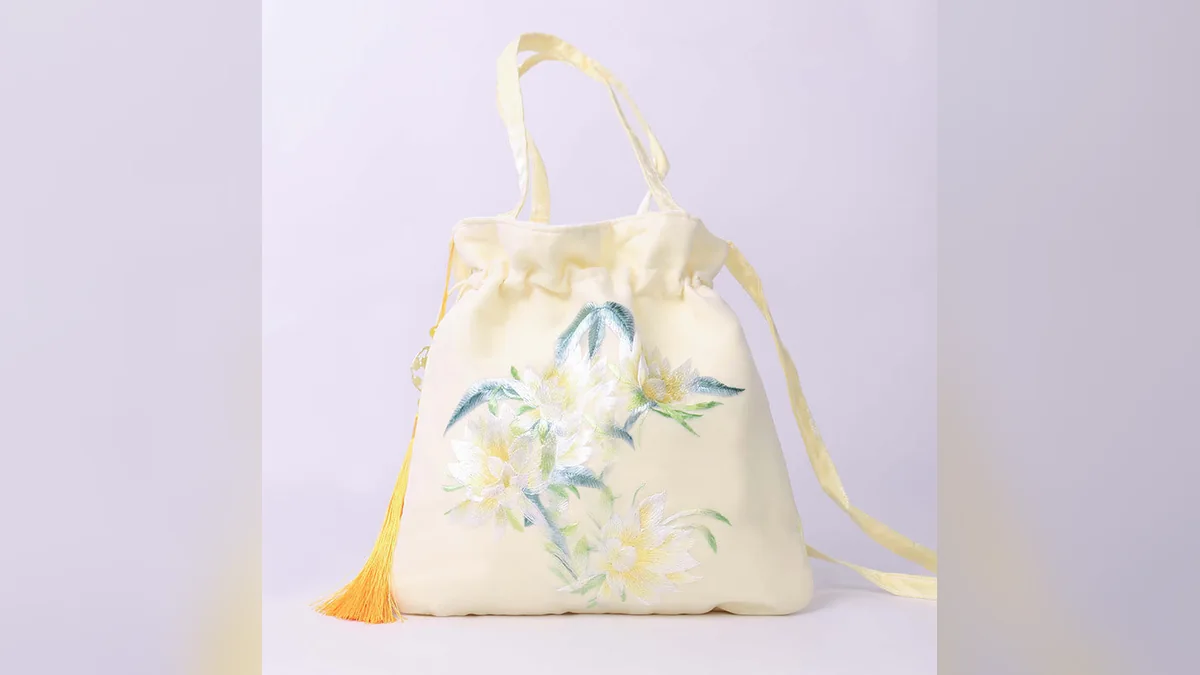
Our Lotus Peony Epiphyllum Phoenix Suzhou Embroidery Cotton Linen Bag includes a Yellow Golden Peony option. Its materials are cotton linen fabric and ceramic bead accessories, and its size is 21*22cm. The bag has one main pocket, a strap closure, and an adjustable strap; the shoulder bag strap length is 130cm. Yellow Epiphyllum, Yellow Golden Lotus, and Yellow Golden Phoenix are the other named options. Choose Yellow Golden Peony when the peony is the subject you want.
A White Peony option appears in our Suzhou Embroidery Lotus Deer Epiphyllum Peony Rabbit Cotton Linen Bag. This bag uses cotton linen fabric and ceramic bead accessories. It measures 21*22cm and has one main pocket, an adjustable strap, and a strap closure. The shoulder bag strap length is 130cm. Other options include Light Blue Epiphyllum and Light Pink Cherry Blossoms. Here, White Peony is the relevant option name to check when choosing the floral subject.
For a silk fabric option, our Suzhou Embroidery Rabbit Lotus Epiphyllum Peony Magnolia Silk Bag includes Light Green Golden Peony. The materials also include ceramic bead accessories. Its dimensions are 20*20*7cm, with one main pocket and one zipper interior pocket. It has an adjustable strap, a shoulder bag strap length of 130cm, and a strap closure. Blue White Magnolia and Light Green Lotus Fish are among the other named options within this product.
Our Suzhou Embroidery Camellia Magnolia Peony Lotus Silk Bag offers Light Blue Peony. Made with silk fabric and ceramic bead accessories, it measures 20*20*7cm. Its interior contains one main pocket and one zipper interior pocket. The adjustable strap has a stated shoulder bag strap length of 130cm, and the closure type is strap. The option range also includes Light Blue Magnolia, Light Green Wisteria, and Navy Blue Camellia, so the selected option determines the named motif.
FAQ
Does a peony mean wealth?
In Chinese tradition, the peony is associated with wealth, prosperity, and honor. Those meanings explain its use in decorative art and gifts. They express cultural associations and hopes; displaying the flower does not determine anyone’s finances or future circumstances.
Is the peony a Buddhist symbol?
The peony is widely associated with Chinese decorative culture. Its presence on an accessory does not by itself make that object Buddhist or establish a religious purpose. Read the particular design in context, especially when it appears beside other flowers or religious imagery.
Can I choose it just for its appearance?
Yes. You can appreciate the petals, color, and composition without adopting a symbolic interpretation. Knowing the traditional associations adds context, but it does not create an obligation. The same flower that once filled a painted scroll can also be a familiar detail on an everyday accessory.
Shop the story
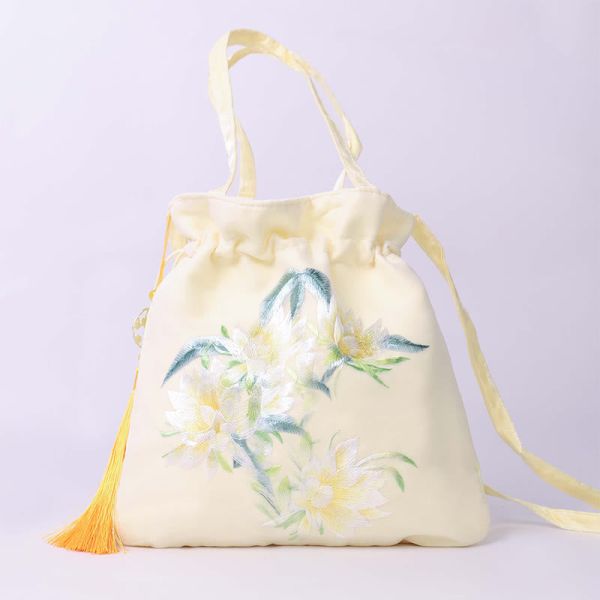 Buddha Stones Lotus Peony Epiphyllum Phoenix Suzhou Embroidery Cotton Linen Tote Crossbody Bag Shoulder Bag HandbagAs low as $22.59 Regular Price $32.27
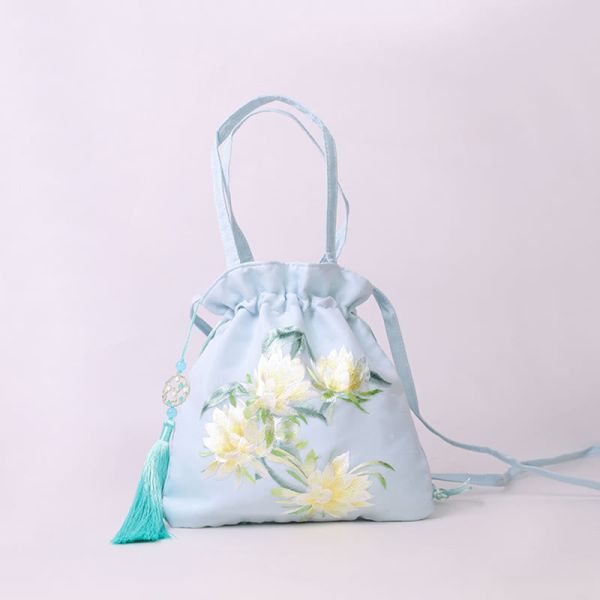 Buddha Stones Suzhou Embroidery Lotus Deer Epiphyllum Peony Rabbit Cotton Linen Tote Crossbody Bag Shoulder Bag HandbagAs low as $22.59 Regular Price $31.82
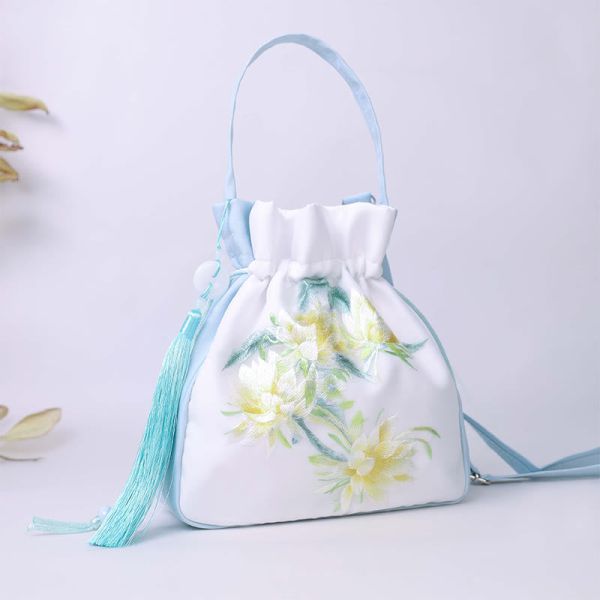 Buddha Stones Suzhou Embroidery Rabbit Lotus Epiphyllum Peony Magnolia Silk Tote Crossbody Bag Shoulder Bag HandbagAs low as $26.59 Regular Price $36.93
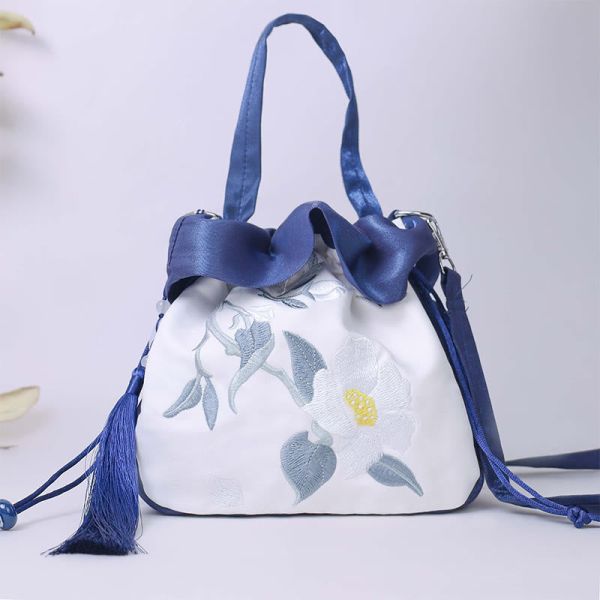 Buddha Stones Suzhou Embroidery Camellia Magnolia Peony Lotus Silk Tote Crossbody Bag Shoulder Bag HandbagAs low as $22.59 Regular Price $30.95