
Pearl Symbolism in Chinese Art, Textiles, and Bags
A small round jewel often sits between two dragons in Chinese decorative art. Pearl symbolism traditionally connects this rounded form with preciousness, purity, and completeness; some interpretations also emphasize wisdom. Auspicious designs may express wishes for luck, wealth, or protection, but these are cultural beliefs: a symbol cannot guarantee such results. At Buddha Stones, we distinguish those traditional associations from the materials and construction of an object. Here, the focus is the pearl as a motif: how its meaning changes beside a dragon, within a textile pattern, or along an accessory.
Pearl Symbolism Begins with a Precious Round Form
The pearl motif draws on the value long attached to pearls as ornaments and treasures. A rounded outline and luminous appearance made the pearl a useful image for something precious. Artists could suggest a treasured object with a simple circle, then add surrounding details to establish the setting.
Chinese dragon imagery offers a familiar example. A dragon may face a round jewel, while a paired composition places the jewel between two dragons. Flames or curling lines sometimes surround it. This is often called a flaming pearl, although a painted or embroidered jewel should not automatically be read as a literal pearl.
Interpretations vary. The jewel may represent wisdom, a precious treasure, or an auspicious ideal. Calling it only a symbol of money makes the image narrower than the tradition allows. Its role also depends on the dragons, clouds, and arrangement around it.
Buddhist art supplies a related distinction. The wish-fulfilling jewel belongs to Buddhist symbolic imagery, but a round jewel in a religious composition is not necessarily a pearl. The concepts can overlap visually without being interchangeable. Looking at the whole composition is more useful than assigning a fixed meaning to every white circle.
Reading the Motif across Art, Cloth, and Celebrations
Painted and decorative surfaces
On ceramics, architectural decoration, and other decorative surfaces, the pearl can become a focal point. Two dragons facing inward direct attention toward the central jewel. A single dragon beside a jewel creates a different balance, with the relationship between the creature and the treasure carrying the scene.
Shape provides clues, but context matters more than color alone. A round object surrounded by flames belongs to a different visual vocabulary from a plain bead border. You do not need to decide that every circular detail has a hidden message; some circles organize a pattern or fill a space.
Embroidery and patterned textiles
Textiles translate the motif into thread, repeating shapes, and contrasting surfaces. A pearl-like circle can punctuate a dragon design, while rows of rounded details can frame a larger scene. The same basic shape may serve as a symbolic center in one pattern and a decorative border in another.
Read outward from the circle. Identify the main creature or flower, then notice clouds, leaves, and repeated forms. This keeps a pearl detail connected to its surroundings. It also avoids treating an embroidered jewel as evidence that the textile contains actual pearls.
Jewelry, accessories, and festival settings
A strand of pearls places repeated rounded forms close together. In jewelry and accessories, this repetition can carry associations of refinement and preciousness without forming a religious scene. A pearl detail may also be chosen simply for its appearance; the wearer does not have to adopt a symbolic interpretation.
Dragon dances offer another setting for the round jewel. A performer may guide the dragon with a ball carried on a pole, often described as a pearl. The moving ball gives the performance a visible point to follow. Its festival setting supports an auspicious reading, but it does not establish one universal explanation for every performance.
What Neighboring Motifs Add to the Reading
Dragons and pearls: The surrounding creature gives the jewel a narrative role. Instead of reading the circle in isolation, notice whether the dragon faces it, reaches toward it, or shares it with another dragon. The composition presents the jewel as an object of attention and value.
Clouds and pearls: Clouds can place the jewel within a celestial scene. Their curling outlines also contrast with its rounded center. An auspicious interpretation comes from this larger arrangement, rather than from a rule that every cloud beside a bead promises a particular result.
Lotuses and jewels: A lotus introduces a distinct Buddhist association with purity. Our discussion of lotus flower meaning in Buddhism explains that flower in its own context. A jewel beside a lotus should be read within the religious or decorative composition, rather than assumed to be a literal pearl.
Flowers, leaves, and pearl details: On accessories, a floral panel and a bead strap may occupy separate parts of the design. Their presence together does not necessarily create a traditional combined emblem. Sometimes the connection is visual: rounded beads sit beside branching stems or broad petals.
Pearl Details on Four Buddha Stones Bags
Our product specifications distinguish straps, tassels, fabrics, and closures. They do not identify a pearl type for these bags, so we do not assign one.
Retro embroidery with a pearl chain
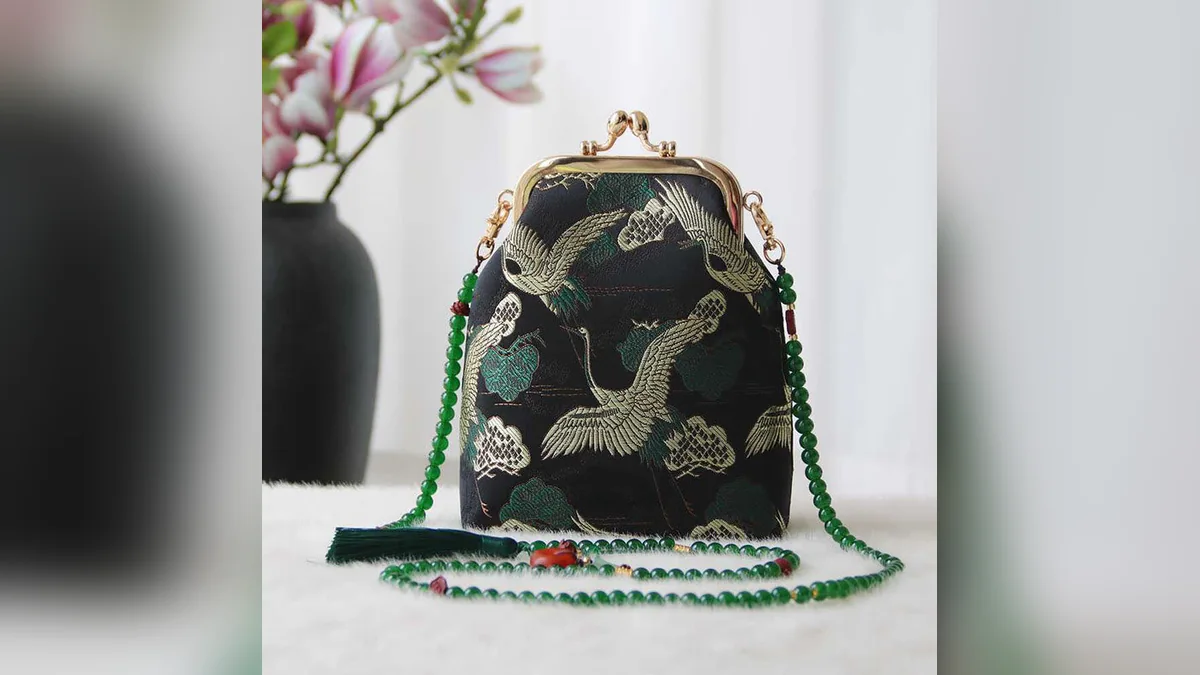
The Retro Chinese Embroidery Pearl Chain Crossbody Bag measures 14*6*18cm. Its materials are polyester fabric, metal, pearl chain, and tassel. The non-adjustable pearl chain strap measures 115cm, and the bag has one main pocket and a buckle closure. Options include Black Crane, Black Bamboo Leaves, Cyan Panda Bamboo, and Gold Deer Flower.
Bai Ze embroidery in two versions
The Bai Ze Embroidery Pearl Chain Tassel Bag has Green Double-sided Bai Ze Embroidery and Green Single-sided Bai Ze Embroidery options. Its size is 25*17*7cm. Materials include polyester, polyurethane, pearl chain, tassel, and bead accessories. Strap lengths are Long Pearl 110cm and Short Pearl 40cm; the strap type is non-adjustable. It has one main pocket and weighs about 560g.
Xiangyunsha silk with pearl tassels
The Handmade River Mountain Pearl Tassel Xiangyunsha Silk Bag combines mulberry silk, Xiangyunsha silk, top-grain leather, polyester, pearl tassels, alloy metal, and bead accessories. Its size is 21*18*12cm, with a 15cm handle. The adjustable strap measures 85-105cm, and the closure is a magnetic clasp. The specifications give about 28 Momme and a pre-sale period of 5 days.
Leaf embroidery and a beaded strap
The Polyester Cotton Embroidery Leaves Bamboo Handle Pearl Bag has polyester cotton as its stated material. It measures 20*20*8cm and has a beaded strap and a magnetic buckle closure. The package includes one bag.
A Small Detail within a Larger Design
The pearl motif becomes clearer when you look beyond the bead or circle itself. A dragon, lotus, cloud, or embroidered leaf supplies a different setting. We keep those cultural readings separate from product facts, leaving room to appreciate a motif for its traditional associations, its visual arrangement, or both.
Shop the story
 Buddha Stones Retro Chinese Embroidery Pearl Chain Crossbody Bag Shoudler BagAs low as $99.59 Regular Price $132.79
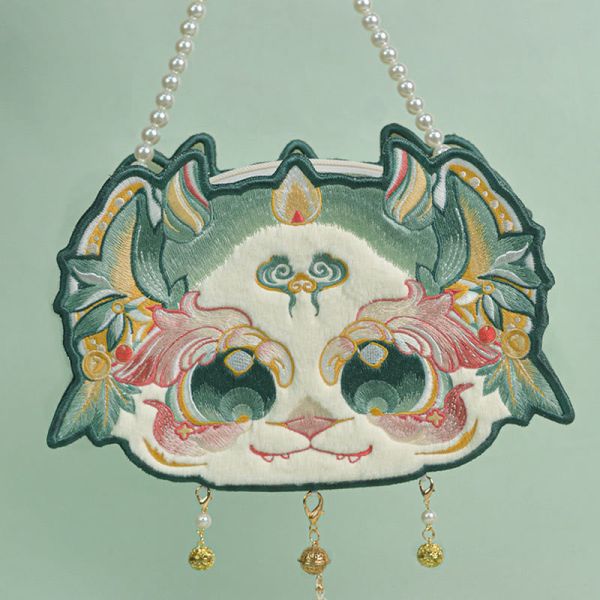 Buddha Stones Double-sided Mythical Beast Bai Ze Embroidery Pearl Chain Tassel Shoulder Bag Crossbody BagAs low as $154.59 Regular Price $206.12
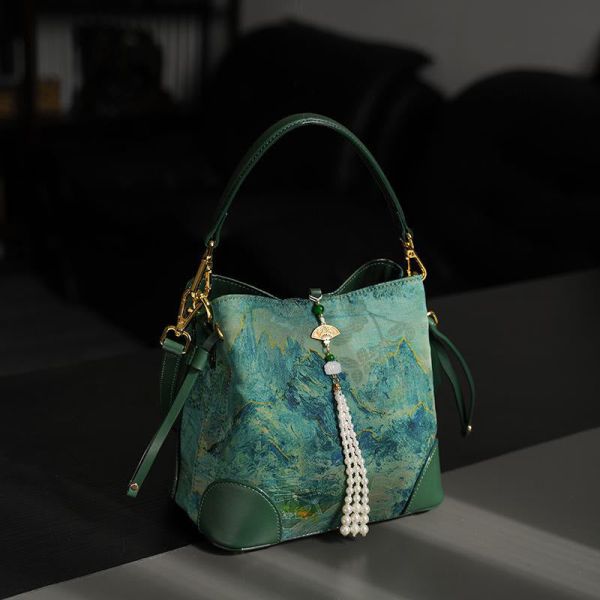 Buddha Stones Handmade River Mountain Bead Pearl Tassel Xiangyunsha Silk Crossbody Bag HangbagsSpecial Price $399.59 Regular Price $532.79
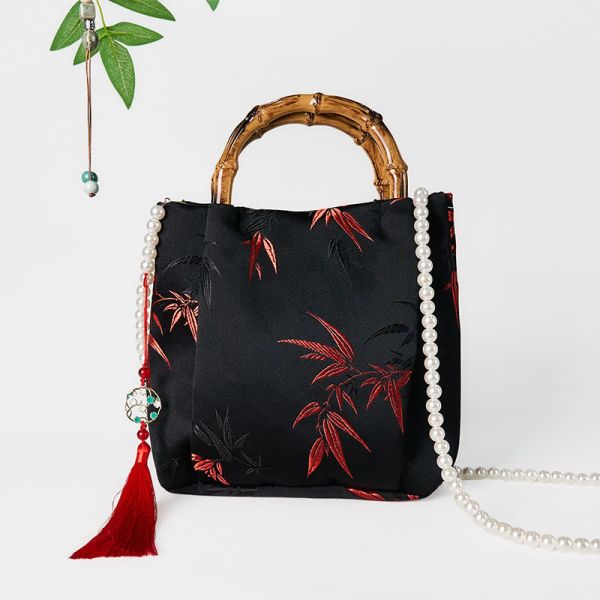 Buddha Stones Polyester Cotton Embroidery Leaves Bamboo Handle Pearl Crossbody Bag HangbagsSpecial Price $34.59 Regular Price $47.38