
Osmanthus Meaning: The Moon Tree and Autumn Wishes
Wu Gang swung his axe at the osmanthus tree on the moon. In the Chinese legend, the trunk became whole again after every blow, leaving him with a task that never ended.
In Chinese tradition, osmanthus meaning centers on autumn, reunion, honor, and scholarly achievement. The flower also represents wishes for prosperity through wordplay. Associations with luck, wealth, or protection belong to cultural belief; wearing or displaying a motif guarantees none of these outcomes.
The tree in the story remained standing, however often the woodcutter struck it. On earth, its flowers became part of much more ordinary things: food shared at a festival, a flowering branch on porcelain, a pattern carried into daily life. Those uses help explain why the blossom still matters beyond the legend.
Osmanthus Meaning at the Mid-Autumn Table
Osmanthus flowers in autumn, and Chinese floral traditions associate it with the eighth lunar month. That is also the month of the Mid-Autumn Festival, when the full moon accompanies family gatherings and stories about the moon palace. The connection joins a seasonal flower to an occasion centered on reunion.
The blossom belongs at the table as well as in the story. Osmanthus appears in Chinese cakes, sweet preparations, tea, and wine. Festival customs differ by region and household, so no single menu defines the celebration. Still, its fragrance and flavor give the moon-tree story a familiar presence in food that people can share.
Wu Gang is one figure in a larger group of lunar tales. Chang’e and the moon rabbit belong to that world too, although their stories have different plots and meanings. Our article on rabbit symbolism considers that neighboring motif. Here, the tree remains the central image: a link between the moon overhead and autumn blossoms below.
How a Branch Became a Wish in Decorative Arts
The Chinese name guihua gives osmanthus another layer of meaning. In Mandarin, gui, the character used for the tree, sounds like the word associated with nobility or high status. This makes the flower useful in auspicious designs, where an image can express a wish through the sound of its name.
Such wordplay depends on language and context. A floral design can carry a conventional wish for prosperity without making a statement about the owner’s finances. That distinction matters when an old motif appears on a modern accessory: the wish is part of its cultural vocabulary, rather than a prediction.
Osmanthus also has a literary association with examination success. The expression about plucking an osmanthus branch became a way to describe scholarly distinction. A branch could therefore stand for recognition earned through study. For a graduation gift, that history offers a specific sentiment: congratulations on work already accomplished, or encouragement for work ahead.
Chinese decorative arts often bring seasonal flowers onto useful objects. Porcelain month cups, for example, pair flowers with particular months; osmanthus represents the eighth. The image lets a vessel refer to the calendar, poetry, and the moon without having to retell the entire legend.
Carrying the Blossom into Modern Jewelry
A flower on a ring occupies a different setting from a tree in a moon legend. The wearer can choose how much of the older symbolism to attach to it. Autumn, family reunion, or respect for learning may provide a personal reason to select the motif. Enjoying a floral design is also sufficient.
The moon-tree tale belongs to Chinese folklore and Daoist storytelling; an osmanthus pattern alone does not establish a Buddhist teaching or ritual purpose. Keeping the context clear gives the flower a more precise meaning.When giving osmanthus jewelry, a brief explanation can carry more meaning than a broad promise. A note might mention the flower’s connection to scholarly achievement or its place in Mid-Autumn celebrations. There is no requirement to wear it on a particular hand, pair it with another symbol, or reserve it for festival days.
The motif appears in our accessories in several forms. Reading the option names alongside the specifications helps distinguish a product family’s broad title from the particular design you select. For a ring, fit deserves attention alongside symbolism; for a bag or fan, the stated dimensions help establish its scale.
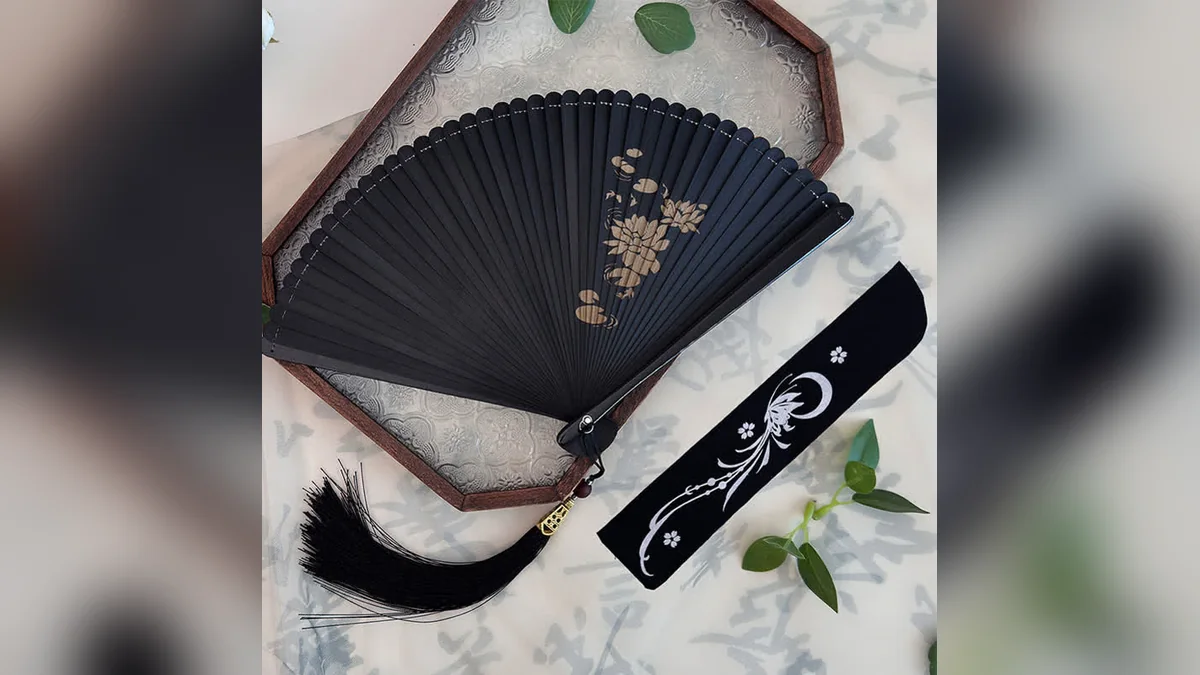
Our black bamboo pattern folding fan has a bamboo frame and bamboo surface. Its open size is Approx. 30 cm / 11.8 in, and its closed size is Approx. 18 cm / 7.1 in. The available options are Dew on the Lotus Pond and Fish in Clear Ripples. Although osmanthus appears in the full product title, these option names should guide your selection rather than an assumption that both feature the blossom.
For an explicitly named floral option, our embroidered osmanthus and floral motif bag includes Yellow Osmanthus among its choices. The material is cotton linen fabric with ceramic bead accessories. Its size is 20*20*7cm, with a 130cm shoulder bag strap and an adjustable strap type. The specified pocket layout is one main pocket and one back zipper pocket. Other options feature different named motifs, so select Yellow Osmanthus when that is the design you want.
Our Liuli Osmanthus Flower Wisdom Ring is a unisex ring made of liuli, with an inner diameter of Approx. 17 mm. Its sizing guidance asks you to measure the widest part of your finger, including the knuckle, and consider sizing up between sizes. The word “Wisdom” in its name can accompany the flower’s scholarly association; it does not mean the ring confers knowledge.
The 925 Sterling Silver Osmanthus Fragrans Ring offers Golden and Silver options. The stated material is 925 sterling silver, and the weight is About 3.23g. Its ring size is adjustable. For an autumn gift, the choice between those named options can follow the recipient’s preference. The product guidance advises removing it before sleeping or washing and allows for slight differences from manual measurement.
Questions About the Moon-Tree Flower
Is osmanthus a symbol of wealth?
It can express a traditional wish for prosperity because its Chinese name supports wordplay about noble status and wealth. That symbolism describes a hope and cannot ensure financial results.
Why is osmanthus connected with the moon?
Chinese legend places an osmanthus tree on the moon, where Wu Gang repeatedly tries to cut it down. Its autumn flowering also connects it with Mid-Autumn celebrations.
Must osmanthus jewelry be a festival gift?
No. Its association with scholarly distinction also suits a graduation or another academic milestone. You can give it for its floral motif alone. An explanation of the tradition is optional, but a specific meaning makes a thoughtful note.
Wu Gang’s tree remains standing in the tale. Beyond it, the blossom belongs to shared food, decorated objects, and expressions of regard. A ring or bag carries only a small part of that history, but the story gives the flower something particular to say.
Shop the story
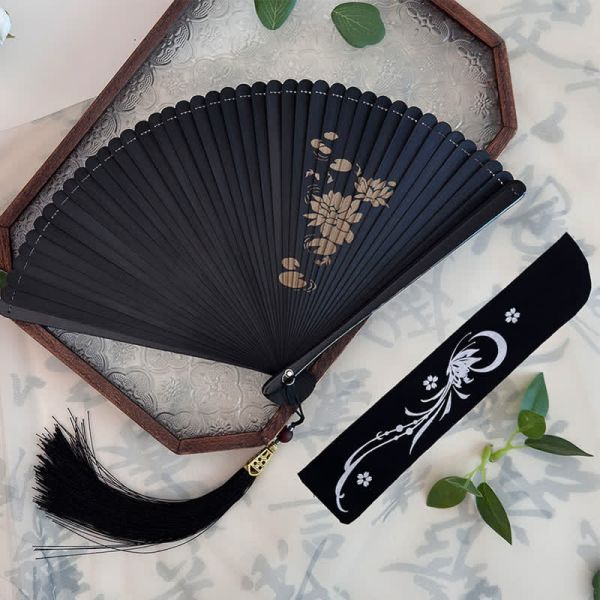 Buddha Stones Black Bamboo Koi Fish Lotus Osmanthus Swallows Dragonfly Pattern Folding FanAs low as $32.59 Regular Price $43.45
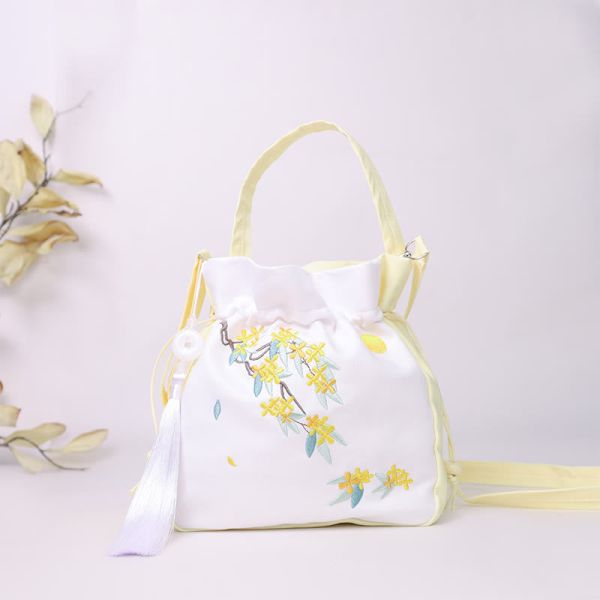 Buddha Stones Embroidered Osmanthus Peony Grape Cat Cotton Linen Tote Crossbody Bag Shoulder Bag HandbagAs low as $24.59 Regular Price $32.79
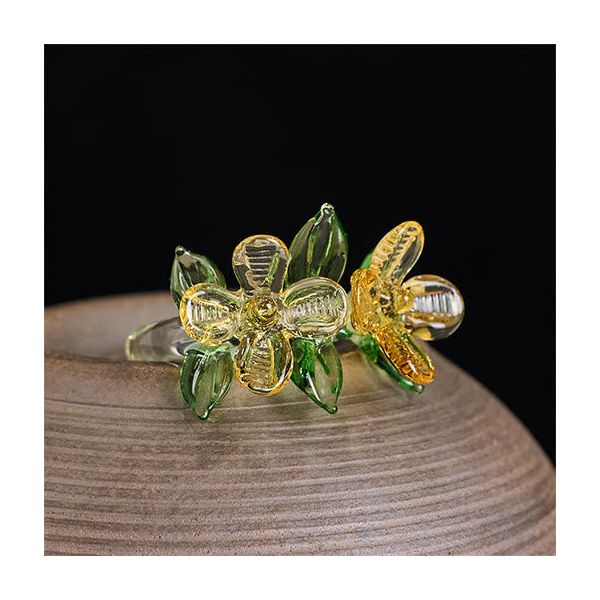 Buddha Stones Liuli Osmanthus Flower Wisdom RingSpecial Price $25.59 Regular Price $35.54
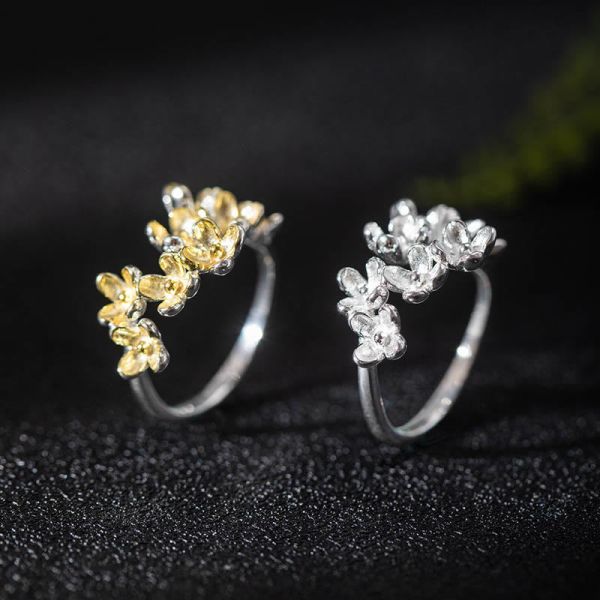 Buddha Stones 925 Sterling Silver Osmanthus Fragrans RingAs low as $79.59 Regular Price $106.12