Rabbit Symbolism: Moon Legends and Autumn Traditions
A rabbit pounds the elixir of immortality with a mortar and pestle on the moon, according to Chinese legend. He is the Jade Rabbit, or Yutu, the companion of Chang'e. Rabbit symbolism in Chinese tradition links the animal with the moon, gentleness, quick wits, and family reunion. The scene belongs to folklore: its familiar figures give a distant moon a household task, a companion, and a story people can tell beneath it.
The rabbit keeps working while Chang'e inhabits the lunar world. Down on earth, the same animal appears beside autumn flowers, on festival objects, and in the zodiac. Following those connections helps explain why a rabbit on a teacup can suggest more than an animal in a garden.
The moon rabbit and Chang'e
The mortar and pestle are useful clues when reading a moon rabbit design. A rabbit alone may refer to the zodiac or simply be an animal motif. A rabbit pounding beneath a moon points more clearly toward Yutu. In the Chinese legend, the substance he prepares is the elixir of immortality, and his place beside Chang'e makes him part of her lunar household.
Chang'e is the moon goddess in Chinese tradition. Stories about her vary, so a decorative scene need not stand for one complete, fixed account. The moon, the rabbit, and the act of pounding are enough to recall the familiar association. A design may include only a few of these elements and still invite that reading.
The name has also traveled beyond folklore. China named its lunar rovers Yutu after the Jade Rabbit. The connection gives the old story a modern reference: the legendary moon dweller lends his name to machines sent to explore the lunar surface. The rover name recalls the legend without turning its events into historical facts.
Rabbits at the Mid-Autumn Festival
The Mid-Autumn Festival comes on the fifteenth night of the eighth lunar month, when the moon is full. Family reunion is central to the occasion, and the round moon is a traditional image of togetherness. The rabbit's place on that moon helps connect him with reunion, even when a design contains no people.
Beijing also has a distinctive rabbit figure associated with the festival: Lord Rabbit, or Tu'er Ye. Clay Lord Rabbit figures were a traditional Mid-Autumn toy. This gives the festival rabbit another form, separate from the small animal crouched beside a mortar. The name and setting matter when identifying the figure.
These associations can overlap on a festival table. A rabbit motif might recall Yutu, a childhood festival toy, or the annual gathering beneath the full moon. There is room for those meanings to sit together without assigning the same story to every rabbit image.
Rabbit symbolism in the Chinese zodiac
The rabbit is the fourth animal in the Chinese zodiac. Tradition associates it with gentleness and quick wits; these are cultural characterizations, rather than a reliable account of anyone's personality. Rabbit years repeat in a twelve-year cycle. The years below begin at Lunar New Year, so a January or early February birthday requires checking the actual New Year date before choosing a zodiac sign.
- 1975
- 1987
- 1999
- 2011
- 2023
- 2035
The osmanthus connection
The moon of legend has a tree as well as a rabbit. An osmanthus, also called sweet osmanthus, stands there while the woodcutter Wu Gang chops at it forever. The endless task belongs to another lunar tale. Its presence helps explain why flowers, a rabbit, and the moon can share a single design.
Osmanthus blooms in autumn, giving the flower an earthly connection to the season of Mid-Autumn. The lunar tree and the seasonal blossom reinforce one another in art: one belongs to a story overhead, while the other marks the time of year below. Together they make an autumn setting recognizable without spelling out the entire legend.
A rabbit paired with osmanthus can therefore suggest this broader lunar world. It need not depict Wu Gang or show a pestle to draw on that association. These connections are traditional meanings, leaving space for the flower and animal to be appreciated as design elements too.
Rabbit motifs in our fans, teaware, decor, and bags
Our rabbit motifs appear on a fan, a teacup, a decoration, and a bag. Choosing among them can begin with the story a design recalls, then turn to size and use.
A moon rabbit folding fan
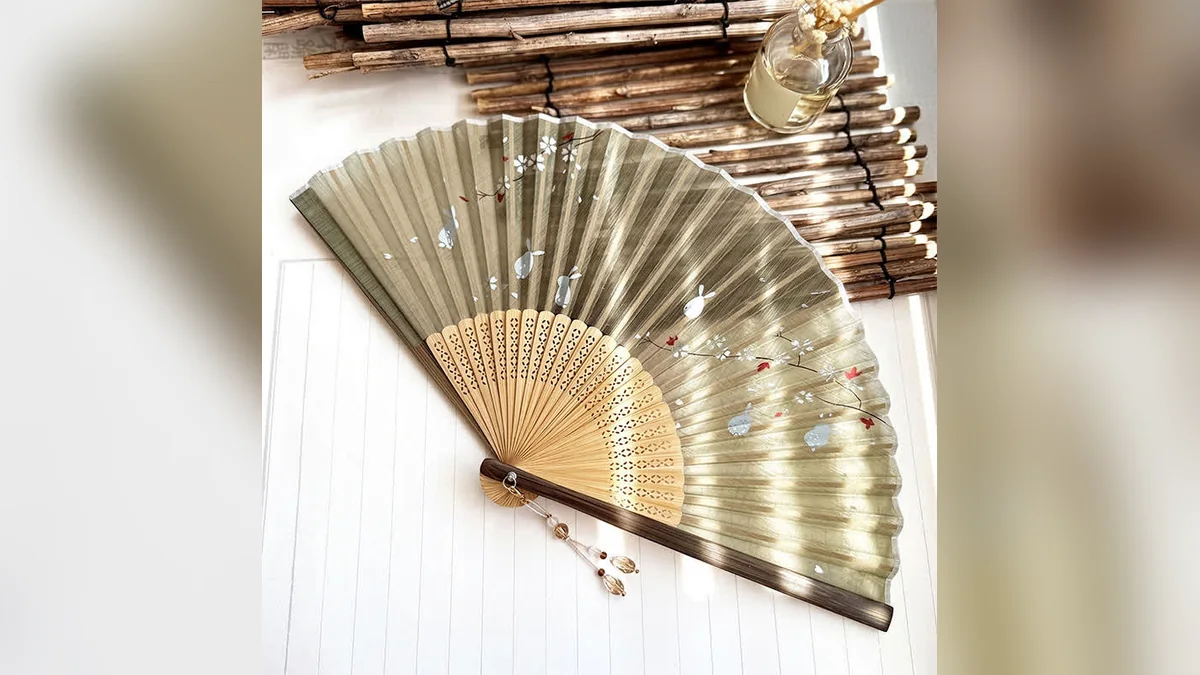
Our Vintage Sakura Moon Rabbit folding fan pairs a polyester leaf with bamboo ribs. It measures approximately 22 cm / 8.7 in closed and 40 cm / 15.7 in open. The color options are dark green, light blue, light gray green, and pink. Print placement is random, so the positioning of the design can vary. The moon rabbit name connects the fan directly with the lunar motif.
An osmanthus rabbit teacup
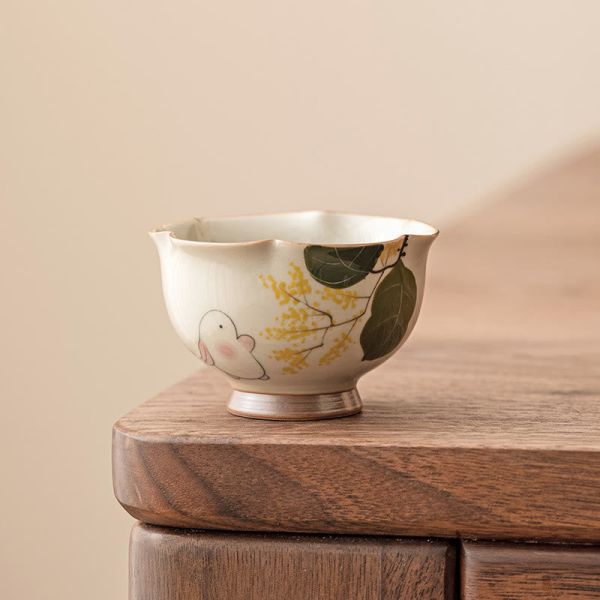
The Hand Painted Small Osmanthus Rabbit ceramic teacup pairs the animal and autumn flower in its name. Its dimensions are 6.7 cm × 4.5 cm, with a 3.2 cm base. Capacity is 40 ml, and weight is about 57 g. That capacity is worth considering alongside the other cups you plan to use for serving. The purchase includes one teacup; accessories shown with it in photos are excluded.
A green sandalwood rabbit decoration
Our Green Sandalwood Mini Rabbit decoration comes in three sizes: small 3.6 cm, medium 5.2 cm, and large 7 cm. Its material is green sandalwood. “Peace” in its title is a customary good wish. A rabbit decoration can carry a personal reference to the zodiac, while the lunar story offers another possible association.
An embroidered osmanthus rabbit bag
The Osmanthus Rabbit Embroidery bag measures 25 × 18 × 4 cm and weighs about 234 g. Its materials are polyester, metal, pearl chain, and pearl. Inside are one main pocket and two internal pockets. Depending on the option chosen, carry choices include an adjustable 110 cm strap, a 110 cm long pearl chain, or a 40 cm short pearl chain, with or without a furball. The pearl chains are non-adjustable. Check the selected option to establish which accessories accompany the bag.
FAQ
What does a rabbit symbolize in Chinese tradition?
Rabbit symbolism includes the moon, gentleness, quick wits, and family reunion. Context helps distinguish a zodiac rabbit from Yutu, Chang'e's companion in the moon legend.
What is the Jade Rabbit pounding?
Chinese legend says the Jade Rabbit pounds the elixir of immortality with a mortar and pestle.
Why do osmanthus flowers appear with rabbits?
Osmanthus blooms in autumn, and legend places an osmanthus tree on the moon. Beside a rabbit, the flower can recall that shared lunar setting and the season of Mid-Autumn.
Shop the story
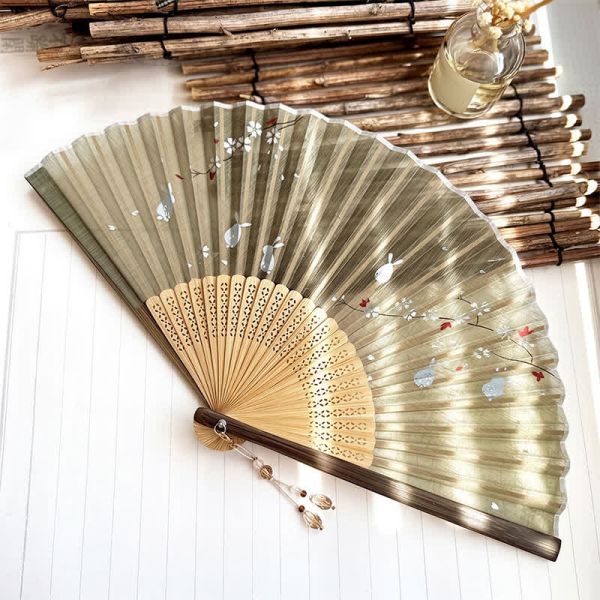 Buddha Stones Vintage Sakura Moon Rabbit Bamboo Foldable Elegant Folding Fan 22 cmAs low as $32.59 Regular Price $44.04
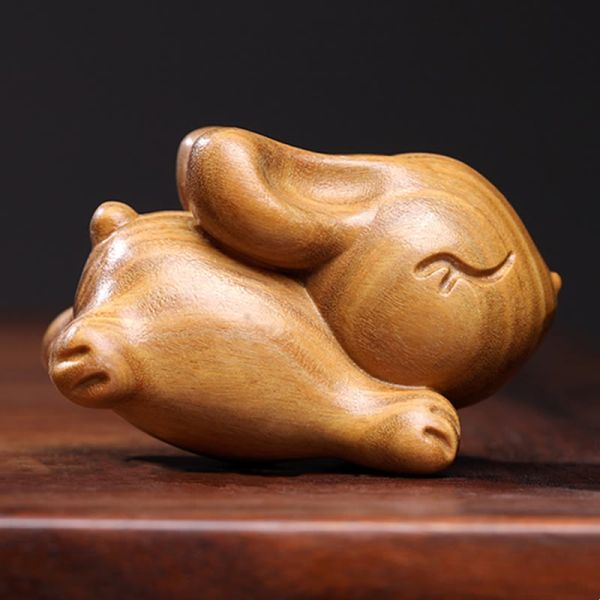 Buddha Stones Green Sandalwood Small Mini Cute Rabbit Bunny Peace DecorationsAs low as $21.59 Regular Price $28.79
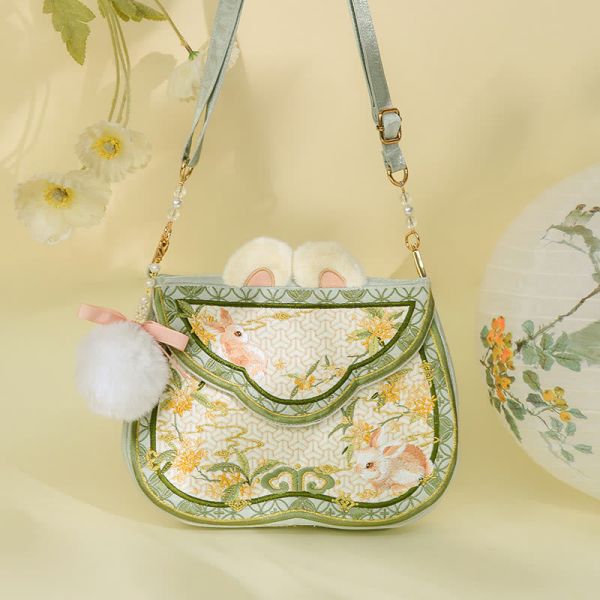 Buddha Stones Osmanthus Rabbit Embroidery Pearl Chain Furball Tassel Shoulder Bag Crossbody BagAs low as $132.59 Regular Price $176.79