
Meditation Tools Guide: Build a Simple Practice
A timer marks the end of your meditation session. This meditation tools guide explains how to choose objects for seating, timing, counting, and marking the beginning or end of practice. You will learn to arrange them, follow a simple sequence, and decide which optional items belong in your setup. At Buddha Stones, we suggest giving every object a clear task before adding another.
1. Meditation tools guide: choose a task first
Write down what you plan to do during the session: sit silently, count breaths, or recite a familiar phrase. Then name the task an object would perform. A chair provides a seat. A timer marks a duration. A mala records repetitions. A bell can mark a transition. You do not need an object for every task.
For a first setup, choose a seat and a way to mark the finish. Add counting beads only if counting belongs to your chosen practice. If you follow a particular Buddhist tradition or teacher, use those instructions for recitation and ritual handling; a general equipment guide cannot supply every tradition’s conventions.
2. Arrange a seat and a reachable surface
Choose a chair, cushion, or bench that lets you sit without balancing on an edge. With a chair, place your feet on the floor or a suitable support. Leave room to move your legs and stand up afterward. Floor seating is an option, not a requirement for using meditation tools.
Put your timer and any beads on a stable surface within easy reach. Keep cords out of walkways and leave your route to the door clear. Place decorative objects separately from the area where your hands will move. This is a practical arrangement for a session, so start with available furniture before choosing additional furnishings.
3. Set one clear endpoint
Choose either a duration or a repetition count. For a timed session, five minutes is a straightforward starting choice, not a required minimum. Set the timer before taking your seat. If you use a phone, select an ending sound and turn off unrelated notifications before beginning.
For a counted session, decide on the number of repetitions in advance. You can stop after a short section of beads; owning a 108-bead strand does not require completing a full round each time. Avoid running several timers and counters together unless your practice specifically calls for them. One endpoint makes the sequence easier to follow.
4. Assign beads a counting task
A mala is a strand of beads used to count recitations or other repeated elements of practice. Decide what one bead represents before you begin: one spoken phrase, one silent repetition, or one complete breath. Keep that unit consistent throughout the session so the count remains understandable.
Hold the strand loosely and move one bead after completing your chosen unit. Let the unused portion rest in your hand or lap rather than pulling against the string. If you lose your place, choose a bead and resume; reconstructing every missed count is unnecessary for an informal practice. Follow your teacher’s instructions where a formal recitation has different requirements.
Keep counting use separate from decisions about wearing the strand. For that subject, our article on how to wear mala beads covers a different part of choosing and using a mala.
5. Add sound or a visual marker only for a defined role
A bell or singing bowl can signal the start or finish of a session. Decide which transition the sound will mark, and learn the instrument’s handling instructions separately. You can also use a timer alone. Check the volume before a shared session and agree on who will sound the instrument.
A visual marker might be a single image or an object placed in front of your seat. Choose it according to your practice rather than filling every available surface. Incense is optional, too. If you include it, follow the burner’s instructions, provide ventilation, keep burning incense away from flammable objects, and never leave it unattended.
6. Follow the same short sequence
- Place your chosen objects within reach and confirm your endpoint.
- Take your seat and begin with your selected signal, if using one.
- Follow your chosen practice, moving beads only when a counting unit is complete.
- Finish at the agreed time or count, then return the objects to their places.
Afterward, review the arrangement in practical terms. Was the timer reachable? Did the strand catch on something? Was the sound appropriate for the room? Change one detail before the next session. You are checking how the equipment fits the sequence, without treating the number of accessories as a measure of practice.
Mistakes to avoid when assembling your setup
- Buying before naming the task. Identify what you need to count, time, or mark before choosing an accessory.
- Changing the counting unit halfway through. Use the same repetition or breath unit from beginning to end.
- Stretching a strand to make it fit. Check the product’s dimensions and band details instead of assuming a bead size describes wrist fit.
- Assigning promised results to symbols. Wealth and Protection in product names express traditional wishes. These names offer no guarantee of results.
- Making optional objects compulsory. Sound, fragrance, and decoration need a defined place in your sequence; they are not required purchases.
Four Buddha Stones bead options and their specifications
Use the details below to compare bead sizes, item types, and materials. Check the selected option before ordering, because available sizes and named configurations differ.
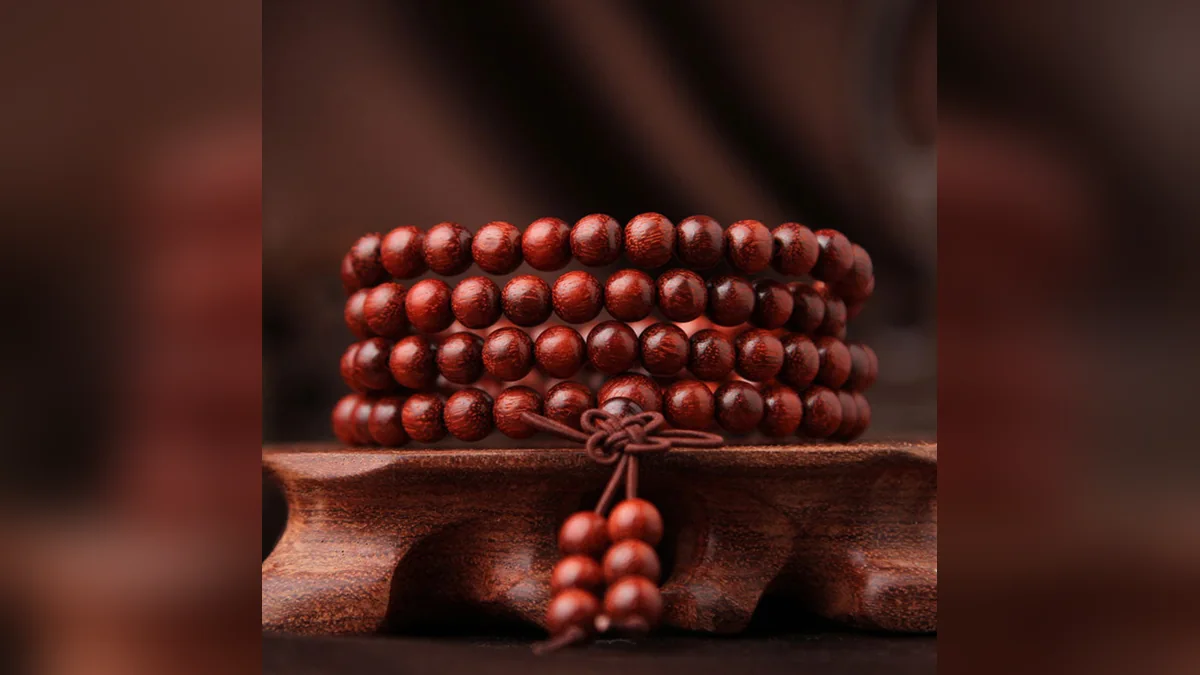
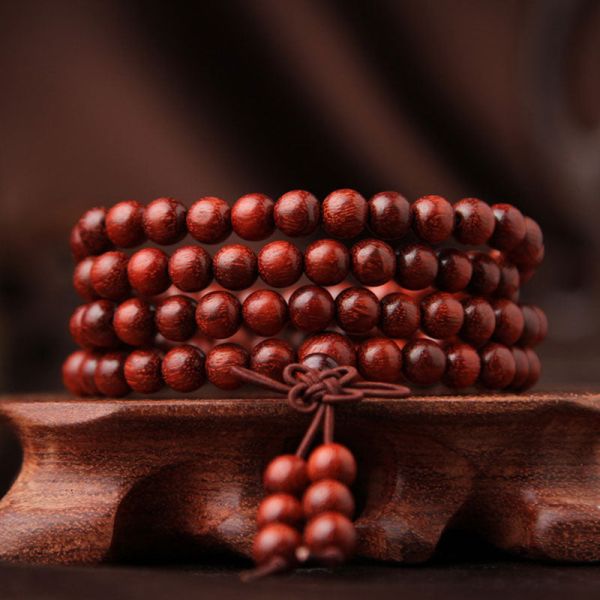
Small Leaf Red Sandalwood
Our Tibetan Small Leaf Red Sandalwood 108 Beads Mala Meditation Bracelet has 108 beads and premium elastic string. The material is Small Leaf Red Sandalwood. Its bead-size options are 6mm*108 and 8mm*108, and its item types are Bracelet, Necklace, and Mala. The specifications identify it as unisex.
Purple Bodhi Seed with configuration choices
The Purple Bodhi Seed Three-eyed Dzi Bead Copper Dorje Harmony Bracelet has 108 beads, with 9mm, 10mm, and 11mm bead-size options. Its item types are Bracelet and Mala. Specified materials are Bodhi Seed (Purple Bodhi Seed), Three-eyed Dzi Bead, and Copper. Named options include Purple Bodhi Seed alone and configurations with Copper Dorje, Three-eyed Dzi Bead, or both.
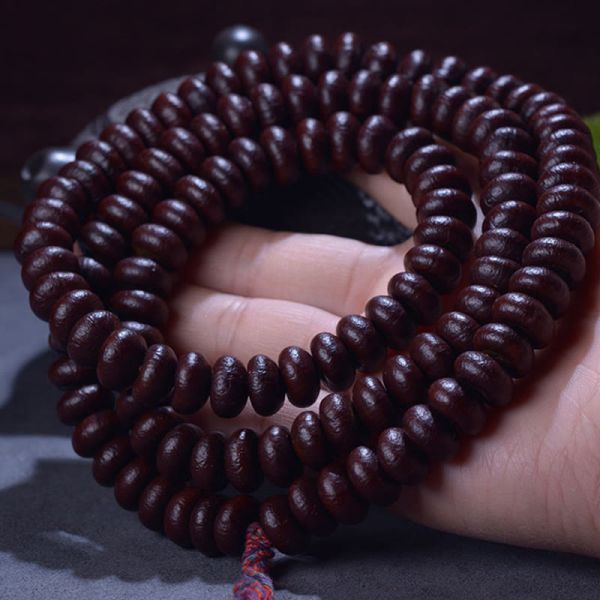
Purple Bodhi Seed in two sizes
Our Purple Bodhi Seed Wealth Bracelet contains 108 beads. It comes in 7mm and 8mm bead-size options, with Bodhi Seed (Purple Bodhi Seed) as the specified material. Its item types are Bracelet and Mala. Wealth is a traditional wish in the name, not a promised result.
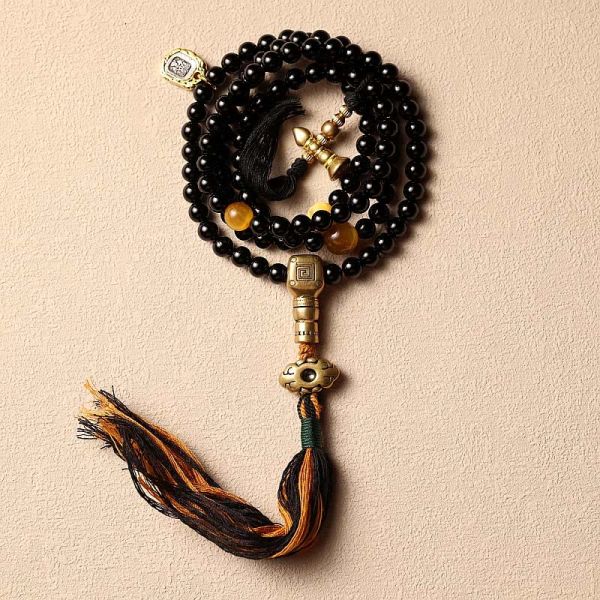
Black Onyx, Tiger Eye, and Copper
The Black Onyx Tiger Eye Nine Palaces Bagua Protection Bracelet is a Bracelet with 108 beads and premium elastic string. Bead-size options are 6mm and 8mm; the wrist circumference specification is 15-17cm. Materials are Black Onyx, Tiger Eye, and Copper. Named options include Black Onyx&Copper, Black Onyx&Nine Palaces Bagua, and Black Onyx&Tassels. Protection expresses a traditional wish and does not guarantee an outcome.
Begin with a seat, an endpoint, and only the objects your chosen practice uses. Keep the arrangement consistent enough to repeat, and make changes when a specific task calls for them. A useful setup is one you can prepare, use, and put away without unnecessary steps.
Shop the story
 Buddha Stones Tibetan Small Leaf Red Sandalwood 108 Beads Mala Meditation BraceletAs low as $25.59 Regular Price $35.54
 Buddha Stones Natural Tibet 108 Mala Beads Purple Bodhi Seed Three-eyed Dzi Bead Copper Dorje Harmony BraceletAs low as $269.59 Regular Price $359.45
 Buddha Stones Natural Tibet 108 Mala Beads Purple Bodhi Seed Wealth BraceletAs low as $159.59 Regular Price $221.65
 Buddha Stones Tibetan 108 Mala Beads Black Onyx Tiger Eye Beads Nine Palaces Bagua Protection BraceletAs low as $199.59 Regular Price $277.21