
Mantra Jewelry Guide: Choose, Read, and Carry It
The inscription is your first checkpoint when choosing mantra jewelry. This mantra jewelry guide explains how to identify the words on a piece, check their meaning, assess practical details, and arrange respectful handling and storage. A mantra is a sacred word or phrase recited in religious practice; jewelry may carry that text as an inscription. At Buddha Stones, we encourage you to understand the wording before choosing by appearance. Start with a readable description, then work through the checks below.
Step 1: Start your mantra jewelry guide with the inscription
Find out exactly what the jewelry says. A decorative mark, a religious symbol, a passage from a sutra, and a mantra are different things. Ask for the inscription in readable text rather than relying on a product title or a distant photograph. If the writing appears around a band or across several surfaces, check that you can see the complete sequence.
Separate three questions: what script is used, how the words are pronounced, and what they mean. A pronunciation written in English letters is not necessarily a translation. Different spellings can represent the same sounds, so compare the full wording before treating a spelling difference as an error.
For a familiar example, our explanation of Om Mani Padme Hum provides context for that particular mantra. Avoid applying one mantra’s interpretation to every inscribed piece.
Step 2: Decide how the text belongs in your practice
Write down why you want to carry the inscription. You might want jewelry associated with a mantra you already recite, or you might be learning about a tradition before choosing a piece. Either starting point calls for reading the words and understanding their religious context.
If you follow a particular Buddhist community or teacher, ask about its approach to wearing and handling sacred text. Customs vary, and a retail description cannot establish a rule for every community. Leave room for those differences rather than presenting one personal preference as universal etiquette.
Keep symbolism separate from promised results. A mantra inscription does not guarantee an outcome. You can appreciate the wording, design, and relationship to a religious practice without assigning the jewelry powers or treating ownership as a substitute for learning.
Step 3: Check the jewelry details before choosing
Once you understand the inscription, review the practical information for the specific jewelry piece. Confirm its stated dimensions, construction, fastening method, and care directions where those details are available. If an essential measurement is absent, request it rather than estimating from a photograph.
Read photographs alongside the written description. A close view may help you examine lettering, while another view may show how the inscription continues around the object. Neither replaces measurements. Decide which details you need to verify before making your choice.
Consider your clothing and the activities during which you intend to wear jewelry. Check for possible catching points, closures you can operate, and any instructions about removing the piece. Treat missing information as an unanswered question, not permission to assume a feature.
Step 4: Establish a handling and care routine
Choose a designated place to put the jewelry when you remove it. A separate pouch, case, or compartment can keep it from becoming tangled with unrelated belongings. Select that container according to the jewelry’s own care requirements, including any delicate lettering, attachments, or surface finishes.
Follow the care directions supplied for the particular item. Do not choose a cleaning method solely because the piece carries a mantra: an inscription does not tell you which substances or tools suit its construction. When instructions are unclear, ask before using water, polishing products, or a brush.
Before putting the jewelry away, check that its fastening is closed and that nothing is pulling on a cord or attachment. Keep any written identification of the mantra with your records so you can refer to the wording later.
Step 5: Plan the bag arrangement before packing
Make a short list of what you intend to carry alongside the jewelry. Compare the outer bag’s stated dimensions and pocket layout with that list. Outer dimensions alone do not establish that a particular case will fit through an opening or sit inside a pocket.
Keep loose jewelry contained before placing it in a larger bag. Avoid leaving a chain or cord across a zipper track, and check the compartment before closing it. If the bag will also hold keys or other loose objects, decide where the jewelry container will go before packing.
Read strap information carefully. Adjustable and non-adjustable straps offer different arrangements, and a stated strap length should not be treated as a measurement of how low the bag hangs.
Mistakes to avoid when choosing and carrying mantra jewelry
- Choosing unreadable text: Request the complete inscription and its identification before deciding that a design carries the mantra you want.
- Confusing pronunciation with meaning: Keep transliteration and translation separate in your notes.
- Assuming one custom applies everywhere: Follow the guidance of the religious community relevant to your practice.
- Guessing from a photograph: Use stated measurements and ask about missing construction or care details.
- Packing jewelry loose: Give it a suitable container and check that closures cannot catch it.
- Assuming accessories are included: Read the package contents before planning your arrangement.
Four Buddha Stones bags to compare for carrying arrangements
Use these specifications to compare dimensions, compartments, and straps with your packing plan.
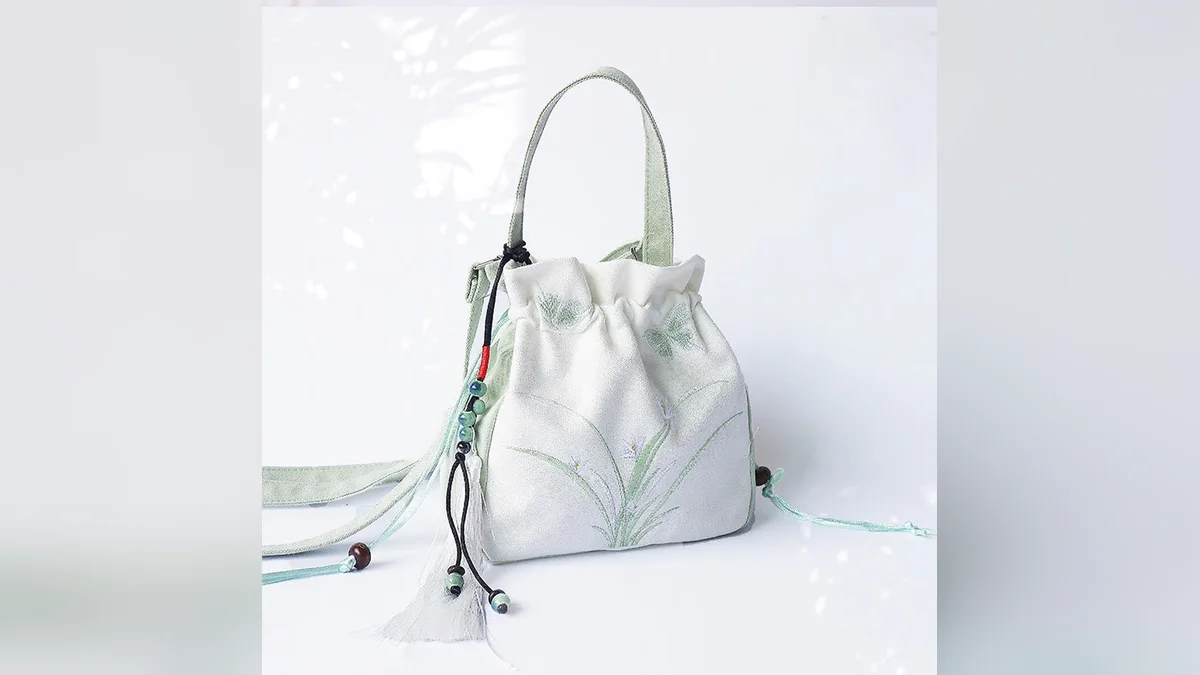
Handmade embroidered flowers canvas bag
This canvas fabric bag measures 20*20cm. Its shoulder bag strap length is 65cm, and its tote bag strap length is 8cm. It has an adjustable strap, a strap closure, one main pocket, one hidden pocket, and one back zipper pocket. Options include Blue White Lotus 20*20cm and Pink White Cherry Blossom 20*20cm. The stated weight is 200g, and the package contains one bag.
Tibetan handmade embroidered camellia crossbody bag
This canvas fabric crossbody bag comes in Blue Camellia and Red Camellia options. It measures 33*28cm and has a 130cm non-adjustable strap. Its internal structure consists of one main pocket. The stated weight is 190g, and the package contains one bag.
Handmade embroidered plum flowers canvas bag
This canvas fabric bag has size specifications of 17*19cm / 20*23cm, with dimensions identified in the option names. Examples include Dark Blue Plum 17*19cm and Green White Tea 20*23cm. It has a 63cm adjustable strap, one main pocket, and one zipper pocket. The stated weight is 200g, and the package contains one bag.
Handmade embroidery pattern canvas bag set
This set uses canvas fabric, chenille fabric, and nylon. The large bag measures 31cm*11cm*38cm (Length*Width*Height); the small bag measures 32.5*20.4cm. The large bag has one main pocket. The small bag has one main pocket and one zipper interior pocket. Specifications state non-adjustable straps, buckle/zipper closures, and a weight of 500g. Blue Flower and Multicolored Flower options are available. The package contains one large bag and one small bag.
Begin with words you can identify, then check the practical details of the jewelry and its carrying arrangement. Keep the inscription’s context, the item’s care instructions, and your chosen handling routine together as the basis for your decision.
Shop the story
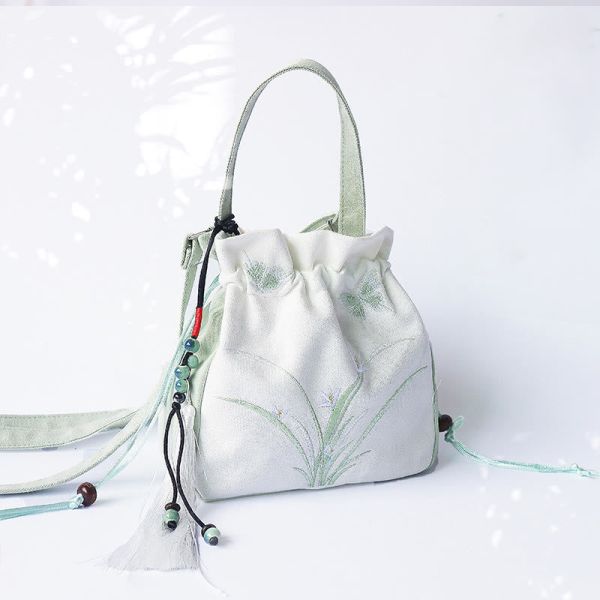 Buddha Stones Handmade Embroidered Flowers Canvas Tote Shoulder Bag HandbagAs low as $26.59 Regular Price $36.93
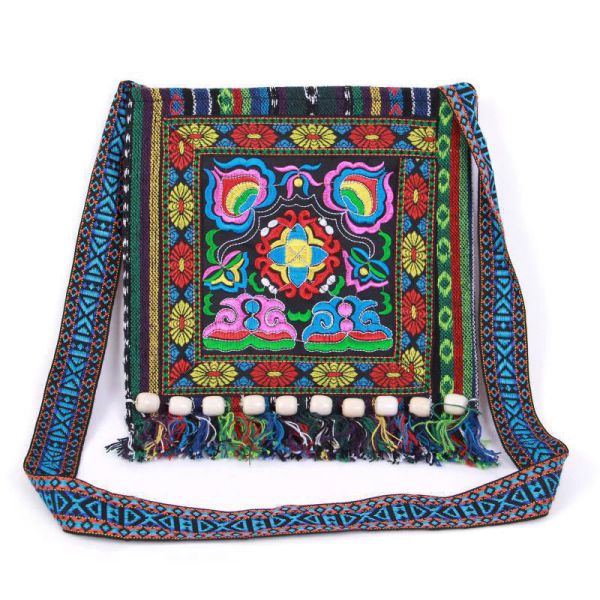 Buddha Stones Tibetan Handmade Embroidered Camellia Canvas Shoulder Bag Crossbody BagAs low as $17.59 Regular Price $24.77
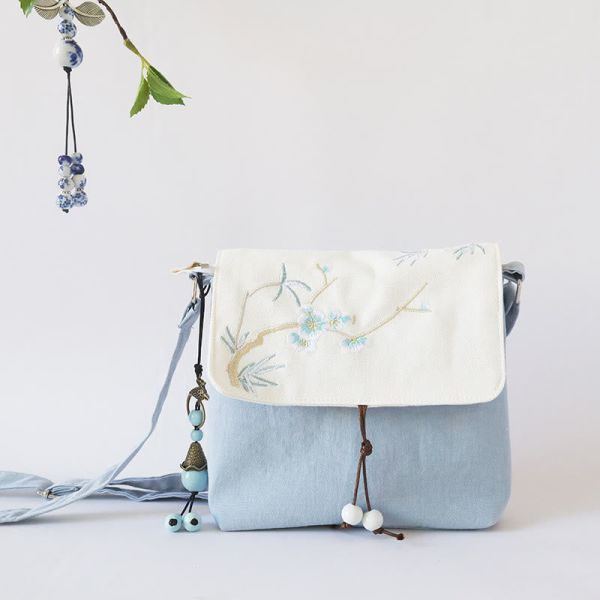 Buddha Stones Handmade Embroidered Plum Flowers Canvas Crossbody Bag Shoulder Bag HandbagAs low as $26.59 Regular Price $36.42
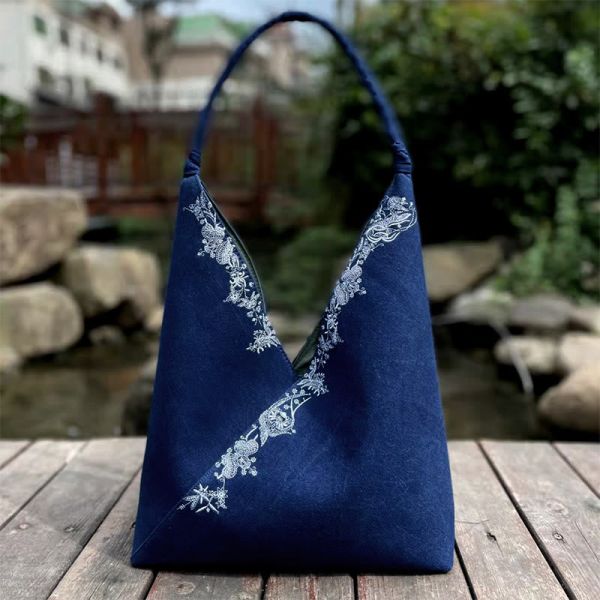 Buddha Stones Handmade Embroidery Pattern Canvas Shoulder Bag Tote Bag SetAs low as $52.59 Regular Price $70.12