Mani Stone Meaning: A Visual Guide to Sacred Script
White Tibetan letters stretch across a dark slab, their strokes following the uneven edge of the rock. The traditional mani stone meaning is devotion expressed through an inscribed prayer, usually Om Mani Padme Hum, the mantra associated with Avalokiteshvara, the bodhisattva of compassion. A mani stone is a sacred inscription on stone, rather than a particular gemstone. Luck or protection may enter personal beliefs about sacred objects, but neither is guaranteed. In this field guide, we focus on the lettering, surfaces, and settings that help you recognize the tradition.
How to recognize the motif
Start with the inscription rather than the outline of the stone. There is no single required silhouette, and a familiar-looking shape alone cannot identify a mani stone. These five cues offer a useful starting point:
- Lettering takes the central position. Tibetan script often stretches across the main face. Its horizontal strokes, stacked forms, and small marks can look ornamental to an unfamiliar reader, but they belong to a writing system. Do not identify the full mantra from a single decorative character.
- The surface may be cut or painted. Letters can sit within grooves, stand above a cut background, or appear in paint. Weathering can soften their edges. A crisp inscription and a worn inscription may belong to the same devotional tradition; appearance alone does not establish age.
- The outline follows the available stone. A flat slab, an irregular rock, or a smaller rounded stone can bear sacred text. Shape is a supporting clue. An unmarked pebble does not become a mani stone simply because it sits beside inscribed examples.
- Repetition may fill the view. Several inscribed stones can appear together in a pile or a long mani wall. Repeated lettering across separate surfaces is especially helpful to notice. The arrangement is a devotional setting, so avoid treating it as a supply of loose souvenirs.
- Other sacred imagery may accompany the text. Some stones include Buddhist figures or additional inscriptions. A lotus-like outline or a figure alone cannot confirm the words. Read a reliable label or ask someone familiar with the script when identification matters.
Mani stone meaning in Tibetan Buddhist tradition
A mani stone gives a prayer a lasting written form. In Tibetan Buddhist practice, making or commissioning sacred inscriptions is traditionally understood as an act of devotion and merit. Here, merit belongs to Buddhist teachings about ethical and religious practice; it is not a measurable property of the rock. This devotional context is described in [Mount Holyoke College Art Museum’s account of mani stones](https://artmuseum.mtholyoke.edu/blog/stories-behind-stones/).
The association with compassion comes through Avalokiteshvara, also known in Tibetan as Chenrezig. Om Mani Padme Hum is associated with this bodhisattva. That connection explains why the inscription matters more than a stone’s color or an attractive arrangement of letters. Our explanation of Om Mani Padme Hum discusses the mantra itself; this guide concentrates on recognizing its presence on stone and related objects.
Keep symbolic wishes separate from practical promises. Descriptions involving luck, wealth, or protection reflect traditional beliefs or hopes, and none of those results is guaranteed by owning an object. Nor does a product name establish that an item has received a religious ceremony. At Buddha Stones, we describe these associations as tradition and identify product details separately.
There is also a useful distinction between a mani stone and the mantra motif. A metal pendant or a cord bracelet bearing the words shares an inscription with the stone tradition. It remains a pendant or bracelet. The shared text does not turn its material into sacred stone.
Where the inscription appears: a field reference
The setting helps explain what you are looking at. Use this table to separate a devotional stone arrangement from another object carrying related lettering. The inscription can be shared even when the object and its use differ.
| Where you see it | How it usually appears |
|---|---|
| Mani walls and stone piles | Multiple inscribed stones gathered together, with separate faces showing repeated sacred text. Some lettering is easy to distinguish; other surfaces may be weathered or partly hidden. |
| Monastery or village entrances | Inscribed stones placed near an entrance or gathered into a nearby arrangement. Their location gives context, although the setting alone cannot identify the wording. |
| Museum displays | An individual inscribed stone shown with a label that may identify its script, imagery, or dedication. A labeled example can help distinguish a mantra from another inscription. |
| Jewelry and carried accessories | The mantra used on a bracelet, pendant, or selected accessory option. These are related uses of sacred lettering, rather than examples of a stone wall or prayer stone. |
At a religious site, follow posted guidance and local custom. Leave stones in their arrangement, avoid stepping over sacred inscriptions, and ask before touching or moving an object. A photograph taken where permitted is a way to record the lettering without disturbing its setting.
Four Buddha Stones pieces connected by the mantra
Our selection below carries Om Mani Padme Hum in product names or option names. Choose by the stated materials, dimensions, and available options. These accessories should be understood through their own descriptions rather than assumed to reproduce a particular mani stone.
Adjustable cord with alloy
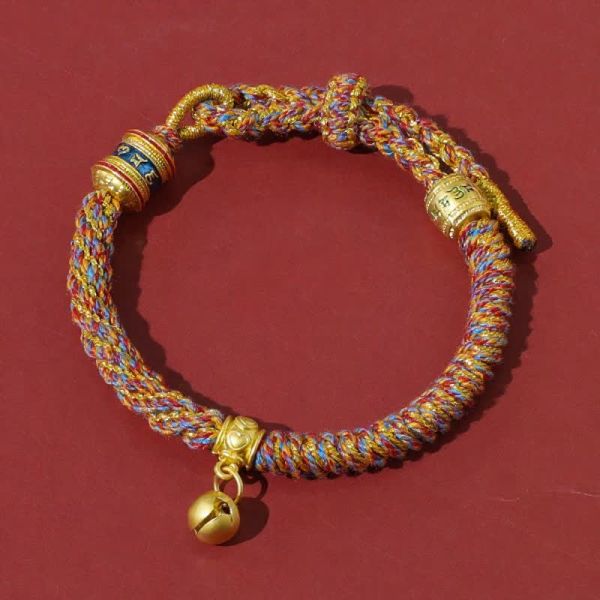
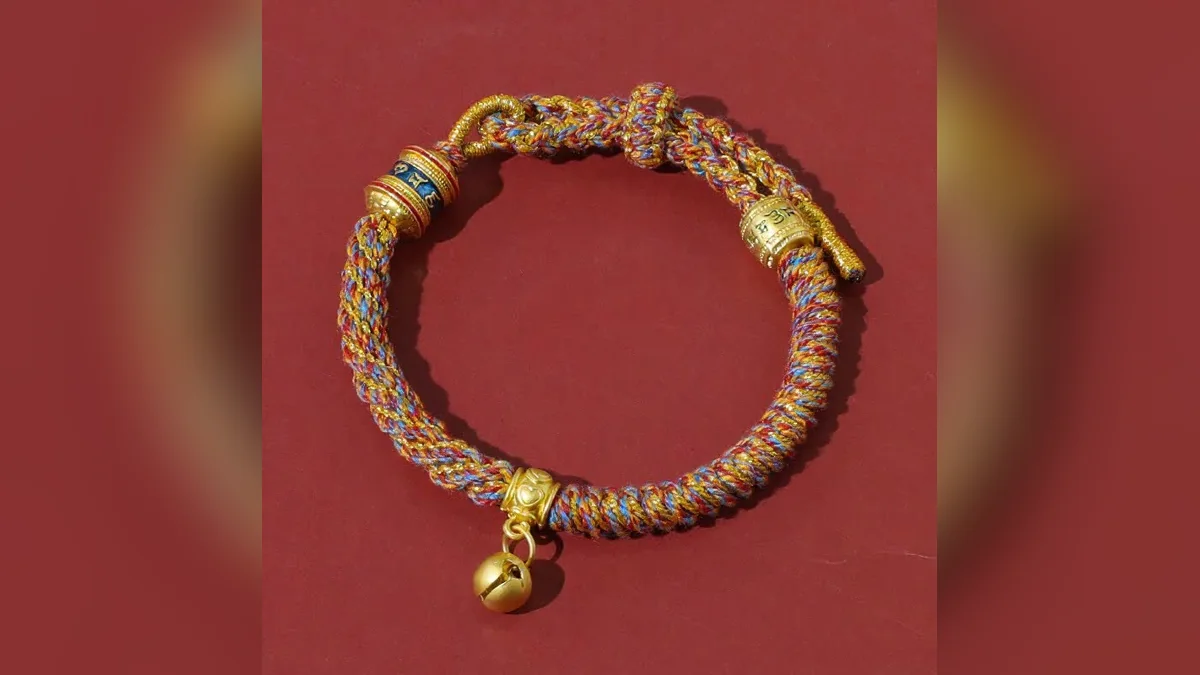
The Buddha Stones Tibetan Om Mani Padme Hum Red String Bracelet combines string and alloy with an adjustable cord. Its wrist circumference specification is 5.5–7.9 in (14–20 cm), and the options are Black, Multicolor, and Red. The full product name includes “Protection,” a traditional wish rather than a promise of safety. For multicolored cords, color tone, shade, and pattern distribution can vary slightly between batches as part of handmade production.
A larger adjustable cord specification
The Buddha Stones Tibetan Titanium Steel Om Mani Padme Hum Bracelet uses string and titanium steel. Its adjustable cord has a wrist circumference specification of 7.1–10.2 in (18–26 cm). Options include Blue Yellow, Dark Colors, Dark Green, Pink Green, Red Blue, Yellow Green, and Yellow Pink. Multicolored cords may differ slightly in tone, shade, and pattern distribution between batches. The package contains one bracelet.
A cylinder pendant in titanium steel
The Buddha Stones Titanium Steel Om Mani Padme Hum Peace Cylinder Necklace comes in Golden and Vintage Silver options. Its material is titanium steel, and the necklace length is Approx. 24 in / 60 cm. The pendant size is Approx. 1.8 in × 0.2 in / 45 × 6 mm. One necklace is included. Those dimensions give you a concrete reference for the cylinder format when comparing it with a bracelet.
A wood keychain with distinct options
The Buddha Stones Linden Wood Lamb Hand-carved Keychain has Om Mani Padme Hum, Peace Tag, and Plum Blossom options. Select Om Mani Padme Hum when that is the motif you want; the option names differ. Materials are linden wood, rope, and peach wood, and one keychain is included. Color, details, and grain may vary, and the wood may develop a patina over time. Avoid water exposure.
Read the lettering before the label
Recognition begins with a small sequence: notice the script, consider the surface, then look at the setting. A mani wall, a museum stone, and a mantra necklace can share sacred words while remaining different kinds of objects. When a photograph does not reveal enough to read the text, leave the identification open. Respect for the inscription includes allowing uncertainty, and remembering that its traditional meaning rests in devotion and compassion rather than a promised result.
Shop the story
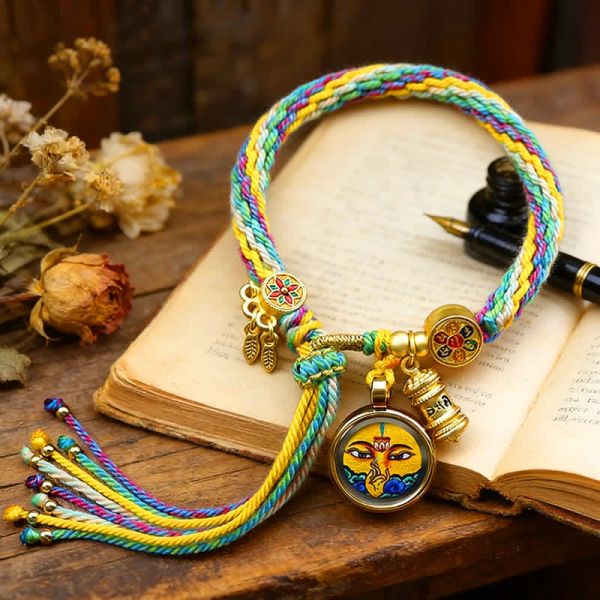 Buddha Stones Tibetan Titanium Steel Om Mani Padme Hum Strengthen BraceletAs low as $25.59 Regular Price $34.12
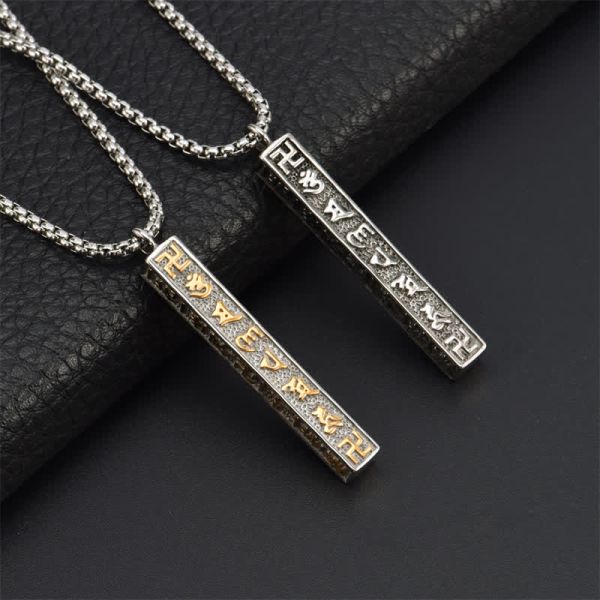 Buddha Stones Titanium Steel Om Mani Padme Hum Peace Cylinder NecklaceAs low as $25.59 Regular Price $34.12
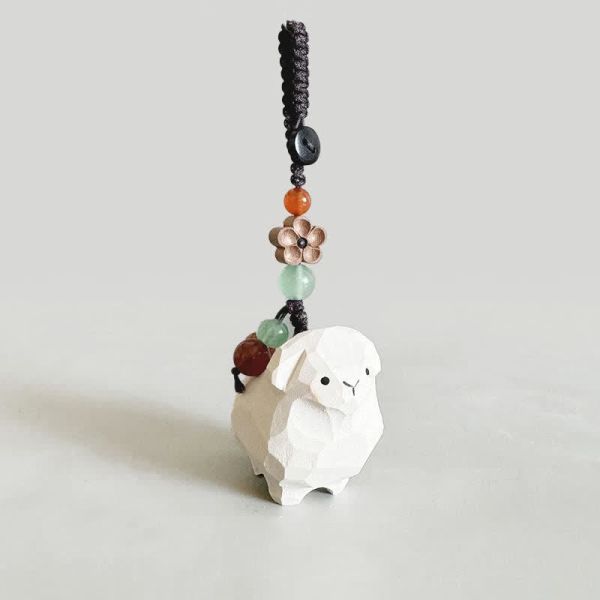 Buddha Stones Linden Wood Lamb Om Mani Padme Hum Plum Bossom Hand-carved KeychainsAs low as $25.59 Regular Price $34.58