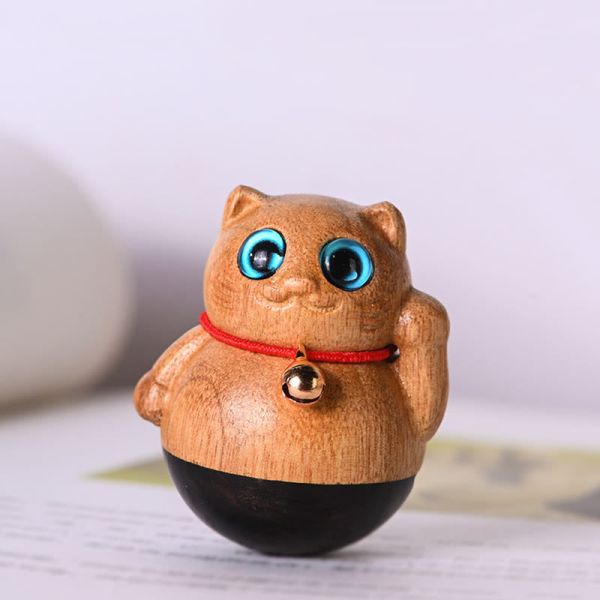
Lucky Cat Meaning: Paws, Colors, and Origin Stories
Behind a shop window, a beckoning cat holds one paw raised as if calling someone in. The lucky cat meaning centers on welcome and a wish for good fortune: maneki-neko, Japanese for “beckoning cat,” is a figurine traditionally displayed by shops and homes. Its raised paw expresses an invitation, while its colors and accessories can carry additional symbolic wishes. These are customs, with no guarantee of luck, wealth, protection, or any other outcome.
From Japanese folk tales to shop counters
The beckoning cat originates in Japan, with its beginnings surrounded by Edo-period folk tales rather than one settled account. One well-known legend is linked to Gotokuji, a temple in Tokyo. In the story, a passing lord follows a temple cat’s beckoning gesture and finds shelter before a storm. Grateful for the encounter, he supports the temple.
Versions differ in their details. The tale gives the raised paw a memorable setting, but it should not be treated as proof of a single inventor or birthplace. The cat’s association with welcome and favorable encounters matters more to understanding the symbol than choosing one story as definitive.
Later, maneki-neko became widespread in Chinese and Southeast Asian shops, as well as businesses elsewhere. That visibility helps explain why it is often mistaken for a Chinese symbol. In Chinese, it is often called zhao cai mao. Its Japanese origin and its adoption in other settings can both be acknowledged.
Coins and gold-colored details can also place the cat beside Chinese wealth imagery. Our post on the Chinese god of wealth explains a separate tradition that can share a shop counter without sharing the cat’s origin story.
Lucky cat meaning: a paw, color, and props decoder
Start with the cat’s own left and right, rather than the side you see when facing it. The following readings are common conventions, not a fixed code followed by every maker, temple, or seller.
- Raised left paw: Traditionally said to invite people or customers. This reading helps explain its familiar place near shop entrances and checkout counters.
- Raised right paw: Said to invite money or good fortune. Read it as an expression of hope for prosperity, rather than a prediction about business results.
- Both paws raised: Often interpreted as combining wishes for people and prosperity. Other interpretations exist, so a particular design’s explanation may differ.
- White: Commonly associated with purity, happiness, or general good fortune. White can also simply be the background color of a cat with colored markings.
- Gold: Commonly assigned a prosperity or wealth meaning. The color reinforces the wealth theme even when the design has no coin or treasure bag.
- Black: Often given a protective meaning in custom and modern descriptions. This is symbolic protection, with no promise that the object prevents harm.
- Red: Often presented as an auspicious color, sometimes with protective associations. Color meanings are assigned by custom and modern sellers, and they vary across settings.
- A gold koban coin: The oval coin recalls historical Japanese currency and reinforces a wish for prosperity. It is a familiar feature of many shop-display cats, though some traditional figures hold no coin.
- A fish or carp: These props can express wishes for abundance or good fortune. The exact reading depends on the design and the tradition behind it, rather than one universal meaning for fish.
- A bell collar: This recalls the appearance of a cared-for domestic cat. Together, the collar and bell give the figure the familiar appearance of a household pet.
- A fortune bag: A bag can suggest gathered treasure or abundance. Like the coin, it adds a visual wish to the figure rather than a promise of financial gain.
In Japan, the beckoning gesture has the palm facing outward or down, with the fingers curling downward toward the palm. The cat’s upright paw echoes that movement. To Western eyes it may look like waving, but the intended message is an invitation to approach.
Giving the cat a place to welcome
A shop window, entrance shelf, or counter suits the cat’s welcoming role. At home, a visible shelf near the entry can carry the same idea. There is no need to turn placement into a formula that promises a particular result.
Pick a steady spot with space around the figure, away from an edge or a frequently opened door. Let its face and raised paw remain visible. If you are giving one as a gift, explain the wish in plain language: welcome for a new home, or good wishes for a business opening. Avoid presenting its color or paw as a condition for success.
Four modern forms at Buddha Stones
The motif now appears beyond the familiar counter figurine. Our listed designs include decorations, a phone hanging, and a keychain. Their practical differences offer a clearer basis for choosing than any promised outcome.
A painted wood decoration
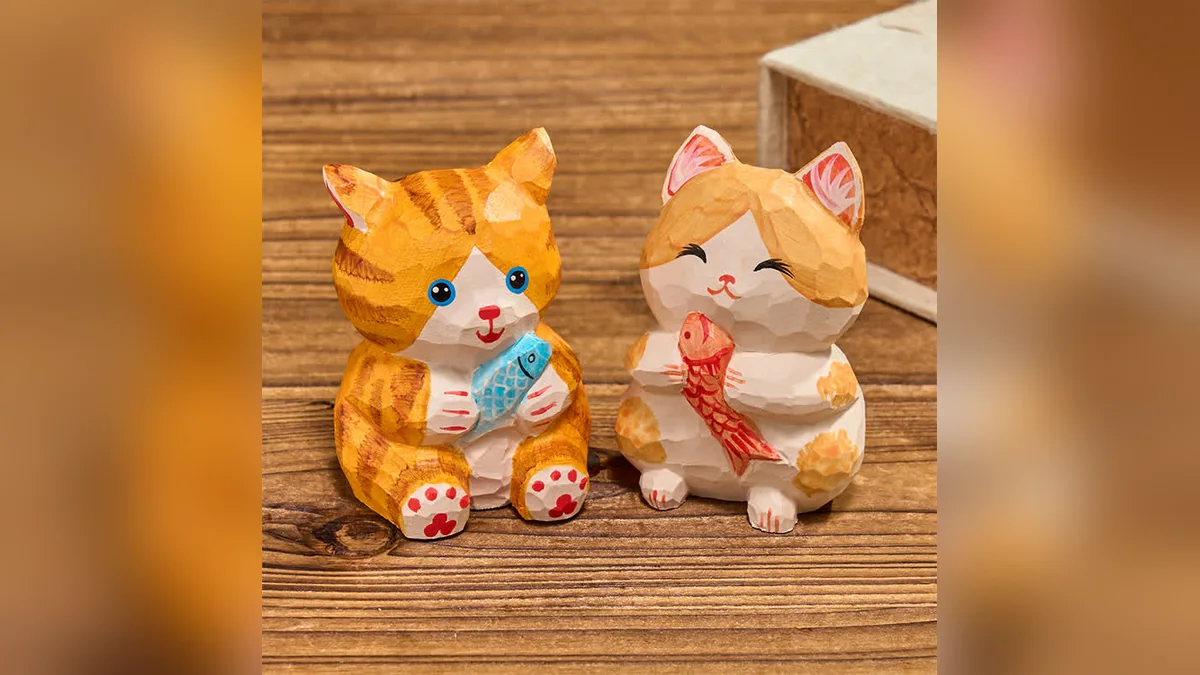
Our Natural Wood Hand Painted Lucky Cat is made of wood and measures approximately 7.5 cm × 5.1 cm / 2.9 in × 2.0 in. Its options are Blue Fish and Orange Fish, the color of the fish each cat holds.
A Phoebe zhennan wood kitten
The Mini Lucky Cat Kitten is a decoration in Phoebe zhennan wood, with listed dimensions of 3.5 × 4.4 cm. Compare those dimensions with the intended display space, especially when arranging it beside other objects on an entry shelf or counter. The kitten format gives the familiar motif a small decorative form.
A beech wood phone hanging
Our Beech Wood Hand Carved Lucky Cat phone hanging uses beech wood and string. The strap is approximately 4.02 in / 10.2 cm, and the charm measures 2.24 × 1.02 in / 5.7 × 2.6 cm. The product page advises avoiding water exposure and notes that the wood may develop a richer patina with wear. Keep that care instruction in mind when deciding where to attach it.
A brass cat keychain
The Brass Lucky Cat Chinese Coin keychain lists copper brass and braided cord as its materials. Its approximate size is 2.4 cm × 2.9 cm / 0.9 in × 1.1 in, and its approximate weight is 25 g. Options include Coins, Red Beads Coins, Red Cord Coins, Black Red Bead Coins, and Auspicious Cloud Gourd. Check the selected option rather than assuming every version has the same accompanying details.
Reading the wish without making a promise
The lucky cat meaning remains approachable even when designs vary. Read the paw first, then consider the color and props as additional layers of custom. For a modern accessory, also check its dimensions, attachment, and stated care needs.
A cat beside a shop register can express a wish for a flourishing business; one near a home entrance can express welcome. Neither requires a claim about what happens next. The raised paw gives that wish a visible form: an invitation, held open.
Shop the story
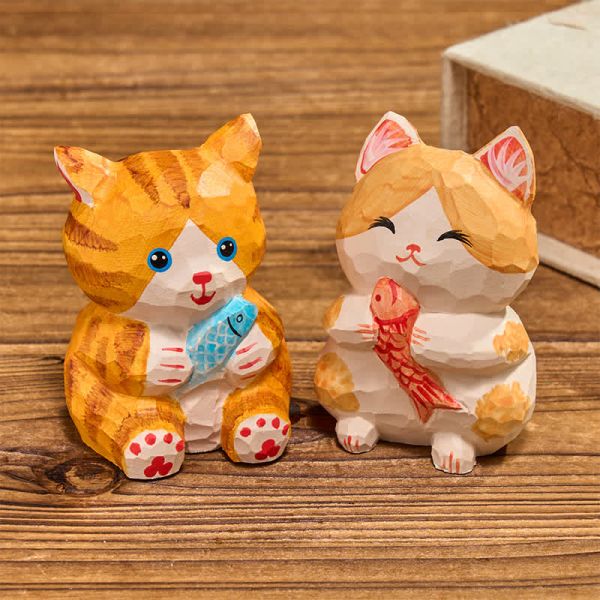 Buddha Stones Natural Wood Hand Painted Lucky Cat Wealth Cute Animal DecorAs low as $25.59 Regular Price $34.12
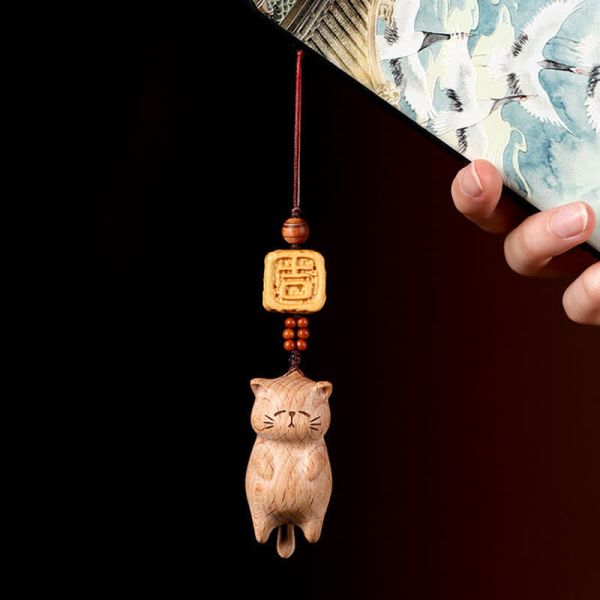 Buddha Stones Beech Wood Hand Carved Lucky Cat Phone Hanging DecorationSpecial Price $25.59 Regular Price $35.54
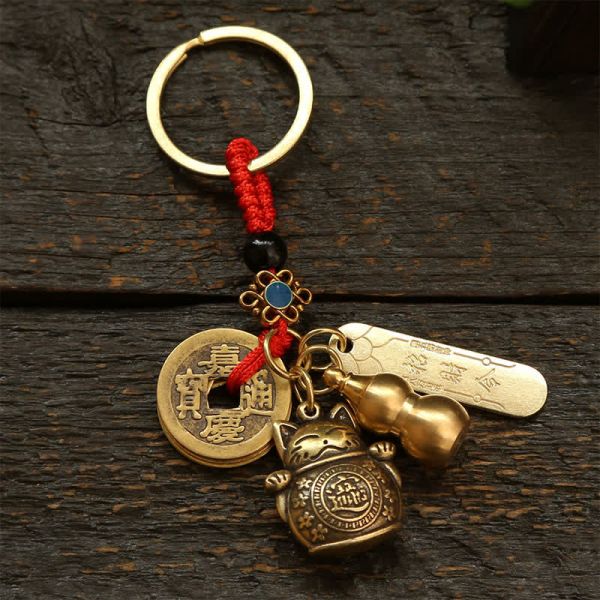 Buddha Stones Brass Lucky Cat Chinese Coin Wealth KeychainsAs low as $25.59 Regular Price $34.12