Lotus Symbolism: A Visual Guide to Floral Motifs
A lotus motif may spread its pointed petals across a bag panel or stack them beneath a seated figure. In Buddhist tradition, lotus symbolism commonly expresses purity and awakening. In decorative art, it can also carry auspicious wishes. Associations with luck or wealth belong to belief; an object offers no guarantee of either. This field guide focuses on what you can see: the petal arrangement, the surrounding leaves, the companions in the design, and the difference between a flower pictured alone and one used as a symbolic base.
How to recognize the motif
Start with the whole outline, then follow the details toward the center. A simplified flower may leave out its stem or leaves, so one feature alone rarely settles the identification. Look for several of these cues together:
- Petals arranged around a center. A lotus viewed from above often has a balanced, radiating shape. Overlapping petals form rings, while a side view may resemble an open cup.
- Tapered petal tips. Many decorative lotus designs use pointed or gently tapering ends. The petals tend to read as separate shapes, even when the flower is reduced to an outline.
- A bud beside an open bloom. A closed, upright bud can help identify a waterside floral scene. Follow its stem to see how it relates to nearby flowers and leaves.
- Broad leaves and long stems. Rounded leaves, sometimes shown with radiating veins, provide useful context. In a small embroidered panel, a leaf may appear as a simple green curve.
- A repeated petal base. Beneath a figure or decorative object, rows of upward or downward petals can represent a lotus seat. The flower is serving as a supporting form, rather than a botanical scene.
Compare the structure before relying on color. A peony design often emphasizes densely gathered, ruffled petals; a magnolia motif may show broad blossoms on a branch. Stylized flowers can share features, so keep an uncertain identification open. A product option named for a lotus is useful evidence, but it does not mean every option on that page depicts one.
Lotus symbolism in tradition: read the setting
The familiar Buddhist association begins with the contrast between muddy growing conditions and the flower that opens above the water. Traditionally, this makes the lotus an image of purity and awakening. In art, the flower can stand for an ideal or teaching without suggesting that the object bearing it produces a particular result.
A lotus beneath a Buddhist figure has a different role from a lotus stitched into a floral border. The first belongs to a religious composition; the second may be decorative, symbolic, or both. Context gives the motif its emphasis. For a closer account of the religious subject, our lotus flower meaning in Buddhism article covers that tradition separately.
In Chinese decorative arts, lotus flowers also appear among fish, birds, and other plants in auspicious compositions. Read these as combinations within a cultural tradition, not as a fixed code attached to every modern pattern. A fish beside a flower does not establish the maker’s intended message unless the design is explained.
Traditional associations with luck or wealth express cultural wishes. Neither is guaranteed by a lotus design.
Color deserves the same care. Religious artwork may use flower colors with particular associations, but a blue or gray bag option can simply describe its appearance. We keep those two kinds of description separate: the tradition supplies cultural context, while the product details identify the available design.
Where the flower changes shape
Scale and surface affect which details remain visible. Use this quick reference to locate the motif before interpreting it.
| where you see it | how it usually appears |
|---|---|
| Bag panels and other textiles | A bloom, bud, or waterside arrangement worked into a larger floral pattern. |
| Buddhist figures and images | A petal seat beneath the figure, sometimes shown in stacked rows. |
| Jewelry motifs | A compact outline or radiating flower, with small details simplified to suit the surface. |
| Decorative vessels and household objects | A central blossom, a repeated border, or petals following the object’s curved shape. |
Orientation can change your reading. A side view emphasizes the cup of petals; a view from above emphasizes symmetry. Repetition may turn the same basic flower into a border. Before assigning meaning, check whether you are seeing a complete blossom, a single petal, or a pattern derived from one.
Four bag designs to compare by motif and construction
Our bag selection shows why the option name and construction details matter alongside the floral theme. Compare the design you want with the stated dimensions and strap type. A lotus reference in a product title does not identify the flowers on every available version.
A small nylon format with lotus options
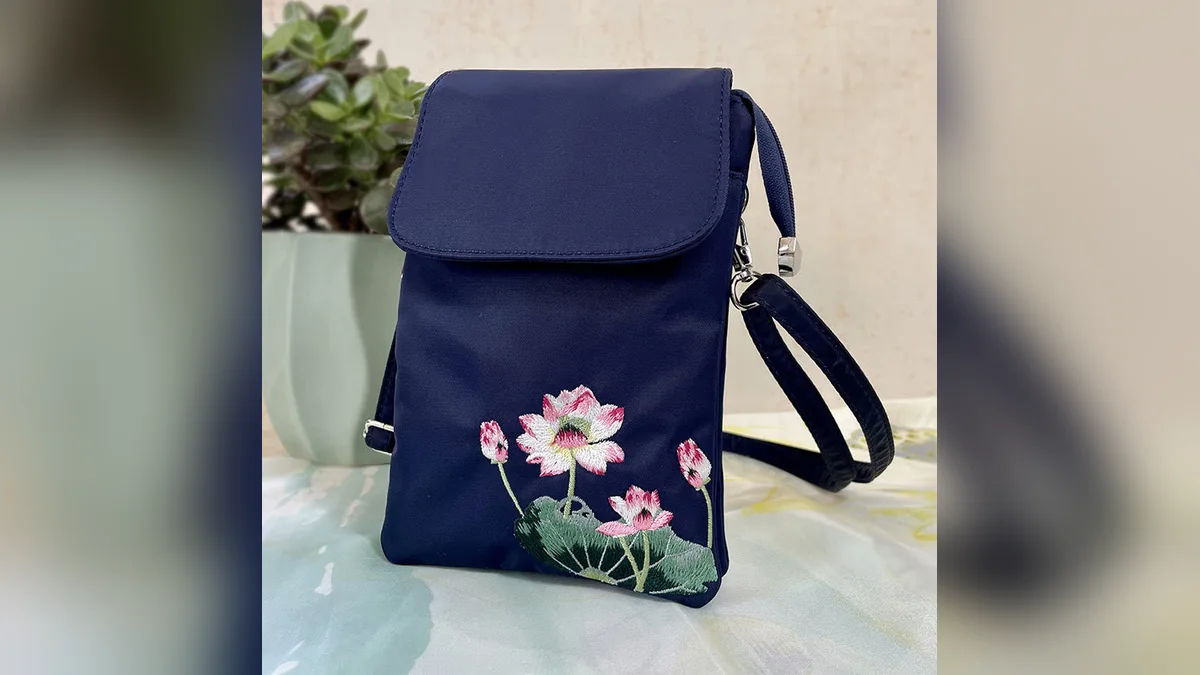
The Lotus Flowers embroidered crossbody bag uses nylon fabric and measures 20*13cm. Its 120cm strap is adjustable, and its closure types are buckle and zipper. Blue Four Lotus, Blue Lotus Dragonfly, and Gray Lotus Dragonfly are among the options. The internal structure has one main pocket, two interior compartments, and one additional pocket. Compare the named lotus versions if you want the flower to be part of the design.
A canvas tote with fixed straps
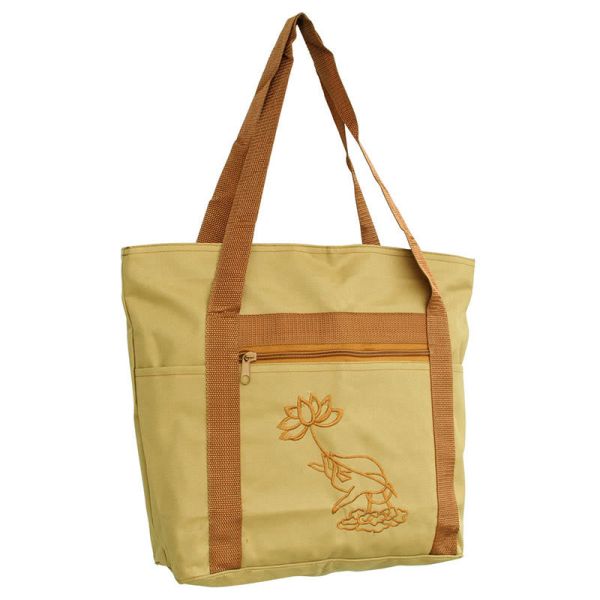
The Lotus Embroidery canvas shoulder tote measures 31*12*31CM (Length*Width*Height). Its strap dimensions are 68*6cm (Length*Width), and the straps are non-adjustable. The canvas fabric bag has a zipper closure, one main pocket, one interior zipper pocket, one front zipper pocket, and one back zipper pocket. For your comparison, the fixed straps are a useful distinction from the adjustable strap on the nylon design.
A Hanfu bag with several floral subjects
The Luck Embroidery Hanfu crossbody bag uses polyester, with a strap length of 100-110cm. Koi Fish Lotus is one option; other options depict different subjects. The size specification applies specifically to Summer Lotus: 22.3*16cm. Do not treat that measurement as a confirmed size for another option. The word “Luck” in the product name expresses a traditional wish. It does not establish a promised result.
A cotton linen bag with two lotus themes
The Butterfly Lotus cotton linen bag combines cotton linen fabric with ceramic bead accessories. It measures 20*20*7cm, with a 130cm shoulder bag strap that is adjustable. Its structure includes one main pocket and one back zipper pocket, with a strap closure. Green Koi Fish Lotus and Light Blue Butterfly Lotus are lotus-themed options. Their names distinguish the accompanying subjects without assigning them a guaranteed symbolic effect.
Keep the flower and its context together
When you encounter a lotus motif, identify its shape first, then its setting. Notice whether the petals form a seat, a single bloom, or part of a larger scene. On a bag, check the selected option before drawing conclusions from the title. The flower can carry a traditional meaning and still function as an ordinary decorative choice. You can appreciate both by keeping the visible design, the cultural association, and the stated product facts distinct.
Shop the story
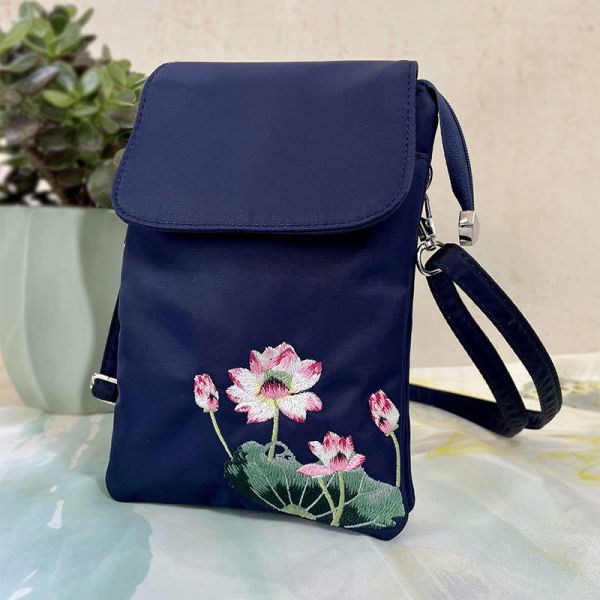 Buddha Stones Waterproof Handmade Embroidered Lotus Flowers Crossbody Bag Shoulder Bag Cellphone BagAs low as $25.59 Regular Price $34.12
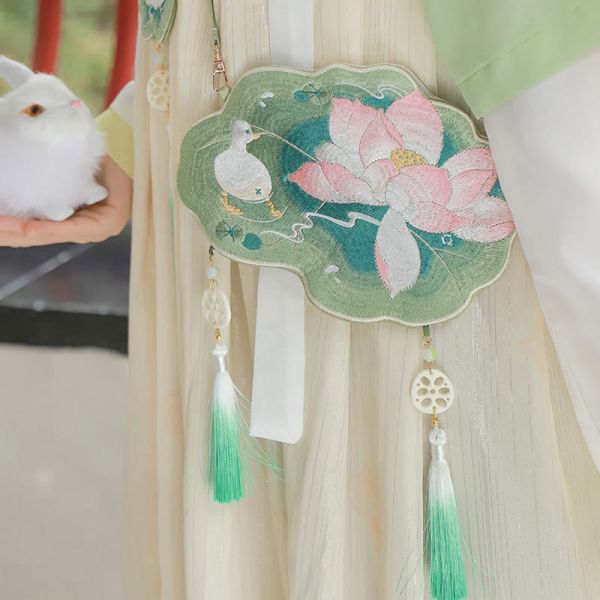 Buddha Stones Luck Embroidery Lotus Koi Fish Rabbit Flower Hanfu Bag Crossbody Bag Shoulder BagAs low as $29.59 Regular Price $39.45
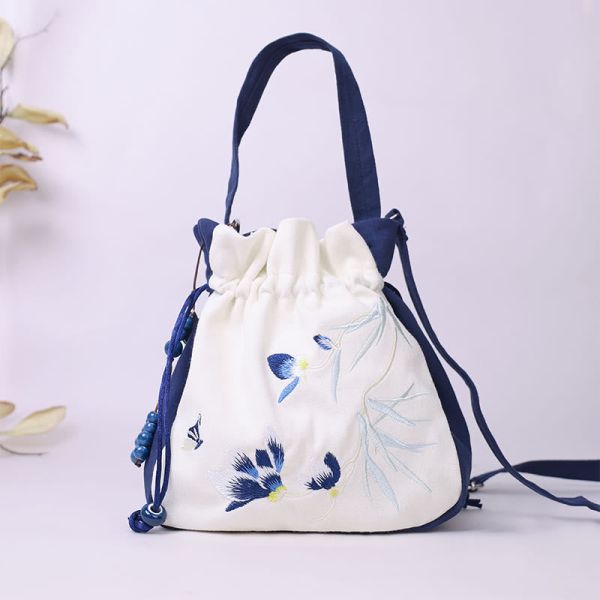 Buddha Stones Embroidered Butterfly Lotus Magnolia Cotton Linen Tote Crossbody Bag Shoulder Bag HandbagAs low as $25.59 Regular Price $35.05