Liuli vs Crystal Glass: How to Compare and Choose
Read the material field before comparing product names. For liuli vs crystal glass, the practical distinction is terminology: liuli refers to decorative glass in a Chinese cultural context, while crystal glass describes glass rather than natural quartz. The labels can overlap; neither alone establishes a particular recipe or production method. We will show you how to compare material descriptions, separate components, check fit or display dimensions, and choose using details you can confirm.
Step 1: Read liuli vs crystal glass as material labels
Start with the specifications beneath the product name. Copy the material wording into a short comparison note, keeping terms such as “glass bead,” “liuli glass bead,” and “crystal glass” separate. Do not silently replace one with another because the photos look similar.
Liuli and crystal glass are not necessarily opposing categories. A decorative glass object may be described through cultural terminology, appearance, or composition, and a short retail description may not answer every question. Neither label by itself proves a place of origin, a particular maker, or a specific glass formula. If composition is central to your decision, look for an explicit statement rather than supplying the missing detail yourself.
Step 2: Separate glass from the other components
Read a mixed-material description component by component. A bracelet can combine glass beads with stone beads and metal parts. A decorative object can combine several named materials. The name of one component does not automatically describe the rest of the object.
Keep “crystal glass” separate from names such as clear quartz or amethyst. Glass and those minerals are different materials, even when their colors or transparency resemble one another. Likewise, a general word such as “crystal” in a title is not enough to identify a component. Use the detailed material field to decide what the seller actually specifies.
Our mala bead materials guide provides related reading when you need to compare bead materials beyond glass.
Step 3: Compare appearance without treating it as proof
Use photographs to compare visible design choices: color, transparency, shape, and the arrangement of components. Check several views if they are available. Look at the outline as well as the close-up, since an appealing detail may occupy only a small part of the complete design.
Photographs cannot reliably establish glass composition or manufacturing method. Lighting and backgrounds also affect how color appears on a screen. Treat bubbles, cloudiness, and strong reflections as visual features to examine, rather than automatic evidence of age, quality, or authenticity.
Choose the appearance you prefer, then return to the written specifications. Keep that order clear: the image helps you assess the design; the material description tells you what has been disclosed.
Step 4: Check fit and placement before choosing
Decide how you intend to use the object before comparing measurements. For a bracelet, distinguish wrist circumference from bead size. These answer different questions: one concerns the wrist measurement supplied for the product, while the other concerns the beads. Do not assume either measurement gives the bracelet’s overall length.
Compare your wrist measurement with the product information and consider your preferred fit. Our bracelet selection guide can help you organize those choices.
For decor, check width, height, and depth where supplied. Mark the proposed space on paper to judge the footprint. Leave room to handle the object without crowding nearby items. A product name cannot replace measurements, and a photograph cannot establish scale by itself.
Step 5: Match care decisions to confirmed information
Check for care instructions that address the complete object, including any metal, string, or stone components. A cleaning method suitable for plain glass may be unsuitable for another part of a mixed-material design. Avoid applying a single material’s care advice to the whole piece without checking.
Handle glass carefully and examine an object for damage before using it. Do not use scratching, tapping against another object, or sudden temperature changes as identification tests. These actions can damage the piece and still leave its composition uncertain.
A candle-holder title also leaves practical questions unanswered. Confirm candle compatibility and use instructions before adding a candle. Decorative material descriptions alone do not establish suitability for heat exposure.
Mistakes to avoid when comparing the labels
- Ranking by the name alone. A more elaborate label does not establish better quality. Compare disclosed materials and the features relevant to your use.
- Assuming glass is quartz. Keep crystal glass and named mineral components distinct in your comparison notes.
- Assigning every material to every option. A product-level material field may cover several choices. Check the selected option before drawing conclusions.
- Reading symbolism as a promise. Wealth, luck, blessing, and protection language expresses traditional wishes. Such names do not guarantee results.
- Overlooking variation notes. Read any stated differences in color, shape, size, or appearance before deciding how closely a photograph must match.
Four Buddha Stones products to compare by their specifications
Glass bead and zinc alloy bracelet
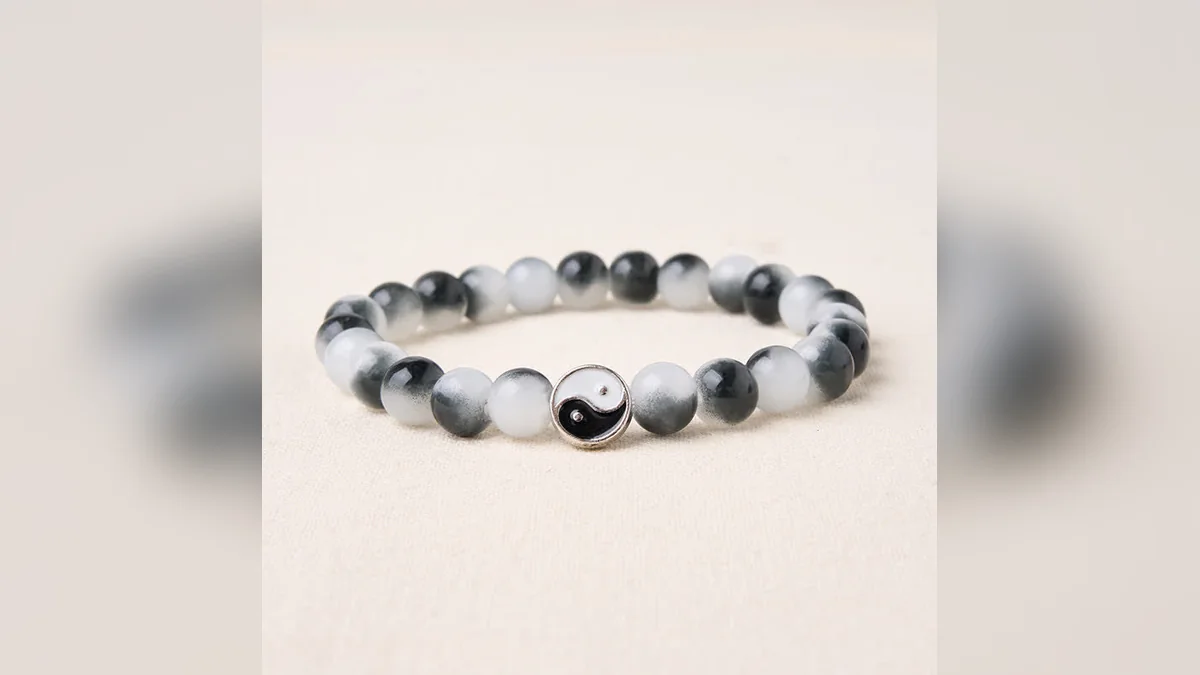
Our Alloy Flat Bead and Glass Yin Yang Two-Tone Balance Bracelet contains Glass Bead and Zinc Alloy. The band type is Premium Elastic String, and the wrist circumference is 5.9–6.3 in (15–16 cm). Bead size is Approx. 8mm. The package includes 1 × Bracelet. SKU: BS2214342B321. The material specification says glass bead; it does not identify that glass as liuli or crystal glass.
Lotus flower crystal glass decoration
The Lotus Flower Crystal Candle Holder has Crystal Glass as its specified material. Its item type is Decorations, its size is 6.5*8cm (Width*Height), and its weight is 524g. Color options are Blue, Colorful, Gold, Green, Purple, Red, and White. SKU: BSP-BS37921D085D.
Wire wrapped tree ornament
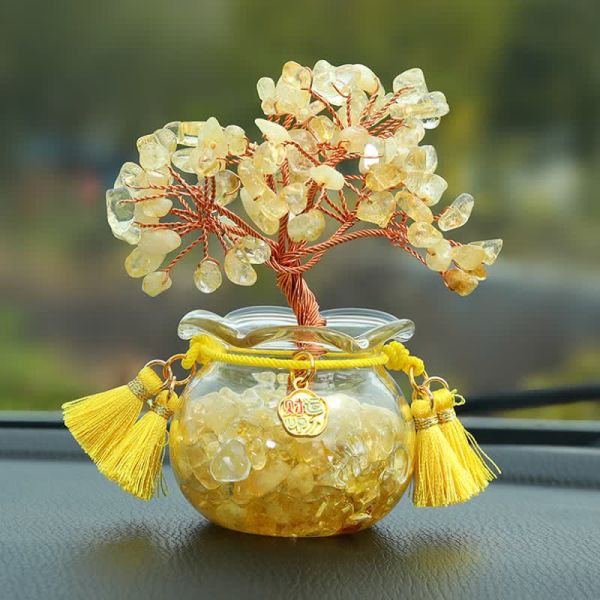
Our Wire Wrapped Crystal Money Tree Dashboard Ornament has a material field containing Citrine, Amethyst, Green Crystal, Rose Quartz, Clear Quartz, Red Agate, Liuli, and Iron Wire. Its size is Approx. 5 cm × 5 cm × 10 cm (L × W × H) / 1.9 in × 1.9 in × 3.9 in (L × W × H). Weight: Approx. 117 g / 128g. The package includes 1 × Decor Piece. Color, shape and size will vary. SKU: BSP-BS229236471D4. Wealth and fortune wording in the full product name expresses traditional wishes; it does not guarantee prosperity.
Candy agate and liuli glass bead bracelet
The Candy Agate Liuli Glass Bead Love Shell Butterfly Charm Bracelet combines Candy Agate, Liuli Glass Bead, and Copper Alloy. Its band type is Premium Elastic String. Wrist circumference is 5.9-6.3 in / 15-16cm, and bead size is Approx. 8mm. The package includes 1 × Bracelet. The natural materials may show slight variations in color, details, and overall appearance. SKU: BS2252416BEDD.
Make your final liuli vs crystal glass comparison from the material wording, the measurements relevant to your use, and any stated variations. Leave unanswered details open rather than guessing. A clear choice begins with knowing which information is confirmed and which details still need clarification.
Shop the story
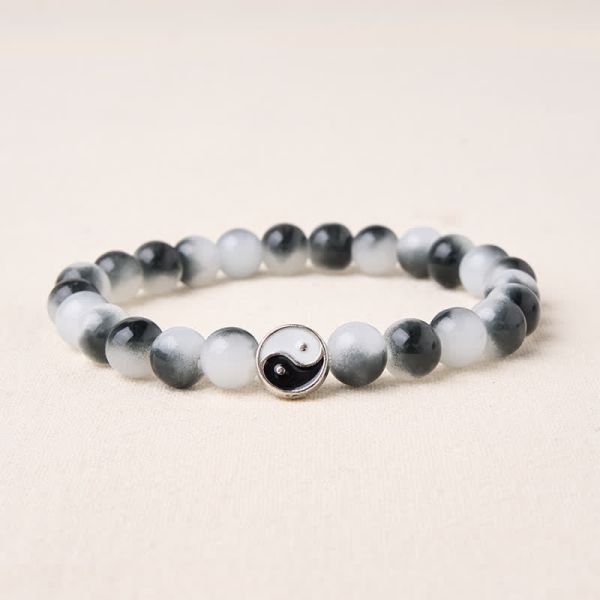 Buddha Stones Alloy Flat Bead and Glass Yin Yang Two-Tone Balance BraceletSpecial Price $25.59 Regular Price $35.54
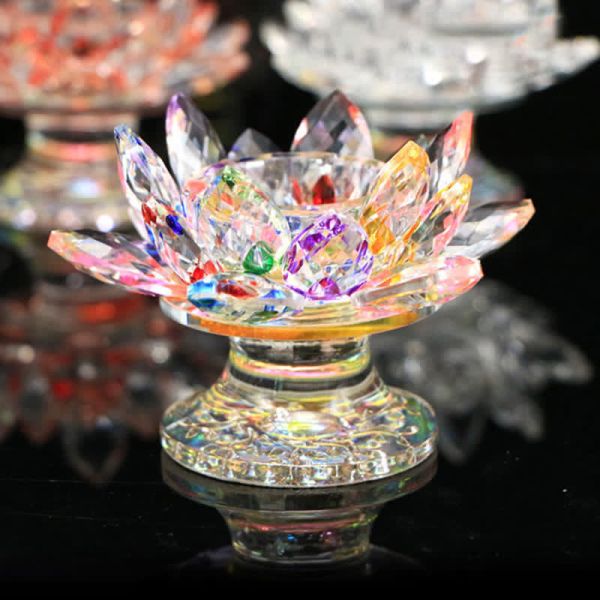 Lotus Flower Crystal Candle Holder Home Office Offering DecorationAs low as $54.59 Regular Price $75.82
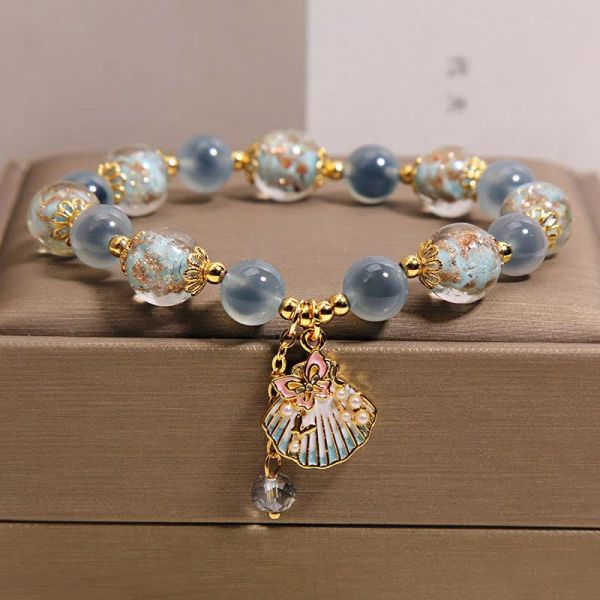 Buddha Stones Candy Agate Liuli Glass Bead Love Shell Butterfly Charm BraceletSpecial Price $26.59 Regular Price $35.93