
Lava Stone Care: Choose, Clean, and Store Your Beads
The material line beneath a lava rock bracelet matters as much as its bead size: metal details and elastic affect how you should clean and store it. Lava stone care means removing surface dirt gently, limiting moisture around the finished jewelry, and checking its string and fittings before wear. This guide helps you choose a suitable design, read its sizing information, and decide when a simple wipe is enough or when to stop wearing a piece for repair.
Start with these questions
- What touches the lava rock? Check for other stones, metal components, and string before choosing a cleaning method.
- What needs removing? Loose dust needs less attention than lotion residue caught around a bead hole.
- Which measurements are provided? Separate bead diameter, bracelet inner circumference, and recommended wrist measurements before selecting an option.
- Will your routine involve water or lotions? Plan to remove the jewelry before washing, swimming, or applying personal care products.
- Is the string still sound? Gaps, fraying, or elastic that no longer returns to shape call for inspection before further wear.
Let the complete material entry guide you
Lava rock commonly has a pitted surface, so dust and residue can settle into small openings. Start with gentle surface cleaning. Avoid digging into the texture with a pin, scraping at marks, or sanding a bead to make it look smoother.
A mixed-material bracelet needs a method suitable for its entire construction. A cleaner intended for one metal may be unsuitable for nearby stones or string. Metal polish can also leave residue in textured beads. Keep polishing compounds away from lava rock unless you have instructions specifically approving their use on the finished jewelry.
Read the specification beneath the product name. A name can describe a style or traditional theme, while the material entry gives you the information needed for care. If the string material or a surface treatment is not identified, keep your cleaning method conservative.
Use bead size and fit as separate decisions
Bead size describes the beads, not the space available for your wrist. Smaller beads can suit someone seeking less visual bulk; larger beads create a more prominent row. Compare the actual size stated for the product rather than estimating it from a photograph.
For fit, match your wrist measurement to the product’s recommended wrist measurements. Bracelet inner circumference is a different measurement, and a total length does not tell you how many wraps will fit. Do not calculate a finished fit from bead count alone.
On elastic designs, stretch is useful for putting the bracelet on. Choose a size that rests comfortably without remaining stretched. Roll it over your hand gently, and remove it before an activity that could catch the string or pull the beads apart.
A practical lava stone care routine
Choose the least involved step that addresses the dirt you can see. Frequent gentle attention is preferable to letting residue build up and then using an aggressive cleaner.
- Inspect before cleaning. Look around bead holes, between neighboring beads, and at any visible string. If a bead is cracked or the string is damaged, set the piece aside for repair.
- Remove loose dust. Wipe with a clean, dry, lint-free cloth. A very soft, dry brush can reach shallow surface openings. Work gently and avoid pulling on the string.
- Address surface residue. If a dry wipe is insufficient, use a cloth lightly dampened with plain water. Wipe the affected area without saturating the bead holes, string, or metal connections.
- Dry before putting away. Blot away moisture with a dry cloth, then leave the jewelry in a ventilated place away from direct heat. Wait until the beads and spaces between them are dry before storage.
Skip soaking, steam cleaners, ultrasonic machines, bleach, and abrasive pastes unless the maker explicitly approves a method for the complete piece. Do not use a hair dryer to hurry drying. If a mark remains after gentle wiping, seek material-specific advice before escalating to stronger products.
For storage, use a clean compartment or pouch that prevents rubbing and tangling. Keep the jewelry away from damp surfaces and avoid hanging an elastic bracelet under tension. Put it on after lotions and perfumes have dried, and take it off before washing or sleeping. Our gemstone jewelry cleaning guide offers broader cleaning guidance; the instructions for your particular piece should guide the final choice.
Products matched to care and fit priorities
For a 6mm bead option: our Buddha Stones Natural Lava Rock 108 Beads Protection Bracelet has 108 lava rock beads and is unisex. Its specifications identify it as a bracelet but do not provide a wrist measurement, so bead count alone cannot confirm fit. The word Protection expresses a traditional wish. It does not guarantee personal safety.
For a choice of inner circumferences: the Buddha Stones Vintage Lava Rock Copper Support Bracelet combines lava rock and brass, with premium elastic string. Its chart pairs a 15cm inner circumference with a 14-14.5cm wrist, 16cm with 15-15.5cm, 17cm with 16-16.5cm, and 18cm with 17-17.5cm. Use those pairings when choosing an option. The material specification identifies brass despite Copper appearing in the name.
For a mixed-material design: the Buddha Stones Tiger Eye Lava Rock Hematite Beads Strength Bracelet combines tiger eye, lava rock, hematite, and copper. It has 8mm beads and Premium Elastic String, with a recommended wrist circumference of 6.3–6.7 in (16–17 cm). Color, details, and overall appearance may vary because of its natural materials. Keep cleaning gentle around the mixed components.
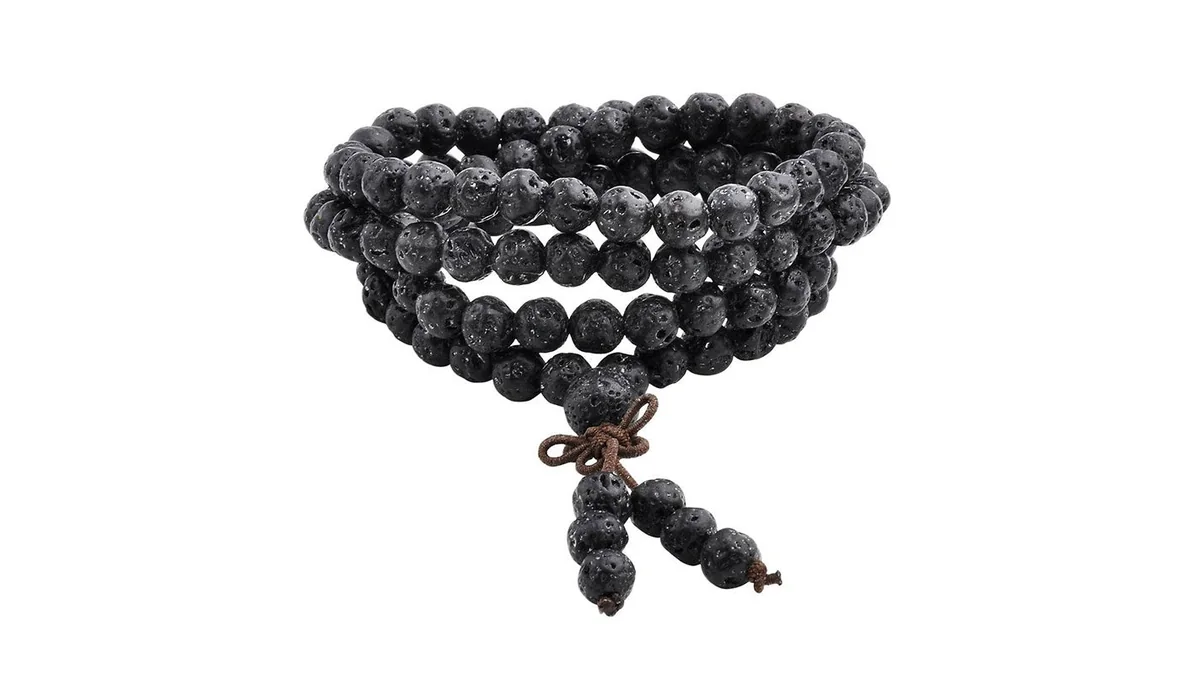
For a bracelet, necklace, or mala format: the Buddha Stones 108 Natural Lava Rock Beads Prayer Mala Bracelet Necklace has lava rock beads measuring 0.31 IN(8MM). Its specifications name those three item types without giving a finished length. Check fit information before assuming how it will sit as a necklace or wrap around a wrist.
Questions that come up during care
Can I wash lava rock jewelry under running water?
For a finished piece with string, metal, or other stones, start with a lightly dampened cloth. Running water can wet parts that are difficult to dry thoroughly. Remove the jewelry before showering or swimming. If it gets wet accidentally, blot it and let it dry fully before storage.
Should I put fragrance oil on the beads?
A pitted surface does not establish that a finished bracelet is intended for oil. The product specifications discussed here do not confirm fragrance compatibility. Avoid applying oil without instructions for that particular piece, including its string and other components. Oil can leave residue that is difficult to remove from textured surfaces.
How can I tell when cleaning is no longer enough?
A cracked bead, frayed string, loose fitting, or stretched elastic needs attention beyond wiping. Stop wearing the piece so a failure does not scatter the beads. Keep any detached components together and ask a jewelry repair professional to assess the construction before it is worn again.
Shop the story
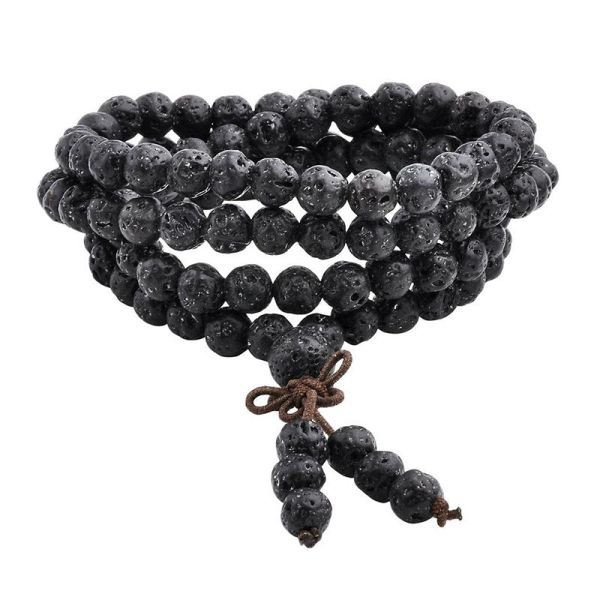 Buddha Stones Natural Lava Rock 108 Beads Protection BraceletSpecial Price $25.59 Regular Price $36.40
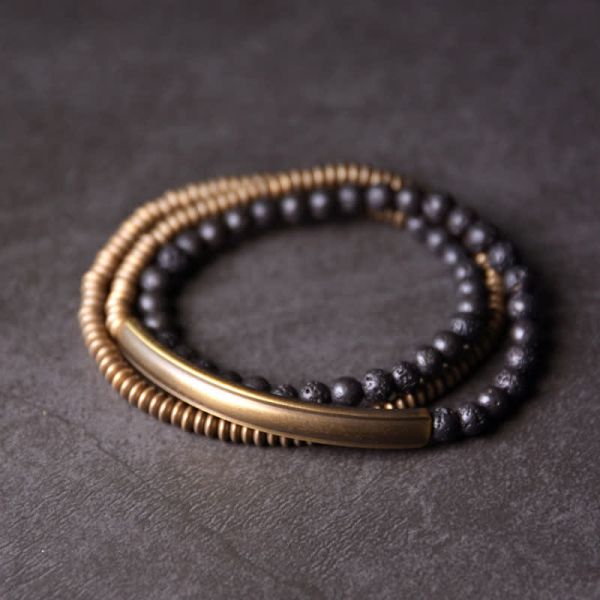 Buddha Stones Vintage Lava Rock Copper Support BraceletAs low as $58.59 Regular Price $82.52
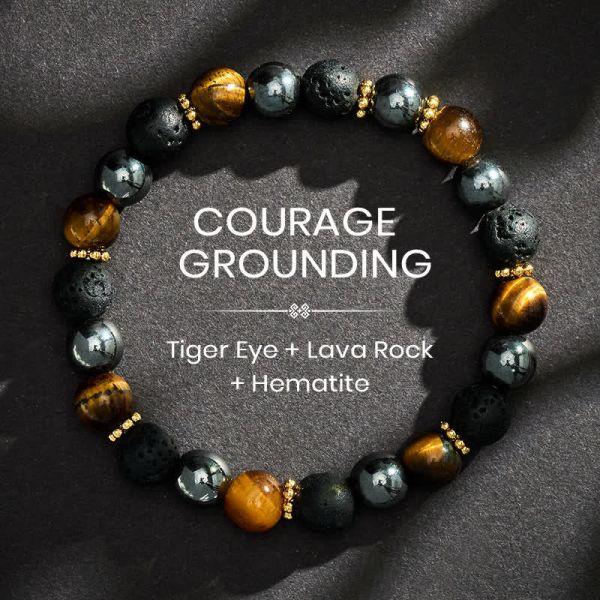 Buddha Stones Tiger Eye Lava Rock Hematite Beads Strength BraceletSpecial Price $25.59 Regular Price $35.05
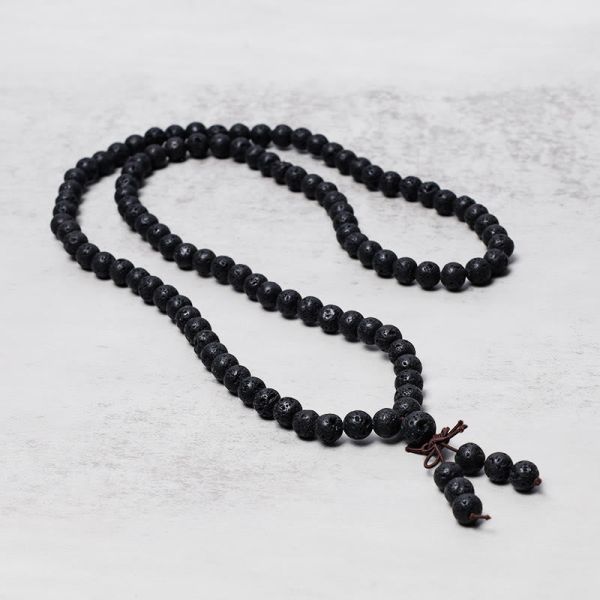 Buddha Stones 108 Natural Lava Rock Beads Prayer Mala Bracelet NecklaceSpecial Price $25.59 Regular Price $36.56