
Koi Symbolism in Festival Cloth and Everyday Jewelry
A carp reached the foot of the Dragon Gate waterfall and leaped toward the crest. In the Chinese legend, a fish that clears the falls becomes a dragon. Koi symbolism traditionally centers on perseverance, achievement, and wishes for abundance. Luck, wealth, and protection are matters of cultural belief, and no symbol or accessory can guarantee them.
The leap supplies the dramatic ending, but the fish has a quieter life in decorative art. It appears on festival banners, textiles, and jewelry, carrying a story into objects people can display or wear. At Buddha Stones, we approach these designs through that connection between a familiar tale and the choices an artist makes: a curved body, an open space, a flower beside a fin.
Koi symbolism in festival banners and New Year pictures
In Japan, carp streamers called koinobori are associated with Children’s Day on May 5. Hung outdoors, their hollow bodies fill with wind. The carp expresses traditional wishes for children’s futures and perseverance. The display turns the idea of a swimming fish into something visible above a home, with air supplying the movement that water would normally provide.
Chinese New Year pictures often include fish as an expression of abundance. The Chinese word for fish, yu, sounds like a word for surplus. That wordplay helps explain why a fish can stand for the hope of having something left over from year to year. This is a broader fish tradition; a fish in a festive picture is not automatically a koi.
These customs share an auspicious vocabulary, but their settings matter. A Japanese carp streamer and a Chinese New Year print do different work within their festivals. Keeping those distinctions makes the motif more interesting than treating every fish image as one universal message.
How cloth and decorative crafts give the fish movement
A real fish moves through depth. On cloth, paper, or ceramic surfaces, artists suggest that movement with a bending outline, sweeping tail, or repeated curves. Waves can establish a direction, while flowers and leaves provide a setting. Even without a waterfall, a composition can suggest effort simply by showing a fish turned against the surrounding flow.
In Chinese decorative traditions, combinations of motifs can also create visual wordplay. Fish paired with lotus may express a wish for continuing abundance, drawing on the sounds of the Chinese words. That reading belongs to a particular cultural context; it should not be assigned automatically to every modern floral pattern.
A lotus also has meanings within Buddhism, where its emergence from muddy water is associated with purity. Our article on lotus flower meaning in Buddhism considers that separate tradition. When lotus and koi appear together, looking at the full design is more useful than adding up fixed definitions as though the pattern were a formula.
When the river motif becomes jewelry
Jewelry gives the fish a smaller setting. A bracelet can place a koi beside beads, a character, or another familiar motif, leaving the wearer to decide which association matters most. Someone may choose the fish for its link to perseverance; another person may simply favor its outline. The same image can accommodate a cultural association or a decorative preference.
Koi imagery appears across several East Asian traditions and contemporary design settings. It is not, by itself, evidence that a bracelet is a Buddhist ritual object. Likewise, pairing a fish with a stone does not establish a special effect. We describe the cultural associations as symbolism, while materials and fit remain practical buying details.
For a gift, a short explanation can keep the meaning personal and clear: “The carp’s persistence made me think of your work toward this goal.” That expresses a wish without predicting the recipient’s future. Words such as Luck and Protection in our product names also refer to traditional wishes. They do not promise a particular result.
Four Buddha Stones designs carrying the carp motif
The following designs place koi on different kinds of accessories. The useful comparison is between the object you want, its stated materials, and any measurements relevant to wearing it.
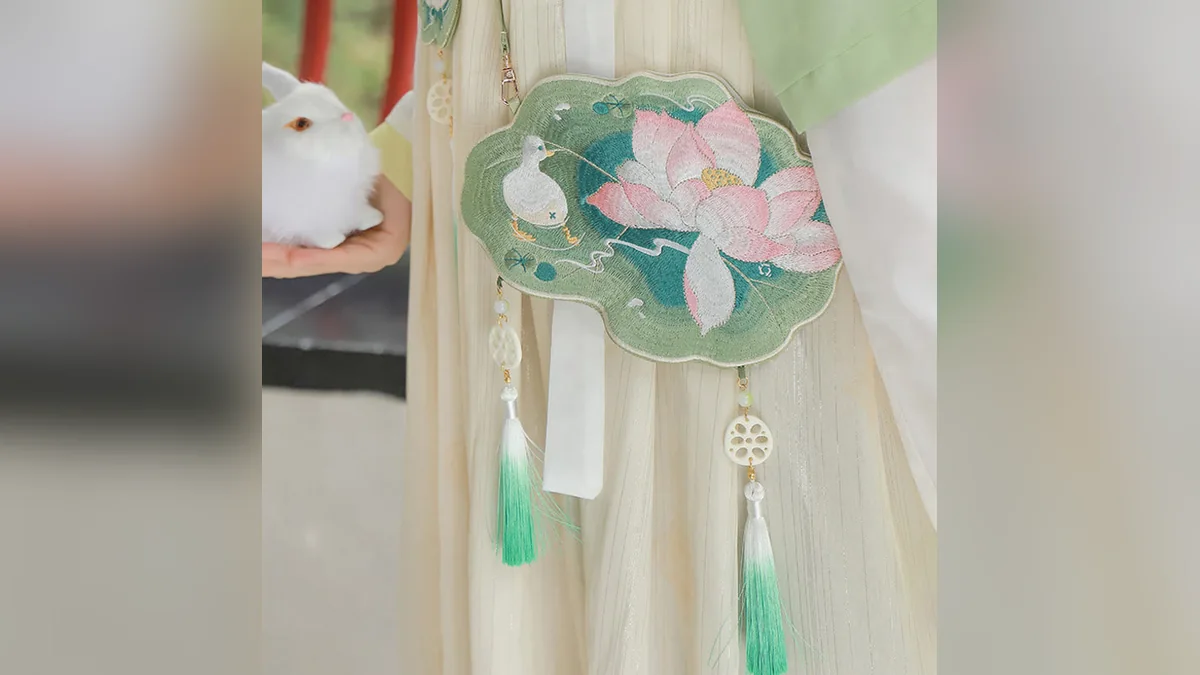
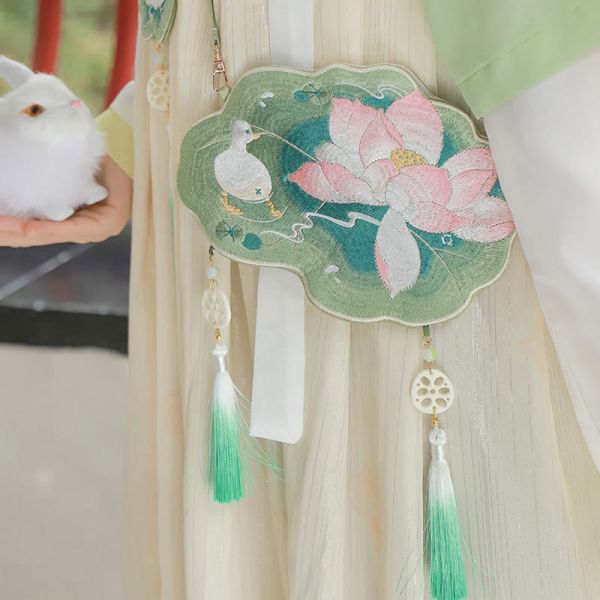
A bag with several koi options. Our Koi Fish Embroidery Hanfu Bag is polyester, with a strap length of 100-110cm. Some options feature koi: Koi Fish Flowers And Birds, Koi Fish Iris, Koi Fish Lotus, and Koi Fish Peony. Other options use different motifs, so the option name matters when choosing a fish design. The size entry specifies “Summer Lotus 22.3*16cm”; it does not supply separate dimensions for the koi options.
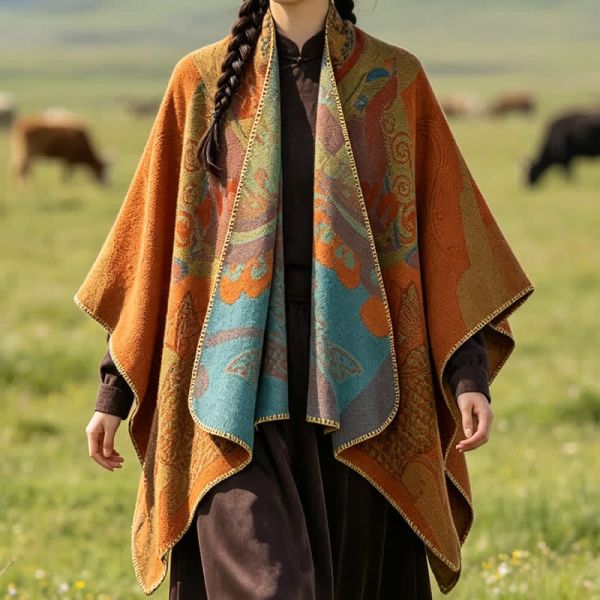
A shawl with fish and clouds. The Koi Fish Clouds Oriental Draped Shawl is made of 50% Polyester, 50% Acrylic. Its size is Approx. 130 cm × 150 cm / 51.2 in × 59.1 in. Color options are Black, CadetBlue, DarkOliveGreen, DimGray, Peru, and Tan. Here, the fish shares the design with clouds, extending the decorative setting beyond the river imagery of the opening legend.
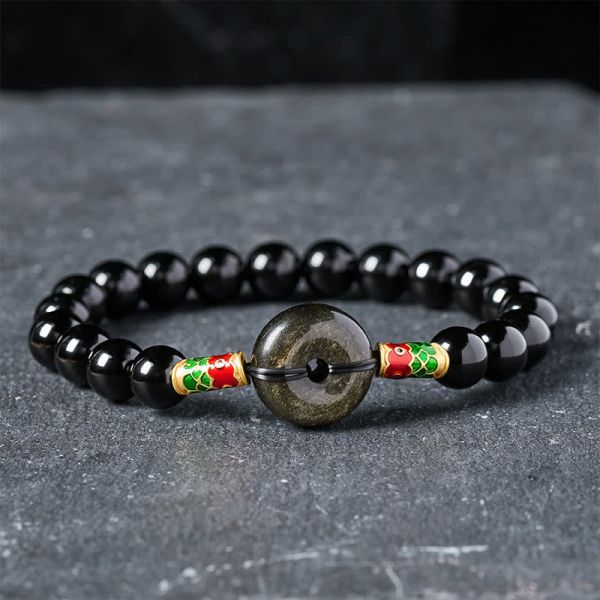
Obsidian beads and a peace buckle. Our Golden Sheen Obsidian Peace Buckle Koi Fish Bracelet combines Golden Sheen Obsidian, Black Obsidian, and Copper Alloy. It uses premium elastic string, with a wrist circumference of 5.9–6.3 in (15–16 cm) and a bead size of Approx. 8mm. Because the stone is natural, its color, details, and overall appearance may vary slightly.
A cord bracelet with the Fu character. The Hand-Woven Koi Fish Fu Character Jade Beads Bracelet has an adjustable cord and a wrist circumference of 5.9–8.3 in / 15–21 cm. Materials are String, Hetian Jade, Copper Alloy, and Copper Plated Gold Bead; options include Dark Red and Red. The jade may show slight differences in color, details, and overall appearance. Fu adds another traditional expression of good fortune to the fish motif.
The waterfall story gives one way to read a koi motif, even in a design without a waterfall. A fish beside a flower or a character carries only part of that larger visual vocabulary. Its meaning can stay modest: an acknowledgment of effort, a seasonal wish, or an appreciation of the design.
Questions about the carp in decorative art
Are koi and carp the same thing?
Koi are ornamental varieties of carp. The Dragon Gate tale concerns a carp, while contemporary decorative designs often use the familiar koi form to refer to that story of perseverance and achievement.
Does a koi design guarantee good luck?
No. Associations with luck and abundance express traditional beliefs and hopes. A fish motif can communicate those wishes, but it cannot ensure financial success, safety, or any other result.
Does the fish need to face a certain direction?
There is no universal direction required for wearing a koi accessory. Direction may matter within a particular composition or custom. For an everyday choice, consider the design as a whole and the meaning you wish to express.
Shop the story
 Buddha Stones Luck Embroidery Lotus Koi Fish Rabbit Flower Hanfu Bag Crossbody Bag Shoulder BagAs low as $29.59 Regular Price $39.45
 Buddha Stones Fall Winter Koi Fish Clouds Oriental Draped Soft ShawlAs low as $41.59 Regular Price $57.76
 Buddha Stones Golden Sheen Obsidian Peace Buckle Black Obsidian Koi Fish Protection Round Bead BraceletSpecial Price $25.59 Regular Price $34.58
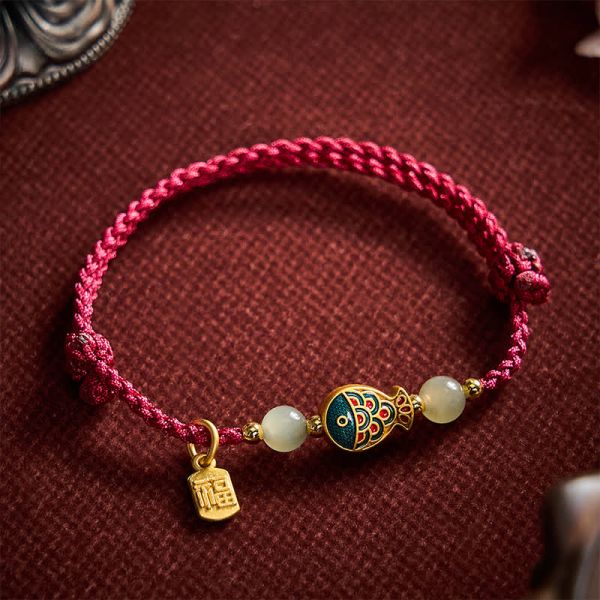 Buddha Stones Hand-Woven Koi Fish Fu Character Jade Beads Protection Rope BraceletAs low as $25.59 Regular Price $34.12