
Jingdezhen Porcelain Guide for Tea and Home Display
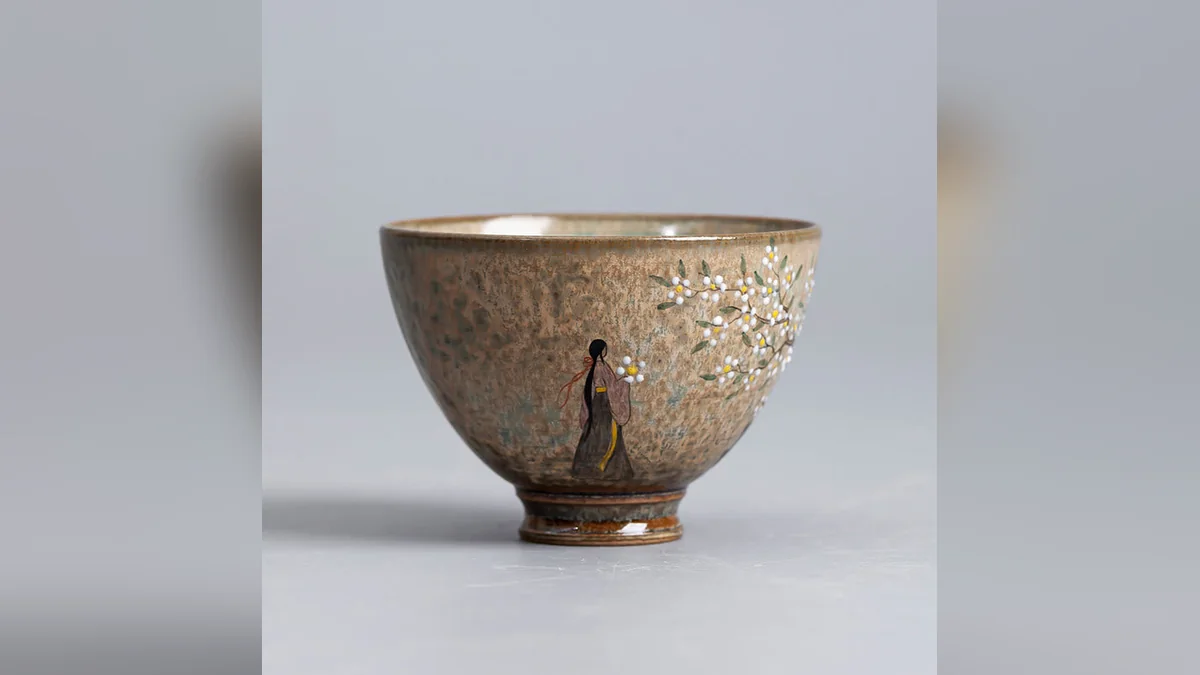
A porcelain teacup belongs on a stable table, shelf, or tea tray. This Jingdezhen porcelain guide explains how to choose a size, arrange a useful tea corner, and care for ceramic teaware at home. In Chinese tea practice, cups and brewing vessels are arranged around serving and sharing tea. For display, give a piece enough room to be seen and lifted safely. At Buddha Stones, we approach placement through those practical habits and the traditional meanings of decorative motifs.
Jingdezhen porcelain guide: choosing size and material
Begin with the job you want the vessel to do. A small cup suits tea served in repeated portions, while a larger cup holds more tea between refills. A gaiwan is a lidded bowl used for brewing or drinking tea. Its saucer also needs space, so consider the complete arrangement rather than the bowl alone.
Compare capacity with the dimensions before choosing a place. Capacity describes the volume a vessel holds; it does not tell you how much space its saucer, lid, or surrounding equipment needs. Leave working room for your hand and a separate spot for setting down removable parts. Do not plan to fill hot tea right to the rim.
Porcelain is a type of ceramic, and Jingdezhen is a Chinese city long associated with porcelain production. Our featured product names use porcelain terminology, while their material specifications say ceramic. Use the stated specifications when comparing them. A style name alone does not establish a historical production date or a particular glaze composition.
For a shelf, check both depth and clearance above the piece. For a tea table, consider the space needed for serving. The useful size is the one that fits the surface and the way you intend to prepare tea.
Arrange the surface around pouring and serving
A tea tray or everyday table
Choose a level surface with enough room to keep vessels away from the edge. Put the brewing vessel within easy reach and place drinking cups where they can be filled without carrying a full pot across other objects. Reserve a dry area for a cloth and a safe resting place for a lid.
In gongfu tea practice, small cups commonly receive repeated servings from a brewing vessel. You can reflect that arrangement at home without building a formal tea room. Keep the pieces you are using together, with enough separation that rims do not knock against one another. A tray can define the serving area, but do not assume it catches water unless it is designed to do so.
Before adding hot water, check that everything sits securely. Keep a kettle cord outside the serving area, and move books or papers beyond the likely path of drips. A heat-resistant surface or suitable mat helps keep hot vessels off vulnerable furniture.
A shelf or home office corner
On a display shelf, turn the main decoration toward the room and leave space around the outline. Avoid balancing a cup on a stack of books or placing it where a cabinet door could strike it. Store loose lids securely so they cannot slide when you reach for another item.
At a desk, give tea its own clear area away from a keyboard and electrical equipment. Place the cup where reaching for it does not require crossing cables. If the same piece moves between display and use, wash it before serving tea and return it to the shelf only after it has dried.
Decorative names can also carry traditional symbolism. Dragon and phoenix pairings often express harmony in Chinese decorative arts, while smooth sailing imagery conveys a wish for an unobstructed passage through life. These are cultural wishes; they do not guarantee results. Choose the motif for its appearance or personal significance, without treating a compass direction as a requirement for ordinary teaware.
Use the vessel with room for safe handling
Start with clean teaware and inspect the rim, base, and any removable parts. Set aside a piece with a crack, a sharp chip, or an unstable base. Avoid sudden temperature changes, such as pouring very hot water into a vessel taken straight from a cold storage area.
For a gaiwan, practice positioning the lid and handling the bowl with cool water before preparing hot tea. Keep the pouring gap small enough to hold back leaves, and use a grip that keeps fingers away from the hot liquid. Our gaiwan brewing instructions cover that separate technique in more detail.
Allow space for serving rather than crowding the tray with decoration. Put a cup down before moving nearby objects, and carry removable parts separately when necessary. For shared tea, arrange the cups so serving does not require reaching over another person.
Wash gently and store fully dry
Let teaware cool before washing. Empty tea leaves into a waste container, then rinse away loose residue. Use warm water, a little mild dish soap, and a soft sponge. Clean the rim and interior carefully, and rinse until no soap remains.
Avoid abrasive pads and scraping dried residue with metal utensils. A brief soak in warm soapy water can loosen a tea film before another gentle wash. Handle a lid and saucer separately over the sink so they do not collide with the cup.
We have not supplied dishwasher, microwave, or oven compatibility information for the products below. Hand washing is a cautious routine; do not infer appliance suitability from the word porcelain. Follow any care instructions supplied with the specific item.
Dry the pieces before putting them away. Leave a washed vessel uncovered until moisture has evaporated, then replace its lid if applicable. Keep storage shelves clean, avoid tight stacks, and check for grit beneath a cup before placing it on furniture.
Four Jingdezhen teaware listings at Buddha Stones
Hanfu Girl and Hat Girl small cups
Our Jingdezhen Hand Painted Ru Kiln Hanfu Girl Flower Teacup comes in Hanfu Girl and Hat Girl options. Both options have the stated size 8cm*6cm*100ml and a capacity of 100 milliliters. The material specification is ceramic, and the place of origin is Jingdezhen, China. SKU: BSP-BS66602E0EBE.
Hanfu Girl and Hat Girl gaiwan
The Jingdezhen Hand Painted Ru Kiln Hanfu Girl Flower Gaiwan has Hanfu Girl and Hat Girl options. The cup size is 10.2cm*8.5cm*150ml, with Saucer 12.2cm. Its capacity is 150 milliliters. The material is ceramic, and its stated origin is Jingdezhen, China. The product name specifies a cup and saucer with lid. SKU: BSP-BS6664489313.
Linglong dragon, phoenix, and boat options
The Jingdezhen Linglong Porcelain Office Teacup offers Auspicious Dragon Phoenix and Boat Smooth Sailing options. The stated size is 9.5cm*13.5cm*420ml, and the capacity is 420 milliliters. Its material specification is ceramic, with Jingdezhen, China given as the place of origin. SKU: BSP-BS6669938CF5.
Great Wall and Landscape options
Our Jingdezhen White Porcelain Handmade Great Wall Landscape Teacup has two sizes: Great Wall 8.5cm*14.5cm*400ml and Landscape 9.3cm*14.8cm*450ml. Their capacities are 400 and 450 milliliters respectively. The material specification is ceramic, and the stated origin is Jingdezhen, China. SKU: BSP-BS667147BCC4.
For these four listings, additional accessories appearing in the photographs serve as staging items and are excluded from the purchase.
Let the arrangement follow your tea practice
A useful porcelain arrangement leaves space to pour, lift, wash, and put things away. Start with the vessel size your surface can accommodate, then arrange the remaining objects around those tasks. Traditional decoration can give the setting cultural meaning, while careful placement and regular cleaning keep the teaware ready for its next use.
Shop the story
 Buddha Stones Jingdezhen Hand Painted Ru Kiln Porcelain Hanfu Girl Flower Ceramic Teacup Kung Fu Tea CupsAs low as $88.59 Regular Price $118.12
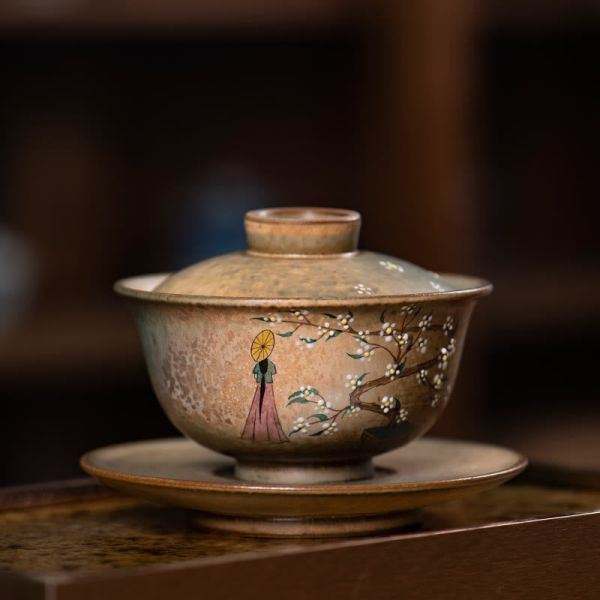 Buddha Stones Jingdezhen Hand Painted Ru Kiln Porcelain Hanfu Girl Flower Ceramic Gaiwan Sancai Teacup Kung Fu Tea Cup And Saucer With LidAs low as $288.59 Regular Price $406.46
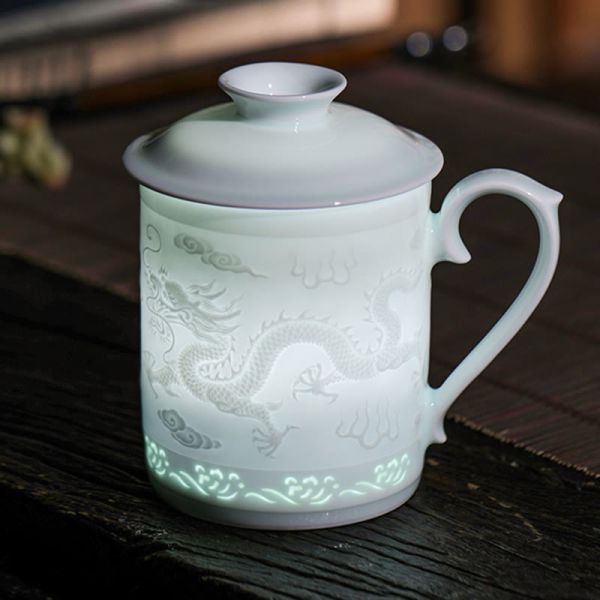 Buddha Stones Jingdezhen Linglong Porcelain Auspicious Dragon Phoenix Boat Smooth Sailing Ceramic Teacup Office Tea Cups 420mlAs low as $187.59 Regular Price $264.21
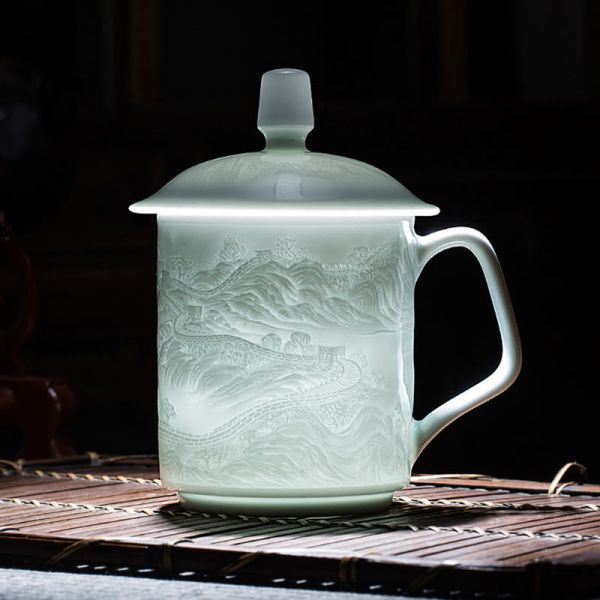 Buddha Stones Jingdezhen White Porcelain Handmade Great Wall Landscape Engraved Ceramic Teacup Office Mug Tea CupsAs low as $129.59 Regular Price $175.12